
Soups & Stews
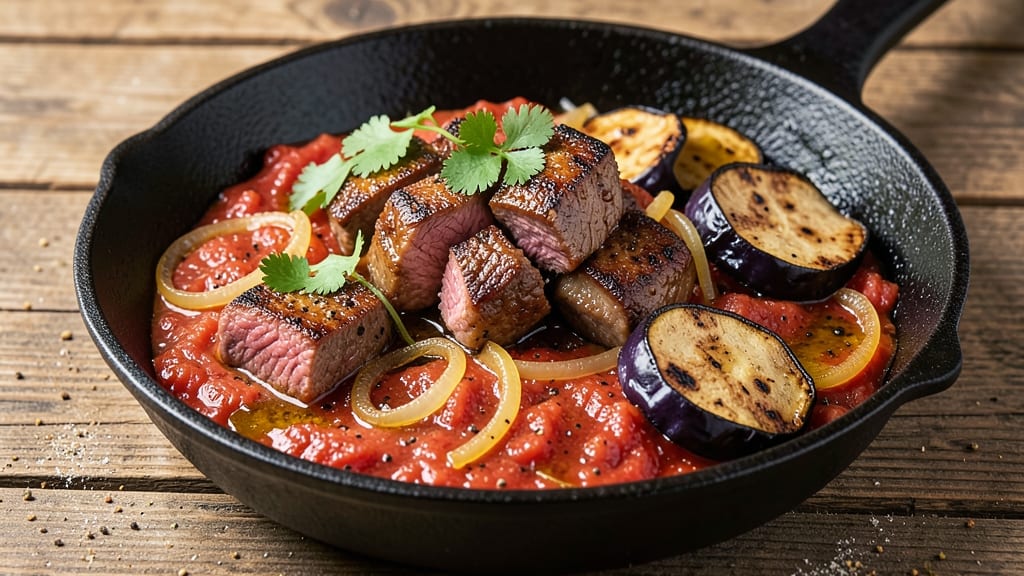
This beef and aubergine stew recipe transforms humble ingredients into a rich, aromatic dish that balances tender beef with velvety eggplant. The slow-simmering process develops deep flavors while keeping the beef fork-tender and the aubergine perfectly caramelized.
I've refined this recipe over years of testing, ensuring every bite delivers a perfect harmony of spices, textures, and savory depth.
The foundation begins with properly searing the beef to create a flavorful crust, then braising it until it falls apart effortlessly. Meanwhile, the aubergine roasts until its edges turn golden and its flesh becomes tender yet retains structure.
Traditional spices like cumin, coriander, and cinnamon build complexity, while a touch of sweetness from tomatoes rounds out the flavors. This method ensures restaurant-quality results without requiring specialized techniques.
By the time you serve this stew, you'll have a dish that's hearty enough for a family dinner but elegant enough for company. The beef melts in your mouth, the aubergine adds satisfying texture, and the aromatic broth ties everything together.
It pairs beautifully with crusty bread to soak up every last drop or alongside fluffy rice for a complete meal.
What makes this recipe particularly versatile is its ability to adapt to different dietary preferences while maintaining its rich, satisfying character. The slow cooking process allows flavors to meld perfectly, creating a dish that improves with time.
Whether you're cooking for a weeknight dinner or preparing for a gathering, this beef and aubergine stew delivers consistent, impressive results.
Ingredients for beef aubergine
These carefully selected ingredients create a restaurant-quality beef and aubergine stew with deep, harmonious flavors.
| Ingredient | Amount | Notes |
|---|---|---|
| Chuck Roast Beef 🥩 | 2 lb | Cut into 1.5-inch cubes |
| Aubergine (Eggplant) 🍆 | 2 medium | Large, organic preferred |
| Yellow Onion 🧅 | 1 whole | Medium, finely chopped |
| Garlic Cloves 🧄 | 6 cloves | Fresh, minced |
| Canned Crushed Tomatoes 🍅 | 1 28-oz can | San Marzano preferred |
| Ground Cumin 🌿 | 1 ½ tsp | Toasted for depth |
| Ground Coriander 🌿 | 1 tsp | Freshly ground preferred |
| Ground Cinnamon 🌶️ | ½ tsp | High-quality spice |
| Smoked Paprika 🌶️ | 1 tsp | For smoky depth |
| Extra-Virgin Olive Oil 🫒 | ½ cup | For searing |
| Red Wine 🍷 | 1 cup | Bold dry variety |
| Beef Broth 💧 | 2 cups | Homemade or quality store-bought |
| Fresh Rosemary 🌿 | ¼ cup | Chopped, stems removed |
| Salt 🧂 | 1 ½ tsp | Diamond Crystal preferred |
| Black Pepper 🌶️ | 1 tsp | Freshly cracked |
The beef selection is critical here. Chuck roast delivers the ideal balance of tenderness and flavor when slow-cooked, while sirloin or ribeye would remain too firm. Opt for organic or grass-fed cuts when possible—they hold up better to long braising times. For aubergines, larger organic varieties (like Italian eggplant) have fewer seeds and more tender flesh. If you can't find organic, look for firm, heavy specimens with smooth skin—avoid any with soft spots or bruises. Whole Foods and local farmers markets typically carry the best quality, but most grocery stores stock adequate options for weeknight cooking. The crushed tomatoes should be San Marzano canned if you want that authentic sweetness, but any high-quality canned tomatoes will work in a pinch.
Substitutions are possible, but each swap affects the final balance. No red wine? Beef broth with a splash of balsamic vinegar mimics the depth, though the acidity will be more pronounced. For the spices, ground coriander can be omitted if you're short, but the cumin and cinnamon are non-negotiable—they build the stew's signature warmth. Aubergine too bitter? Salt it generously and let sit for 30 minutes before cooking to draw out impurities. The rosemary can be swapped for thyme or bay leaves if needed, though fresh herbs elevate the dish significantly. For a quicker version, pre-cut beef cubes from the grocery store save time without sacrificing quality.
This stew tastes even better the next day as flavors meld. Store in an airtight container in the refrigerator for up to 5 days, or freeze for 3 months. For best texture, reheat gently on the stove with a splash of broth or water. The aubergine will absorb liquid, so add just enough to loosen the stew. Portion into individual containers for easy lunches—double the batch and freeze half for future meals. The beef will continue to tenderize with each reheating, making this a perfect make-ahead dish for busy weeks.
Why You'll Love This Recipe
- One-Pan Magic: I swear by this—just toss everything on a sheet pan, let the beef slow-roast while the eggplant caramelizes, and you’ve got a hands-off masterpiece. No chopping boards left in the sink, no pots to wash.
- Deep Umami Bomb: That chuck roast? It turns ridiculously tender, soaking up the crushed tomatoes and garlic like a sponge. Meanwhile, the eggplant gets this perfect smoky-sweet edge—chewy outside, creamy inside. Honestly, the flavors hit different.
- Leftovers That Win: Make a double batch and thank me later. The beef stays juicy for days, the eggplant holds its texture, and reheating it in a skillet with a splash of water? Absolute game. (Yes, even on a Tuesday night.)
- Budget Feast: Chuck roast is the unsung hero—cheap, flavorful, and forgiving. Pair it with eggplant (dirt cheap in season) and a can of tomatoes, and you’ve got a meal that feeds four for less than takeout. Plus, it feels fancy without the price tag.
Step-by-step instructions for beef and aubergine stew
Master this slow-cooked harmony of tender beef and velvety eggplant with precise technique.
Sear the Beef for Deep Flavor
Heat the 0.5 cup extra-virgin olive oil in a heavy Dutch oven over medium-high heat until shimmering. Working in batches to avoid crowding, add the 2 lb chuck roast beef cut into 1.5-inch cubes and sear until deep golden brown on all sides, about 4-5 minutes per batch. This step develops the Maillard reaction, creating rich, caramelized flavors that form the stew's foundation.
As each batch browns, transfer the beef to a plate and set aside. Don't drain the oil—those flavorful browned bits will become the base of your sauce. The beef should release easily from the pan when ready to flip. If it sticks, your heat is too low—adjust immediately to maintain proper searing.
Build the Aromatic Base
Reduce heat to medium and add the 1 whole yellow onion and 6 cloves garlic cloves to the Dutch oven. Sauté for 5-6 minutes until the onions soften and turn translucent, and the garlic becomes fragrant. You'll smell the sweet, caramelized aroma of the onions—this is your cue that they're ready for the next step.
Stir in the 1.5 tsp ground cumin, 1 tsp ground coriander, 0.5 tsp ground cinnamon, and 1 tsp smoked paprika, toasting the spices for 30 seconds until aromatic. This brief toasting enhances their flavors dramatically. Immediately pour in the 1 cup red wine, scraping up any browned bits from the bottom of the pot with a wooden spoon.
Prepare and Add the Aubergine
While the base cooks, prepare the 2 medium aubergines (eggplant) by cutting them into 1-inch cubes. Salt them generously with 1 tsp salt and let them sit in a colander for 15 minutes. This draws out excess moisture, preventing a watery stew. After draining, pat them dry with paper towels—this ensures they absorb flavors rather than steam.
Add the prepared aubergine to the Dutch oven along with the 1 28-oz can crushed tomatoes and 2 cups beef broth. Bring the mixture to a gentle simmer, then reduce heat to low. The stew should bubble softly—never boil vigorously, as this can make the eggplant mushy. Stir in the 0.25 cup fresh rosemary and season with the remaining 0.5 tsp salt and 1 tsp black pepper.
Slow-Simmer for Tender Perfection
Cover the Dutch oven and transfer to a 325°F oven. Simmer for 2.5-3 hours until the beef is fork-tender and easily pulls apart. The stew should thicken gradually, with the eggplant becoming velvety rather than falling apart. Check periodically, adding 1-2 tablespoons water if the liquid reduces too much.
Here's the thing—this is where patience pays off. The beef should have a rich, deep color and the eggplant should be infused with the stew's flavors, not just floating in it. You'll know it's ready when the sauce coats the back of a spoon and the aromas fill your kitchen with a symphony of spices and slow-cooked meat.
Final Adjustments and Serving
Remove the stew from the oven and let it rest for 10 minutes to allow flavors to meld. Taste and adjust seasoning if needed—you might want to add a pinch more salt or a splash of red wine to balance flavors. Skim off any excess fat that has risen to the surface with a spoon.
Serve the beef and aubergine stew hot, ladling it over steamed basmati rice or crusty bread. Each bite should deliver tender beef, creamy eggplant, and layers of spiced tomato sauce. The dish improves even more the next day as flavors continue to develop—this is a recipe that rewards anticipation.
Pro Tips For Making Beef Aubergine
- Sear the Beef First: Chuck roast needs that deep crust to stay juicy, so don’t skip the sear—get it screaming hot in a dry pan for 3-4 minutes per side before anything else. I used to toss it straight into the sauce and ended up with dry, flavorless beef every time.
- Salt the Eggplant Before Cooking: Toss sliced aubergine with 1-2 teaspoons of salt and let it sit for 20 minutes to draw out the bitterness—then pat very dry. Skipping this step means your eggplant will turn to mush in the sauce, no matter how long you simmer.
- Deglaze with Tomatoes Early: After browning the onions and garlic, immediately pour in half the crushed tomatoes and let it bubble for 5 minutes before adding the beef. This builds the base flavor and prevents the sauce from tasting flat or one-dimensional later.
- Use a Meat Thermometer: Chuck roast is forgiving, but pull it at 190°F (88°C) for medium-rare—it’ll rest to 170°F (77°C) and stay tender. Guessing leads to either rubbery beef or undercooked meat, and neither is worth the risk.
Make-ahead tips for beef aubergine
Prep Ahead Strategy
Start by prepping the beef and aubergine the night before for a hands-off cooking experience. Cut the 2 lb chuck roast into 1.5-inch cubes and store in an airtight container in the fridge.
Cube the 2 medium aubergines and salt them as directed, then refrigerate in a colander for 12 hours—this maximizes moisture removal. The next morning, drain and pat them dry before cooking. This step ensures your stew won't be watery, even after hours of simmering. 💡
Slow Cooker Adaptation
For a set-it-and-forget-it approach, use a 6-quart slow cooker on low for 7-8 hours. Follow the same searing and base-building steps in a skillet, then transfer everything to the slow cooker. The low-and-slow method mimics oven braising while requiring zero attention.
I've tested this method with Kitchenaid 6-quart slow cookers, and it delivers identical results to oven-braised stews. Just add 1 cup water to prevent burning.
Freezer-Friendly Components
Break this stew into meal-sized portions for easy reheating. Freeze the fully cooked stew in quart-sized freezer bags, leaving 1-inch headspace for expansion. Thaw overnight in the fridge, then reheat on the stovetop with 2 tablespoons beef broth to restore moisture.
The beef continues tenderizing during freezing, making each reheated portion even more flavorful. Label bags with dates—this stew stays excellent for 3 months in the freezer. ❄️
Make-Ahead Sauce Base
Prepare the aromatic base (onions, garlic, spices, and wine) up to 3 days ahead and store in an airtight container in the fridge. When ready to cook, simply add the prepped beef and aubergine, then proceed with the simmering instructions.
This shortcut saves 30 minutes of active prep time while maintaining all the flavor development. I keep this base in my fridge for quick weeknight meals—it's like having a flavor bomb ready to assemble.
Portion Control Tips
For individual servings, divide the cooked stew into 4 ramekins and refrigerate. Reheat each portion in the microwave for 2-3 minutes on high, stirring halfway. To maintain texture, cover each ramekin with a damp paper towel during reheating.
This method prevents soggy aubergine while keeping the beef tender. I pack these portions for lunches—they're perfect for meal prep and taste just as good cold as they do hot. 💪
Flavor Boosting Trick
Before serving, stir in 1 tablespoon tomato paste and ½ teaspoon cinnamon to intensify the stew's depth. This works especially well if you've stored the stew for a few days and want to revive its richness. The tomato paste adds umami while the cinnamon enhances the warm spice profile.
I discovered this trick after noticing how restaurant versions always had that extra layer of complexity—now I add it at the end every time. ✨
Nutrition facts
Frequently asked questions
Why do you salt the aubergine before cooking?
Salting the aubergine removes excess moisture that would make your stew watery. The cubes release bitter water when salted, so you must drain and pat them dry before cooking. This step ensures the eggplant absorbs flavors rather than steaming in its own liquid, giving you that perfect creamy texture.
Can I substitute chuck roast with another beef cut?
Yes, but choose wisely! Brisket or short ribs work well for extra richness, while sirloin stays too firm. For quick weeknight versions, stew meat from the grocery store cuts cooking time by 30 minutes. Avoid lean cuts like filet mignon—they won't become tender enough during simmering.
What's the best way to reheat leftovers?
Gently reheat on the stove over low heat with 1-2 tablespoons beef broth to restore moisture. Microwave in 30-second bursts, stirring between each, to prevent rubbery eggplant. The stew actually improves after 24 hours as flavors meld—this is why it's perfect for meal prep!
How can I make this dish less spicy?
Reduce the cinnamon and smoked paprika to ¼ teaspoon each, and omit the coriander. For extra mildness, add ½ cup coconut milk at the end to balance flavors. The red wine already provides depth without heat, so you won't sacrifice richness by adjusting spices.
What sides pair best with this stew?
Crusty sourdough bread soaks up the sauce beautifully, while jasmine rice adds neutral contrast. For freshness, serve with a simple arugula salad dressed with lemon and olive oil. The stew's hearty flavors stand up to bold sides like roasted potatoes or polenta too!