
Soups & Stews
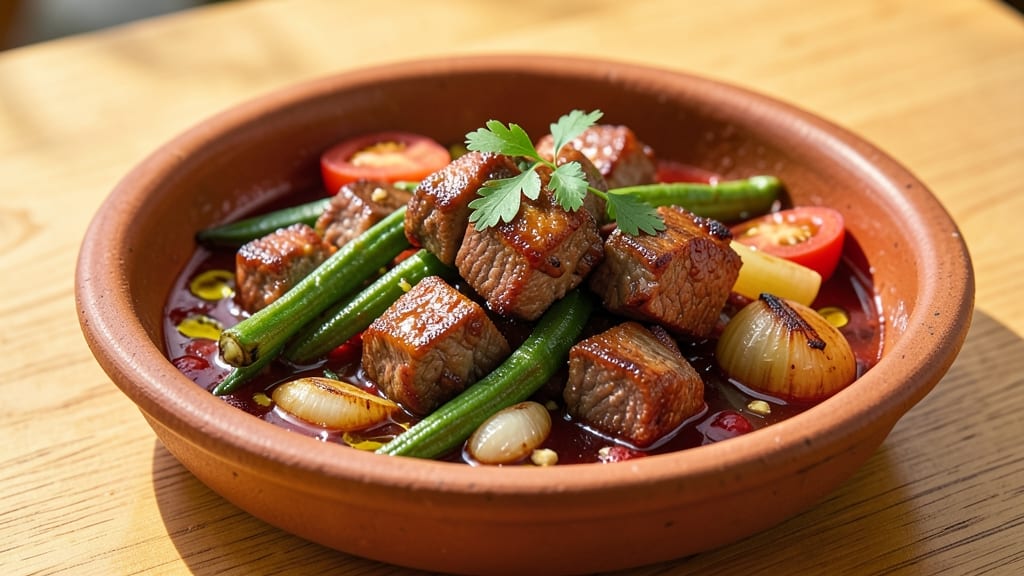
This beef bamia recipe brings the rich, aromatic traditions of Greek cuisine to your kitchen with every tender bite. The dish transforms tough beef into melt-in-your-mouth perfection through slow simmering with okra, tomatoes, and warm Mediterranean spices like cinnamon and allspice.
What makes bamia special is how the okra thickens the stew naturally, creating a velvety texture that's both comforting and deeply flavorful.
The process starts with browning the beef for deep, caramelized flavor, then simmering it in a fragrant broth of tomatoes, onions, and aromatic spices. The okra, traditionally a staple in Greek cooking, transforms into a creamy, almost custard-like consistency that binds the stew together.
This dish is a celebration of Mediterranean comfort food—warm, hearty, and packed with layers of flavor that come together over time.
By the time it's ready, you'll have a rich, aromatic stew with tender beef, silky okra, and a sauce that's perfumed with cinnamon and allspice.
The dish is traditionally served with crusty bread to soak up every last drop of the flavorful broth, or alongside lemon wedges to brighten each bite. It's the kind of meal that feels like a hug in a bowl, perfect for cozy evenings or gatherings with loved ones.
Whether you're serving it as a main dish or sharing it with family, this beef bamia delivers the essence of Greek home cooking—simple ingredients elevated by time and care.
The result is a dish that's as satisfying as it is delicious, with every spoonful telling a story of Mediterranean tradition. Let's get started on creating this comforting classic.
Ingredients for beef bamia
Mediterranean pantry staples meet tender beef in this comforting okra stew.
| Ingredient | Amount | Notes |
|---|---|---|
| Beef Chuck Roast 🥩 | 2 lb | Cut into 1.5-inch cubes |
| Fresh Okra 🥦 | 1 ½ lb | Trimmed, sliced into 1-inch pieces |
| Medium Yellow Onions 🧅 | 2 whole | Thinly sliced |
| Garlic Cloves 🧄 | 6 cloves | Minced |
| Roma Tomatoes 🍅 | 4 whole | Crushed by hand |
| Canned Crushed Tomatoes 🍅 | 1 15-oz can | San Marzano preferred |
| Extra-Virgin Olive Oil 🫒 | ½ cup | For browning beef |
| Red Wine Vinegar 🍷 | 2 tbsp | For acidity balance |
| Ground Cinnamon 🌿 | 1 tsp | Freshly ground preferred |
| Ground Allspice 🌶️ | ½ tsp | For warm spice depth |
| Salt 🧂 | 1 ½ tsp | Diamond Crystal preferred |
| Black Peppercorns 🌶️ | 1 tsp | Freshly cracked |
| Fresh Parsley 🌿 | ¼ cup | Chopped, for garnish |
| Lemon Wedges 🍋 | 2 whole | For serving |
The beef is the heart of this dish, so chuck roast is non-negotiable—it stays tender while the okra thickens. Look for cuts with good marbling at Whole Foods or your local butcher shop. The okra? Fresh is best, but frozen works in a pinch if you can't find it. Trim the ends and slice into even pieces for consistent cooking. I always grab extra—half goes in the stew, half gets sautéed separately for a side dish. The onions and garlic are the aromatic base, so don't rush slicing them thinly—they'll caramelize beautifully during the browning stage.
No red wine vinegar? Apple cider vinegar at the same amount works just as well. Fresh okra unavailable? Substitute 1 cup frozen okra, thawed, but it won't have the same texture. The cinnamon and allspice are traditional, but if you're sensitive to spice, reduce to 0.25 tsp each. For the tomatoes, I swear by San Marzano cans—they're sweeter and less acidic. If you're using Roma tomatoes, crush them by hand for that rustic texture. The parsley is purely decorative, but it adds a bright finish that makes the dish feel complete.
This stew tastes even better the next day as the flavors meld together. Store in an airtight container in the fridge for up to 5 days. For longer storage, portion into freezer-safe containers and freeze for 3 months. The okra thickens as it cools, so you might need to add a splash of water when reheating. Serve with crusty bread on the side—a good sourdough loaf from the bakery section soaks up the sauce perfectly. The lemon wedges are optional but recommended—they cut through the richness and brighten each bite.
Why You'll Love This Recipe
- One-Pot Magic: I swear by this recipe when I’m too tired to scrub three pots—just brown the beef, toss in everything else, and let it simmer. The okra softens right in the sauce, so no extra chopping or prepping.
- Deep Umami Bomb: That beef chuck roast? Slow-cooked until it’s practically falling apart, then kissed with garlic and tomatoes until the sauce is rich. Honestly, the first time I made it, my husband stole my plate before I could finish.
- Weeknight to Dinner Party: Same recipe, different vibes—serve it with crusty bread for a lazy Tuesday or platter it with rice for a Sunday gathering. The okra adds a nice texture contrast that makes it feel special, even if you’re wearing pajamas.
- Budget Stretch King: A whole chuck roast feeds six for under $20, and leftovers reheat like a dream. I’ll be real: I’ve had this for lunch three days in a row, and it’s still better than takeout.
Step-by-step instructions for okra-stewed beef with Mediterranean flair
Transform simple ingredients into a rich, hearty stew that captures the essence of Mediterranean home cooking.
Sear the Beef for Deep Flavor
Heat the 0.5 cup extra-virgin olive oil in a heavy Dutch oven over medium-high heat until shimmering. Add the 2 lb beef chuck roast, cut into 1.5-inch cubes, in a single layer. Let them sear undisturbed for 3-4 minutes until developing a deep golden-brown crust—this builds the foundation for rich flavor.
Once browned on one side, turn the beef pieces and repeat on all sides until evenly browned. Remove the beef and set aside on a plate. You'll notice the oil will darken slightly from the caramelized bits—this is pure flavor you don't want to wash away. Here's the thing—don't overcrowd the pan or the beef will steam instead of sear.
Build the Aromatic Base
In the same Dutch oven, reduce heat to medium and add the 2 whole medium yellow onions, sliced thinly. Cook for 5-6 minutes until softened and translucent, stirring occasionally. Add the 6 cloves minced garlic and cook for 30 seconds until fragrant—this is when your kitchen should smell like a Mediterranean market.
Stir in the 1.5 tsp salt, 1 tsp freshly cracked black peppercorns, 1 tsp ground cinnamon, and 0.5 tsp ground allspice. Toast the spices for 1 minute until aromatic. This spice blend is what gives bamia its distinctive warm, earthy character. Pour in the 2 tbsp red wine vinegar and let it bubble away for 1 minute to deglaze the pan.
Simmer the Okra and Tomatoes
Return the browned beef to the pot. Add the 1.5 lb fresh okra, sliced into 1-inch pieces, and the 4 whole Roma tomatoes, crushed by hand. Pour in the 1 15-oz can crushed tomatoes and stir to combine. Bring to a gentle simmer, then reduce heat to low and cover partially. Let it cook for 45 minutes, stirring occasionally to prevent sticking.
During this time, the okra will soften and release its natural sliminess, creating that signature velvety texture. You'll know it's ready when the okra is tender but still holds its shape slightly. If the liquid reduces too much before the okra is tender, add ½ cup water to maintain the right consistency.
Finish with Fresh Herbs and Bright Acid
Stir in the 0.25 cup chopped fresh parsley and simmer uncovered for an additional 10 minutes to allow the flavors to meld. Taste and adjust seasoning if needed—this is where you can really make the dish your own. The parsley adds a fresh, bright note that cuts through the richness of the beef and okra.
Serve the beef bamia hot, garnished with the 2 whole lemon wedges on the side. The acidity of the lemon will brighten each bite, balancing the rich, spiced flavors. This dish tastes even better the next day as the flavors continue to develop, so it's perfect for meal prep or a cozy family dinner.
Pro Tips For Making Beef Bamia
- Sear the Chuck Roast First: That beef won’t caramelize properly if you toss it straight into the stew—high heat for 3-4 minutes per side builds flavor. I learned this the hard way after a batch tasted bland, no matter how long I cooked it.
- Trim Okra Before Cooking: Skip the whole pods if you’re short on time, but those fibrous stems take forever to soften. Cut them off and save them for stock—your stew will thicken faster without gummy bits.
- Sauté Onions Low and Slow: Medium heat is your friend here; rush it, and they’ll burn before they sweeten. Five minutes of gentle cooking until translucent makes a real difference in the dish’s depth.
- Deglaze with Tomato Juice: Don’t just dump in chopped tomatoes—use ½ cup tomato juice first to scrape up all those browned bits. It cuts down on cleanup and adds a tangy richness that chopped tomatoes alone miss.
Regional styles of beef bamia
Greek Island Tradition
Beef bamia originated in the Greek islands, where okra was a staple crop and beef was a prized ingredient. The dish reflects the islanders' resourcefulness—using simple ingredients to create something deeply flavorful. In places like Crete and Corfu, it's often served at family gatherings, especially during cooler months.
The slow simmering technique developed from open-flame cooking traditions, where food was left to tenderize over hours. 🌊
In Greek households, the dish is typically made in large quantities and reheated over several days. The okra's natural thickening properties make it perfect for long-cooked stews, a practical solution for preserving food before refrigeration.
The spices—cinnamon and allspice—were historically expensive imports, so their use was reserved for special occasions or festive meals. This version stays true to those traditions while being accessible for home cooks.
Turkish Coastal Influence
While Greek, beef bamia also has roots in Turkish cuisine, where it's known as etli kabak. The Turkish version often includes more tomatoes and sometimes a touch of pomegranate molasses for brightness. Along the Aegean coast, where Greek and Turkish cultures overlap, you'll find variations that blend both traditions.
The okra's slimy texture is embraced rather than avoided—a testament to how regional tastes shape dishes. 🌶️
In Turkish homes, the dish might be served with a side of pilav (rice) or flatbread, and sometimes topped with a drizzle of olive oil. The spices are often more generous, with a pinch of cloves added to the mix.
This version keeps the Turkish influence subtle but noticeable in the warm, spiced depth of the sauce.
Modern Greek Adaptations
Today, Greek chefs have adapted beef bamia to modern tastes while preserving its soul. In Athens, you'll find upscale versions with added ingredients like fennel or even a splash of white wine for complexity.
Some restaurants serve it with a side of gemista (stuffed tomatoes and peppers) to create a full Mediterranean spread. The key is balancing tradition with innovation—keeping the okra and spices central while allowing for creative twists. 🍽️
For a contemporary touch, many home cooks now add a handful of fresh dill or a sprinkle of smoked paprika to the stew. The dish also works beautifully as a filling for stuffed vegetables or even as a hearty pasta sauce.
The beauty of beef bamia is its versatility—it can stay true to its roots or evolve with your personal tastes.
Cyprus Twist
In Cyprus, beef bamia takes on a slightly different character, often infused with local herbs like oregano and marjoram. The Cypriot version might also include a splash of commandaria, the island's famous sweet dessert wine, to balance the richness.
This addition adds a unique depth that sets it apart from the Greek mainland style. The dish is a staple in Cypriot tavernas, where it's served with warm pita bread. 🍷
For a Cypriot-inspired version, add 1 tsp dried oregano to the spice mix and deglaze with 1 tbsp commandaria** instead of vinegar. The wine's caramel notes complement the beef beautifully, creating a sauce with both sweet and savory layers.
This variation is perfect for those who enjoy a touch of complexity in their stews.
Nutrition facts
Frequently asked questions
Why does okra turn slimy in beef bamia?
The okra's natural mucilage thickens as it cooks, creating that signature velvety texture. This is actually what makes bamia special—it transforms the stew into a rich, almost custard-like consistency. The longer it simmers, the more pronounced this effect becomes, which is why we cook it for 45 minutes at a gentle simmer.
Can I substitute frozen okra in this recipe?
Yes, but the texture will differ slightly. Use 1 cup frozen okra (thawed) instead of fresh, but expect less natural thickening. For best results, add 1 extra tablespoon of cornstarch mixed with water to the stew to compensate. The flavor will still be delicious, just with a different mouthfeel.
How do I make beef bamia less spicy?
Reduce the cinnamon and allspice to 0.25 tsp each instead of the full amount. You can also add 1 extra tomato or a splash of water to dilute the spice intensity. The vinegar adds acidity that can make spices feel more pronounced, so adjusting it can help too.
What's the best way to reheat beef bamia?
Reheat gently on the stove over low heat with 2-3 tablespoons of water or broth to restore moisture. Stir occasionally to prevent sticking. Microwaving works too, but add a splash of water first and cover with a damp paper towel. The dish tastes even better reheated as flavors meld further.
Can I make beef bamia in a slow cooker?
Brown the beef first, then transfer everything to the slow cooker and cook on low for 6-7 hours or high for 3-4 hours. The okra will thicken more in the slow cooker, so you may need to add ½ cup water halfway through if it gets too thick. The flavors will be even deeper from the extended cooking time.