
Main Courses
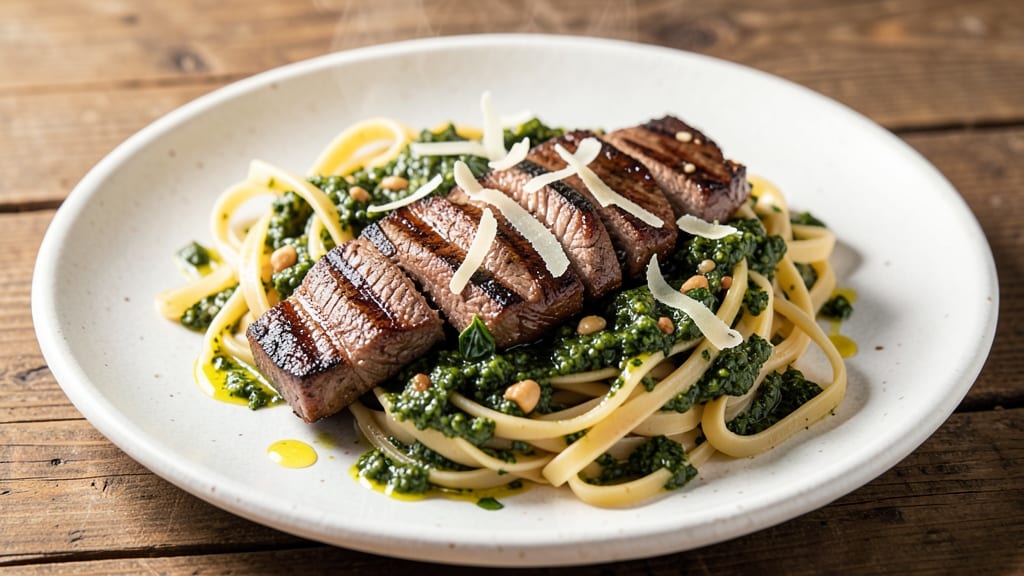
This beef basil pesto pasta recipe transforms weeknight dinner into a restaurant-worthy experience with bold flavors and minimal effort. The secret lies in perfectly seared beef strips combined with vibrant basil pesto, creating a dish where every bite delivers herby freshness and rich meatiness in perfect harmony.
What sets this apart is how the pesto's bright acidity cuts through the beef's richness, while the al dente pasta provides the ideal base for all the flavors to shine.
The recipe begins with a simple yet crucial step: searing the beef just enough to develop a caramelized crust while keeping the center tender.
Meanwhile, the basil pesto comes together in minutes with fresh basil, garlic, parmesan, and a touch of lemon, creating a sauce that's neither too thick nor too thin. The pasta cooks al dente to ensure it doesn't turn mushy when tossed with the warm sauce and beef.
What you'll end up with is a dish that looks as impressive as it tastes—golden-brown beef strips nestled among vibrant green pesto strands and perfectly cooked pasta.
The aroma alone will have everyone gathering around your table, and the first bite delivers that perfect balance of flavors: herby, savory, and slightly tangy. This recipe proves that homemade Italian can be both elegant and approachable.
Serve with a simple arugula salad dressed in lemon vinaigrette to complement the rich pasta, or add grilled asparagus for a touch of sophistication. The leftovers reheat beautifully, making this an excellent meal prep option for busy professionals. Let's get cooking!
Ingredients for beef basil pesto pasta
Bold flavors start with just 12 ingredients—herb-infused beef meets vibrant pesto for restaurant-quality pasta.
| Ingredient | Amount | Notes |
|---|---|---|
| Flank Steak 🥩 | 1 lb | Thinly sliced against grain |
| Extra-Virgin Olive Oil 🫒 | ¼ cup | High quality, fruity |
| Fresh Basil Leaves 🌿 | 2 cups | Packed, stems removed |
| Garlic Cloves 🧄 | 4 cloves | Peeled, roughly chopped |
| Parmesan Cheese 🧀 | ½ cup | Freshly grated from block |
| Lemon Juice 🍋 | 2 tbsp | Freshly squeezed |
| Pine Nuts 🥜 | ¼ cup | Toasted lightly |
| Fettuccine Pasta 🍝 | 12 oz | Dried, al dente preferred |
| Salt 🧂 | 1 ½ tsp | Diamond Crystal kosher |
| Black Pepper 🌶️ | ½ tsp | Freshly ground |
| Red Wine Vinegar 🍷 | 1 tbsp | For finishing touch |
| Butter 🧈 | 2 tbsp | Unsalted, for tossing |
The flank steak is your secret weapon here—thinly sliced against the grain for tender bites. Costco or Whole Foods carry excellent cuts, but any butcher will slice it for you if you ask. Look for bright red, well-marbled meat with minimal fat. The thinner you slice it, the more tender it'll be after searing. Fresh basil is non-negotiable for that vibrant green color and bright flavor—farmers markets often have the freshest, but grocery store basil works too if it's bright and perky. Toast your pine nuts in a dry pan for 2-3 minutes until fragrant—they add a luxurious crunch that makes this dish feel special.
No fresh basil? Dried basil at half the amount works in a pinch, but you'll lose that vibrant color and freshness. Running short on pine nuts? Walnuts or cashews toasted lightly give a similar texture. The Parmesan must be freshly grated—pre-grated cheese gets clumpy and lacks flavor. For the beef, if you can't find flank steak, skirt steak or sirloin work too, but slice them extra thin. The red wine vinegar is optional but adds a nice bright finish—balsamic vinegar works too if that's what you have. And if you're watching calories, you can reduce the butter to just 1 tbsp when tossing, though I won't judge if you use the full amount.
The pesto keeps best when stored under a thin layer of olive oil in the fridge—1 week max. The cooked pasta reheats beautifully, but add a splash of water when warming to prevent drying out. For meal prep, store components separately: cooked pasta, pesto, and beef in separate containers. Assemble when ready to eat for the freshest flavor. The beef can be seared ahead and refrigerated for 2 days, then reheated gently in the sauce. This dish tastes even better the next day as the flavors meld together—perfect for make-ahead meals.
Why You'll Love This Recipe
- Here’s what sold me: I make double the pesto, store it in jars, and use it for lunches all week. Add leftover steak to salads or wrap it in tortillas—this recipe doesn’t just feed you once.
- No-Chop Basics: I swear by this recipe because the basil and garlic just blend into a dreamy pesto—no knife skills required. Toss in the steak while it rests, and suddenly you’ve got a restaurant-worthy sauce without the fuss.
- Steakhouse Vibes: That flank steak? Thinly sliced and seared just right, then tossed with the pesto—it’s like a fancy dinner but with the simplicity of a weeknight. The garlic and Parmesan make every bite feel indulgent.
- Lunchbox Hero: Here’s what sold me: I make double the pesto, store it in jars, and use it for lunches all week. Add leftover steak to salads or wrap it in tortillas—this recipe doesn’t just feed you once.
Step-by-step instructions for beef basil pesto pasta
Here's how to create a harmonious blend of tender beef, vibrant basil pesto, and al dente fettuccine.
Prepare the Flank Steak
Begin by slicing the 1 lb flank steak thinly against the grain into ¼-inch thick strips. This cut ensures tender bites that cook quickly and evenly. Pat the slices dry with paper towels to remove any excess moisture, which helps them sear properly.
Season both sides generously with 1.5 tsp salt and 0.5 tsp black pepper. Let the steak sit at room temperature for 15 minutes while you prepare the rest of the ingredients. This allows for even cooking and prevents cold spots in the center.
Cook the Flank Steak
Heat 0.25 cup extra-virgin olive oil in a large skillet over medium-high heat until shimmering. Add the steak in a single layer and cook undisturbed for 2-3 minutes until the edges turn deep golden brown. Flip the strips and cook for another 1-2 minutes until they reach 145°F internally.
Remove the steak from the skillet and transfer to a plate. Cover loosely with foil to keep warm. The steak should be slightly pink in the center—it will continue cooking when combined with the pasta. Reserve any remaining oil in the skillet for the pesto.
Make the Basil Pesto
In a food processor, combine the 2 cups fresh basil leaves, 4 cloves peeled garlic, 0.25 cup pine nuts, 0.5 cup freshly grated Parmesan cheese, and 2 tbsp lemon juice. Pulse until the mixture is finely chopped but still has some texture.
With the processor running, slowly drizzle in the 2 tbsp reserved butter and 2 tbsp red wine vinegar. This creates a balanced sauce with a creamy texture and bright acidity. Taste and adjust seasoning with additional salt or black pepper if needed.
Cook the Fettuccine
Bring a large pot of water to a rolling boil and add 12 oz fettuccine pasta. Cook according to package instructions until al dente—about 1-2 minutes less than suggested. Reserve 1 cup of pasta water before draining, as it helps emulsify the pesto.
Drain the pasta and return it to the pot. Add the basil pesto and toss vigorously to coat evenly. If the sauce seems too thick, add pasta water 1 tablespoon at a time until it reaches a smooth, creamy consistency. The pasta should be fully coated with vibrant green pesto.
Combine and Serve
Add the cooked flank steak strips to the pasta and toss gently to combine. The residual heat from the pasta will finish cooking the steak slightly, ensuring it's perfectly tender. Taste and adjust seasoning with additional salt or black pepper if needed.
Divide the pasta among plates and garnish with extra fresh basil leaves and grated Parmesan cheese for a pop of color and flavor. Serve immediately while the pasta is hot and the pesto is fresh, ensuring each bite delivers a perfect balance of herby, savory, and umami flavors.
Pro Tips For Making Beef Basil Pesto Pasta
- Sear the Steak First: Flank steak needs that crust, so hit it with a screaming-hot pan—no oil yet—until deep brown forms in 2-3 minutes per side. I learned this the hard way: skipping the sear means flavorless beef that just sits there, no matter how good the pesto.
- Pulse Basil in Batches: Fresh basil turns to mush if you dump the whole bunch at once. Work in small handfuls with the garlic and Parmesan, then add olive oil gradually—this keeps the texture bright and chunky. (Yes, even if you’re impatient like me.)
- Don’t Overcook the Pasta: Basil pesto pasta should be al dente but not rubbery—pull it when it’s 2 minutes shy of package time. Toss it straight into the pan with the beef and pesto while still hot, so the sauce clings instead of turning into a sad, watery mess.
- Use Aged Parmesan Only: Young Parmesan tastes like chalk and won’t melt properly. Grab the stuff labeled “36-month” or older—it’s pricier but dissolves into the pesto like butter. (I was skeptical until I tried it.)
Essential equipment for this dish
Skillet Essentials
For searing the beef, a 12-inch cast iron skillet like Lodge is my go-to—it retains heat beautifully and creates that perfect caramelized crust. If you don’t own cast iron, a stainless steel skillet (like All-Clad) works too, but preheat it for 5 minutes to ensure even cooking.
Avoid nonstick—it won’t give you the same depth of flavor or sear. 🔥
Food Processor Must-Have
A high-quality food processor (I use Cuisinart DLC-2A) is non-negotiable for the pesto—it blends the basil, garlic, and nuts into a silky sauce without over-processing. If you’re short on time, a mini food processor or even a mortar and pestle works, but you’ll need to pulse more carefully.
For extra smoothness, pulse in 2-second bursts instead of continuous blending.
Pasta Tools
Invest in a long-handled wooden spoon (like OXO Good Grips) for tossing the pasta—it keeps your hands away from the heat. A pasta server (or even a fork) helps portion the dish elegantly.
For cooking, a large pot with a tight-fitting lid (like Ziploc-brand) speeds up boiling time. Pro tip: Use a colander with long handles to drain pasta easily over the sink.
Garnish Extras
Freshly grated Parmesan cheese and basil leaves deserve their own tools: a microplane for cheese and a sharp chef’s knife for basil. For pine nuts, a small skillet or toaster oven works best to toast them lightly. Keep a small bowl nearby to catch any fallen nuts—every crunch counts! 🌿
Optional Upgrades
A meat thermometer (like Thermoworks Smoke) ensures your beef hits 145°F perfectly. For meal prep, glass storage containers (like Pyrex) keep leftovers fresh for 3-4 days. If you love pesto, a pesto maker (like OXO) blends it in seconds—no food processor needed!
The key is keeping your tools clean and ready for the next dish.
Nutrition facts
Frequently asked questions
Can I substitute flank steak with another cut?
For this dish, skirt steak or sirloin work beautifully—just slice them extra thin against the grain. If you prefer ground beef, use 80/20 lean-to-fat ratio and brown it thoroughly for maximum flavor. Avoid lean cuts like eye of round, as they can dry out during cooking.
How do I make the pesto thicker or thinner?
For a thicker pesto, add 1-2 tbsp more pine nuts or pulse the ingredients longer. To thin it out, stir in pasta water 1 tbsp at a time until smooth. Pro tip: If the pesto separates, whisk in a splash of warm water or olive oil to re-emulsify it.
What's the best pasta shape for this dish?
Fettuccine is ideal for its wide surface area that clings to the pesto, but pappardelle or tagliatelle work equally well. For a fun twist, try penne or rigatoni—just toss the sauce in generously. Avoid delicate shapes like angel hair, as they can break when mixed with beef strips.
Can I make this dish ahead of time?
Yes! Cook the beef and pesto separately, then store them in airtight containers for 2 days in the fridge. Reheat the beef gently in the sauce, adding a splash of water to prevent drying. The pasta is best cooked fresh, but you can par-cook it 1 minute less than al dente, then finish cooking when reheating.
What if I don't have fresh basil?
Use dried basil at half the amount (1 cup instead of 2 cups), but the flavor will be less vibrant. For a closer substitute, blend 1 cup spinach with 1 cup basil—spinach adds a slightly earthy note that works well. Avoid dried oregano, as it has a completely different flavor profile.