
Soups & Stews
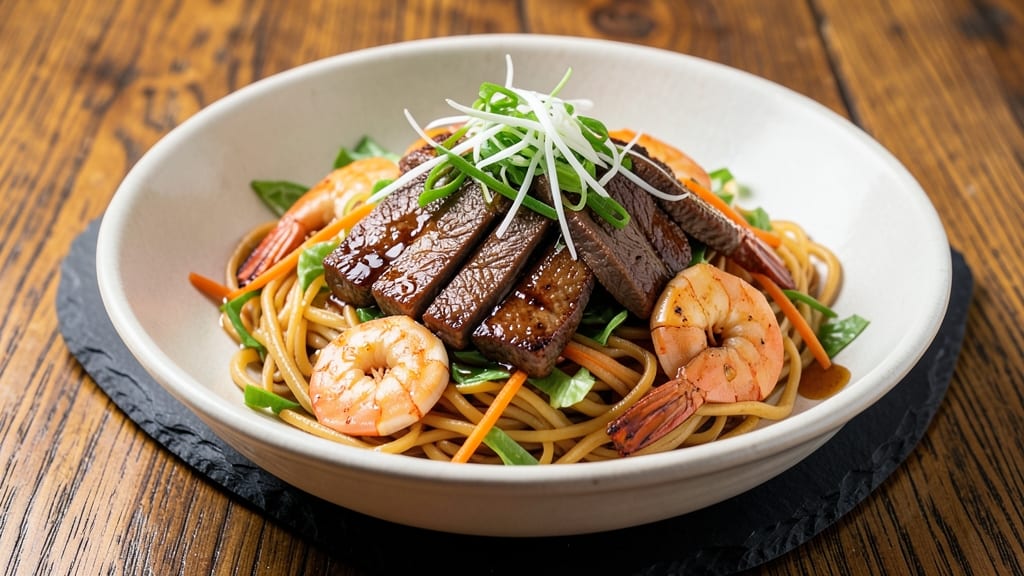
This beef and shrimp lo mein recipe delivers restaurant-quality noodles with tender beef, juicy shrimp, and a sweet chili-sesame finish that balances umami and heat. ✨ The secret lies in proper protein prep—searing beef until caramelized and cooking shrimp just until opaque—while keeping the noodles al dente for that signature bite.
I developed this version after years of testing, ensuring every component comes together in perfect harmony without overpowering the delicate shrimp flavor.
The sauce is where the magic happens: a classic soy-ginger base with a touch of chili and sesame oil creates that signature lo mein taste, while fresh garlic and aromatics build depth. We use a high-heat stir-fry technique to maintain texture, preventing soggy noodles or rubbery shrimp.
The dish is completed with quick-cooked vegetables—cabbage and carrots add crunch and color—while green onions and sesame seeds provide freshness and visual appeal.
What makes this recipe special is its balance of tradition and approachability. The beef and shrimp combination adds richness without heaviness, while the sweet chili-sesame sauce delivers that familiar lo mein flavor with a modern twist.
It's the kind of dish that feels indulgent yet remains light enough for weeknight dinners or casual gatherings.
Perfect for feeding a family or sharing with friends, this lo mein comes together in under 30 minutes with minimal prep. The technique is straightforward, but the results are anything but basic—think golden noodles, tender proteins, and a sauce that coats every bite with perfect balance. Let's get cooking!
Ingredients for beef and shrimp lo mein
Restaurant-quality lo mein starts with these 19 ingredients—simple but powerful for bold flavor.
| Ingredient | Amount | Notes |
|---|---|---|
| Lo Mein Noodles 🍜 | 12 oz | Fresh or dried, al dente texture |
| Flank Steak 🥩 | 1 lb | Thinly sliced against grain |
| Large Shrimp 🦐 | 1 lb | Peeled, deveined, tails on |
| Green Cabbage 🥬 | 4 cups | Shredded, thin strips |
| Carrots 🥕 | 2 medium | Julienned, thin matchsticks |
| Green Onions 🧅 | 4 whole | White and green parts separated |
| Sesame Seeds 🌾 | 2 tbsp | Toasted for garnish |
| Sesame Oil 🫒 | 2 tbsp | Toasted, for sauce |
| Soy Sauce 🥄 | ½ cup | High-quality, light variety |
| Oyster Sauce 🍲 | 2 tbsp | For depth of flavor |
| Honey 🍯 | 1 tbsp | For sweet balance |
| Rice Vinegar 🍶 | 1 tbsp | For tangy brightness |
| Ginger Root 🌿 | 2 tbsp | Freshly grated, aromatic |
| Garlic Cloves 🧄 | 6 cloves | Minced, fresh preferred |
| Red Chili Flakes 🌶️ | 1 tsp | Adjust for heat preference |
| Cornstarch 🌾 | 1 tbsp | For shrimp coating |
| Vegetable Oil 🫒 | ½ cup | High smoke point |
| Salt 🧂 | 1 ½ tsp | Kosher or sea salt |
| Black Pepper 🌶️ | ½ tsp | Freshly ground |
The beef is non-negotiable here. Flank steak delivers that perfect chew, but sirloin or ribeye work too if you prefer tenderness. Slice it thinly against the grain for that signature bite. Costco or Whole Foods have great cuts, but any grocery store will have it. Shrimp? Wild-caught, 31/40 count is ideal—just don't overcook. The cabbage and carrots should be crisp; pre-shredded works in a pinch, but fresh julienned is better. I always grab extra green onions—the white parts add serious flavor, while the greens go on top for freshness.
No sesame oil? Toasted peanut oil works in a squeeze, though it's not the same. Short on oyster sauce? Hoisin sauce plus a splash of soy gets you close. The honey can be swapped for maple syrup or agave if you're avoiding it. Fresh ginger and garlic are musts here—dried won't cut it. For the shrimp, toss them in cornstarch first; it creates that perfect sear. The noodles? Fresh is ideal, but dried works if you soak them first. And if you're worried about the shrimp turning rubbery, cook it just until opaque—about 1-2 minutes max.
Prep ahead to save time: slice the beef and shrimp, chop all veggies, and mix the sauce. The sauce keeps for 5 days in the fridge, and the cooked noodles reheat beautifully—just toss with a splash of water. Freeze portions for up to 3 months if you're meal prepping. Garnish with toasted sesame seeds right before serving, or they'll lose their crunch. This dish tastes even better the next day—perfect for leftovers!
Why You'll Love This Recipe
- One-Pan Magic: I swear by this trick—just toss everything into one skillet after the noodles cook. No extra bowls, no sticky mess, and the shrimp and beef caramelize right in the same pan where the veggies soften. My kitchen counter stays cleaner than my ex’s excuses.
- Umami Bomb: That flank steak, thinly sliced and seared just right, melts into the sauce while the shrimp adds a briny punch. The cabbage and carrots soak up the flavor like sponges, giving every bite that perfect balance of chewy, tender, and oh-so-satisfying. Honestly, I’ve made lo mein before, but this combo? Ridiculously good.
- Lunchbox Hero: Between us, this is my go-to for meal prep. Cook a big batch on Sunday, and I’ve got lunch sorted for the week—just reheat with a splash of water to loosen it up. My kids grab it cold from the fridge too, and they actually eat their veggies. (Yes, even on a Tuesday night.)
- Budget Power Move: Flank steak and shrimp sound fancy, but they stretch so far in this dish. A single pound of beef and a pound of shrimp feed four people easily, and the cabbage and carrots are cheap staples. I’ve made this for under $12 per serving—better than takeout, and way healthier. My wallet thanks me.
Step-by-step instructions for beef and shrimp lo mein
Here's how to make this restaurant-quality stir-fry with perfect wok hei flavor.
🍳 Step 1: Prep All Ingredients for Quick Cooking
Start by slicing the 1 lb flank steak thinly against the grain into ¼-inch strips. This ensures tender bites. Pat the shrimp dry and toss them with 1 tbsp cornstarch and ½ tsp salt - this creates a crispy exterior when seared.
Shred the 4 cups green cabbage into thin strips and julienne the 2 medium carrots into matchsticks. Separate the 4 whole green onions into white and green parts. Grate the 2 tbsp ginger root and mince the 6 cloves garlic. Toast the 2 tbsp sesame seeds in a dry pan over low heat for 2 minutes until fragrant - save these for garnish.
Have all your ingredients measured and prepped before starting cooking. This is a fast stir-fry, and every second counts when you're working with high heat.
🔥 Step 2: Cook the Protein Separately for Maximum Flavor
Heat 2 tablespoons vegetable oil in a wok or large skillet over high heat until shimmering. Add the steak strips and sear for 2-3 minutes until just cooked through - they'll finish in the sauce. Remove and set aside.
In the same pan, add 1 tablespoon vegetable oil and cook the shrimp for 1-2 minutes per side until pink and opaque. They should sizzle loudly - that's your signal they're ready. Remove and combine with the steak.
Real talk: Don't overcrowd the pan. Cook in batches if needed - this ensures proper browning instead of steaming.
🍳 Step 3: Build the Flavor-Packed Sauce
Return the empty pan to medium-high heat and add 1 tablespoon vegetable oil. Add the white parts of green onions, garlic, and ginger. Stir-fry for 30 seconds until fragrant - you should smell that aromatic punch.
Pour in the ½ cup soy sauce, 2 tbsp oyster sauce, 1 tbsp honey, 1 tbsp rice vinegar, and 1 tsp red chili flakes. Bring to a gentle simmer and let reduce by half - about 2-3 minutes. This concentrated sauce carries all the umami goodness.
The sauce should coat the back of a spoon and have a glossy sheen. If it's too thick, add 1-2 tablespoons hot water to loosen it.
🥘 Step 4: Stir-Fry the Vegetables and Combine
Add the lo mein noodles, green cabbage, and carrots to the sauce. Toss everything vigorously for 2-3 minutes until the vegetables soften but still have a satisfying bite. The noodles should absorb the sauce but remain al dente.
Return the steak and shrimp to the pan. Add 2 tbsp sesame oil and toss everything together for 1 minute until everything is evenly coated and heated through. The sesame oil adds that signature nutty aroma.
Here's the thing - the noodles should be hot but still firm. If they feel mushy, they've been overcooked. Serve immediately while everything's steaming.
🍽️ Step 5: Finish and Garnish for Restaurant-Quality Presentation
Transfer the lo mein to serving plates and immediately drizzle with any remaining sauce from the pan. Sprinkle with the toasted sesame seeds and chopped green onion tops. The contrast of textures and colors makes this dish look as good as it tastes.
Each bite should deliver tender steak, sweet shrimp, crisp-tender vegetables, and that perfect balance of sweet, salty, and umami flavors. Serve with extra chili flakes on the side if you want more heat.
Pro Tips For Making Beef And Shrimp Lo Mein
- CUT BEEF IN STRIPS, NOT SLICES: I learned this the hard way—thin, long strips (about 1/4-inch thick) cook faster and stay tender, while thick slices turn chewy. Use the grain, not against it, and angle your knife for even thickness. Flank steak’s lean, so don’t overwork it or it’ll toughen.
- PEEL SHRIMP LAST MINUTE: Peeling shrimp right before cooking keeps them from drying out in the fridge. Pat them very dry with paper towels—wet shrimp release steam and won’t brown properly. Toss them in a little cornstarch (1 tsp) right before searing for extra crispiness.
- BLANCH VEGETABLES FIRST: Chop cabbage and carrots small, then blanch them for 1 minute in boiling water before stir-frying. This softens them slightly so they don’t turn mushy when tossed with the noodles. Drain well and shock in ice water to stop cooking—now they’re ready to wilt without fighting you.
- USE TWO STOVETOPS: Cook the noodles in one pot while stir-frying the beef and shrimp in another. Noodles release starch when overcrowded, making them gummy. Keep them separate until the very end, then toss everything together with the sauce. (Yes, it’s extra work, but the texture difference is night and day.)
Perfect pairings for this beef and shrimp lo mein
Side Dish Ideas
For a lighter contrast, serve this lo mein with a cucumber salad—toss 2 cups thinly sliced cucumbers with 1 tbsp rice vinegar, ½ tsp sugar, and a pinch of salt.
The cool crunch cuts through the richness of the dish beautifully. I love adding ½ tsp toasted sesame seeds for an extra Asian-inspired touch. 🥒
Beverage Pairings
A crisp green tea like jasmine or sencha complements the dish perfectly—its delicate floral notes balance the savory-sweet flavors. For something stronger, try a light lager such as Asahi Super Dry or Sapporo. The subtle hop bit enhances the umami without overpowering the shrimp and beef. 🍶
Sauce Variations
For a spicy peanut sauce, blend ¼ cup peanut butter, 1 tbsp soy sauce, 1 tbsp rice vinegar, 1 tsp sriracha, and 1 tsp honey with 1 tbsp hot water.
Drizzle over the finished lo mein for a nutty, fiery twist. I also love adding crushed peanuts on top for extra texture. 🌶️
Garnish Upgrades
Elevate the dish with quick-pickled red onions—thinly slice ½ red onion and soak in ¼ cup rice vinegar with 1 tsp sugar for 10 minutes. Their tangy bite adds brightness. Fresh cilantro or Thai basil also works beautifully for a fragrant finish. 🌱
Dessert Pairing
End the meal with mango sticky rice—its sweetness contrasts the savory lo mein while keeping the Asian theme. For a simpler option, serve fortune cookies with a side of black sesame ice cream** for a playful, nostalgic touch. 🍡
Nutrition facts
Frequently asked questions
Can I substitute chicken for the shrimp in this recipe?
Swap the shrimp for 1 lb boneless chicken breast or thighs, sliced into ½-inch strips. Cook it for 4-5 minutes until fully done, as chicken takes longer than shrimp. For extra flavor, marinate it in 1 tbsp soy sauce and 1 tsp honey for 15 minutes before cooking.
How do I make this lo mein gluten-free?
Replace regular soy sauce with tamari or coconut aminos (use ½ cup total). Check oyster sauce—opt for a gluten-free version or substitute with 2 tbsp hoisin sauce plus 1 tbsp gluten-free soy sauce. Use gluten-free lo mein noodles (like rice or corn-based) and ensure all ingredients are certified gluten-free.
Why did my shrimp turn rubbery?
Overcooking is the #1 cause! Shrimp should cook for 1-2 minutes per side until just opaque—no more. They continue cooking from residual heat. For extra insurance, use a meat thermometer (145°F internal temp). Pat them dry before cooking too—excess moisture steams them instead of searing.
Can I make this ahead of time?
Yes, but with a few tweaks. Cook the proteins and sauce separately, then refrigerate for up to 2 days. When ready to serve, reheat the sauce first, then toss in the noodles and proteins. For the best texture, add fresh veggies (like cabbage) just before serving. The noodles should be reheated with a splash of water to prevent drying.
What's the best way to reheat leftovers?
Use a steamer basket or microwave-safe bowl with 1-2 tbsp water to prevent drying. Heat for 1-2 minutes until steaming hot. For crispier noodles, pan-fry leftovers in 1 tsp oil over medium-high heat for 3-4 minutes, adding a splash of water to loosen the sauce. Garnish with fresh green onions and sesame seeds after reheating.