
Soups & Stews
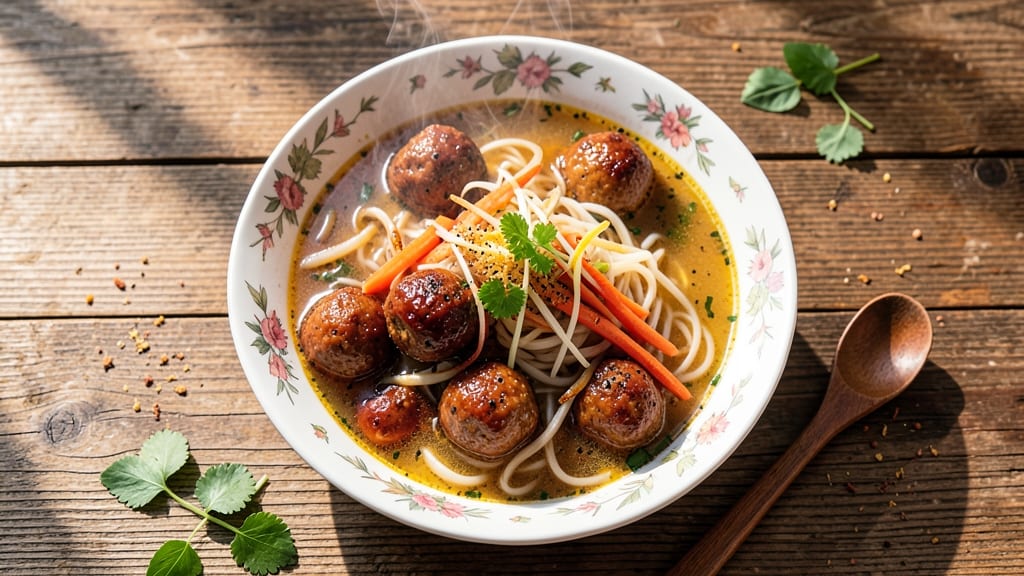
This beef ball pho recipe transforms a classic Vietnamese comfort dish into a restaurant-quality experience at home. The aromatic broth, spiced meatballs, and delicate rice noodles come together to create a harmonious balance of flavors and textures that will transport you to the bustling streets of Hanoi.
What sets this recipe apart is the attention to traditional techniques—like slow-simmered star-anise broth and hand-formed beef balls—while offering modern shortcuts for busy home cooks.
The foundation of any great pho is the broth, which builds deep, complex flavors through hours of simmering. Here, we use a blend of spices—star anise, cinnamon, and cardamom—that infuse the broth with warmth and depth.
Meanwhile, the beef balls are seasoned with a mix of garlic, ginger, and fish sauce, ensuring they’re tender yet flavorful. The rice noodles, cooked just until pliable, provide the perfect canvas for this rich, savory dish.
By the time you finish assembling your bowl, you’ll have a steaming plate of pho with perfectly spiced meatballs nestled in a fragrant broth, topped with fresh herbs and lime. The contrast of textures—soft noodles, tender meat, and crisp herbs—makes every bite satisfying.
Whether you’re serving a family dinner or a cozy night in, this recipe delivers the essence of Vietnamese comfort food without the fuss.
For those short on time, I’ve included adaptations like using a pressure cooker for the broth or pre-made beef balls, so you can still enjoy this dish on a weeknight. The key is balancing tradition with convenience—because great pho shouldn’t require all day in the kitchen.
Ingredients for beef ball pho
These aromatic ingredients create restaurant-quality beef ball pho at home with traditional depth.
| Ingredient | Amount | Notes |
|---|---|---|
| Ground Beef (Chuck) 🥩 | 1 ½ lb | 80% lean for best texture |
| Large Eggs 🥚 | 2 whole | Room temperature for binding |
| Garlic Cloves 🧄 | 6 cloves | Minced, aromatic base |
| Fresh Ginger 🌿 | 2 tbsp | Finely grated, peeled |
| Fish Sauce 🍶 | 2 tbsp | Red Boat preferred |
| Carrots 🥕 | 2 whole | Julienned, medium size |
| Onion 🧅 | 1 whole | Yellow, sliced thick |
| Star Anise 🌟 | 2 whole | Whole pods for infusion |
| Cinnamon Sticks 🌿 | 2 whole | 1-inch pieces |
| Cardamom Pods 🌿 | 4 whole | Lightly crushed |
| Dried Shiitake Mushrooms 🍄 | 4 whole | Rehydrated for umami |
| Rice Noodles 🍜 | 8 oz | Banh pho width |
| Fresh Thai Basil 🌿 | ½ cup | Stems removed |
| Lime Wedges 🍋 | 2 whole | For serving |
| Bean Sprouts 🌱 | 2 cups | Fresh, rinsed |
The beef matters most—chuck roast gives that melt-in-your-mouth texture. Grab 80% lean from the meat counter, not ground chuck from the freezer section. For the spices, Penzeys Spices or bulk bins at Whole Foods have the best quality star anise and cardamom. Fresh ginger and garlic? The Asian market usually has more vibrant options than the grocery store. If you can't find Thai basil, regular basil plus a pinch of mint works in a pinch—just add it at the end.
No fresh shiitake? Dried porcini mushrooms work just as well. Short on fish sauce? Soy sauce plus a splash of lime juice mimics the umami punch. The rice noodles can be pre-soaked in hot water for 10 minutes if you're short on time—just don't overcook them. For the beef balls, chill the mixture 30 minutes before forming so they hold shape. And trust me on the Red Boat fish sauce—it's worth the investment for that authentic flavor.
Broth keeps 5 days in the fridge or 3 months frozen—portion into containers for easy reheating. The beef balls freeze beautifully too, so make a double batch. Fresh herbs like basil and bean sprouts should go in right before serving. Lime wedges? Squeeze them over each bowl just before eating—they brighten everything up. This dish tastes even better the next day as flavors meld, so plan ahead if you're feeding a crowd.
Why You'll Love This Recipe
- No-Fuss Prep: I swear by this recipe on days when I’m too tired to julienne ginger—just grate it with a microplane and mix it into the beef. The eggs bind everything together so fast, you’ll have dumplings rolling before your tea steeps.
- Umami Bomb: That fish sauce? It’s the secret weapon—just a splash in the beef mixture turns bland into ridiculously good. The garlic and ginger get caramelized right in the pan, so every bite has this deep, savory punch that lingers.
- Lunchbox Hero: Between us, these freeze like a dream. Toss them in the freezer after cooking, and reheat straight from frozen in broth for a quick pho night. My kids drag them to school in their lunchboxes—no complaints, just empty containers.
- Budget Win: Ground chuck stretches forever, and eggs make these dumplings cost pennies each. I’ve made a full pho pot for six people for under $15, and everyone’s left begging for seconds. (Yes, even on a Tuesday night.)
Step-by-step instructions for beef ball pho
Here's how to craft aromatic spiced beef meatballs and build a fragrant broth that captures Vietnam's soul.
Prepare the Spiced Meatball Mixture
In a large bowl, combine the 1.5 lb ground beef (chuck) with the 2 whole large eggs, 2 tbsp finely grated fresh ginger, 2 tbsp fish sauce, 6 cloves minced garlic cloves, and 1 tbsp freshly cracked black pepper. Use your hands to mix gently until just combined—overworking develops gluten and makes the meatballs tough.
Next, add the lightly crushed 4 whole cardamom pods, 2 whole star anise, and 2 whole cinnamon sticks (cut into 1-inch pieces). These spices will infuse deep aromatic notes into the meatballs. Mix again until evenly distributed. The mixture should hold together when pressed but not be sticky—if it's too wet, add 1 tbsp rice flour to bind.
Form and Cook the Spiced Meatballs
Roll the mixture into 1.5-inch diameter meatballs (about 12 total) and place them on a plate. Refrigerate for 15 minutes to firm up—this prevents them from falling apart during cooking. Heat 2 tablespoons neutral oil in a large skillet over medium-high heat until shimmering.
Cook the meatballs in batches for 2-3 minutes per side until they develop a golden-brown crust and internal temperature reaches 160°F. They should be cooked through but still juicy. Remove and set aside on a paper towel-lined plate to drain excess fat. The residual oil in the pan will become the flavor base for your broth.
Build the Fragrant Star-Anise Broth
In the same skillet, add the 1 whole yellow onion (sliced thick) and 2 whole carrots (julienned). Sauté for 4-5 minutes until softened but not browned. Add 4 whole dried shiitake mushrooms (rehydrated and chopped) and cook for another 2 minutes to meld their earthy umami into the base.
Pour in 6 cups water and bring to a gentle simmer. Add the remaining spices: 1 whole star anise, 1 whole cinnamon stick, and any reserved spices from the meatball mixture. Simmer uncovered for 30 minutes—you'll notice the broth develop a deep golden color and enticing aroma. Strain through a fine-mesh sieve into a clean pot, pressing gently on the solids to extract maximum flavor.
Assemble the Pho Bowls
Bring a large pot of water to a boil and cook the 8 oz rice noodles according to package instructions (usually 4-5 minutes). Drain and rinse briefly under cold water to stop cooking. Divide the noodles among 4 bowls and top each with 3 meatballs, ½ cup bean sprouts, and 2 tbsp fresh Thai basil. Ladle 1½ cups hot broth over each serving.
Garnish with 1 lime wedge and serve immediately with extra basil and bean sprouts on the side. The broth should be fragrant with star anise and cardamom, while the meatballs deliver rich, spiced beef flavor that melts in your mouth. Each bite should balance heat, umami, and fresh herbal notes—this is authentic pho at its finest.
Pro Tips For Making Beef Ball Pho
- CHILL THE GINGER: Grate it fresh and toss the pieces in ice water for 10 minutes before using—this dulls the sharpness and keeps the flavor bright. I learned this the hard way after making pho taste like a ginger bomb.
- SALT THE MEAT RIGHT AWAY: Mix 1 teaspoon fish sauce and ½ teaspoon salt into the raw ground chuck before forming balls. The seasoning binds better, and you won’t end up with bland, dry meatballs after simmering.
- DON’T OVERMIX THE EGGS: Crack the eggs into the beef mixture, then gently fold just until combined—no need to overwork it. Overmixing makes the balls tough, and nobody wants chewy pho meatballs.
- SIMMER LOW AND COVERED: Once the broth starts boiling, reduce to a bare simmer, cover, and let the meatballs cook for 15 minutes. High heat steams them instead of browning, and that’s when they turn out mealy.
Pro cooking tips for great beef ball pho
Broth Simmering Secrets
The key to restaurant-quality pho broth lies in low-and-slow simmering—never boiling. I keep my broth at a gentle simmer (185-195°F) using a candy thermometer for precision. The spices need time to infuse without scorching.
For extra depth, I add 1 tbsp fish sauce and 1 tsp sugar during the final 10 minutes of simmering to balance flavors. 🌟
Meatball Texture Mastery
To prevent dry meatballs, I undercook them slightly in the pan—160°F internal temperature is perfect. The residual heat carries them to 165°F while resting. For extra tenderness, I add 1 tbsp cold water to the meat mixture before forming—it creates steam during cooking.
Never skip the 15-minute chill before cooking; it ensures they hold shape. 🥩
Spice Infusion Hacks
Star anise and cinnamon sticks release their oils best when lightly crushed—just enough to expose the inner layers. I use a rolling pin to gently press them. For a deeper flavor, I toast the spices in a dry pan for 30 seconds before adding to the broth.
Cardamom pods should be lightly cracked to release aroma without turning bitter. 🌿
Noodle Perfection
Rice noodles should be al dente—they finish cooking in the hot broth. I soak them in warm water (not boiling) for 10 minutes before serving. For extra authenticity, I use banh pho noodles (flat, wide noodles) from the Asian market.
Overcooking turns them mushy; drain immediately and rinse with cold water to stop cooking. 🍜
Broth Shortcuts
Short on time? Use a pressure cooker for broth—30 minutes on high pressure delivers deep flavor in a fraction of the time. For meatballs, I make a double batch, freeze half, and thaw as needed.
Store broth in airtight containers with 1-inch headspace to prevent freezer burn. Reheat gently on low heat to preserve texture. ⏰
Garnish Like a Pro
Fresh herbs make the difference—Thai basil should be added right before serving to preserve its bright flavor. I crush 2-3 basil leaves between my fingers and sprinkle them over each bowl.
Bean sprouts add crunch; rinse them well to remove dirt. Always serve with lime wedges—squeeze fresh lime over each bowl to cut through the richness. 🍋
Nutrition facts
Frequently asked questions
Can I make the beef balls ahead of time?
Form the beef balls and refrigerate them on a tray for up to 24 hours before cooking. For longer storage, freeze them raw on a parchment-lined tray, then transfer to a sealed bag. Cook from frozen—just add 1-2 extra minutes to reach 165°F internally. The spices will deepen in flavor over time, making them even more aromatic when reheated.
What if I can't find Thai basil?
No problem! Use a mix of regular basil plus 1 tsp mint for a similar fresh, bright flavor. For extra depth, add ½ tsp cilantro to mimic the complex aroma of Thai basil. The key is to add all fresh herbs right before serving—they wilt quickly in hot broth.
How do I adjust the spice level?
This recipe is naturally mild, but you can customize it. For heat, add ½ tsp chili flakes to the meatball mixture or serve with sriracha on the side. For more aroma, increase star anise to 3 pods in the broth. Remember—spices like star anise and cardamom build flavor over time, so simmering longer makes them more potent.
Can I use ground turkey instead of beef?
Yes, but expect a slightly leaner texture. Use 93% lean ground turkey and add 1 tbsp olive oil to the meatball mixture to compensate for fat loss. Cook turkey meatballs for 1 minute less per side to avoid overcooking. The flavor will be milder, so boost umami with an extra 1 tbsp fish sauce in the broth.
Why does my broth taste bitter?
Bitterness usually comes from over-simmering the spices or using old ingredients. Keep broth at a gentle simmer (185-195°F)—never boiling. Remove star anise and cinnamon sticks after 30 minutes to prevent over-extraction. Check your spices: fresh cardamom and star anise should smell sweet and aromatic, not stale. If needed, balance with ½ tsp sugar or a splash of lime juice.