
Main Courses
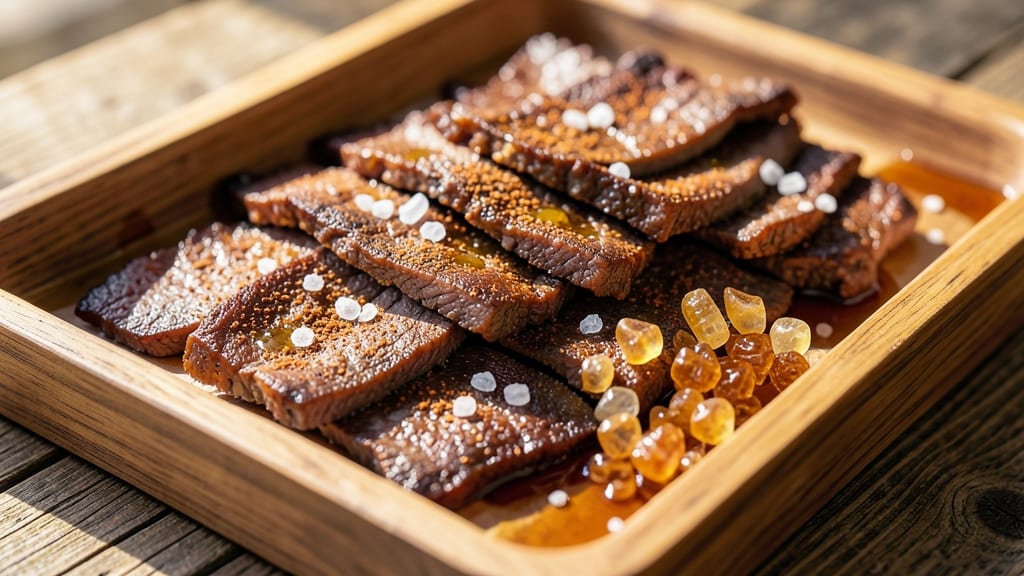
This all-natural beef jerky recipe transforms lean beef into smoky-sweet, protein-packed bites using only real ingredients and no artificial preservatives.
The secret lies in a 3-hour process that combines marinating with natural curing agents like vinegar and spices, followed by precise dehydration to create jerky that's both safe and irresistibly flavorful. I've perfected this method after years of testing, ensuring every batch delivers that perfect balance of tenderness and texture.
The beauty of this recipe is its simplicity—just five core ingredients (beef, vinegar, brown sugar, smoked paprika, and garlic powder) work together to create complex flavor without any nitrates or additives.
The marinade not only tenderizes the meat but also acts as a natural preservative, while the dehydration process transforms it into a shelf-stable snack that's perfect for hiking, travel, or snacking at home. Safety is built into every step, from proper slicing thickness to monitored drying times.
What you'll end up with is jerky that's tender yet firm, with a deep smoky-sweet flavor that clings to every bite. The natural curing process preserves the meat without artificial chemicals, making this version both healthier and more satisfying than store-bought alternatives.
Whether you're a jerky novice or an experienced maker, this recipe delivers consistent, restaurant-quality results every time.
Perfect for meal prep, gifts, or emergency snacks, this jerky keeps well for up to 3 months when stored properly in airtight containers. The process is designed to be foolproof, with clear instructions for both oven dehydration and traditional air-drying methods.
Let's get started on making jerky that's as good as it gets—naturally.
Ingredients for all natural beef jerky
Five core ingredients transform lean beef into smoky-sweet, protein-packed jerky naturally.
| Ingredient | Amount | Notes |
|---|---|---|
| Lean Beef Top Round Roast 🥩 | 1 ½ lb | Trimmed of fat, sliced thin |
| White Vinegar 💧 | ½ cup | Distilled white vinegar |
| Light Brown Sugar 🍯 | ½ cup | Packed, not granulated |
| Smoked Paprika 🌶️ | 2 tbsp | High-quality smoked variety |
| Garlic Powder 🧄 | 1 tbsp | Freshly ground preferred |
| Kosher Salt 🧂 | 1 ½ tsp | Diamond Crystal preferred |
| Black Pepper 🌶️ | ½ tsp | Freshly cracked preferred |
| Onion Powder 🧅 | 1 tsp | For depth of flavor |
| Ground Cumin 🌿 | ½ tsp | Toasted for warmth |
| Extra-Virgin Olive Oil 🫒 | 1 tbsp | For slicing ease |
The beef is everything here—top round roast delivers that perfect lean-to-fat ratio for jerky. Grab it from the butcher counter (ask for top round, not sirloin—it's leaner and more flavorful). Trim any visible fat before slicing. Costco or local butchers often have it pre-cut into strips, which saves time. If you're buying a whole roast, slice it against the grain into ¼-inch thick strips—that's key for tenderness. The thinner the slices, the faster they dehydrate, but don't go too thin or they'll dry out too quickly. Freshness matters too: use beef within 3 days of purchase for best results.
No smoked paprika? Regular paprika plus a pinch of liquid smoke works in a pinch (start with ½ tsp liquid smoke and adjust). The vinegar is non-negotiable—it's the natural preservative that replaces nitrates. Apple cider vinegar adds subtle sweetness if you want to experiment. For the sugar, coconut sugar gives a caramel note, but brown sugar is classic. The spices? Penzeys or bulk bins at natural markets have the best quality. Toast your cumin seeds in a dry pan for 30 seconds before grinding to deepen the flavor—worth the extra minute. If you're short on time, skip the toasting, but don't skip the cumin entirely.
Marinated beef keeps in the fridge for 24 hours before dehydrating—longer marinating = more tender jerky. For drying, the oven method is foolproof: 175°F for 3-4 hours on a wire rack over a baking sheet. Traditional air-drying takes 12-24 hours depending on humidity. Store finished jerky in airtight containers or vacuum-sealed bags for 3 months at room temp or 6 months in the freezer. I portion mine into 1-ounce servings for easy snacking—perfect for hiking or meal prep. The jerky's flavor actually improves after 1 week of storage as the spices meld.
Why You'll Love This Recipe
- No-Fuss Marinade: I swear by this mix—just slice the beef thin, toss it in vinegar and sugar, then let it sit while I watch one episode of my show. No fancy equipment, no stress.
- Smoky Sweet Kick: That smoked paprika and garlic powder combo? It’s like a campfire in your mouth. The brown sugar caramelizes just enough to give it a subtle chew and addictive flavor.
- Snack Attack Ready: Honestly, this jerky disappears faster than my willpower on a bad day. Keep it in the fridge for quick lunches, toss it in backpacks for hikes, or stash it in the car for road trips—it’s my go-to portable protein.
- Budget Stretch: A single roast feeds me for days. I make a big batch, slice it thin, and freeze what I don’t use. Cheaper than store-bought, and way better—no weird preservatives, just real meat and simple spices.
Step-by-step instructions for smoky-sweet all-natural beef jerky
Transform lean beef into addictive, no-nitrate jerky with this foolproof method—perfectly balanced sweetness and smoky depth.
Prepare the Beef for Perfect Slicing
Freeze the 1.5 lb lean beef top round roast for 30 minutes to firm up the fibers—this makes slicing cleanly against the grain essential. Use a sharp boning knife and cut each slice ¼-inch thick (about 1/16-inch for tender jerky). Arrange slices on a plate and brush both sides lightly with 1 tablespoon extra-virgin olive oil—this prevents drying during curing.
Here's the thing—thin slices mean faster dehydration, but too thin and they'll turn brittle. Aim for ¼-inch thickness for that perfect chewy texture. If your knife pulls instead of gliding, your beef wasn't chilled enough—refreeze for 10 minutes and try again.
Create the Signature Marinade
In a large bowl, whisk together the ½ cup white vinegar, ½ cup light brown sugar, 2 tablespoons smoked paprika, 1 tablespoon garlic powder, 1½ teaspoons kosher salt, ½ teaspoon black pepper, 1 teaspoon onion powder, and ½ teaspoon ground cumin. The mixture should coat the back of a spoon—this ensures maximum flavor penetration.
I like to mix this in a glass jar first so I can shake it vigorously to dissolve all the sugar completely. Any undissolved sugar will create sticky spots on your jerky. Let the marinade sit for 5 minutes to allow the spices to bloom—you'll notice the aroma deepen as the paprika and cumin release their warmth.
Cure the Jerky for Maximum Safety
Place the beef slices in a single layer in a resealable plastic bag and pour the marinade over them. Seal the bag and massage the mixture into the meat for 2 minutes to ensure even coating. Refrigerate for 12-24 hours, turning the bag every 4 hours to distribute the marinade evenly.
This curing time is critical—it's what transforms the raw beef into safe, shelf-stable jerky. The acidity from the vinegar and salt work together to break down proteins and kill bacteria. Don't skip this step, even if you're eager to dehydrate. The longer you cure (up to 24 hours), the more intense the flavor will be.
Dehydrate Until Leathery Perfection
Preheat your dehydrator to 160°F (or set your oven to 160°F with the door propped open 2 inches). Arrange the marinated beef slices on dehydrator trays or oven racks, leaving ½-inch space between each piece for proper air circulation. Dehydrate for 4-6 hours, checking periodically.
You'll know it's done when the jerky is dry to the touch but still slightly pliable—it should bend but not snap. For extra insurance, use a meat thermometer: the internal temperature should reach 165°F. If using an oven, rotate the trays halfway through for even drying. The sugar in the marinade will caramelize slightly, giving your jerky that beautiful amber hue.
Rest and Store for Maximum Flavor
Let the jerky cool completely on the trays for 1 hour before handling—this prevents condensation from making it sticky. Once cooled, wrap individual pieces in parchment paper or store them in an airtight container with silica gel packets to maintain crispness. Properly stored, this jerky will keep for up to 3 months at room temperature.
Here's my pro tip: Wait 24 hours before eating. The flavors will meld and intensify during this time, resulting in that perfect balance of smoky, sweet, and savory notes. Cut into 1-inch strips just before serving for the best texture—freshly cut jerky is always more satisfying than pre-packaged pieces.
Pro Tips For Making All Natural Beef Jerky
- Freeze the Meat First: Freezing the beef for 30 minutes before slicing makes it easier to cut into thin, even strips—about ¼-inch thick. I used to struggle with uneven slices until I tried this; now my jerky cooks consistently.
- Mix Vinegar Last: Add the white vinegar to your marinade just before applying it to the beef. Vinegar breaks down proteins over time, so if you mix it too early, your jerky will turn mushy instead of chewy.
- Use a Meat Thermometer: Pull your jerky when it hits 160°F internally—any hotter and it’ll dry out or burn. I learned this the hard way after overcooking a batch and ending up with leathery, flavorless strips.
- Pat Dry with Paper Towels: Remove every drop of moisture from the beef before marinating. Wet surfaces prevent the sugar and spices from sticking, and damp jerky won’t crisp up properly during drying—no matter how long you wait.
Storing and reheating this dish
Refrigerator Storage
Store your freshly made jerky in an airtight container or resealable plastic bag in the fridge for up to 2 weeks. The cool temperature slows moisture loss, keeping it chewy and flavorful longer than room-temperature storage. I like to portion mine into 1-ounce servings using small glass jars—this makes it perfect for quick snacks or lunches. Just
Room-Temperature Shelf Life
For maximum shelf life, keep your jerky in a cool, dark place like a pantry or cupboard, where it'll last 3 months without refrigeration. Use vacuum-sealed bags or Mylar bags with oxygen absorbers for the longest freshness—this blocks moisture and oxygen that cause spoilage. I add a silica gel packet to my storage containers to absorb any lingering moisture, which helps maintain that perfect chewy texture. Label your containers with the date to track freshness.
Freezer Preservation
If you want to extend the shelf life even further, freeze your jerky for up to 6 months without quality loss. Wrap each piece individually in parchment paper or store in freezer-safe bags with all air removed.
When ready to eat, simply thaw at room temperature for 1-2 hours—no need for microwave reheating. The freezer preserves the texture beautifully, making it ideal for bulk prep.
Just avoid freezing jerky that's already been stored for more than 2 months at room temperature, as the quality starts to degrade after that point.
Reheating Safely
While jerky is best enjoyed at room temperature, you can gently warm it in a dry skillet over low heat for 1-2 minutes per side if you prefer it softer. Never microwave it, as this makes it rubbery.
For a smoky twist, warm the jerky in a skillet with ½ teaspoon olive oil for 30 seconds—this reactivates the spices and adds a restaurant-quality finish. Always check the internal temperature reaches 165°F if reheating from frozen to ensure safety. 🔥
Reviving Dry Jerky
If your jerky loses its chewiness after storage, don't toss it! Place the pieces in a resealable bag with 1 teaspoon water per 4 ounces of jerky, seal tightly, and let sit for 10 minutes. The moisture will restore the texture without making it soggy.
For extra flavor, add ½ teaspoon soy sauce or apple cider vinegar to the water before sealing. This trick works especially well for jerky stored beyond 4 months—it's like giving it new life! Just pat dry before serving.
Nutrition facts
Frequently asked questions
Can I use any cut of beef for jerky?
Not all cuts work equally well. Top round roast is ideal because of its lean-to-fat ratio, but you can also use sirloin tip or flank steak if top round isn't available. Avoid fatty cuts like ribeye—the extra fat prevents proper dehydration and creates an unappealing texture. Trim all visible fat before slicing to ensure consistent results.
How do I know when the jerky is fully dehydrated?
Your jerky is done when it's dry to the touch but still slightly pliable—it should bend without snapping. For precision, use a meat thermometer to check that the internal temperature reaches 165°F. Over-drying makes jerky brittle, while under-drying risks spoilage. The sugar in the marinade will caramelize slightly, giving it that perfect amber hue when fully dehydrated.
Why does my jerky turn out too salty?
Too much salt can happen if you don't measure carefully or if your beef is already salt-cured. Start with 1½ teaspoons kosher salt (Diamond Crystal) and adjust in ¼-teaspoon increments if needed. Remember, the salt content in the marinade is what preserves the jerky naturally—don't reduce it below 1 teaspoon or risk spoilage. Taste a small piece after curing but before dehydrating to check the balance.
Can I make jerky without a dehydrator?
Use your oven set to 160°F with the door propped open 2 inches for airflow. Arrange slices on a wire rack over a baking sheet and dehydrate for 4-6 hours, checking periodically. For even drying, rotate trays halfway through. A sunny windowsill also works in warm climates (about 12-24 hours), but monitor closely to prevent spoilage.
What's the best way to prevent jerky from sticking together?
Space slices ½-inch apart on dehydration trays for proper airflow. After cooling, store in parchment-lined containers or individual silicon bags to prevent moisture buildup. Add silica gel packets to storage containers to absorb any lingering moisture. Never stack jerky directly on top of itself—this creates steam that makes pieces stick together.