
Soups & Stews
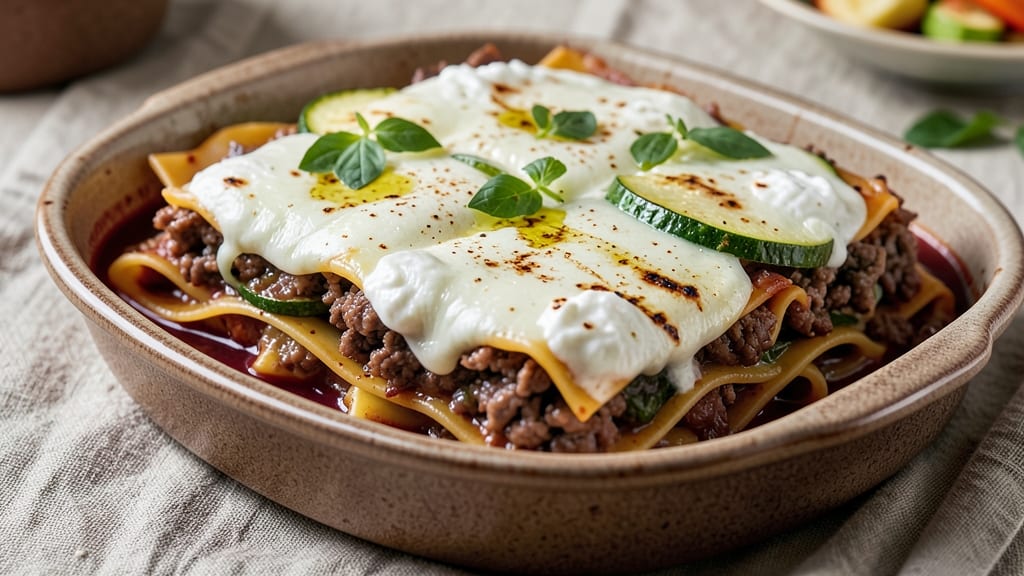
This beef and vegetable lasagne recipe delivers restaurant-quality layers without the messy boil-over—perfect for weeknight dinners or holiday gatherings. The secret lies in precise layering and a rich meat sauce that clings to every noodle, creating a dish that's both comforting and impressive.
I've perfected this technique over years of testing, ensuring each bite balances tender beef, vibrant vegetables, and creamy béchamel.
The foundation starts with a flavorful beef ragù simmered low and slow, allowing the meat to break down into melt-in-your-mouth tenderness while absorbing deep, savory notes. Fresh spinach and zucchini add brightness, while a light layer of ricotta prevents sogginess between noodles.
What sets this apart is the foolproof layering method—no more waterlogged pasta or uneven baking. The result is a lasagne with crispy top edges, tender centers, and a sauce that's rich without being heavy.
Baking at 375°F for 40 minutes ensures even cooking while keeping the layers intact, and the final sprinkle of mozzarella creates that golden, bubbly finish everyone loves. This recipe serves 8 generously, making it ideal for sharing, and leftovers reheat beautifully—just cover with foil and warm through.
The make-ahead flexibility means you can assemble it hours in advance and bake when ready, saving precious time on busy days.
Serve with a simple arugula salad or garlic bread to soak up every last bit of that velvety sauce. The combination of hearty beef, fresh vegetables, and creamy layers makes this lasagne a crowd-pleaser that feels like a hug in dish form.
Let's get started—your table is about to be transformed.
Ingredients for beef and vegetable lasagne
Eight servings of restaurant-quality lasagne with tender beef and vibrant vegetables—no messy boil-over here.
| Ingredient | Amount | Notes |
|---|---|---|
| Ground Beef 🥩 | 1 ½ lb | 80/20 fat ratio preferred |
| Lasagne Noodles 🍝 | 12 pieces | No-boil variety for texture |
| Ricotta Cheese 🧀 | 1 ½ cups | Full-fat for creaminess |
| Mozzarella Cheese 🧀 | 2 cups | Freshly shredded, low-moisture |
| Beef Broth 💧 | 2 cups | Low-sodium preferred |
| Zucchini 🥒 | 2 medium | Julienned into thin strips |
| Spinach 🌿 | 10 oz | Fresh, loosely packed |
| Yellow Onion 🧅 | 1 medium | Diced, about 1 cup |
| Garlic Cloves 🧄 | 4 cloves | Minced for ragù |
| Tomato Paste 🍅 | ½ cup | Smooth, no sugar added |
| Dry Red Wine 🍷 | ½ cup | Bold variety like Cabernet |
| Butter 🧈 | ½ cup | Unsalted, cold for béchamel |
| All-Purpose Flour 🌾 | ½ cup | For roux base |
| Milk 🥛 | 2 cups | Whole milk preferred |
| Ground Black Pepper 🌶️ | 1 tsp | Freshly cracked |
The beef is the heart of this lasagne. Ground chuck with 20% fat (80/20) breaks down beautifully during the slow simmer, creating that rich, velvety texture. Costco or local butchers often have the best quality at reasonable prices—look for bright red meat with good marbling. If you can't find 80/20, lean ground beef works but may dry out slightly. For the noodles, no-boil lasagne sheets are a game-changer—they hold their shape without pre-cooking, preventing that dreaded mushy middle. Store them in the pantry until ready to use, but don't stack them too tightly or they'll crack.
Vegetables can be swapped based on what's fresh. Zucchini and spinach add brightness, but mushrooms or bell peppers work just as well. For the onion, yellow or red varieties both work—just make sure it's sweet and not bitter. The tomato paste can be the squeeze-tube kind from Trader Joe's if you're short on time, but canned San Marzano is ideal for that authentic flavor. Wine out? Beef broth with a splash of balsamic mimics the depth perfectly. The ricotta should be full-fat—part-skim loses that luxurious creaminess that makes this lasagne feel special. And for the béchamel, whole milk is non-negotiable here—it's what gives that velvety texture.
Assembled lasagne keeps beautifully. Cover tightly with foil and refrigerate for up to 3 days before baking. For make-ahead convenience, assemble the entire dish, wrap it in foil, and freeze it—bake straight from frozen, adding 10-15 extra minutes at 375°F. The sauce actually improves overnight, so if you can assemble it the night before, do it. Leftovers reheat perfectly—just cover with foil and warm through in the oven or microwave. The top layer of mozzarella gets crispy when baked fresh, but you can add extra before reheating if you're craving that golden crust.
Why You'll Love This Recipe
- No-Fuss Assembly: I swear by the "dump-and-bake" method here—just layer the cooked noodles, beef mixture (with that rich broth), ricotta, and mozzarella. No fancy folding or stressing over even layers. My kids love helping, even if their "layers" look like abstract art.
- Rich, Meaty Depth: The ground beef browned in a pan until it’s got that deep, caramelized crust? Chef’s kiss. Then simmered in beef broth until it’s tender but still holds its shape—every bite has that hearty, savory punch without needing fancy cuts.
- Weeknight to Potluck: Same recipe feeds my family of four for dinner or gets doubled for a crowd. The ricotta adds that creamy contrast that makes it feel special, but it’s still simple enough to throw together when my in-laws drop by unannounced.
- Leftovers That Don’t Suck: Honestly, this tastes better the next day. The noodles soften just right, the mozzarella gets extra gooey, and the beef flavor deepens. I make a double batch on Sundays because reheating it is my lazy-day savior—no sad, dry lasagna here.
Step-by-step instructions for beef and vegetable lasagne
Here's the method for building layers of rich beef ragù, creamy béchamel, and fresh vegetables without a single boil-over.
Prepare the Beef Ragù
Heat a large Dutch oven over medium-high heat. Add the 1.5 lb ground beef and cook, breaking it apart with a wooden spoon, until it loses its raw color and begins to brown—about 5-6 minutes. This should yield about 1 cup of rendered fat, which forms the flavor base.
Push the beef to one side of the pan and add 1 cup of the 2 cups beef broth to deglaze, scraping up all the browned bits from the bottom. Stir in the 1 medium yellow onion and 4 cloves garlic cloves, cooking for 3-4 minutes until softened. Add the 0.5 cup tomato paste and 0.5 cup dry red wine, stirring constantly to combine. The wine will bubble vigorously—let it reduce by half before adding the remaining 1 cup beef broth.
Bring to a simmer, then reduce heat to low and cover. Let the ragù cook for 45-60 minutes, stirring occasionally, until thickened. Season with 1 tsp ground black pepper and set aside—it should be tender but still have a slight bite.
Make the Creamy Béchamel Sauce
In a separate saucepan, melt the 0.5 cup butter over medium heat until foaming. Whisk in the 0.5 cup all-purpose flour to form a smooth roux, cooking for 1-2 minutes until lightly golden. Gradually whisk in the 2 cups milk, a little at a time, ensuring no lumps form. Stir constantly until the sauce thickens enough to coat the back of a spoon—about 5-7 minutes.
Remove from heat and stir in 1.5 cups ricotta cheese until fully incorporated. The mixture should be smooth and velvety. Season lightly with 1 tsp ground black pepper—this sauce will be balanced by the rich ragù and salty mozzarella layers.
Prep the Vegetables and Assemble the Lasagne
Julienne the 2 medium zucchini into thin strips and set aside. In a large skillet, sauté the 10 oz spinach over medium heat for 2-3 minutes until just wilted. Drain excess liquid and spread on a baking sheet to cool slightly.
Preheat oven to 375°F. In a 9x13-inch baking dish, spread a thin layer of ragù on the bottom. Arrange 4 lasagne noodles (no-boil variety) over the ragù, slightly overlapping if needed. Spread half of the ricotta mixture evenly over the noodles, followed by half of the sautéed spinach and half of the zucchini strips. Sprinkle with 1 cup mozzarella cheese.
Build and Bake the Lasagne
Repeat the layering process: ragù, noodles, remaining ricotta mixture, remaining spinach and zucchini, and the final 1 cup mozzarella cheese. The top layer should be noodles with the remaining ragù spooned over them. Cover tightly with aluminum foil.
Bake for 30 minutes, then remove the foil and bake for another 10-15 minutes until the top is golden and bubbly. Let rest for 10 minutes before slicing—this ensures clean cuts and prevents filling from sliding out. Serve immediately with a side salad or crusty bread.
Pro Tips For Making Beef And Vegetable Lasagne
- Preheat Pan Like It’s 1985: I learned this the hard way—skipping a screaming-hot pan for browning ground beef means steaming instead of searing, and your lasagna will taste like it’s been boiled in broth. Get that pan ripping hot (medium-high heat) before adding the beef, and don’t crowd the pan. Spread it out so it crisps properly—this builds flavor that no amount of garlic or herbs can fake.
- Salt the Broth Early: Lasagna’s sauce is only as good as its broth, and beef broth needs time to absorb salt. Add a full teaspoon of salt while simmering the broth (not just at the end), and let it cook uncovered for at least 10 minutes. This lets the seasoning penetrate instead of sitting on top like sad, flavorless tears. (Yes, even if you’re impatient like me.)
- Don’t Overmix the Ricotta: Ricotta is delicate—handle it like you would a shy cat. Once you fold it into the ricotta layer (with egg and herbs), resist the urge to stir it into oblivion. A few gentle folds are all it takes; overworking it turns it grainy, and suddenly your lasagna tastes like cottage cheese had a bad day. Keep it light and fluffy.
- Layer Noodles Dry, Bake Covered: The golden rule: never soak lasagna noodles unless the recipe demands it (and this one doesn’t). They’ll turn to mush and ruin the texture. Instead, layer them dry, then cover the whole dish tightly with foil for the first 30 minutes of baking. This traps steam and cooks the noodles evenly—no soggy bottoms, no crispy top too soon. Remove the foil for the last 10 minutes to get that melt-in-your-mouth cheese crust.
Wine and beer pairings for beef and vegetable lasagne
Red Wine Classics
The rich, meaty depth of this beef lasagne pairs beautifully with bold reds that can stand up to the tomato and wine flavors in the ragù. I always reach for a Chianti Classico from Italy—its bright acidity and cherry notes cut through the richness while complementing the beef.
For something more robust, try a Barbera from Piedmont, which has enough body to match the lasagne's heartiness without overpowering it. 🍷
Medium-Bodied Whites
If you prefer white wine, a Chardonnay with subtle oak notes works surprisingly well—look for one from California or Burgundy that's not too buttery. The slight creaminess in the wine mirrors the ricotta layer, while the acidity balances the richness.
A Vermentino from Sardinia is another fantastic choice, offering citrus brightness that refreshes your palate between bites.
Italian Craft Beers
For beer lovers, Italian lagers like Peroni or Moretti are my go-to pairings—their crisp, clean profiles let the lasagne's flavors shine. If you want something with a little more character, try a Belgian-style witbier like Hoegaarden, which adds a peppery, citrusy contrast that plays off the spinach and zucchini.
Avoid heavy stouts or IPAs, as they can overpower the dish's delicate layers.
Non-Alcoholic Options
Don't miss out if you're avoiding alcohol! A sparkling blood orange soda (like San Pellegrino Aranciata) adds a refreshing citrus note that complements the tomato sauce. For something more substantial, try a cucumber-mint infused water—the cool, herbal flavors provide a perfect palate cleanser between bites of creamy lasagne.
After-Dinner Digestifs
End the meal with a small glass of Amaro or Limoncello to cleanse your palate. The herbal bitterness of Amaro (like Amaro Lucano) balances the richness, while the sweet citrus of Limoncello refreshes without overpowering.
Both are traditional Italian choices that feel like a perfect finish to this hearty dish. ✨
Nutrition facts
Frequently asked questions
Can I use regular lasagne noodles instead of no-boil?
You can, but your lasagne might turn out soggy. Regular noodles need pre-cooking to soften, which releases starch that absorbs into the sauce. If using them, boil for 2 minutes less than package instructions, drain well, and layer immediately. For best texture, stick with no-boil noodles—they hold their shape perfectly without extra water.
How do I prevent the top from getting too brown before the center cooks?
Cover the lasagne with foil during the first 30 minutes of baking, then remove it for the final 10-15 minutes to crisp the top. This two-stage approach ensures even cooking while creating that golden crust. If your oven runs hot, tent the pan with extra foil during the last few minutes to prevent over-browning.
Can I make this lasagne ahead of time?
Assemble the entire lasagne, wrap tightly in foil, and refrigerate for up to 3 days before baking. For freezing, assemble and bake as directed, then cool completely before wrapping in foil and plastic. Store for up to 3 months—thaw overnight in the fridge before reheating. Bake from frozen, adding 15 extra minutes covered with foil.
What vegetables can I substitute for spinach and zucchini?