
Main Courses
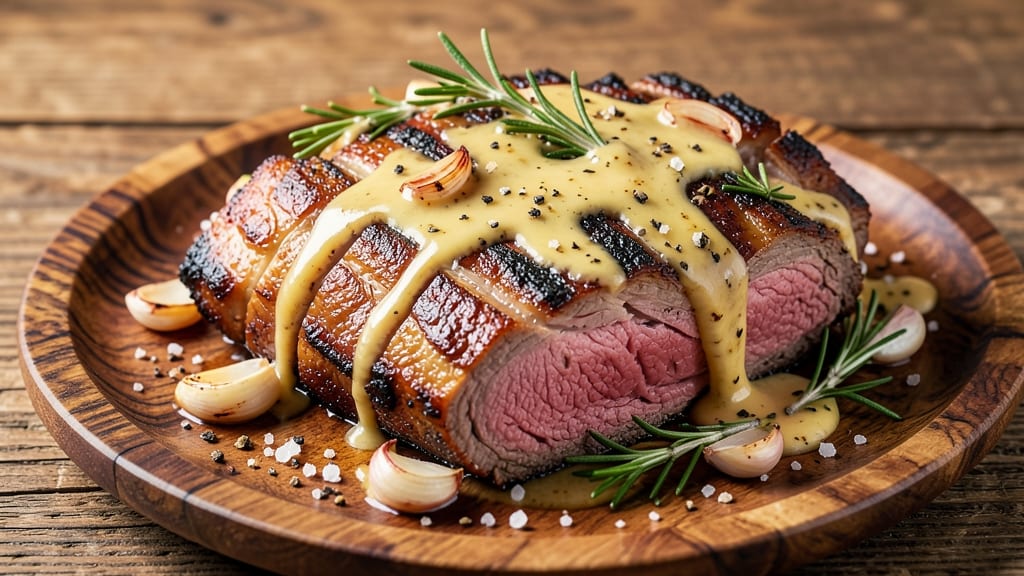
This Angus beef prime rib roast recipe delivers melt-in-your-mouth tenderness with a perfectly seared crust—exactly what makes holiday dinners unforgettable. 🔥 The secret lies in reverse-searing: slow-roasting first for even doneness, then finishing with a high-heat sear to lock in juices and create that coveted caramelized exterior.
I’ve perfected this method over years of hosting dinners where the prime rib always disappears first, leaving guests begging for seconds.
The beauty of this recipe is its simplicity paired with restaurant-quality results. With just a few high-quality ingredients—Angus beef, coarse salt, black pepper, and butter—you’ll achieve a roast that’s juicy at the core and richly flavorful throughout.
The reverse-searing technique ensures no part of the roast is overcooked, while the final butter baste adds a luxurious sheen and depth of flavor that elevates this cut from impressive to showstopping.
What you’ll end up with is a prime rib that’s tender enough to slice with a fork, with a crust so crisp it practically shatters, and a rich, buttery aroma that fills your kitchen long before it’s ready to serve.
The key to success is patience—letting the roast rest after cooking ensures every slice stays juicy, while the high-heat sear delivers that perfect crust. This isn’t just a recipe; it’s a centerpiece for any celebration.
Pair it with classic sides like roasted garlic mashed potatoes or a vibrant red wine reduction for dipping, and you’ve got a meal that feels like a five-star restaurant experience. Ready to master the art of prime rib? Let’s get started with the foolproof steps that guarantee success every time.
Ingredients for angus beef prime rib roast
Six high-quality ingredients transform into a showstopping prime rib with restaurant-worthy crust and juicy centers.
| Ingredient | Amount | Notes |
|---|---|---|
| Angus Beef Prime Rib Roast 🥩 | 4 lb | Bone-in, 1.5-inch thick cross-section |
| Kosher Salt 🧂 | 1 ½ tbsp | Diamond Crystal preferred for texture |
| Freshly Ground Black Pepper 🌶️ | 1 ½ tsp | Coarse grind for even coverage |
| Unsalted Butter 🧈 | ½ cup | Cold, cubed for basting |
| Garlic Cloves 🧄 | 6 cloves | Smashed for aromatic infusion |
| Fresh Rosemary 🌿 | ¼ cup | Finely chopped, organic preferred |
| Fresh Thyme 🌿 | ¼ cup | Leaves only, stems removed |
| Red Wine 🍷 | ½ cup | Bold Cabernet Sauvignon preferred |
| Beef Bone Broth 🥄 | 1 cup | Homemade or high-quality store-bought |
| Olive Oil 🫒 | 2 tbsp | Extra-virgin for high-heat searing |
| Balsamic Vinegar 🍶 | 1 tbsp | For finishing drizzle |
The Angus beef prime rib is non-negotiable for this recipe—look for cuts with visible marbling and a deep red color, not grayish hues. Costco or high-end butcher shops are your best bets for premium quality, though well-stocked grocery stores like Whole Foods carry excellent options. A 4-pound bone-in roast (1.5-inch thick) ensures perfect doneness without drying out. If possible, ask your butcher to trim excess fat—you want flavor, not grease. The rosemary and thyme should be fresh (no dried substitutes here), with vibrant green leaves that smell intensely aromatic when crushed. For the red wine, any bold Cabernet Sauvignon will work—whatever you'd drink with the dish. Beef bone broth adds depth; Kettle & Fire or Imagine brands are reliable shortcuts if homemade isn't an option.
No Angus beef? High-end ribeye or strip steak (4-5 lb) works in a pinch, though texture won't be identical. Diamond Crystal kosher salt is ideal—it's coarser and clings better, but Morton works fine if that's what you have. The butter must be unsalted and cold when cubed—Plugrá or Land O'Lakes are consistent choices. Running short on rosemary? Fresh sage (1:1 ratio) adds a similar earthy note. The balsamic vinegar can be swapped for aged balsamic glaze if you prefer a sweeter finish. For the bone broth, vegetable broth in a bind, though flavor will differ slightly. Prefer less wine? Substitute with extra beef broth—just reduce by half first to concentrate flavors.
The prime rib should rest at room temperature for 1 hour before cooking—this ensures even doneness. Store uncooked meat in its original packaging on the bottom shelf of your fridge (coldest spot) and use within 5 days. Fresh herbs last 5-7 days wrapped in damp paper towels in a sealed container. Butter cubes freeze beautifully for up to 6 months—portion into ice cube trays for easy basting. Cooked prime rib reheats poorly, so portion and serve immediately. Leftovers (if any) keep for 3-4 days in the fridge, but freeze sliced portions for up to 3 months—separate slices with parchment to prevent sticking. The red wine reduction can be made ahead and reheated gently with a splash of broth.
Why You'll Love This Recipe
- I’ll be real: this isn’t just for holidays. A smaller cut roasted to medium-rare on a random Thursday night feels like a treat without the stress. The garlic butter crust? That’s the secret weapon that makes it feel special, even when it’s just us at home.
- Four-Hinger Feast: The moment you slice into that rosy center—juicy, tender, practically melting—you’ll understand why this is my go-to for celebrations. That rich, beefy flavor from the prime rib, paired with just a whisper of garlic and butter, feels like a hug on a plate.
- One-Pan Magic: Honestly, this recipe is that easy. You season the roast, slap on a few garlic cloves, baste with butter, and let the oven do the work. No chopping, no fussing—just 20 minutes of hands-off perfection while you sip wine or scroll through your phone.
- Leftover Luxury: Between us, the best part might be the leftovers. Thinly sliced prime rib turns into ridiculously good sandwiches or wraps the next day—no one will guess it’s not "fresh." I’ve fed my whole family for days with just one roast, and they keep asking for seconds.
Step-by-step instructions for reverse-seared prime rib roast
Master this technique and you'll achieve a perfect crust with melt-in-your-mouth tenderness every time.
👨🍳 Step 1: Prep and Season the Roast for Even Cooking
Remove the 4 lb Angus Beef Prime Rib Roast from the refrigerator 1 hour before cooking to bring it to room temperature. Pat it completely dry with paper towels—this is critical for achieving that perfect crust. I like to use two layers of paper towels and really press down firmly to remove all moisture.
In a small bowl, combine the 1.5 tbsp Kosher Salt and 1.5 tsp Freshly Ground Black Pepper. Generously coat all sides of the roast with this mixture, pressing it into the meat so it adheres well. For extra flavor penetration, I also make small slashes in the fat cap (about ¼-inch deep) and rub the seasoning into these cuts. Let the seasoned roast rest uncovered on a wire rack set over a baking sheet for 30 minutes at room temperature.
🔥 Step 2: Low-Temperature Roast to Perfect Doneness
Preheat your oven to 250°F. Place the seasoned roast fat-side up on a wire rack set inside a roasting pan. This allows hot air to circulate around all sides, ensuring even cooking. Roast for 2-2.5 hours, or until the internal temperature reaches 115°F on a meat thermometer inserted into the thickest part of the roast (not touching bone).
Here's the thing—this low-and-slow approach builds incredible flavor and tenderness. I check the temperature every 30 minutes after the first hour to ensure it doesn't overcook. The roast should feel very tender when you press it gently with tongs, but still have a slight resistance. This is the perfect stage for the reverse sear.
🍳 Step 3: Create the Herb Butter Basting Mixture
While the roast cooks, prepare the herb butter. In a small saucepan, melt the 0.5 cup Unsalted Butter over low heat. Add the 6 smashed garlic cloves, 0.25 cup Fresh Rosemary, and 0.25 cup Fresh Thyme. Cook for 2-3 minutes until the garlic is fragrant but not browned. Remove from heat and set aside.
In a separate small bowl, mix the 0.5 cup Red Wine and 1 cup Beef Bone Broth. This mixture will be used for basting during the searing process to add moisture and depth of flavor. Keep both mixtures warm until ready to use.
🔥 Step 4: Reverse Sear for Crispy Perfection
Heat a large oven-safe skillet over high heat until it's very hot. Add 2 tbsp Olive Oil and let it shimmer for 1 minute. Carefully transfer the roast to the skillet, fat-side down. Sear for 4-5 minutes until the fat is golden brown and crispy, and the bottom develops a deep mahogany crust.
Using tongs, flip the roast and baste with the herb butter mixture, letting it sizzle for 1 minute. Then baste with the wine-broth mixture, scraping up any browned bits from the pan. Transfer the skillet to a 425°F preheated oven and roast for 10-12 minutes, basting with remaining butter and wine mixture every 3 minutes, until the internal temperature reaches 125°F.
⏰ Step 5: Rest and Finish with Balsamic Glaze
Remove the roast from the oven and transfer it to a cutting board. Tent loosely with aluminum foil and let it rest for 15-20 minutes. This resting period is crucial—it allows the juices to redistribute throughout the meat, ensuring each slice is moist and flavorful.
While the roast rests, heat the 1 tbsp Balsamic Vinegar in a small saucepan over medium heat until it reduces by half and becomes syrupy. Carefully drizzle this glaze over the top of the roast just before serving. The contrast of the sweet, tangy glaze with the rich, savory meat is what makes this dish truly exceptional.
Pro Tips For Making Angus Beef Prime Rib Roast
- CRANK THE HEAT FIRST: High heat for the first 10 minutes—seriously, crank your oven to 450°F (230°C) before adding the rib roast. This sears the surface and locks in juices before you drop the temp for low-and-slow cooking. I used to skip this, and the crust always ended up pale and sad.
- SALT THE GARLIC BUTTER: Crush those garlic cloves first, then mix them into softened butter with a generous pinch of kosher salt. The salt dissolves into the butter while it melts, making every bite brighter. (Yes, even if your recipe doesn’t mention it—trust me.)
- DON’T CUT THE FAT CAP: Leave that thick layer of fat on top of the roast intact—it’s your insurance for a juicy, flavorful crust. After roasting, just slice it off before serving. I learned this the hard way when I trimmed it early and ended up with dry edges.
- REST IT UNDER FOIL: After pulling the roast from the oven, tent it loosely with foil and let it rest for 15 minutes. This keeps it warm while the juices redistribute—no one wants to slice into a bloodbath. (And yes, even if you’re impatient like me.)
Common mistakes when making perfect results
Overcooking the Roast
I’ve seen this happen more times than I can count—especially when guests are eagerly waiting. The biggest mistake is letting the prime rib cook past 125°F internal temperature. Once it hits that mark, the meat becomes dangerously close to dryness.
Always use a meat thermometer (I swear by the ThermoWorks Smoke model) and remove it from heat when it reaches 120-125°F. The reverse sear will bring it to perfect medium-rare doneness. 🌡️
Skipping the Resting Phase
This is a rookie mistake that ruins all the hard work. When you slice into a prime rib that hasn’t rested, all the juices rush out, leaving you with dry, tough meat. The 15-20 minute rest is non-negotiable—it lets the muscle fibers relax and redistribute those precious juices.
I’ve learned this the hard way: cutting into a roast too soon means wasted effort and disappointed guests.
Uneven Seasoning Application
Don’t just sprinkle salt and pepper on top—this leads to flavorless spots. Press the seasoning into the meat, especially in the fat cap where flavor needs to penetrate. I like to make tiny slashes in the fat (about ¼-inch deep) and rub seasoning into them.
This ensures every bite has that perfect balance of saltiness and herbal notes. Skipping this step means missing out on maximum flavor impact.
Using the Wrong Cut
Not all beef roasts are created equal. For this recipe, you must use a bone-in prime rib roast with good marbling. A leaner cut like top round or sirloin won’t deliver the same tenderness or flavor.
I recommend buying from a trusted butcher or high-end grocery store where you can verify the quality. The Angus beef label is crucial—it guarantees the right fat-to-lean ratio for perfect results.
Ignoring the Fat Cap
The fat cap isn’t just for looks—it’s what creates that incredible crust and keeps the meat moist during cooking. Never trim it completely off! Leave about ¼-inch of fat to render and crisp during the reverse sear.
This fat also adds flavor as it melts into the meat. I’ve seen home cooks trim too aggressively, leading to dry, flavorless results. Trust the fat—it’s your friend in this recipe.
Rushing the Low-Temp Roast
Patience is key with the 250°F low-temperature roast. Trying to speed this up by increasing the heat will result in an unevenly cooked roast with a tough exterior. The slow cook ensures even doneness throughout.
I check the temperature every 30 minutes after the first hour to make sure it’s progressing steadily. Rushing this step is how you end up with a roast that’s overcooked on the outside and undercooked inside.
Nutrition facts
Frequently asked questions
How do I know when the prime rib is done?
Use a meat thermometer for precision—remove the roast when it reaches 120-125°F internal temperature. The reverse sear will bring it to perfect medium-rare (about 130°F when sliced). Never rely on time alone, as oven temperatures vary.
Can I cook this in a regular oven without a skillet?
Yes, but you'll need to adapt. Roast at 250°F until 115°F internal, then transfer to a broiler pan for 5-7 minutes at high heat to create the crust. Baste with butter and wine during the broil. The sear won't be as crispy as a skillet, but it'll still be delicious.
What's the best way to slice prime rib?
Slice against the grain at a ¼-inch thickness for maximum tenderness. Use a sharp carving knife and cut through bone if present. For presentation, fan the slices slightly. Never force the knife—let the meat guide you. A 15-20 minute rest before slicing is crucial for clean cuts.
How far ahead can I prep the herb butter?
Prepare it up to 24 hours ahead and store in the fridge. Reheat gently before basting—just warm until melted (2 minutes in microwave or 3 minutes in saucepan). Cold butter won't crisp properly during searing. For extra flavor, add a pinch of salt to the reheated butter.
What sides pair best with this prime rib?
Classic choices include creamy garlic mashed potatoes, roasted root vegetables, or a fresh arugula salad with lemon vinaigrette. For a showstopping presentation, serve with a red wine reduction for dipping. The rich beef needs bright, acidic, or starchy contrasts to balance its intensity.