
Soups & Stews
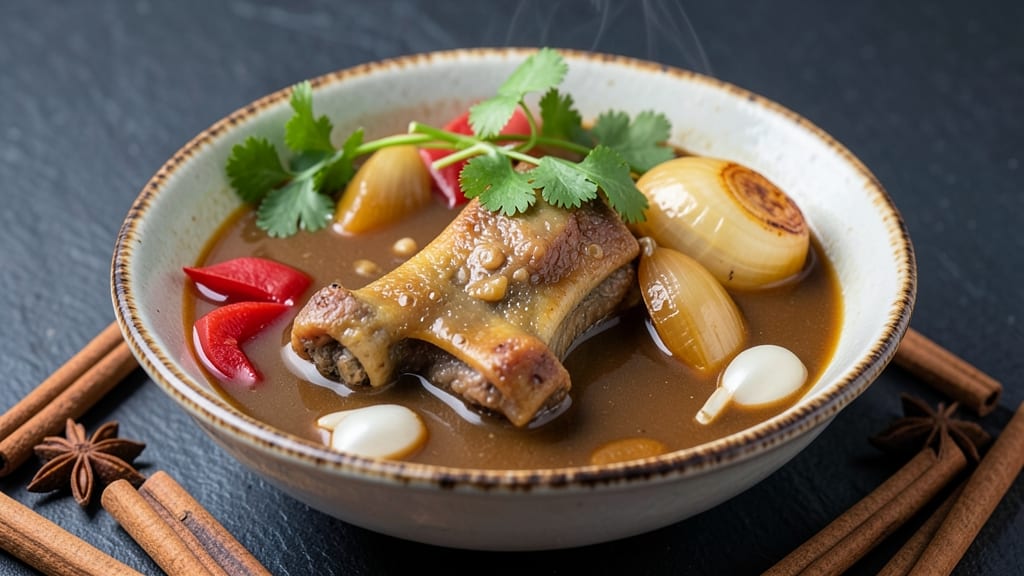
This Asian beef bone broth recipe transforms tough bones into a deeply flavorful, aromatic simmer that forms the heart of Korean galbi tang, Chinese beef bone soup, and Japanese nikujaga—each with its own cultural twist.
The secret lies in slow-cooking bones with aromatic spices like star anise, cinnamon, and ginger, which infuse the broth with layers of warmth and umami.
Unlike Western broths, this version builds complexity through fermented pastes and soy, creating a rich, velvety liquid that’s far more than just a base—it’s a dish in itself.
The process begins with roasting bones to deepen their flavor, then simmering them for hours with ginger, garlic, and Asian spices until the collagen dissolves into a glossy, golden broth that clings to every spoonful. Skimming fat and adjusting seasoning at the end ensures a clean, balanced result.
This isn’t just broth; it’s a restaurant-quality simmer that pairs perfectly with rice, noodles, or stir-fried greens, turning a simple meal into something extraordinary.
What sets this recipe apart is its versatility—adjust the spices for Korean heat, Chinese depth, or Japanese subtlety, and you’ve got a broth that adapts to any Asian-inspired dish.
The slow simmer extracts maximum flavor, while the aromatic spices create a fragrant, inviting aroma that fills your kitchen long before the broth is ready. Whether you’re prepping for a family dinner or meal prepping for the week, this broth delivers restaurant-quality depth at home.
Ready in 6-8 hours (or less with a pressure cooker), this broth is worth the wait. The key is patience—letting the bones release their collagen gradually for a silky, umami-rich liquid that’s impossible to resist.
Serve it as a standalone soup, use it as a base for stir-fries, or drizzle it over noodles for an instant upgrade. Here’s how to make it.
Ingredients for asian beef bone broth
Six pounds of bones and twelve cups of water start this umami journey.
| Ingredient | Amount | Notes |
|---|---|---|
| Beef Bones 🦴 | 3 lb | Marrow and knuckle bones preferred |
| Yellow Onion 🧅 | 1 whole | Quartered, skin on for color |
| Fresh Ginger Root 🌿 | ½ cup | Peeled, roughly chopped (2-3 inches) |
| Garlic Cloves 🧄 | 8 cloves | Smash lightly for deeper flavor |
| Star Anise Pods 🌶️ | 4 whole | Whole pods for easy removal |
| Cinnamon Sticks 🌿 | 2 whole | 2-inch pieces for aroma |
| Dried Shiitake Mushrooms 🍄 | 4 whole | Stems removed, torn |
| Asian Fish Sauce 🍶 | 2 tbsp | Red Boat preferred for quality |
| Soy Sauce 🥫 | 2 tbsp | Dark soy for deeper color |
| Sesame Oil 🫒 | 1 tbsp | Toasted for nutty aroma |
| Salt 🧂 | 1 ½ tsp | Kosher salt for seasoning |
| Black Peppercorns 🌶️ | 1 tsp | Crushed for peppery bite |
| Water 💧 | 12 cups | Filtered preferred for clarity |
The bones are everything—marrow and knuckle bones release the most collagen for that signature silky texture. Costco or your local butcher usually have them, often labeled as 'beef soup bones.' Look for bones with good marrow content—they'll have a slightly spongy look at the ends. If you can't find marrow bones, chuck roast bones work too, though they won't be quite as rich. The ginger? Fresh is non-negotiable—dried just won't give that bright, zesty punch. Buy a big knob, peel it, and chop roughly. The shiitake mushrooms? Dried is best—they're packed with umami and rehydrate beautifully during simmering.
No star anise? Anise seeds work at double the amount, but the flavor won't be identical. Short on soy sauce? Coconut aminos at half the quantity gives a similar salty depth. The fish sauce is crucial—Red Boat or Three Crabs are the gold standards, but any quality brand will do. If you're avoiding fish sauce, mushroom soy sauce (like Lee Kum Kee) is a great substitute. The sesame oil goes in at the very end—don't add it to the simmer, or it'll burn and turn bitter. Toast it first in a dry pan for 30 seconds to deepen its nutty aroma. For the garlic, smashing the cloves releases more flavor than mincing.
This broth gets better with time—3-4 days in the fridge lets the flavors meld perfectly. Skim the fat daily if you're storing it uncovered. For longer storage, freeze in ice cube trays—thaw as needed for stir-fries or soups. The broth keeps for up to 3 months frozen, though I find it's best used within 6 weeks. If you make a big batch, portion it into glass jars or silicone molds for easy grab-and-go use. The first batch is always the best—use it up before making more.
Why You'll Love This Recipe
- No-Chop Necessary: I swear by this—just toss in whole onions, a few star anise pods, and a knob of ginger. The broth builds flavor while you’re doing anything else, and honestly? The ginger doesn’t even need peeling if you’re in a rush.
- Umami Bomb Ready: That star anise and garlic combo? It’s like a slow-dance of deep, savory warmth. The beef bones melt into a rich, almost sweet broth that tastes even better the next day—trust the process.
- Weeknight to Dinner Party: Same recipe, endless uses. Sip it straight with rice, use it for stir-fries, or freeze it for future ramen. I’ve poured this into pho bowls on lazy nights and served it in tiny cups at holiday gatherings—no stress, just flavor.
- Budget Magic: Beef bones are cheaper than steaks, and this broth stretches for weeks. I make a big batch, freeze it in portions, and always have a pantry staple that costs pennies per serving—no takeout guilt, just comfort.
Step-by-step instructions for Asian beef bone broth
Here's how to build a deeply flavorful broth that balances sweet, umami, and aromatic notes.
Prepare the Bones and Aromatics
Rinse the 3 lb beef bones thoroughly under cold water to remove any blood or impurities. Place them in a large stockpot and cover with 12 cups cold water. Bring to a boil over high heat, then immediately reduce to a simmer. Skim off any foam or impurities that rise to the surface during the first 15 minutes of simmering—this ensures a clear, clean broth.
While the bones simmer, prepare the aromatics. Peel and roughly chop the 0.5 cup fresh ginger root into 2-3 inch pieces. Smash the 8 cloves garlic lightly with the flat side of a knife to release their oils. Quarter the 1 whole yellow onion, leaving the skin on for color. Remove stems from the 4 whole dried shiitake mushrooms and tear them into rough pieces. This prep ensures maximum surface area for flavor extraction.
Build the Flavor Base
After 15 minutes of simmering, add the prepared aromatics to the pot: the chopped ginger, smashed garlic, quartered onion, torn shiitake mushrooms, 4 whole star anise pods, and 2 whole cinnamon sticks. These ingredients will infuse the broth with complex, warming notes. Let everything simmer uncovered for 2 hours—this long cook time is what develops the deep, rich flavor profile.
Here's where the magic happens: the ginger and garlic slowly break down, releasing their essential oils into the broth. The star anise and cinnamon contribute subtle warmth, while the shiitake mushrooms add earthy umami. Don't be tempted to rush this step—patience is key to building layers of flavor. You'll know it's working when the broth takes on a golden hue and the aroma becomes irresistibly rich.
Enhance with Seasonings
After 2 hours, add the 2 tbsp Asian fish sauce, 2 tbsp soy sauce, and 1 tbsp sesame oil to the simmering broth. These ingredients bring bold umami and depth. The fish sauce adds a salty, fermented punch, while the soy sauce contributes a malty sweetness. The sesame oil provides a nutty aroma that ties everything together. Stir gently to combine, being careful not to disturb the settled sediment at the bottom of the pot.
Next, add the 1.5 tsp salt and 1 tsp crushed black peppercorns. The salt enhances all the flavors, while the pepper adds a subtle bite that cuts through the richness. Let the broth continue to simmer for another 1 hour, allowing these final ingredients to meld completely. The broth should now smell like a perfect balance of sweet, savory, and aromatic notes—this is your reward for the long simmer.
Strain and Finish
Once the broth has simmered for a total of 3 hours, it's time to strain. Line a fine-mesh strainer with cheesecloth or a coffee filter to catch any fine particles. Pour the broth through the strainer into a large bowl or clean pot. Discard the solids in the strainer—you've extracted all the flavor you need. The strained broth should be clear with a beautiful golden color and a rich, inviting aroma.
Taste the broth and adjust the seasoning if needed. You might want to add a splash more fish sauce for umami or a pinch of salt for balance. Let the broth cool to room temperature, then transfer it to airtight containers. It will keep in the refrigerator for up to 5 days or can be frozen for 3 months. This broth is the foundation for everything from pho to stir-fries—every sip should deliver that perfect balance of ginger, garlic, and umami.
Pro Tips For Making Asian Beef Bone Broth
- Char Bones First: Don’t toss raw bones straight into cold water—sear them in a dry pot over medium-high heat until they turn golden brown. This isn’t just for flavor; it’s the thing that matters most for extracting collagen later. (Yes, it’ll smell like a barbecue joint for 5 minutes—worth it.)
- Slice Ginger Thin: Skip the rough chopping—use a mandoline or sharp knife to slice ginger into paper-thin sheets. They’ll infuse faster and dissolve completely, giving your broth that bright, aromatic depth without bitterness. (I learned this the hard way after straining out chewy ginger chunks.)
- Skip the Boil: Let the broth simmer at a gentle bubble, not a rolling boil. Too much heat scalds the collagen instead of rendering it, leaving you with weak, cloudy liquid. Aim for 180°F (82°C)—low and slow is the only way to get that silky texture.
- Toast Spices Hard: Dry-toast star anise and garlic in the pot for 2 minutes before adding water—it deepens their flavor by caramelizing the oils. (Sounds weird, but it works: the broth will taste like it’s been simmering for hours, not just one.) Don’t skip this step if you want real depth.
Storing and reheating this asian beef bone broth
Refrigerator Storage
Let your broth cool to room temperature before transferring it to airtight glass containers—I prefer quart-sized mason jars for easy portioning. Store in the fridge for up to 5 days, but trust me, it tastes even better after 2-3 days as the flavors meld.
Skim any congealed fat from the surface before serving, and give it a quick stir before using. The broth will thicken slightly when chilled, so add a splash of water if you need to thin it later. ❄️
Freezer Storage
For longer storage, freeze your broth in ice cube trays or silicone molds—this makes it perfect for quick stir-fries or pho later. Once frozen, transfer cubes to a freezer bag with all air removed to prevent freezer burn.
Label with the date, as it keeps best for 3 months (though I find it’s most flavorful within 6 weeks). For larger batches, freeze in 1-cup portions in glass jars, leaving 1-inch headspace for expansion. 🧊
Reheating Methods
For the best texture, reheat broth on the stovetop over medium-low heat—never microwave it directly, or it’ll turn rubbery. Add 1-2 tbsp water per cup of broth to prevent sticking, and stir occasionally.
If you’re using frozen cubes, drop them into a pot and heat gently until completely thawed and warmed through. For pressure cookers, add broth and cook on high heat for 3 minutes—this restores its silky consistency instantly. 🔥
Fat Skimming
Before storing or reheating, skim off any solidified fat from the surface—this keeps your broth clear and prevents a greasy texture. Use a fine-mesh skimmer or a spoon to remove it, then store the broth uncovered in the fridge overnight if you want to remove even more fat.
The fat actually contains flavor, so save it for cooking rice or stir-fries if you’re feeling adventurous! 🧂
Flavor Boosts
If your broth tastes flat after reheating, revive it with a dash of fish sauce or a splash of soy sauce. A pinch of freshly ground black pepper or a squeeze of lime juice can also brighten it up.
For extra depth, add a small piece of kombu (dried seaweed) while reheating—it dissolves completely and adds umami without altering the texture. 🌿
Portioning Tips
Divide your broth into single-serving containers before freezing or refrigerating—this way, you can grab exactly what you need without thawing a large batch. For soups, use 1 cup per serving, and for stir-fries, ½ cup per dish works perfectly.
Label each container with the date and purpose (e.g., "Pho Broth" or "Stir-Fry Base") to keep your freezer organized. 📅
Nutrition facts
Frequently asked questions
Can I use chicken or pork bones instead of beef?
While beef bones are traditional for their rich collagen, you can use pork bones (like trotter or knuckle) for a slightly sweeter flavor, or chicken bones (backbone or neck) for a lighter broth. Just reduce the simmer time to 2-3 hours—chicken bones release collagen faster. The aromatic spices will still shine, but the texture will be less velvety. For pork, roast the bones first to deepen their flavor.
How do I make this broth faster with a pressure cooker?
Use the same ingredients but reduce simmer time to 1.5-2 hours on high pressure. After cooking, let the pressure release naturally for 15 minutes before opening. For extra depth, add 1 tsp miso paste during the last 10 minutes of cooking. The broth will still be rich, though the texture may be slightly less gelatinous than slow-simmered versions.
What’s the difference between this and regular Western bone broth?
Asian beef broth uses ginger, star anise, and fermented pastes (like fish sauce) for bright, aromatic depth, while Western broths often rely on bay leaves and parsley. The simmer time is similar, but Asian versions frequently include shiitake mushrooms and soy sauce for umami. The result is a golden, fragrant broth perfect for noodle dishes, not just soups.
Can I make this broth without fish sauce?
Yes! Replace the 2 tbsp fish sauce with 1 tbsp soy sauce + 1 tbsp mushroom soy sauce (like Lee Kum Kee) or 1 tbsp coconut aminos + 1 tsp miso paste. For umami depth, add 1 tsp dried shiitake powder or a small piece of kombu during simmering. The flavor will be subtly different but still deeply savory.