
Main Courses
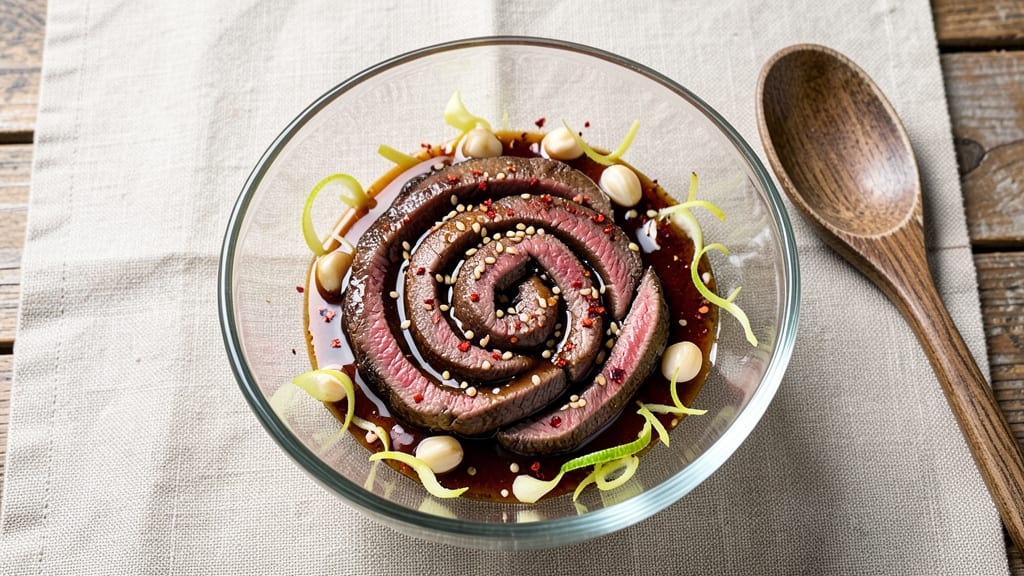
Asian beef tartare delivers restaurant-quality freshness with every bite—juicy, tender beef cubes marinated in a symphony of umami, citrus, and aromatic spices. This isn't your typical tartare; it's a meticulously balanced dish where perfectly balanced heat from chili and sesame meets the richness of soy and garlic. The secret lies in using the freshest beef (preferably ribeye or sirloin) and a marinade that tenderizes without overpowering the natural flavor.
What sets this recipe apart is its adaptability—whether you're leaning toward the delicate elegance of Japanese gyu tartare or the bold, spicy profile of Korean yukhoe, the foundation remains the same: thinly sliced beef cured in a flavor-packed marinade.
The key steps include proper slicing (against the grain for tenderness), a quick cure to enhance safety and texture, and a marinade that builds layers of flavor without overwhelming the beef's natural richness.
When served, this tartare transforms into a visually stunning dish with vibrant garnishes like pickled vegetables, sesame seeds, and crisp rice crackers. The texture is unmatched—juicy, tender beef with a slight bite from the marinade, all while maintaining that fresh, almost raw quality.
It's a dish that commands attention, perfect for special occasions or when you want to impress guests with a meal that's as beautiful as it is delicious.
For those new to raw beef dishes, don't worry—this recipe includes a foolproof curing method to ensure safety while preserving that signature freshness. Serve it alongside steamed rice, crispy rice crackers, or a side of pickled radish for the full experience.
Let's get started on creating a dish that's as thrilling to eat as it is to prepare.
Ingredients for asian beef tartare
Fresh ribeye meets aromatic marinades for this restaurant-worthy Asian-inspired tartare.
| Ingredient | Amount | Notes |
|---|---|---|
| Ribeye Steak 🥩 | 1 lb | Center-cut, against grain, sliced thin |
| Soy Sauce 🍶 | 3 tbsp | High-quality, reduced for depth |
| Sesame Oil 🫒 | 1 tbsp | Toasted, for nutty aroma |
| Fresh Ginger 🧄 | 1 tbsp | Grated, finely minced |
| Garlic Cloves 🧄 | 4 cloves | Minced, aromatic intensity |
| Red Chili Flakes 🌶️ | 1 tsp | Adjust for heat preference |
| Toasted Sesame Seeds 🌿 | 1 tbsp | For garnish, freshly toasted |
| Lemon Juice 🍋 | 1 tbsp | Freshly squeezed, bright acidity |
| Cucumber 🥒 | ½ cup | Thinly sliced, for crunch |
| Scallions 🧅 | 3 whole | Thinly sliced, for freshness |
| Vegetable Oil 🫒 | 1 tbsp | For slicing, neutral flavor |
| Salt 🧂 | ½ tsp | Kosher, for curing |
| Black Pepper 🌶️ | ¼ tsp | Freshly cracked, subtle warmth |
| Rice Vinegar 🍶 | 1 tbsp | For acid balance |
The beef selection is non-negotiable—ribeye or sirloin with good marbling ensures tenderness and flavor. Purchase from a trusted butcher or Whole Foods for the freshest cuts. Look for center-cut steaks; the grain direction is critical for slicing against it. If using frozen beef, thaw it overnight in the fridge for even texture. The soy sauce should be reduced by half to concentrate its umami punch—simmer in a small saucepan until syrupy. For extra depth, add a splash of mirin or sake during reduction.
No sesame oil? Toasted sesame seeds blended with neutral oil works as a substitute, though the aroma won't be identical. Fresh ginger and garlic are ideal, but if using powdered, reduce to half the amount—freshness is key here. The red chili flakes can be swapped for gochugaru (Korean chili flakes) for a more nuanced heat. For the cucumber, use Korean or Persian varieties if available; their thinner skins hold up better to slicing. If you prefer less acidity, reduce the lemon juice to 1 tsp and add an extra 1 tbsp rice vinegar instead.
Prep the beef immediately before slicing to maintain texture—slice against the grain for maximum tenderness. Store any unused marinade components in airtight containers in the fridge for up to 1 week. The tartare itself should be served immediately after assembly to preserve its fresh, vibrant qualities. For leftovers (if any), consume within 24 hours and store in a sealed container with a thin layer of plastic wrap pressed directly on the surface to prevent drying. Garnishes like sesame seeds and scallions can be prepped ahead and stored separately.
Why You'll Love This Recipe
- No-Fuss Prep: I swear, this comes together faster than ordering takeout. Dice the ribeye while the rice cooks—no fancy techniques, just a sharp knife and a steady hand. The ginger and garlic get minced in under two minutes, and boom, you’re done.
- Umami Bomb: That first bite? Pure flavor explosion. The ribeye stays tender but packs a punch, while the soy and sesame oil turn it into something dangerously addictive. Honestly, I’ve made tartare before, but this one actually tastes like it belongs in a restaurant.
- Party in a Bowl: Between us, this is my secret weapon for game day or unexpected guests. Serve it over rice for a hearty meal, or pile it on toast with a fried egg for brunch. My roommates still ask, "What’s in this?" every time I make it.
- Leftovers? Better: Here’s what sold me—it tastes just as good the next day. Store it in the fridge, and the flavors meld even deeper. I’ve turned last night’s tartare into today’s lunch with zero effort, wrapped in a tortilla or tossed with noodles. Zero waste, all win.
Step-by-step instructions for Asian beef tartare
Here's the precise method for creating restaurant-quality Asian beef tartare with perfect texture and balanced flavors.
Prepare the Ribeye Steak for Tartare
Remove the 1 lb ribeye steak from the refrigerator and let it sit at room temperature for 20-30 minutes. This ensures even cooking and prevents cold spots in the center. Pat the steak dry with paper towels to remove any surface moisture, which is crucial for proper searing.
Using a sharp chef's knife, slice the steak thinly against the grain into ¼-inch thick strips. The grain direction is visible as fine lines running through the meat. For 4 servings, you should end up with about 1½ cups of sliced beef. Place the sliced steak in a shallow bowl and immediately cover with 3 tablespoons soy sauce. Use a rubber spatula to gently mix the soy sauce into the meat, ensuring each piece is well-coated. Let it marinate for 15 minutes at room temperature.
Create the Umami-Packed Marinade
In a small mixing bowl, combine 1 tablespoon sesame oil, 1 tablespoon finely minced fresh ginger, 4 minced garlic cloves, 1 teaspoon red chili flakes, 1 tablespoon rice vinegar, and 1 tablespoon freshly squeezed lemon juice. Mix thoroughly until the ginger and garlic are fully incorporated and the chili flakes are evenly distributed. The mixture should have a vibrant, aromatic appearance with a deep reddish hue from the chili.
Taste the marinade and adjust the seasoning if needed. You may want to add a pinch more salt or black pepper to enhance the flavor profile. This marinade is the heart of your tartare, balancing the rich beef with bright, spicy, and acidic notes. Keep this mixture at room temperature until ready to use.
Combine and Cure the Tartare
Transfer the marinated beef to a clean mixing bowl and add the prepared marinade. Using clean hands or a rubber spatula, gently fold the beef and marinade together until fully combined. The beef should be evenly coated with the vibrant, aromatic mixture. Sprinkle with ½ teaspoon salt and ¼ teaspoon freshly cracked black pepper, then mix again to distribute evenly.
Cover the bowl with plastic wrap and refrigerate for at least 2 hours, or up to 4 hours. This curing process is essential for tenderizing the meat and allowing the flavors to meld together. The beef will develop a deeper, more complex flavor profile during this time. Do not skip this step—it ensures the perfect texture and taste.
Prepare the Garnishes and Serve
While the tartare cures, prepare the garnishes. Thinly slice ½ cup cucumber into half-moons and 3 whole scallions into ¼-inch rings. Toast 1 tablespoon sesame seeds in a dry skillet over medium heat for 1-2 minutes until fragrant and lightly golden. Set aside to cool.
When ready to serve, transfer the cured beef tartare to a serving platter or individual bowls. Arrange the sliced cucumber and scallions around the beef, creating a visually appealing presentation. Sprinkle the toasted sesame seeds evenly over the top. Serve immediately with chilled vegetable oil for drizzling on the side, allowing each diner to customize their tartare to their preferred consistency.
Pro Tips For Making Asian Beef Tartare
- FREEZE THE MEAT FIRST: Grab a block of ice and submerge your ribeye for 10 minutes before slicing—this keeps the meat firm enough to dice cleanly without turning to mush. I learned this the hard way when my first batch turned into a sad, stringy pile because I skipped this step. Use a sharp knife and slice against the grain for chewier texture.
- GRATE THE GINGER FINE: Skip the mincer—use a microplane or the smallest holes on a box grater for ginger. You want it almost paste-like, not chunky, so it blends smoothly into the soy and garlic. Too much heat from pre-mincing? Just toss it in the freezer for 10 minutes first.
- MARINATE THE RAW MEAT: Toss the sliced ribeye with 1 tablespoon soy sauce and ½ teaspoon sesame oil for 10 minutes before mixing everything. This jumpstarts the flavor and prevents the meat from tasting raw or metallic. Don’t overdo it—just enough to coat, or you’ll end up with soggy beef.
- CHILL THE FINISHED TARTARE: Let the tartare sit uncovered in the fridge for 20 minutes after mixing. This lets the flavors meld and the texture firm up slightly—critical if you’re serving it with delicate toppings like scallions or sesame seeds. I used to skip this and always wondered why my dish felt "off" until I realized it needed time to breathe.
Essential equipment for this dish
Precision Slicing Tools
Your first essential tool is a sharp chef's knife—I recommend a 8-inch Wüsthof or Shun Premier for their razor-sharp edges. Slicing beef tartare requires precision, so a dull knife will tear the meat instead of cleanly cutting against the grain.
Pair it with a cutting board—I prefer maple or bamboo for their gentle surfaces that won't dull your blade. 🔪
Marinade Mixing
For combining ingredients, a small mixing bowl (like the OXO Good Grips) works perfectly. You'll need a rubber spatula to fold the beef without breaking it up. A microplane (like BergHOFF) is ideal for grating fresh ginger and garlic—it creates fine, aromatic particles that blend seamlessly.
For measuring liquids, a 2-ounce measuring spoon ensures accuracy with sesame oil and rice vinegar.
Curing & Storage
An airtight container (I use Glasslock containers) is crucial for the curing process. The beef needs to rest at 40°F or below for safety, so a refrigerator is non-negotiable.
For portioning, small ramekins (like Le Creuset) keep garnishes organized and ready to serve. A thermometer (like Thermoworks Smoke) ensures your fridge stays at the right temperature.
Garnish Essentials
Toast sesame seeds in a small nonstick skillet (I love Made In) over medium heat. For slicing cucumbers and scallions, a mandoline (like Benedict) creates uniform, paper-thin slices.
A pair of kitchen shears (like OXO Good Grips) makes quick work of trimming scallions. Finally, a drizzling bottle (like Makura) lets you serve chilled vegetable oil elegantly.
Budget-Friendly Swaps
No need for high-end tools—start with basics like a $10 chef's knife (like Mercer Culinary) and $15 cutting board. For measuring, a set of stainless steel spoons works fine.
A $12 microplane (like Microplane) handles ginger and garlic just as well. The only splurge worth it? A $20 thermometer—safety first! 💰
Nutrition facts
Frequently asked questions
Is it safe to eat raw beef tartare?
The recipe includes a 2-4 hour curing process with soy sauce and salt, which helps reduce bacteria. However, always use fresh, high-quality beef from a trusted source. For extra safety, consider using previously frozen beef (freezing kills parasites) or serving it with a side of wasabi or horseradish to deter bacteria growth. Never use beef that smells sour or has an off-color.
Can I make this recipe with ground beef instead of sliced?
Ground beef won't work for tartare—it lacks the proper texture and presentation. The key is thinly sliced ribeye or sirloin against the grain for maximum tenderness. If you want a ground beef alternative, try making Korean-style bulgogi or Japanese gyudon instead. For tartare, stick to whole-muscle cuts.
How do I adjust the heat level?
The recipe uses 1 teaspoon red chili flakes as a base. For milder heat, reduce to ½ teaspoon or swap for ½ teaspoon gochugaru (Korean chili flakes), which has a more complex, less intense heat. For extra spice, add ½ teaspoon cayenne pepper or a dash of Sriracha. Always taste the marinade before combining with beef.
What's the best way to serve this dish?
Serve immediately with chilled vegetable oil for drizzling and these classic pairings: steamed jasmine rice, rice crackers, or pickled vegetables (like kimchi or quick-pickled radish). For presentation, arrange on a slate board or individual bowls with garnishes fanned around the beef. Pro tip: Add a drizzle of ponzu sauce or yuzu kosho for extra umami.
Can I prepare this ahead of time?
While the marinade and garnishes can be prepped 1 day ahead, the beef should cure for only 2-4 hours before serving. Store components separately: beef in an airtight container (covered with plastic wrap), marinade in a separate container, and garnishes in a sealed bag. Assemble just before serving to maintain freshness. Never refrigerate the fully combined tartare for more than 24 hours.