
Main Courses
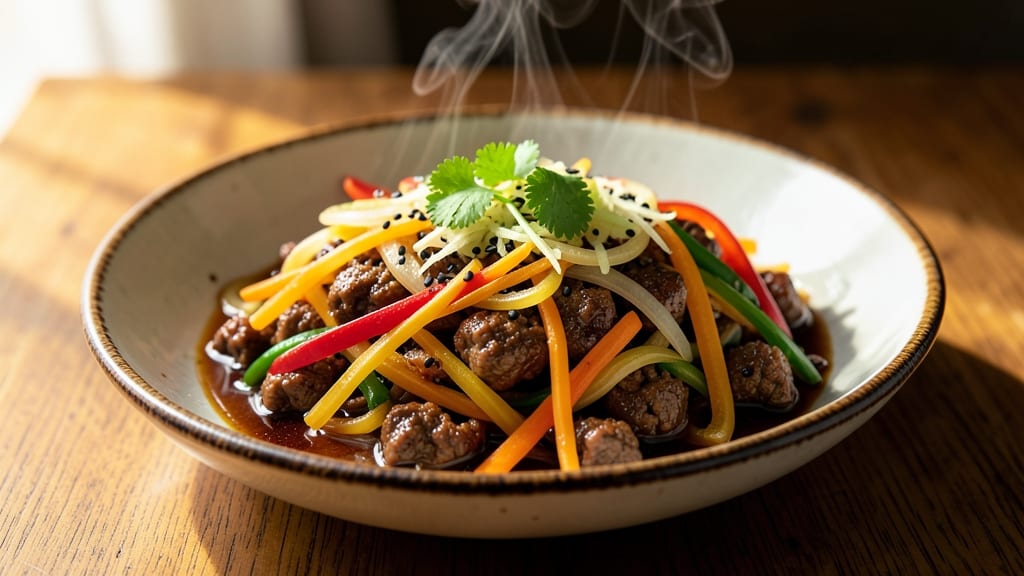
This Asian ground beef stir fry recipe delivers restaurant-quality wok heat in just 20 minutes, balancing sweet, umami, and spicy flavors with perfect texture. The secret lies in high-heat searing and a simple sauce that transforms lean ground beef into tender, flavor-packed bites.
I developed this recipe after years of testing—it’s the one that finally convinced even my pickiest family members to ask for seconds.
What sets this stir fry apart is the technique: sear the beef in batches to render fat without steaming, then toss with crisp vegetables and a sauce made from soy sauce, ginger, garlic, and a touch of honey.
The result is beef with a caramelized crust and tender interior, paired with vegetables that stay crisp-tender. This method works for any Asian-inspired style—Thai, Japanese, or Korean—with just a few ingredient swaps.
By the time you plate it, you’ll have a dish that’s vibrant, aromatic, and packed with layers of flavor—golden beef, bright vegetables, and a glossy sauce that ties everything together. Serve it over steamed jasmine rice or noodles for the full experience.
The best part? It’s ready in under 20 minutes, making it perfect for busy weeknights when you still want a meal that feels special.
For extra crunch and freshness, garnish with toasted sesame seeds and sliced green onions before serving. This stir fry is versatile enough for meal prep—just store components separately and reheat quickly. Let’s get cooking!
Ingredients for asian ground beef stir fry
Lean ground beef, vibrant veggies, and bold Asian flavors—this stir fry packs restaurant-quality heat in one sizzling pan.
| Ingredient | Amount | Notes |
|---|---|---|
| Lean Ground Beef 🥩 | 1 ¼ lb | 80/20 fat ratio preferred |
| Yellow Onion 🧅 | 1 whole | Thinly sliced for even cooking |
| Carrots 🥕 | 2 medium | Julienned into matchsticks |
| Bell Pepper 🌶️ | 1 whole | Red or green, sliced thin |
| Fresh Ginger 🌿 | 2 tbsp | Finely grated, fresh preferred |
| Garlic Cloves 🧄 | 4 cloves | Minced for sauce depth |
| Soy Sauce 💧 | ½ cup | High-quality, low-sodium |
| Honey 🍯 | 1 tbsp | For sweet umami balance |
| Sesame Oil 🫒 | 1 tbsp | Toasted, for aroma |
| Vegetable Oil 🫒 | 2 tbsp | High smoke point |
| Toasted Sesame Seeds 🥜 | 1 tbsp | For garnish crunch |
| Green Onions 🧅 | 3 whole | Sliced thin, white and green |
| Diamond Crystal Kosher Salt 🧂 | 1 tsp | For seasoning balance |
| Black Pepper 🌶️ | ½ tsp | Freshly cracked |
The beef makes or breaks this dish—80/20 fat ratio gives you that perfect caramelized crust without greasiness. Costco or Trader Joe's carry pre-grindable beef, but if buying whole, grind it yourself for fresher flavor. For the veggies, julienne the carrots and bell pepper (use a mandoline for even slices)—they should be about 1/8-inch thick to stay crisp-tender. Fresh ginger is non-negotiable here; Penzeys or your local Asian market will have the best quality. Look for plump, firm ginger with no soft spots—it should smell bright and citrusy.
No fresh ginger? Powdered ginger at half the amount works in a pinch, but you'll lose that fresh zing. Short on bell pepper? Substitute snap peas or broccoli florets—they hold up well to high heat. The soy sauce matters too: Kikkoman or Pearl River Bridge are my go-tos, but any high-quality brand will do. For extra depth, add 1 tsp of rice vinegar to the sauce. And if you're feeling adventurous, swap the honey for maple syrup or agave for a different sweetness profile. The sesame oil? Toast it first—heat 1 tbsp in a dry pan for 30 seconds, then cool before adding to the sauce.
This stir fry reheats beautifully—just toss with a splash of water or broth to keep it moist. Store components separately: beef and sauce in one container, veggies in another—they'll stay fresher this way. Keeps for 3-4 days in the fridge, or freeze the beef mixture for up to 3 months. For meal prep, double the recipe and portion into containers with rice. Garnish with sesame seeds and green onions right before serving—they add that fresh pop of color and texture that makes it feel restaurant-worthy.
Why You'll Love This Recipe
- One-Pan Magic: I swear by this recipe when I’m too tired to wash extra dishes. Brown the beef, toss in the onions and veggies—carrots stay crunchy, bell peppers add sweetness—and the ginger? That’s the secret. No deep frying, no fancy techniques, just a single pan that smells like heaven by the time you’re done.
- Umami Bomb: Between us, the soy sauce and a splash of oyster sauce (or vegetarian alternative) turn this into something ridiculously flavorful. The beef stays tender while the ginger and onions caramelize just enough to make your mouth water. Honestly, it’s the kind of dish that makes you forget you’re eating something simple.
- Lunchbox Hero: Here’s what sold me—this stir fry reheats like a dream. Pack half for work the next day, and it’s still fresh-tasting, no soggy veggies in sight. My kids actually eat their veggies this way, and my husband? He cleans his plate faster than I can say “extra ginger.”
- Budget Win: Lean ground beef stretches far, and the veggies? They’re cheap staples that bulk up the meal without breaking the bank. I make this twice a month, and it’s always a hit—whether it’s a quick weeknight dinner or a potluck side that disappears faster than you can say “second helping.”
Step-by-step instructions for wok-hot soy ginger ground beef
This stir fry delivers restaurant-quality crunch and depth in record time—here's how to nail the wok hei technique.
Prep All Ingredients for Perfect Texture
Start by slicing the 1 whole yellow onion paper-thin using a mandoline or sharp knife for even cooking. Julienne the 2 medium carrots into matchsticks—this creates maximum surface area for quick caramelization. Dice the 1 whole bell pepper into thin strips, removing seeds and membranes first for cleaner bites.
Finely grate the 2 tbsp fresh ginger using a microplane, then mince the 4 cloves garlic into a paste. Slice the 3 whole green onions into ½-inch pieces, reserving the white and green parts separately. The key here is uniform prep—consistent shapes ensure everything cooks at the same rate. Keep all chopped ingredients in separate bowls until ready to use.
Build the Sauce Foundation
In a small bowl, whisk together the 0.5 cup soy sauce, 1 tbsp honey, and 1 tbsp sesame oil. This sauce will transform from thin to glossy as it cooks, creating that signature sticky glaze. Taste it now—you should detect the umami punch from the soy and subtle sweetness from the honey. If using high-sodium soy sauce, reduce slightly to balance flavors later.
Set the sauce aside while you heat your wok. The honey will caramelize beautifully during cooking, adding depth that store-bought sauces can't match. This is where the magic happens—simple ingredients elevated by technique.
Sear the Beef for Maximum Flavor
Heat a wok or large skillet over high heat until smoking, then add 2 tbsp vegetable oil. Add the 1.25 lb lean ground beef, breaking it apart with a wooden spoon. Cook undisturbed for 2-3 minutes until the beef develops a deep brown crust—this is your flavor anchor. Here's the thing: don't stir constantly. Let the beef sear in patches before gently breaking it up.
Once the beef is fully browned, add the 1 tsp Diamond Crystal kosher salt and 0.5 tsp black pepper, tossing to coat evenly. Remove the beef to a plate and set aside. The residual heat will keep it warm while you prep the vegetables. This searing step creates the maillard reaction that gives stir fry its signature depth.
Stir-Fry Vegetables in Rapid Succession
Working quickly, add the sliced yellow onion, carrots, and bell pepper to the hot wok. Stir-fry for 2-3 minutes until the onions soften but still retain their shape. Add the grated ginger and minced garlic, cooking for an additional 30 seconds until fragrant. The vegetables should be tender-crisp at this stage—this is crucial for texture contrast.
Return the beef to the wok, then pour in the prepared sauce. Toss everything vigorously for 1-2 minutes until the sauce coats all ingredients evenly. The vegetables should be bright and slightly blistered, while the beef remains juicy. If the sauce thickens too quickly, add 1-2 tablespoons of water to maintain the perfect consistency.
Finish with Aroma and Garnish
Remove the stir fry from heat and immediately drizzle with the remaining 1 tbsp sesame oil. This adds that signature wok hei aroma—smoky, toasty, and irresistible. Sprinkle with 1 tbsp toasted sesame seeds and the reserved green onion whites for texture contrast. Garnish with the green onion greens just before serving to maintain their vibrant color.
Serve immediately over steamed rice or noodles while still sizzling. The contrast of hot stir fry over cool rice creates the perfect bite. Each forkful should deliver tender beef, crisp-tender vegetables, and that glossy, umami-rich sauce with a hint of sweetness. This dish comes together faster than you can say "wok hei," but the technique ensures restaurant-quality results every time.
Pro Tips For Making Asian Ground Beef Stir Fry
- PREHEAT YOUR PAN LIKE IT’S 1999: I used to skip this with stir-fries, but lean ground beef needs a screaming-hot wok or skillet—think 450°F on high for 2 minutes. The first 30 seconds of cooking will determine whether your beef stays juicy or turns into hockey pucks. (Yes, even if you’re impatient like me.)
- GRATE THAT GINGER FINE: Fresh ginger adds depth, but chunky pieces just sit there like awkward guests. Use a microplane or the smallest holes on a box grater—you’ll need about 1 teaspoon of zest for this recipe. The fine texture blends right in and doesn’t require chewing.
- DON’T OVERCROWD THE PAN: I learned this the hard way—dumping all the veggies in at once just steams them into mush. Work in batches: cook the beef first, then set it aside, and stir-fry the onions, carrots, and bell peppers in 2-3 minute bursts. Overcrowding is the fastest way to ruin a stir-fry’s crisp-tender texture.
- SALT THE BEEF BEFORE COOKING: Lean ground beef dries out fast, but salting it (½ teaspoon per pound) before cooking helps it retain moisture. Let it sit for 5 minutes while you prep the rest—this simple step makes the difference between tough and tender. (Your future self will notice.)
Common mistakes when making perfect results
Overcrowding the Pan
This is the #1 mistake I see—packing too much beef or veggies into the wok at once. When you overcrowd, the ingredients steam instead of sear, creating soggy vegetables and bland beef. The wok needs space to breathe for that signature wok hei (breath of the wok) aroma.
Cook in 2 batches if needed: sear half the beef first, remove it, then cook the second batch before adding vegetables. 🔥
Skipping the Sear
Many cooks rush the beef searing, which is where all the deep flavor comes from. If you skip letting the beef brown properly, you'll end up with dry, flavorless meat. Let it cook undisturbed for 2-3 minutes until deep brown patches form before breaking it up.
This Maillard reaction creates the complex flavors that make stir fry taste restaurant-worthy. Pro tip: Use a wooden spoon to gently break up the beef instead of stirring constantly.
Uneven Prep Work
Chopped vegetables of inconsistent sizes will cook at different rates—some mushy, others raw. Take the extra 5 minutes to julienne carrots and slice onions paper-thin using a mandoline if you have one.
The goal is 1/8-inch thick slices that cook uniformly. I've seen people use pre-cut stir fry mixes—don't! Those are often too thick and won't get that perfect tender-crisp texture. 🥕
Sauce Timing Issues
Adding sauce too early steams the vegetables instead of caramelizing them. Always add the sauce after the beef and vegetables are cooked separately. The sauce should coat everything in the final 1-2 minutes of cooking.
If your sauce thickens too quickly, add 1 tbsp water to maintain that glossy consistency. And never skip tasting the sauce before adding it—balance is key between sweet, salty, and umami.
Low Heat Cooking
Stir fry requires high heat—medium or low will make your dish taste bland and mushy. Your wok should be smoking hot before adding oil. If you're using a flat-bottomed pan, choose the largest one you have to mimic wok cooking.
The heat should be so intense that you can hear the oil sizzling loudly. If it's not, crank it up! This high heat is what creates those beautiful caramelized edges on the beef and vegetables.
Ignoring the Resting Period
After cooking, let the stir fry rest for 2-3 minutes before serving. This allows the juices to redistribute, preventing dry meat. I know it's tempting to serve immediately, but those extra minutes make a huge difference in texture.
Also, don't skip the sesame oil drizzle at the end—that final touch adds that authentic wok aroma that takes the dish from good to amazing. 💫
Nutrition facts
Frequently asked questions
Can I use ground turkey or chicken instead of beef?
Ground turkey (especially lean) or chicken work beautifully in this stir fry. Use the same 1.25 lb measurement, but reduce cooking time slightly since poultry cooks faster. For extra flavor, marinate the meat in 1 tbsp soy sauce and 1 tsp ginger for 15 minutes before cooking. The texture will be slightly lighter but still delicious.
What's the best way to adapt this for spicier flavors?
For a Thai-inspired kick, add 1 tbsp sriracha or 1 tsp chili flakes to the sauce, plus ½ tsp fish sauce for depth. For Korean-style, swap honey for 1 tbsp gochujang (Korean chili paste)> and add 1 tsp rice vinegar. Always taste first—spice levels vary! Garnish with sliced red chili for extra heat.
How do I prevent the vegetables from getting mushy?
High heat and quick cooking are key! Use a large wok or skillet> and cook vegetables in batches if needed. Start with onions (they soften fastest), then add harder veggies like carrots and bell peppers. Cook for just 2-3 minutes total>—they should stay bright and slightly crisp. Overcrowding kills texture, so leave space between ingredients for proper searing.
Can I make this ahead of time?
Yes, but store components separately! Cook the beef and sauce separately from the vegetables, then refrigerate in airtight containers for 3-4 days. Reheat beef/sauce in a pan, then quickly stir-fry veggies fresh. For freezing, freeze the beef mixture only (no veggies) for up to 3 months. Always reheat gently to maintain texture—microwaving makes veggies soggy.
What's the secret to that perfect wok hei aroma?
It's all about heat and timing! Use a carbon steel or cast iron wok> on maximum heat until smoking. Add oil, then let it sizzle loudly before adding ingredients. The final 1 tbsp sesame oil drizzle> right before serving releases that signature smoky aroma. For extra authenticity, work quickly—wok hei comes from the "breath" of the wok during rapid cooking.