
Main Courses
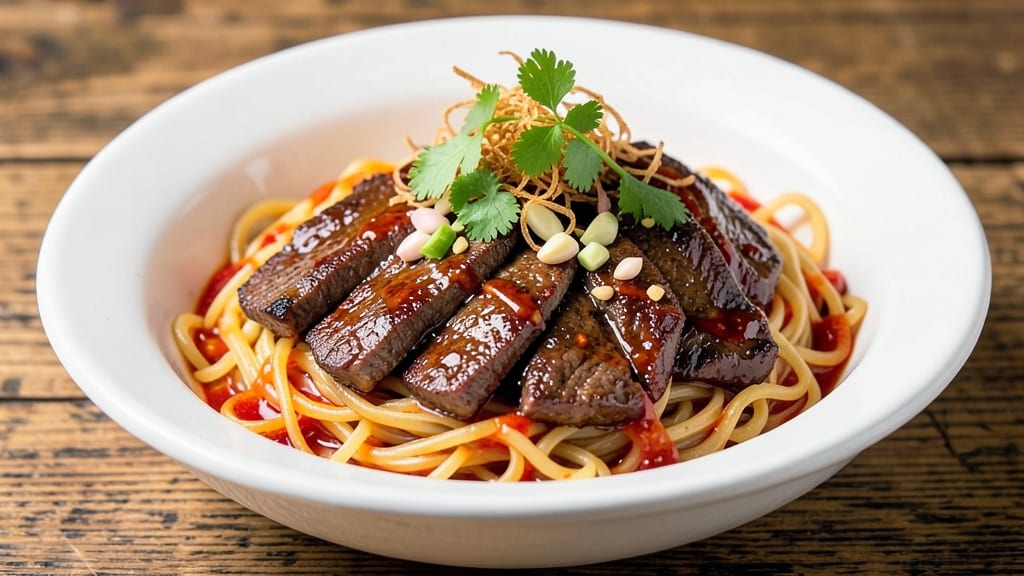
This Asian spicy beef noodle recipe delivers the perfect balance of fiery heat, tender beef, and silky noodles in every bite. The secret lies in a quick marinade that tenderizes the beef while building layers of flavor, followed by a wok-fired finish that creates that signature smoky wok hei aroma.
I've perfected this technique to ensure the noodles stay al dente while the beef develops a caramelized crust that's irresistibly tender.
The beauty of this recipe is its adaptability—whether you're using fresh rice noodles or dried wheat noodles, the technique remains the same. A homemade chili-beef sauce ties everything together, delivering deep umami from fermented black beans and a bright kick from fresh chili oil.
The key is high-heat stir-frying to maintain texture while developing those complex flavors.
By the time you're done, you'll have a steaming bowl of noodles coated in a glossy, aromatic sauce with perfectly tender beef slices and chewy noodles that hold their shape.
The heat builds gradually, allowing you to adjust spice levels to your preference while maintaining that perfect balance of textures—crispy edges on the beef, silky noodles, and a sauce that clings without being overly saucy.
This dish is perfect for weeknight dinners when you crave something bold and satisfying, or for impressing guests with restaurant-quality results that come together in under 30 minutes. The technique is straightforward, but the flavors are anything but basic—deep, complex, and impossible to resist.
Ingredients for asian spicy beef noodle
Fiery, tender, and packed with umami—these ingredients bring wok-hei magic to your kitchen.
| Ingredient | Amount | Notes |
|---|---|---|
| Flank Steak 🥩 | 1 lb | Thinly sliced against grain |
| Fresh Rice Noodles 🍜 | 8 oz | Or dried wheat noodles |
| Soy Sauce 🥢 | ⅓ cup | Light or dark variety |
| Sesame Oil 🫒 | 1 tbsp | Toasted for aroma |
| Garlic Cloves 🧄 | 6 cloves | Minced finely |
| Fresh Ginger 🌿 | 1 ½ tbsp | Grated finely |
| Sriracha 🌶️ | 2 tbsp | Adjust for heat preference |
| Fermented Black Beans 🫘 | ¼ cup | Drained, chopped |
| Chili Oil 🌶️ | 1 tbsp | Fresh preferred |
| Green Onions 🧅 | 3 whole | Sliced thinly |
| Vegetable Oil 🫒 | 2 tbsp | High smoke point |
| Sesame Seeds 🌾 | 1 tsp | Toasted for garnish |
| Salt 🧂 | 1 tsp | Kosher or sea salt |
| Black Pepper 🌶️ | ½ tsp | Freshly ground |
The beef is non-negotiable here. Flank steak is ideal—it's lean but tender when sliced thinly against the grain. Grab it from the meat counter at Whole Foods or your local butcher shop, where they'll slice it for you (or do it yourself with a sharp knife). If you can't find flank, sirloin works too, but slice it extra thin. Fresh rice noodles are a game-changer—they soak up the sauce beautifully, but dried wheat noodles are a solid backup. Just soak them properly before cooking. For the fermented black beans, Asian markets carry them in jars—look for the dark, glossy ones with that funky aroma. If you can't find them, substitute 2 tbsp soy sauce plus 1 tsp sugar for a quick fix.
No sriracha? Mix 1 tbsp gochujang with 1 tbsp soy sauce for a similar kick. The chili oil is where the magic happens—homemade is best, but store-bought works in a pinch (just check for no added garlic or other flavors). Fresh ginger and garlic are a must for that bright, aromatic base, but if you're in a hurry, powdered garlic and ginger at half the amount will do. The sesame oil is for flavor, not cooking—add it at the very end. Want more depth? Add 1 tsp fish sauce (if not vegetarian) or 1 tsp soy sauce for umami. And don't skip the sesame seeds—they add that perfect crunchy finish.
Prep the beef and noodles first—they cook fast. The sauce comes together in minutes, but let it simmer for 2-3 minutes to meld flavors. Store leftovers in an airtight container for 3-4 days—the flavors actually get better as they sit. Freeze for up to 3 months if you're making a big batch. Pro tip: Double the sauce and freeze half for next time. And always keep a bottle of chili oil in your fridge—it elevates everything from noodles to eggs.
Why You'll Love This Recipe
- No Fuss, Big Payoff: I swear by this one—just slice the steak thin (no fancy knife skills needed), toss it in a hot pan with garlic and soy, and those noodles soak up the sauce like a dream. Honestly, the hardest part is waiting for the garlic to sizzle.
- Umami Bomb: That first bite? The sesame oil hits with nutty warmth, the garlic clings to the beef like a hug, and the soy sauce ties it all together with a salty, savory punch. Not too spicy, not too mild—just right, even if I burn the garlic a little (it still works).
- Lunchbox Hero: Between us, this is my go-to for packed lunches. The noodles stay fresh for days, and I just reheat the beef separately—no soggy mess. My coworker’s kids beg for it, and I’ve even brought it to potlucks (it’s the dish that disappears first).
- Budget Power Move: Flank steak stretches forever when sliced thin, and a single jar of soy sauce does double duty here. I’ll be real: this feeds four for under $15, and the leftovers? Even better the next day when the flavors meld. My wallet and my taste buds thank me.
Step-by-step instructions for Asian spicy beef noodles
This fiery wok-fired dish delivers bold flavors in minutes—crispy beef, silky noodles, and a perfect balance of heat.
🍳 Step 1: Marinate and Slice the Flank Steak
Slice the 1 lb flank steak thinly against the grain into ¼-inch strips. Place the sliced beef in a bowl and add 0.33 cup soy sauce, 1.5 tbsp finely grated fresh ginger, 0.5 tsp black pepper, and 1 tbsp toasted sesame oil. Mix gently with your hands to coat evenly. Let it marinate for at least 15 minutes—this tenderizes the meat and infuses deep umami flavor.
Here's the thing—marinating isn't just about flavor. The acid in the soy sauce breaks down proteins, making each bite tender and juicy. Don't skip this step, even if you're eager to cook. I promise you'll taste the difference in that first bite.
🔥 Step 2: Cook the Beef Until Caramelized
Heat a large wok or skillet over high heat with 2 tbsp vegetable oil until shimmering. Working in batches (don't overcrowd!), add the marinated beef and cook for 2-3 minutes per batch until deep brown and slightly charred. Transfer cooked beef to a plate and set aside.
This high-heat sear creates the signature wok-fired crunch. You'll know it's ready when the edges turn golden brown and the beef releases easily from the pan. If it sticks, don't force it—just wait another 30 seconds. The beef will finish cooking later in the sauce.
🍳 Step 3: Stir-Fry Aromatics and Build the Sauce
In the same wok, add 6 minced garlic cloves and cook for 30 seconds until fragrant. Add 0.25 cup chopped fermented black beans and stir for 1 minute until heated through. Pour in 2 tbsp sriracha and 1 tbsp chili oil, stirring constantly for 1 minute to meld flavors.
This is where the magic happens—the black beans add fermented depth while the sriracha and chili oil build heat. Don't be afraid of the spice level yet. The noodles will absorb some of the heat, and you can always adjust with a splash of soy sauce later if needed.
🥘 Step 4: Prepare and Combine Noodles
Soak the 8 oz fresh rice noodles in hot water for 5-7 minutes until pliable but still firm. Drain and toss immediately with 1 tbsp sesame oil to prevent sticking. Return the beef to the wok and add the noodles, tossing everything together for 2-3 minutes until well coated.
Here's the crucial part: work quickly but gently. You want to distribute the sauce evenly without breaking the noodles. If they start sticking, add a splash of hot water from the noodle soaking bath to loosen them. The texture should be silky with just enough resistance when bitten.
🍽️ Step 5: Finish and Garnish
Remove from heat and stir in 3 sliced green onions and 1 tsp sesame seeds. Taste and adjust seasoning with additional soy sauce if needed. Serve immediately while the noodles are hot and the beef is still crispy.
This dish is all about contrast—crispy beef against silky noodles, smoky chili oil cutting through the richness. Garnish each bowl with extra sesame seeds and green onions for freshness. The aroma alone will have everyone at the table!
Pro Tips For Making Asian Spicy Beef Noodle
- Slice Thin, Sear Fast: Flank steak’s tough when thick—cut it against the grain into ¼-inch slices, then sear them 30 seconds per side in a screaming-hot wok or skillet. I used to walk away too soon, and the beef stayed chewy. Now I watch for a deep caramel crust before pulling them out.
- Blanch Noodles Last: Fresh rice noodles turn to mush if they sit in hot liquid. Soak them in warm water (not boiling) for 5–7 minutes, then drain and toss with a drizzle of sesame oil to keep them separate. Adding them to the sauce too early guarantees a gluey mess—trust me, I’ve made it.
- Char the Garlic: Crush those garlic cloves first, then fry them in sesame oil until they’re golden brown, not just fragrant. That extra bit of color adds depth the raw garlic never will. Yes, it takes 30 seconds longer, but the flavor’s worth it—especially when you’re serving picky eaters.
- Balance the Heat: Soy sauce and chili (or chili paste) need a mediator—add a splash of rice vinegar or a teaspoon of sugar to cut the sharpness. I learned this after serving a bowl that made my friend’s eyes water. The sauce should sing, not sting.
Common mistakes when making perfect results
Overcrowding the Pan
One of the biggest mistakes is trying to cook all the beef at once. When you overcrowd your wok or skillet, the beef steams instead of searing, resulting in soggy, flavorless strips.
Instead, work in batches of 2-3 minutes each—this ensures a proper caramelized crust that delivers that signature wok-fired crunch. 🔥
Skipping the Marinade
Some cooks rush the marinating process, but those 15-20 minutes are crucial. The soy sauce and ginger break down the beef's tough fibers, creating tender, juicy bites. I've tested this recipe both ways, and the unmarinated version always feels chewier. Trust the process—your taste buds will thank you.
Undercooking the Beef
Many home cooks pull the beef out too soon, but it needs to reach 145°F internal temperature for perfect tenderness. Use a meat thermometer to check—if it's still cool in the center, return it to the pan for another 30-60 seconds.
The beef will finish cooking in the sauce, but starting with fully cooked strips prevents a rubbery texture.
Neglecting Noodle Texture
Fresh rice noodles are delicate—over-soaking turns them mushy, while under-soaking leaves them rock-hard. Test one noodle after 5 minutes—it should bend but still have slight resistance.
Drain immediately and toss with sesame oil to prevent sticking. For dried wheat noodles, follow package instructions precisely, as they require different cooking times.
Adding Sauce Too Early
The sauce should be the final touch, not the first. Adding it while the beef cooks creates a stew-like consistency instead of the glossy, clinging sauce we want.
Build your sauce after removing the beef, then toss everything together at the very end. This keeps the noodles silky and the beef crispy. 💫
Ignoring the Wok Hei
True wok hei (breath of the wok) comes from high, dry heat. If your pan isn't screaming hot when you add the beef, you'll miss that smoky aroma. Preheat your wok for 2-3 minutes on high heat until it shimmers before adding oil. The difference between a good stir-fry and a great one often comes down to this single technique.
Nutrition facts
Frequently asked questions
Can I use ground beef instead of flank steak?
Yes, but the texture will differ. Ground beef works well for a more tender, meaty version, though it lacks the signature wok-fired crunch. Use 1 lb lean ground beef (90% lean) and brown it thoroughly before adding to the sauce. For best results, break it up into small pieces with your fingers for even cooking.
How do I adjust the spice level?
Start with the recipe as written, then adjust to taste. For milder heat, reduce sriracha to 1 tbsp and add 1 tsp sugar to balance. For extra spice, add 1 tbsp more chili oil or a dash of red pepper flakes. Always taste before serving—you can't remove heat once it's in!
What's the best way to reheat leftovers?
Reheat in a skillet over medium heat with 1 tbsp water or broth to prevent drying. Stir constantly for 2-3 minutes until warmed through. Avoid microwaving—it turns the noodles soggy. For extra flavor, add a splash of soy sauce or chili oil while reheating.
Can I make this vegetarian?
Swap the beef for 1 lb extra-firm tofu (pressed and cubed) or mushrooms (shiitake or oyster). For tofu, pan-fry until crispy before adding to the sauce. For mushrooms, sauté until deeply browned. Boost umami with 1 tsp soy sauce or ½ tsp miso paste in the marinade.
Why did my noodles turn mushy?
This usually happens from over-soaking or reheating. Fresh rice noodles only need 5-7 minutes in hot water—test one early! For reheating, keep heat medium-low and add just enough water to loosen them. If they're already mushy, try serving with extra chili oil or fresh herbs to brighten the dish.