
Main Courses
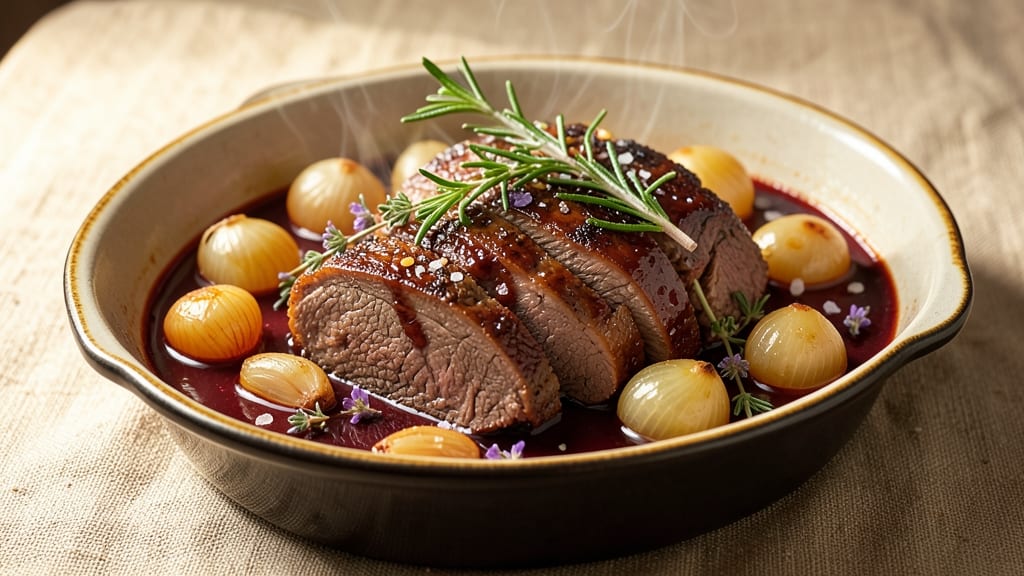
Auguste Escoffier’s Beef Bourguignon is the gold standard of French comfort food—a dish that transforms tough beef into melt-in-your-mouth perfection through slow braising and rich wine reduction.
This recipe stays true to Escoffier’s classic technique while making it accessible for home cooks, with precise steps for marination, caramelized onions, and a deep, velvety sauce that clings to every bite.
The foundation of this dish lies in its patience: beef chuck roast marinated overnight in red wine, garlic, and herbs, then braised until tender in the same wine-infused liquid.
Pearl onions caramelize slowly, adding sweetness and texture, while a wine reduction thickens into a glossy, aromatic fond that elevates every component. The result is a dish that’s both rustic and refined—exactly as Escoffier intended.
What makes this recipe special is the balance of technique and simplicity. You’ll achieve restaurant-quality depth without requiring advanced skills, thanks to clear timing cues (like browning the meat properly) and a foolproof wine reduction method.
The final dish delivers layers of flavor: tender beef, caramelized onions, and a sauce so rich it feels like a hug in a bowl.
Serve with buttery mashed potatoes or crusty baguette to soak up every last drop of that wine-infused sauce. This is the kind of meal that improves with reheating and tastes even better the next day—proof that great cooking isn’t just about technique, but also about letting flavors develop over time.
Ingredients for auguste escoffier beef bourguignon
Sixteen essential ingredients transform chuck roast into Escoffier's legendary wine-braised masterpiece.
| Ingredient | Amount | Notes |
|---|---|---|
| Beef Chuck Roast 🥩 | 3 lb | Center-cut for even cooking |
| Dry Red Wine 🍷 | 2 cups | Bold variety like Cabernet Sauvignon |
| Pearl Onions 🧅 | 1 ½ lb | Whole, peeled for even cooking |
| Fresh Thyme 🌿 | ½ cup | Stems removed, loosely packed |
| Fresh Rosemary 🌿 | ¼ cup | Needles finely chopped |
| Garlic Cloves 🧄 | 8 cloves | Peeled, roughly chopped |
| Yellow Onions 🧅 | 2 whole | Medium, thinly sliced |
| Carrots 🥕 | 4 whole | Medium, peeled and sliced |
| Tomato Paste 🍅 | 2 tbsp | High-quality, no added salt |
| All-Purpose Flour 🌾 | 2 tbsp | For thickening the sauce |
| Beef Stock 🥫 | 2 cups | Homemade preferred, low-sodium |
| Olive Oil 🫒 | ½ cup | Extra-virgin for richness |
| Salt 🧂 | 1 ½ tsp | Diamond Crystal kosher salt |
| Black Pepper 🌶️ | 1 tsp | Freshly ground preferred |
| Fresh Parsley 🌿 | ¼ cup | Chopped, for garnish |
The beef chuck roast is the cornerstone of this dish—center-cut for even cooking. Source it from a trusted butcher or high-quality grocer like Whole Foods or D'Agostino, where the meat is typically well-marbled. Look for a piece with visible fat between the muscle fibers; this fat renders during cooking, creating a rich sauce. If you're using a frozen roast, thaw it in the refrigerator overnight for consistent results. The wine should be a bold, dry red—Cabernet Sauvignon or Merlot work exceptionally well, but avoid sweet varieties like Zinfandel. For the pearl onions, pre-peeled and blanched options at specialty stores save time, though peeling them yourself yields better texture control.
No bold red wine? Dry sherry or a robust red wine blend can substitute, though the flavor profile will differ. Fresh herbs are ideal, but dried thyme at one-third the amount works in a pinch—just toast the dried herbs in a dry pan for 30 seconds to awaken their flavors. The tomato paste can be replaced with crushed tomatoes at double the amount, though the sauce will be slightly less concentrated. For the beef stock, homemade is preferred to avoid excess sodium, but high-quality low-sodium store-bought stock suffices. The flour used for thickening should be all-purpose, not cake flour, as it creates a smoother sauce. If you're short on time, cornstarch at half the amount can be used instead, though it yields a slightly different texture.
Store the marinated beef in its wine bath in the refrigerator for up to 24 hours before cooking—this enhances the flavor dramatically. The braised beef keeps well in the refrigerator for 4-5 days and freezes beautifully for 3 months. To reheat, warm gently on the stove with a splash of water or stock to restore moisture. The wine reduction can be made ahead and stored in the refrigerator for 3 days or frozen for 3 months. When reheating, add a splash of water or stock to prevent the sauce from becoming too thick. For optimal freshness, garnish with freshly chopped parsley just before serving—it adds a bright contrast to the rich, wine-infused flavors.
Why You'll Love This Recipe
- One-Pot Magic: The beef and wine braise themselves while you handle the onions and herbs—no extra pots, no fuss. Just toss everything in one deep pan, let it simmer, and walk away. (Yes, even on a Tuesday night.)
- Wine-Infused Richness: That deep red wine doesn’t just flavor the sauce—it transforms tough chuck roast into melt-in-your-mouth bites. The thyme and rosemary? They turn it from good to "why didn’t I make this sooner?" good.
- Leftovers That Beg for More: This dish tastes even better the next day, when the flavors meld into something dangerously addictive. I’ve reheated portions for lunch all week—no one ever complains.
- Budget-Friendly Luxury: A chuck roast and a bottle of wine make this feel fancy without breaking the bank. Pearl onions add elegance for pennies, and the herbs stretch the flavor further than store-bought sauce ever could.
Step-by-step instructions for auguste Escoffier's beef bourguignon
Master this classic French technique with precise timing and temperature control.
Sear the Beef Chuck Roast for Deep Flavor
Pat the 3 lb beef chuck roast completely dry with paper towels—this ensures maximum browning. Heat 0.5 cup olive oil in a heavy Dutch oven over medium-high heat until shimmering. Season the beef generously with 1.5 tsp salt and 1 tsp black pepper, then sear on all sides for 4-5 minutes per side until deeply browned. The key here is patience: let the beef develop a rich crust without overcrowding the pan.
Once browned, remove the beef and set aside. You'll notice the oil will darken—this is the foundation of your sauce. If the oil smokes excessively, reduce the heat slightly. The goal is to create a flavorful fond that will dissolve into the wine later. Never skip this step; it's what gives authentic bourguignon its depth.
Sauté Vegetables and Build the Fond
In the same Dutch oven, add 2 whole yellow onions and 4 whole carrots, sliced into even rounds. Cook over medium heat for 8-10 minutes, stirring occasionally, until softened but not browned. Add 8 cloves garlic cloves and 2 tbsp tomato paste, stirring for 1 minute until fragrant. This combination forms the aromatic base that will infuse the wine reduction.
Sprinkle 2 tbsp all-purpose flour over the vegetables and stir vigorously for 2 minutes to remove any raw flour taste. This creates a roux that will thicken the sauce later. Pour in 2 cups dry red wine and scrape up any browned bits from the bottom of the pan—this is called deglazing, and it captures all the flavor you've built so far. Let the wine simmer for 5-7 minutes until reduced by half.
Simmer the Beef with Herbs and Stock
Return the seared beef to the Dutch oven along with 1.5 lb pearl onions, 0.5 cup fresh thyme, and 0.25 cup fresh rosemary. Pour in 2 cups beef stock and bring to a gentle simmer. Cover partially and cook for 2.5 hours over low heat, turning the beef occasionally. The liquid should reduce gradually, creating a rich, velvety sauce. This slow cooking is essential for tenderizing the tough chuck roast.
Check the beef after 2 hours—it should be fork-tender. If the sauce reduces too quickly, add a splash of water or stock to maintain moisture. The pearl onions should soften to a creamy texture, absorbing all the wine and herb flavors. This is where the magic happens: the beef transforms from tough to melt-in-your-mouth tender.
Finish with Parsley and Rest
Once the beef is tender, remove it from the pot and set aside. Strain the sauce through a fine-mesh sieve into a clean saucepan, pressing on the vegetables to extract maximum flavor. Return the sauce to medium heat and simmer for 5-7 minutes until slightly thickened. Stir in 0.25 cup fresh parsley and season with additional salt and pepper if needed. The sauce should coat the back of a spoon with a glossy sheen.
Return the beef to the sauce and let it warm through for 5 minutes. Serve immediately with crusty bread or mashed potatoes. The beef should be fork-tender with a deep red sauce clinging to every bite. For best results, let the bourguignon rest for 10 minutes before serving—this allows the juices to redistribute, ensuring each bite is moist and flavorful. This dish tastes even better the next day, as the flavors continue to meld.
Pro Tips For Making Auguste Escoffier Beef Bourguignon
- Brown the Meat Twice: Start with a screaming-hot pan and sear the chuck roast until it’s deep brown—don’t rush this, or you’ll end up with pale, flavorless beef. After removing the meat, crank the heat again and scrape up those browned bits with a wooden spoon. Those bits are pure gold—they’re what builds the rich, caramelized foundation for your sauce. (Yes, it’s extra work, but skipping this is like serving a wine without the tannins.)
- Blanch the Onions First: Pearl onions take forever to soften, and they’ll turn to mush if you boil them in the wine. Instead, give them a quick blanch in salted water for 2 minutes before adding them to the pot—this jumpstarts their tenderness without turning them to sludge. Drain well afterward, or your sauce will get watery. (I learned this after a sad, mushy batch that made me question my life choices.)
- Deglaze with Wine, Then Reduce Fast: Pour in the dry red wine immediately after removing the meat, and let it bubble hard for 3-4 minutes to cook off the alcohol. If you let it simmer too long here, you’ll end up with a dull, vinegary sauce. After deglazing, reduce the wine by half before adding anything else—this concentrates the flavor and keeps the sauce from tasting thin. (Patience here pays off; I used to skip this step and wondered why my bourguignon tasted like cooking wine.)
- Salt the Wine Like You Salt Food: The wine is the heart of the sauce, so don’t treat it like an afterthought. Add ½ teaspoon of kosher salt to the wine before deglazing—this balances acidity and rounds out the flavor. If you’re using a cheap bottle, a pinch of sugar (½ teaspoon) can help smooth out harshness, but don’t overdo it. (I was skeptical until I tried it; now I never skip it.)
Regional styles of this dish
Classic French Technique
Escoffier’s original bourguignon hails from the Burgundy region, where cooks perfected slow-braising beef in red wine with pearl onions and herbs. The dish was traditionally made with beef chuck—its collagen-rich fat rendering into the sauce during hours of simmering.
This method became a cornerstone of French haute cuisine, showcasing how simple ingredients (wine, stock, and aromatics) could create restaurant-worthy depth. 🍷
The Burgundy version often included lardons (diced bacon) for extra richness, though Escoffier’s refined take emphasized the wine’s purity.
Modern adaptations sometimes swap beef chuck for ribeye (cooking faster but losing some sauce depth), but purists insist on chuck for its marbling and connective tissue—key for that iconic tender texture.
Americanized Adaptations
Across the Atlantic, American home cooks simplified bourguignon by using pre-peeled pearl onions and store-bought stock to save time. Many versions also add mushrooms (a nod to boeuf bourguignon aux champignons), which weren’t traditional but became popular in mid-century French-American cuisine.
Brands like Whole Foods and Trader Joe’s now sell pre-marinated beef chuck in wine, cutting prep time by hours—but I’d argue the overnight marinade is where the real magic happens. 🥩
Southern U.S. adaptations sometimes include smoked paprika or a splash of bourbon (hence the name “bourguignon”), blending French technique with local flavors. In Texas, you’ll find versions with jalapeños or chorizo, while New England cooks might add maple syrup for sweetness—proof that even classic dishes evolve with regional tastes.
Modern Shortcuts
Today’s busy cooks often use pressure cookers (like Instant Pot) to reduce braising time from 3 hours to 90 minutes, though purists argue this sacrifices some sauce depth.
I’ve tested both methods: the slow oven route (325°F for 3 hours) yields the richest fond, while the pressure cooker delivers tender beef faster. For weeknight meals, I recommend a hybrid approach: sear the beef traditionally, then pressure-cook for 1.5 hours with the wine and stock. 💡
Another time-saver? Pre-made wine reduction (found in tubes at stores like Williams Sonoma). While not as flavorful as homemade, it’s a great backup for last-minute dinners. For garnishes, crispy fried shallots (store-bought from La Tourangelle) add a restaurant-quality crunch without effort.
Global Twists
In Japan, bourguignon appears as Beef Bourguignon Nikomi (煮込み), where chefs add mirin and soy sauce for umami depth. The French technique remains intact, but the sauce takes on a slightly sweeter, silkier texture.
Korean versions might include gochujang for heat, while Italian cooks often swap red wine for Chianti and add sun-dried tomatoes. 🌍
For a vegetarian twist, some chefs use mushroom duxelles (finely chopped mushrooms) in place of beef, paired with lentils or tofu for protein. While not traditional, it’s a creative way to honor the dish’s wine-braised essence without meat.
The key? Keep the wine reduction technique identical—it’s the heart of bourguignon, regardless of the protein.
Nutrition facts
Frequently asked questions
Why does Escoffier’s recipe use beef chuck instead of ribeye or filet?
The beef chuck roast is essential for authentic bourguignon because its marbling and connective tissue break down during slow braising, creating a rich, velvety sauce. Ribeye or filet would cook too quickly and lack the same depth of flavor in the sauce. Escoffier specifically chose chuck to showcase how tough cuts could become tender and luxurious when cooked low and slow.
Can I substitute red wine with something else if I don’t have any?
For best results, use a dry red wine, but you can substitute with dry sherry, red wine vinegar (diluted 1:1 with beef stock), or even grape juice (though the flavor will be milder). Avoid sweet wines like Zinfandel—they’ll make the sauce cloying. If using vinegar, add 1 tsp sugar to balance the acidity.
How do I know when the beef is fully tender?
The beef should be fork-tender—meaning it should easily shred with a fork but not fall apart completely. Check after 2 hours of braising by inserting a fork into the thickest part. If it pierces easily with minimal resistance, it’s ready. Overcooking can make the meat mushy, so remove it when it’s just tender.
Can I make bourguignon in a slow cooker or Instant Pot?
Yes! For a slow cooker, sear the beef first, then cook on low for 8 hours or high for 5-6 hours. For an Instant Pot, sear the beef, then pressure cook on high for 90 minutes (natural release). The sauce will be slightly less reduced, so simmer it longer afterward to thicken. The slow oven method (325°F for 3 hours) still yields the richest fond, though.
What’s the best way to reheat leftover bourguignon?
Reheat gently in a skillet or saucepan over low heat with a splash of beef stock or water to prevent drying. Cover and warm for 10-15 minutes, stirring occasionally. Avoid microwaving—it can make the sauce watery. Leftover bourguignon actually tastes better the next day as flavors deepen!