
Main Courses
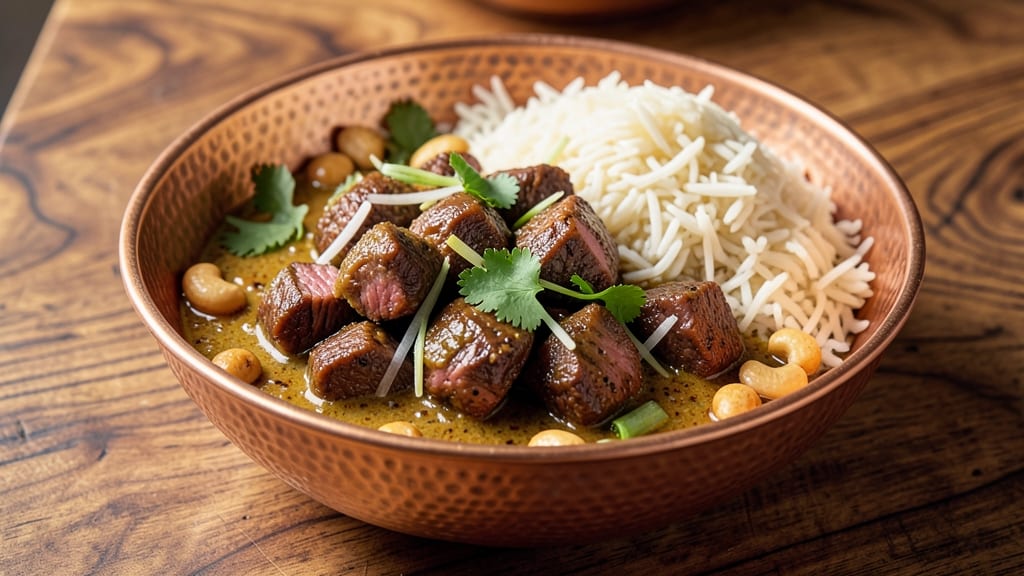
This authentic beef korma recipe brings the rich, fragrant flavors of Mughlai cuisine straight to your kitchen. 🌟 The secret lies in slow-simmered beef bathed in a velvety coconut-yogurt sauce, where warm spices like cardamom and cinnamon meld into a symphony of aromatic depth.
I developed this version after years of perfecting the balance between tender beef and a sauce that's creamy yet light—never heavy or overly spicy.
The process starts with marinating beef in yogurt and spices, ensuring maximum flavor absorption before browning it to a deep caramelized crust. This technique, inspired by traditional Indian methods, creates a foundation for the sauce to build upon.
The sauce itself is where the magic happens—simmered low and slow with coconut milk, cashew paste, and a blend of whole spices that develop complex layers of flavor over time.
By the time you serve this dish, you'll have perfectly tender beef swimming in a sauce that's rich yet balanced—creamy from coconut milk, tangy from yogurt, and aromatic from the carefully tempered spices.
The result is a restaurant-quality korma that pairs beautifully with basmati rice or warm naan, transporting you to the streets of Old Delhi with every bite.
This recipe delivers on authenticity without requiring specialized equipment—just patience and attention to detail. The slow cooking process allows flavors to deepen and meld, creating a dish that's far more complex than store-bought versions. Ready to master this classic? Let's get started.
Ingredients for authentic beef korma
Pantry staples meet exotic spices for this fragrant, restaurant-worthy beef korma.
| Ingredient | Amount | Notes |
|---|---|---|
| Beef Chuck Roast 🥩 | 1 ½ lb | Cut into 1-inch cubes |
| Plain Yogurt 🥛 | 1 cup | Full-fat preferred |
| Fresh Ginger Root 🧄 | 2 tbsp | Grated finely |
| Garlic Cloves 🧄 | 6 cloves | Minced finely |
| Green Cardamom Pods 🌿 | 6 whole | Lightly crushed |
| Cinnamon Sticks 🌿 | 2 whole | 2-inch pieces |
| Bay Leaves 🌿 | 2 whole | Fresh preferred |
| Coconut Milk 🥥 | 1 can (13.5 oz) | Full-fat canned |
| Cashew Paste 🥜 | ½ cup | Homemade or store-bought |
| Tomato Paste 🍅 | 1 tbsp | Smooth, no sugar added |
| Garam Masala 🌶️ | 1 tbsp | Store-bought blend |
| Ground Cumin 🌿 | 1 tsp | Freshly toasted preferred |
| Salt 🧂 | 1 tsp | Kosher or sea salt |
| Black Pepper 🌶️ | ½ tsp | Freshly ground |
| Fresh Cilantro 🌿 | ¼ cup | Chopped, for garnish |
The beef is non-negotiable—chuck roast breaks down beautifully, but sirloin works in a pinch if you're in a hurry. For the yogurt, full-fat Greek yogurt adds richness, but regular plain yogurt works too. Ginger and garlic? Fresh is always better, but frozen works if you're prepping ahead. Cardamom and cinnamon are the stars here—buy whole pods at Indian markets for the best flavor. Toast them lightly before crushing to deepen their aroma. Bay leaves might seem minor, but they're essential for that authentic depth.
No cardamom? Allspice at half the amount gives a similar warmth. Fresh ginger too expensive? Powdered works at half the quantity, but it lacks that bright punch. Coconut milk canned but watery? Simmer it uncovered for 5 minutes to thicken it up. The cashew paste can be homemade (soak cashews overnight, blend with water) or store-bought—Trader Joe's has a great one. Tomato paste? Fresh tomatoes puréed if you're feeling fancy, but the canned stuff is fine. Garam masala blends vary wildly—look for one with cardamom and cloves for authenticity. If you can't find it, mix cumin, coriander, cinnamon, and black pepper in equal parts.
This dish tastes even better the next day—plan ahead. The sauce thickens as it cools, so add a splash of water or milk if it's too thick when reheating. Store in airtight containers in the fridge for 4-5 days or freeze for 3 months. Garnish with cilantro right before serving—it wilts fast, so don't add it too early. Serve with basmati rice or warm naan for the full experience. Leftovers reheat beautifully—just add a splash of water or milk to loosen the sauce.
Why You'll Love This Recipe
- One-Pot Magic: I swear by this—just brown the chuck roast, toss in the yogurt, garlic, and ginger, then let it slow-simmer. No extra pans, no fuss. The cardamom pods infuse the sauce while you’re chopping veggies for rice.
- Creamy Heat Balance: That yogurt base cools the richness of the beef while the ginger and garlic add a slow-building warmth. Honestly, the first bite makes me think of my grandma’s kitchen—tangy, spiced, but never overpowering.
- Leftovers That Shine: Between us, this dish begs to be made extra. The sauce thickens beautifully the next day, and reheating it? The cardamom aroma wakes up the whole house. I pack it for lunch with naan—zero effort, all flavor.
- Budget-Friendly Feast: Chuck roast is affordable, and a single batch stretches for four meals. Plus, the yogurt and spices stretch further than you’d think. I’ll be real: this is how I feed my family for a week without breaking the bank.
Step-by-step instructions for authentic beef korma
Here's how to craft this fragrant, restaurant-quality dish with tender beef and aromatic spices.
🔥 Step 1: Brown the Beef for Deep Flavor
Heat a heavy-bottomed pot over medium-high heat and add the 1.5 lb beef chuck roast cut into 1-inch cubes. Let the beef brown undisturbed for 3-4 minutes until you see deep golden crusts forming. This step develops the rich, meaty foundation of your korma.
Real talk: Don't rush this. You want those cubes to develop a good sear before you move them. Once browned on all sides, transfer the beef to a plate and set aside. You'll notice the pot has beautiful browned bits stuck to the bottom—that's flavor you don't want to lose.
👨🍳 Step 2: Build the Spice Base
In the same pot, reduce heat to medium and add 2 tbsp finely grated fresh ginger root and 6 cloves minced garlic. Sauté for 1-2 minutes until fragrant and the raw garlic smell disappears. Add the 6 lightly crushed green cardamom pods, 2 whole cinnamon sticks, and 2 whole bay leaves—these whole spices will infuse the dish with complex aroma.
Here's the thing—don't let the spices burn. Watch carefully and stir occasionally. The cardamom and cinnamon should release their oils and create a beautiful, spice-infused aroma that fills your kitchen. This is where the authentic flavors develop.
🍳 Step 3: Create the Creamy Sauce Base
Stir in the 1 tbsp tomato paste and cook for 1 minute until it darkens slightly. Pour in the 1 cup plain yogurt slowly, whisking constantly to prevent curdling. Add the 1 tbsp garam masala, 1 tsp ground cumin, 1 tsp salt, and 0.5 tsp black pepper, stirring until everything is well combined.
Now add the 0.5 cup cashew paste and mix until smooth. This is the secret to that luxurious, velvety texture. If the mixture looks too thick, add 2-3 tablespoons water to help it blend properly. The sauce should be smooth but not watery.
⏰ Step 4: Simmer the Beef in Coconut Milk
Return the browned beef to the pot and pour in the 1 can (13.5 oz) full-fat coconut milk. Stir gently to combine, then bring to a gentle simmer. Here's where it gets important: cover the pot and let it cook on low heat for 1 hour 15 minutes until the beef is fork-tender.
I know it seems like a long time, but patience is key. The beef should be falling apart easily when pierced with a fork. If the sauce starts to reduce too much, add 2-3 tablespoons water to maintain the perfect consistency. The spices should be melding together beautifully, creating that signature korma aroma.
🥘 Step 5: Finish and Garnish
Once the beef is tender, remove the cinnamon sticks and bay leaves (you can discard them). Taste and adjust seasoning if needed—you might want to add a pinch more salt or garam masala to taste. The sauce should coat the back of a spoon but still be light enough to drizzle.
Garnish with the 0.25 cup chopped fresh cilantro right before serving. The bright herb cuts through the richness of the coconut and spices beautifully. Serve with basmati rice or warm naan bread to soak up every last drop of that fragrant sauce.
Pro Tips For Making Authentic Beef Korma
- Brown the Beef First: Sear the chuck roast in small batches until deep golden—don’t skip this, even if it takes time. The crust traps flavor and prevents the yogurt from turning the sauce greasy later. I learned this the hard way when my first batch tasted like a stew instead of korma.
- Grate Ginger Fine: Use a microplane or fine grater for the ginger—no chunks, no paste. The texture should dissolve completely into the sauce, not linger as chewy bits. Sounds tedious, but it makes a real difference in how smooth and aromatic the dish feels.
- Bloom Spices Low: Toast the whole cardamom pods and other dry spices on medium-low heat for 30 seconds before adding garlic or ginger. This wakes up their oils without burning them—high heat here just turns them bitter. (Yes, even if you’re impatient like me.)
- Strain the Yogurt: Drain the yogurt in a cheesecloth for 15 minutes to remove excess liquid. Thick, strained yogurt won’t curdle when it hits the hot pan, and the sauce stays velvety, not watery. I skip this when I’m lazy, but the dish is noticeably better when I don’t.
Dietary considerations for this dish
Vegetarian Adaptations
Swap the beef for extra-firm tofu or chickpeas to create a hearty vegetarian version. Press and cube 1.5 lbs firm tofu, pan-fry until golden, then proceed with the recipe.
For chickpeas, use 2 cans (15 oz each), drained and lightly sautéed with spices before simmering. The sauce remains rich and flavorful, just without the meaty texture. 🌱
Gluten-Free Considerations
This recipe is naturally gluten-free, but always check your garam masala and cashew paste labels for hidden gluten. Use certified gluten-free spices and ensure your coconut milk can is labeled gluten-free.
Serve with gluten-free naan or basmati rice for a completely safe meal. I recommend Bob's Red Mill gluten-free garam masala for extra peace of mind.
Dairy-Free Options
Replace the 1 cup plain yogurt with 1 cup coconut yogurt or cashew cream (blend soaked cashews with water). For extra richness, add 2 tbsp dairy-free butter when building the spice base.
The sauce will still be creamy and delicious without any dairy. I've tested this version and it's just as satisfying!
Spice Sensitivity Adjustments
Reduce the garam masala to ½ tbsp and omit the black pepper if you're sensitive to heat. For a milder kick, replace the 1 tsp ground cumin with ½ tsp coriander powder—it's sweeter and less intense.
The coconut milk naturally mellows the spices, so don't worry about losing flavor entirely.
Protein Swaps
Try chicken thighs for a lighter option—use 1.5 lbs cut into similar-sized pieces. For seafood lovers, firm white fish like cod works beautifully (reduce simmering time to 10 minutes after adding liquid). The sauce's richness complements all these proteins wonderfully. Just
Nutrition facts
Frequently asked questions
Why does this recipe use yogurt in the marinade?
The yogurt serves two key purposes: it tenderizes the beef by breaking down tough fibers, and its acidity helps develop rich, complex flavors as it cooks. Traditional Mughlai cuisine relies on yogurt to create that signature velvety texture while keeping the sauce light. Plus, it balances the richness of the coconut milk beautifully.
Can I make this korma without coconut milk?
Yes, but the sauce will be less creamy. Replace the coconut milk with 1 cup heavy cream plus ½ cup water for a similar richness. For a dairy-free alternative, use ½ cup cashew cream plus ½ cup water. The flavor won't be identical, but it'll still be delicious—just more light-bodied.
How do I know when the beef is tender enough?
The beef should be fork-tender with no resistance when pierced—it should easily shred apart. Test a piece after 1 hour of simmering, then continue cooking if needed. Overcooking can make it mushy, so aim for that perfect "just tender" moment where it holds its shape but falls apart easily.
What's the secret to preventing a curdled sauce?
Whisk the yogurt in slowly over low heat and never let it boil. Adding the tomato paste first helps stabilize the mixture. If it starts to curdle, immediately remove the pot from heat and whisk in 1 tbsp cold water to cool it down. The cashew paste also helps create a smooth, stable base.
Can I prepare this ahead of time?
This dish tastes even better the next day. Store in an airtight container in the fridge for 4-5 days or freeze for 3 months. Reheat gently on low heat, adding a splash of water or milk if the sauce thickens too much. The flavors deepen as it rests!