
Main Courses
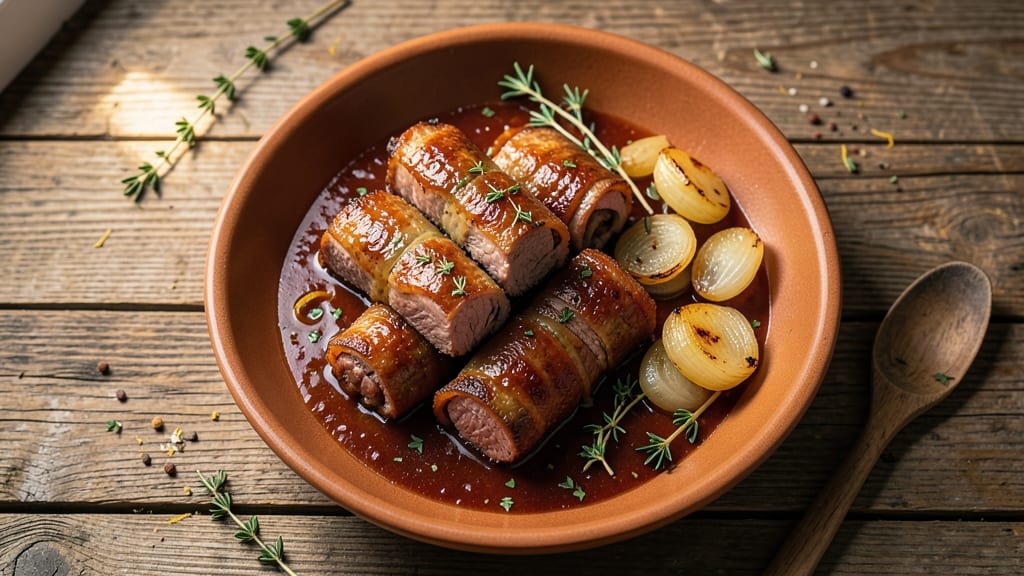
This authentic German beef rouladen recipe brings hearty Bavarian tradition to your dinner table with tender beef rolls stuffed with tangy mustard and sweet onions. The secret lies in thinly sliced beef—pounded just right—and slow braising that transforms tough cuts into melt-in-your-mouth perfection.
German kitchens rely on this method for its rich, savory depth, and the mustard-onion filling adds a signature tang that balances the beef's richness.
The recipe follows traditional German techniques: beef is rolled tightly around the mustard-onion mixture, then braised in a flavorful broth until fork-tender. This slow cooking method ensures the meat stays juicy while absorbing the aromatic flavors of the braising liquid.
The result is a dish that's both comforting and impressive—ideal for family dinners or special occasions. Authenticity comes from the braising process and the classic mustard-based gravy that ties everything together.
Serve this dish with traditional German sides like red cabbage or buttery spaetzle to complete the meal. The rich, savory beef pairs beautifully with the slightly sweet and tangy cabbage, while the dumplings soak up every bit of the delicious gravy.
This recipe delivers the true taste of Germany, with techniques and flavors that have been perfected for generations. The slow-cooked beef becomes irresistibly tender, making it a standout centerpiece for any table.
For those looking to modernize the dish, consider adding a splash of red wine to the braising liquid or using gluten-free flour for the gravy. The key to success is patience—letting the beef braise until it falls apart easily.
This is a recipe that rewards your time with a deeply satisfying, restaurant-quality meal that feels like a taste of home.
Ingredients for authentic german beef rouladen
Fourteen ingredients deliver authentic Bavarian flavor with tender beef and aromatic filling.
| Ingredient | Amount | Notes |
|---|---|---|
| Top Round Roast Beef 🥩 | 1 ½ lb | Thinly sliced against grain |
| Dijon Mustard 🍯 | ¼ cup | High-quality for tangy flavor |
| Yellow Onions 🧅 | 2 whole | Thinly sliced, caramelized |
| Fresh Thyme 🌿 | 1 tbsp | Leaves only, chopped |
| Fresh Parsley 🌿 | ¼ cup | Chopped, for garnish |
| Beef Broth 💧 | 3 cups | Low-sodium preferred |
| Red Wine 🍷 | ½ cup | Dry, like Cabernet |
| Tomato Paste 🍅 | 2 tbsp | Smooth, not chunky |
| All-Purpose Flour 🌾 | 2 tbsp | For gravy thickening |
| Olive Oil 🫒 | 2 tbsp | For searing beef |
| Bay Leaves 🌿 | 2 whole | Fresh preferred |
| Salt 🧂 | 1 ½ tsp | Kosher or sea salt |
| Black Pepper 🌶️ | ½ tsp | Freshly ground |
| Garlic Cloves 🧄 | 4 cloves | Minced for filling |
The beef cut matters—top round roast is lean but tender when sliced thin. Look for well-marbled meat at Whole Foods or your local butcher; avoid pre-sliced deli cuts. Thin slices are key—pound to 1/8-inch thickness against the grain for perfect rolling. The mustard should be Dijon-style for that signature tang. If using pre-sliced onions, caramelize them first—they're the flavor foundation here.
No red wine? Substitute beef broth with an extra splash of balsamic vinegar. Fresh thyme is ideal, but dried works at half the amount. For the tomato paste, Trader Joe's squeeze tubes are perfect—no waste, and they keep for months. The flour matters for gravy—Diamond Crystal kosher salt dissolves better than others. If you're gluten-free, swap for cornstarch. The bay leaves? Fresh is best, but dried works in a pinch if you don't have any.
Store fresh thyme and parsley wrapped in damp paper towels for 5-7 days. The raw beef rolls can be prepped ahead and refrigerated for 1 day before braising. Gravy reheats beautifully—simply stir in a splash of beef broth. For leftovers, freeze in portions for up to 3 months. The onions caramelize best when made fresh, but you can par-cook and freeze them for convenience.
Why You'll Love This Recipe
- No Pansy Prep: I swear by this method—just slice the beef, slather on that Dijon mustard, and roll it up like a burrito. No fancy carving skills needed, and the onions stay put between those tight layers.
- Thyme for Magic: That first bite of tender beef with the bright, herby mustard cutting through? It’s like a German bistro in my kitchen. The thyme and parsley finish it off with a freshness that makes it feel special without the fuss.
- Budget Beef That Feels Fancy: Top round roast is affordable, but the mustard and herbs make it taste like you spent hours. Honestly, it’s my go-to for dinner parties because it’s reliable, hearty, and looks impressive with zero effort.
Step-by-step instructions for authentic German beef rouladen
This traditional German dish delivers tender beef rolls stuffed with savory mustard and onions.
Prepare the Thinly Sliced Beef
Begin by slicing the 1.5 lb Top Round Roast Beef thinly against the grain into strips about ¼-inch thick. I use a sharp boning knife for clean cuts—this prevents tearing and ensures even cooking. The slices should be long enough to roll tightly later.
Place the beef slices between two sheets of plastic wrap and pound gently with a meat mallet until they reach a uniform ⅛-inch thickness. This step is crucial for even cooking and maximum tenderness. The beef should remain intact but pliable enough to roll without cracking.
Create the Mustard-Onion Filling
In a small bowl, combine the 0.25 cup Dijon Mustard, 4 minced garlic cloves, and 1 tbsp chopped fresh thyme. Mix well to create a smooth paste—this will be the base of your filling. The Dijon mustard adds that classic tangy flavor that defines authentic Rouladen.
Next, thinly slice the 2 whole Yellow Onions into long, paper-thin strips. You'll need about 1 cup of sliced onions for the filling. Set aside—these will caramelize beautifully during the cooking process, adding sweetness that balances the mustard's sharpness.
Assemble the Beef Rolls
Spread 1 tablespoon of the mustard mixture onto each beef slice, leaving a ½-inch border along one long edge. This prevents the filling from leaking out during cooking. Place 1-2 onion strips along the same edge, then tightly roll each slice into a neat cylinder.
Secure each roll with a toothpick or kitchen twine. I like to make them as compact as possible—this ensures they hold together while braising. Arrange the completed rolls seam-side down in a single layer in a large skillet or Dutch oven.
Sear the Rouladen
Heat 2 tablespoons Olive Oil in the skillet over medium-high heat until shimmering. Carefully add the beef rolls and sear for 3-4 minutes per side until they develop a deep golden-brown crust. This step creates the Maillard reaction that gives Rouladen its rich flavor.
Don't overcrowd the pan—work in batches if needed. The rolls should release easily from the pan when ready to flip. Remove the seared rolls and set aside temporarily while you prepare the braising liquid.
Braise to Perfection
In the same skillet, add 2 tablespoons Tomato Paste and cook for 1 minute to deepen its flavor. Deglaze with 0.5 cup Red Wine, scraping up any browned bits from the bottom of the pan—this captures all the flavor you've built.
Add 3 cups Beef Broth, 2 whole Bay Leaves, 1.5 tsp Salt, and 0.5 tsp Black Pepper. Bring to a gentle simmer, then return the beef rolls to the skillet. Cover and transfer to a 325°F oven for 1 hour 15 minutes, turning the rolls halfway through cooking.
Finish and Serve
Remove the rolls from the oven and let them rest for 10 minutes before serving. The braising liquid should have reduced slightly, creating a rich gravy. Remove the bay leaves and stir in 2 tablespoons All-Purpose Flour to thicken the sauce if needed.
Garnish with 0.25 cup chopped Fresh Parsley just before serving. The rolls should be fork-tender with a perfect balance of flavors—tangy mustard, sweet onions, and rich beef. Serve with traditional German sides like red cabbage or buttered potatoes for an authentic meal.
Pro Tips For Making Authentic German Beef Rouladen
- Pound Thin, Not Flat: Top round can be stubborn—aim for ¼-inch thickness when rolling, not paper-thin. I learned this the hard way when my first batch split open like overstuffed sausages. Use a meat mallet or rolling pin, not just your hands, and resist the urge to overwork the edges.
- Mustard First, Then Salt: Spread Dijon mustard before salting the beef. The acid in the mustard helps tenderize the meat, and salting after lets the seasoning penetrate deeper. Skip this, and your rouladen will taste bland no matter how long you braise.
- Onions in Layers, Not Piles: Slice onions paper-thin and layer them evenly inside each roll—no clumps. I used to stuff them in like taco filling, and they’d either burn or turn to mush. Thin slices caramelize perfectly and stay intact during cooking.
- Braise Low and Slow: Start with a hot pan to sear the rouladen, then drop the heat to 170°C (340°F) for braising. Too high, and the mustard burns; too low, and the onions stay raw. A Dutch oven with a tight lid keeps moisture locked in—no peeking, or you’ll lose steam.
Essential equipment for authentic german beef rouladen
Dutch Oven Essentials
Your Dutch oven is the star of this recipe—it's the only vessel that can sear, braise, and even bake the rouladen perfectly. I swear by a Le Creuset Signature Dutch Oven (5.5-quart size) for its even heat distribution and durable construction.
If you're on a budget, the Amazon Basics Dutch Oven works well too—just avoid cheap, thin-gauge metal that warps easily. The deep sides prevent spills during searing, and the tight lid traps moisture for tender beef. 🔥
Meat Mallet Must-Have
A meat mallet is non-negotiable for pounding the beef to the perfect ⅛-inch thickness. My go-to is the OXO Good Grips Meat Tenderizer Mallet—it's lightweight but delivers consistent pressure. Avoid rolling pins or heavy hammers, which can tear the beef fibers.
For a budget option, the Basics Meat Mallet from Amazon works fine. Pounding the beef evenly ensures all rolls cook at the same rate and stay intact during braising.
Toothpicks or Twine
You'll need something to secure those rolls while they cook—toothpicks or kitchen twine both work. I prefer wooden toothpicks (like Dart brand) because they're easy to insert and remove without breaking.
For larger rouladen, heavy-duty kitchen twine (like Butcher's Twine) is better—it won't dissolve in the braising liquid. Avoid plastic twine, as it can melt or leach chemicals into your food. 💡
Precision Thermometer
While braising, you want to maintain a steady 325°F temperature. A thermometer ensures your oven isn't fluctuating. The ThermoWorks Oven Thermometer is my top pick—it's affordable and accurate. For a no-fuss option, the Taylor Precision Digital Thermometer works well too.
Place it near the rouladen (not touching) to monitor the internal temperature of the beef. Aim for 195°F for fork-tender results.
Sharp Boning Knife
A sharp boning knife (like the Wüsthof Classic Boning Knife) is essential for slicing the beef against the grain. Dull knives crush the fibers, making the rolls tough. Invest in a quality knife—it's worth the splurge.
If you're new to boning, practice on a cheap cut of beef first. The goal is ¼-inch thick slices that roll neatly without tearing. A flexible blade helps navigate the curves of the beef roast.
Slotted Spoon for Handling
Use a slotted spoon (like the OXO Good Grips Slotted Spoon) to handle the rouladen during searing and braising. It lets the braising liquid drip back into the pot, keeping the beef moist. Avoid regular spoons—they'll trap liquid and make the rolls soggy.
A long-handled spoon also helps if your Dutch oven has high sides. Pro tip: Use it to flip the rolls gently during searing for even browning. ✨
Nutrition facts
Frequently asked questions
Can I make rouladen with a different cut of beef?
For authentic results, stick with top round roast or sirloin tip roast—these cuts are lean but tender when sliced thin. You could try chuck roast (more marbling), but it may need longer braising. Avoid pre-sliced deli beef—it's too thin and lacks the proper texture for rolling. The key is thin slices against the grain for perfect tenderness.
What if I don't have red wine for the braising liquid?
No problem! Substitute with ½ cup beef broth plus 1 tablespoon balsamic vinegar for depth. For extra richness, add 1 teaspoon soy sauce. The wine's acidity helps tenderize the beef, but these alternatives work well. Just ensure your braising liquid is salted properly—the vinegar can be acidic.
How do I prevent the filling from leaking during cooking?
Leave a ½-inch border of beef uncovered when applying the mustard filling—this creates a seal. Roll tightly and secure with toothpicks or twine. For extra insurance, lightly brush the outside of each roll with egg wash before searing. The mustard should be thick enough to stick but not runny.
Can I make rouladen ahead of time?
Assemble the rolls and refrigerate them uncooked for up to 24 hours before braising. For leftovers, store cooked rouladen in the fridge for 3-4 days or freeze for 3 months. Reheat gently in the oven with a splash of broth to maintain moisture. The flavors actually improve after resting overnight!
What's the best way to reheat rouladen?
Place rouladen in a skillet with a splash of beef broth and cover. Warm over low heat for 10-15 minutes until heated through. Avoid microwaving—it makes the beef tough. For oven reheating, cover with foil and bake at 300°F for 20 minutes. The gravy will thicken slightly upon reheating.