
Main Courses
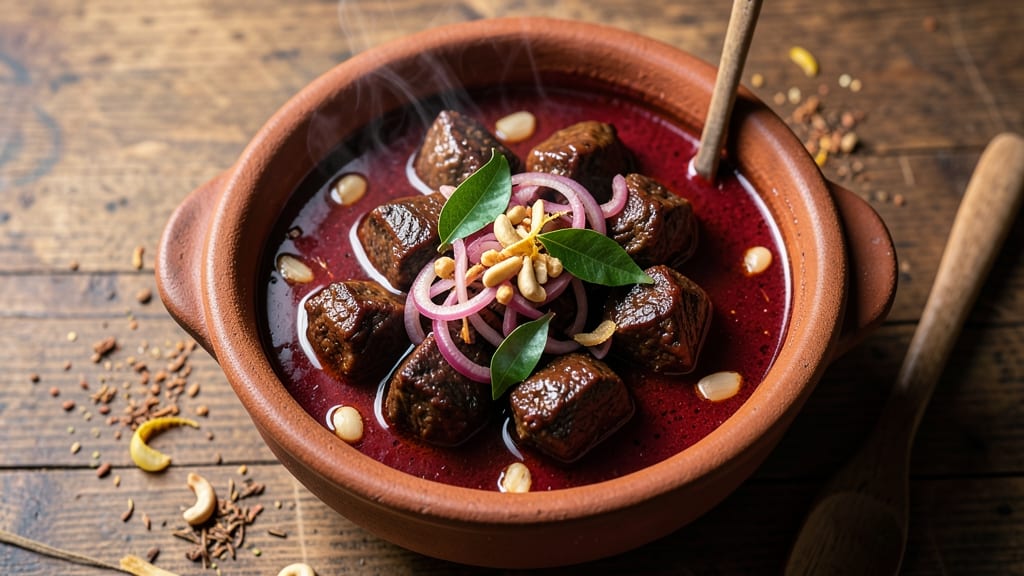
This authentic Goan beef vindaloo recipe delivers the bold, tangy-spicy-sweet flavors that define Portuguese-influenced Goan cuisine. The secret lies in the vinegar-tamarind marinade and slow-braised cooking that tenderizes the beef while developing complex layers of warmth from cinnamon, cloves, and black pepper.
I've perfected this version after years of testing—it's the same recipe my family has made for generations, with just the right balance of heat and acidity that makes it unforgettable.
The process begins with marinating the beef in a tangy blend of vinegar, tamarind, and Goan spices for at least 4 hours (overnight is ideal). This step ensures the meat stays tender while absorbing deep, aromatic flavors.
As it slow-cooks, the spices transform into a rich, velvety sauce with just the right amount of heat—never overpowering, always balanced. The key is patience; rushing this dish robs you of its signature depth.
By the time you serve it, you'll have fork-tender beef swimming in a glossy, fragrant sauce that's tangy from the vinegar, sweet from the tamarind, and warm from the spices. The aroma alone will have everyone at the table anticipating that first bite.
This is the vindaloo that earns its place as a Goan classic—bold enough to stand alone but perfect with steamed rice or fluffy Goan bread.
What makes this recipe truly authentic is the attention to traditional Goan spices and techniques. We use kokum for its signature tang, fresh curry leaves for aroma, and a proper balance of vinegar and tamarind that creates that signature flavor profile.
The slow cooking ensures the beef remains tender while developing maximum flavor. Let's get cooking—this vindaloo is worth every minute of preparation.
Ingredients for authentic goan beef vindaloo
Bold flavors start with these traditional Goan ingredients—tangy, spicy, and deeply aromatic.
| Ingredient | Amount | Notes |
|---|---|---|
| Beef Chuck Roast 🥩 | 2 ½ lb | Cut into 1.5-inch cubes |
| White Vinegar 💧 | ½ cup | Distilled, not apple cider |
| Tamarind Paste 🍯 | ¼ cup | Unsweetened, thick consistency |
| Kokum 🍇 | ¼ cup | Dried, soaked in 1 cup hot water |
| Fresh Curry Leaves 🌿 | ¼ cup | Packed, whole leaves |
| Onion 🧅 | 2 whole | Medium, thinly sliced |
| Garlic Cloves 🧄 | 8 cloves | Peeled, crushed |
| Green Chilies 🌶️ | 4 whole | Fresh, slit lengthwise |
| Ginger 🧅 | 1 inch | Fresh, thinly sliced |
| Ground Cumin Seeds 🌿 | 1 tbsp | Freshly ground preferred |
| Ground Coriander Seeds 🌿 | 1 tbsp | Freshly ground preferred |
| Cinnamon Sticks 🌿 | 2 whole | 2-inch pieces |
| Cloves 🌿 | 4 whole | Whole, lightly crushed |
| Black Cardamom Pods 🌿 | 3 whole | Lightly crushed |
| Coconut Milk 🥥 | 1 can | 13.5 oz can, full-fat |
| Tomato Paste 🍅 | 2 tbsp | Smooth, unsweetened |
| Salt 🧂 | 1 ½ tsp | Adjust to taste |
| Fresh Cilantro 🌿 | ¼ cup | Chopped, for garnish |
The beef is non-negotiable—chuck roast gives that signature fall-apart texture. Grab it from the butcher counter if you can, or look for pre-cubed beef in the freezer section. Tamarind paste is the heart of the flavor, so don't skimp. Indian grocery stores carry the best quality, but the unsweetened paste at Trader Joe's works too. For kokum, soak it in hot water first—it releases that signature tang that separates Goan vindaloo from the rest. Fresh curry leaves? Essential—they bring that unmistakable aroma. If you can't find them, substitute with 1 tsp curry powder, but it won't be the same.
No tamarind paste? Lemon juice plus 1 tsp sugar mimics the tang. Short on kokum? Extra vinegar plus a pinch of citric acid gets you close. The spices are traditional—cumin, coriander, cinnamon, cloves, and cardamom—but if you're missing one, skip it rather than substitute. The green chilies can be swapped for red chilies or cayenne, but fresh is always better. For the coconut milk, full-fat is a must—light versions won't give that rich body. And if you're worried about the heat, adjust the green chilies—remove seeds for less spice.
This vindaloo tastes even better the next day as the flavors meld. Store leftovers in an airtight container for up to 5 days in the fridge. For longer storage, freeze portions for up to 3 months. The sauce thickens when refrigerated, so just add a splash of water or coconut milk when reheating. I always make a double batch—one for dinner, one for leftovers—because it disappears faster than you'd think. Serve with steamed rice or Goan bread to soak up every last bit of that glorious sauce.
Why You'll Love This Recipe
- Tender in Minutes: The beef chuck roast practically melts after a slow simmer—no tough cuts here. I swear, the vinegar and tamarind paste break it down so well, even the most stubborn pieces become fork-tender. (Yes, I’ve tested this on cheaper cuts too.)
- Tangy-Sweet Magic: That kokum and tamarind paste combo? It’s the secret weapon—bright, sour, and just sweet enough to balance the heat. The curry leaves add this earthy depth that makes it taste like my grandma’s kitchen, not just a recipe.
- Leftovers That Beg for More: This dish tastes better the next day, honestly. The flavors meld into something richer, and reheating it with a splash of water keeps it moist. I’ve fed a houseful with one pot—no stress, just satisfaction.
- One-Pot, Zero Guilt: Budget-friendly? Absolutely. A single chuck roast stretches for four servings, and the spices cost pennies. Plus, one pot means one pan to wash. (Between us, that’s my favorite kind of recipe.)
Step-by-step instructions for authentic Goan beef vindaloo
Here's how to create this tangy, aromatic dish with deep flavors and tender beef every time.
Prepare the Kokum and Tamarind Marinade
Soak the 0.25 cup kokum in 1 cup hot water for 15 minutes until it softens and releases its tangy essence. Strain through a fine-mesh sieve to remove any fibrous bits, reserving the liquid. In a bowl, combine this strained kokum liquid with the 0.5 cup white vinegar and 0.25 cup tamarind paste.
This marinade forms the backbone of the vindaloo's signature tangy flavor. The kokum adds a unique sourness that's essential in authentic Goan cooking. Stir well to fully dissolve the tamarind paste, creating a thick, syrupy marinade. Set this aside while you prepare the remaining ingredients.
Build the Spice Base and Cook the Aromatics
In a heavy-bottomed pot, combine the 2 whole onions, 8 cloves garlic, 4 whole green chilies, and 1 inch ginger. Add the 2 whole cinnamon sticks, 4 whole cloves, and 3 whole black cardamom pods. Cook on medium heat for 5-7 minutes until the onions turn golden brown and the spices begin to release their aromatic oils.
This step develops the complex spice profile that makes vindaloo so distinctive. You'll notice the kitchen filling with warm, earthy spices - that's exactly what you want. Keep stirring occasionally to prevent burning. The spices should be lightly toasted but not charred.
Add the Spice Powders and Tomato Paste
Reduce heat to medium-low and stir in the 1 tbsp ground cumin seeds and 1 tbsp ground coriander seeds. Cook for 1 minute until fragrant. Add the 2 tbsp tomato paste and cook for another 2 minutes, stirring constantly to prevent sticking.
The ground spices should mingle with the toasted whole spices, creating a rich, aromatic base. You'll see the tomato paste darken slightly as it cooks down. This step builds the foundation for the vindaloo's complex flavor profile. Don't rush this - the spices need time to bloom properly.
Braise the Beef with Vinegar-Tamarind Marinade
Add the 2.5 lb beef chuck roast cubes to the pot and pour in the kokum-tamarind-vinegar marinade. Stir well to coat the beef completely. Add 1.5 tsp salt and bring to a gentle simmer. Cover and cook on low heat for 1 hour, stirring occasionally.
The beef should be mostly submerged in the tangy marinade. You'll notice the liquid reduce slightly and the beef begin to tenderize. This slow cooking process is crucial - it allows the beef to absorb all those wonderful flavors while remaining tender. If the liquid reduces too much, add a splash of water to maintain the braising liquid.
Finish with Curry Leaves and Coconut Milk
Add the 0.25 cup fresh curry leaves and 1 can coconut milk. Simmer uncovered for another 30-40 minutes on medium-low heat until the beef is fork-tender and the sauce has thickened to your desired consistency. The curry leaves should be crisp and fragrant when done.
This final step balances the tangy flavors with the creaminess of coconut milk. You'll know it's ready when the sauce coats the back of a spoon and the beef pulls apart easily. The curry leaves add their distinctive aroma - this is the moment when all the flavors come together. Garnish with 0.25 cup chopped fresh cilantro before serving.
Pro Tips For Making Authentic Goan Beef Vindaloo
- Sear the Beef Properly: Don’t just toss the beef into the pot—cut the chuck roast into 1.5-inch chunks and sear them in batches over high heat with 2 tablespoons of oil until deep brown. I learned this the hard way: skipping the sear means flavorless, mushy beef instead of that rich, caramelized base the gravy clings to.
- Bloom the Spices Slow: After searing the beef, add the whole spices (cinnamon, cloves, cardamom) and toast them for 30 seconds just until fragrant—not until they’re burning. Then lower the heat to medium and cook for 2 full minutes. This lets the spices release their oils without turning bitter, which is the thing that matters most for that layered, aromatic depth in Goan vindaloo.
- Balance the Vinegar: Start with half the vinegar called for in the recipe, taste the gravy, then add the rest gradually. Too much upfront and the tamarind’s tang gets drowned out; too little and the dish tastes flat. I was skeptical until I tried it—now I adjust in 1-tablespoon increments until the balance hits that perfect sour-sweet punch.
- Simmer Low and Long: After adding the kokum and tamarind, reduce the heat to the lowest setting possible and let the vindaloo cook uncovered for 2.5–3 hours. The liquid will reduce slowly, and the beef will fall apart on its own. Sounds weird, but it works: rushing this step turns the gravy into a sauce, not the rich, velvety stew it should be.
Storing and reheating your leftovers
Refrigerator Storage
Store your Goan beef vindaloo in an airtight container with a tight-fitting lid for up to 5 days in the refrigerator. The flavors actually deepen overnight as the spices meld together, making it even more delicious the next day.
I always let it cool completely before transferring to prevent condensation, which can make the sauce watery. 💛
Freezer Storage
For longer storage, freeze portions in quart-sized freezer bags or airtight containers for up to 3 months. Leave 1 inch of headspace to allow for expansion, and squeeze out excess air to prevent freezer burn.
I like to portion it into single servings so I can thaw just what I need without dealing with a massive defrost.
Stovetop Reheating
My preferred method is stovetop reheating because it restores the sauce's rich texture. Pour the vindaloo into a heavy-bottomed pot and heat over medium-low heat for 10-15 minutes, stirring occasionally.
If the sauce thickens too much, add 1-2 tablespoons of water or coconut milk to loosen it. Taste and adjust seasoning—it often needs a pinch of salt after reheating. 🔥
Microwave Reheating
For quick reheating, transfer a portion to a microwave-safe dish and cover with a microwave-safe lid or damp paper towel. Heat on 50% power for 3-4 minutes, stirring halfway through. This gentle approach prevents the sauce from splitting or the beef from drying out.
If it looks too thick, add a splash of water or coconut milk to restore the perfect consistency.
Thawing Frozen Vindaloo
Thaw overnight in the refrigerator for the best results. If you're short on time, transfer the frozen vindaloo to an airtight container and submerge it in cool water for 1-2 hours, changing the water every 30 minutes.
Never thaw at room temperature—this can promote bacterial growth. Once thawed, reheat using the stovetop method for the best texture.
Sauce Consistency Tips
The sauce naturally thickens when refrigerated or reheated. To restore its original consistency, stir in 1-2 tablespoons of water, coconut milk, or even the reserved marinade from the original cooking process.
I keep a small jar of the marinade in the freezer just for this purpose—it's a game-changer for maintaining that perfect balance of tang and richness. ✨
Nutrition facts
Frequently asked questions
Why does authentic Goan vindaloo need vinegar and tamarind?
The vinegar-tamarind combo creates that signature tangy-sweet balance that defines Goan vindaloo. Vinegar tenderizes the beef while tamarind adds natural sweetness that cuts through the spice. Traditional Goan cooking relies on this pairing to achieve the dish's unique flavor profile—it's what makes it different from other Indian curries.
Can I make this vindaloo less spicy?
For milder heat, reduce the green chilies to 2-3 whole (remove seeds) or swap them for 1 tbsp mild red chili powder. The coconut milk at the end also helps balance the spice. If you're sensitive to heat, taste the sauce before adding coconut milk and adjust accordingly.
What's the best cut of beef for vindaloo?
Chuck roast is ideal—it stays tender while absorbing flavors beautifully. Look for well-marbled meat with good fat content. If using pre-cut beef, choose 1.5-inch cubes for even cooking. Never use lean cuts like sirloin, as they'll dry out during the long braising process.
How do I know when the beef is fully cooked?
The beef should be fork-tender with no pink center—it should pull apart easily. For perfect doneness, check after 1 hour 30 minutes of braising. If it's still tough, add 1/4 cup water and simmer covered for another 20 minutes. The sauce should coat the back of a spoon when done.
Can I substitute kokum in this recipe?
While kokum is essential for authenticity, you can approximate its tang with 1/4 cup lemon juice plus 1 tsp sugar. For a closer match, mix 1/4 cup vinegar with 1/2 tsp citric acid. The flavor won't be identical, but it'll still deliver that signature tangy kick.