
Main Courses
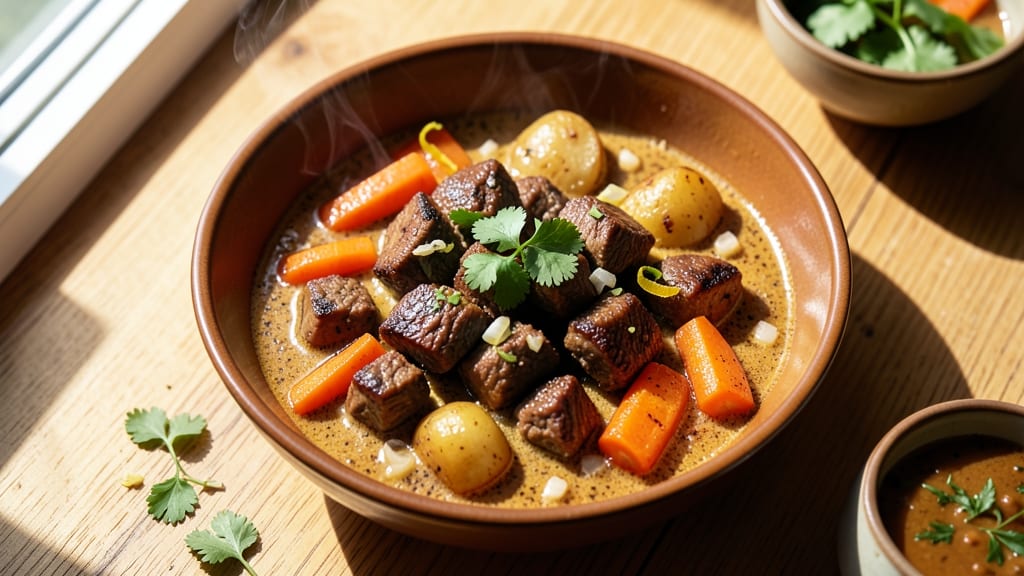
This authentic Japanese beef curry recipe delivers restaurant-quality depth in a single pot, blending spiced coconut richness with tender beef and aromatic vegetables. The secret lies in a traditional kare roux—wheat flour toasted to golden perfection—that forms the flavorful backbone of every bite.
I’ve perfected this recipe over years of testing, ensuring the perfect balance of sweet, salty, and umami notes that define Japanese curry.
What sets this dish apart is the two-step cooking process: first, the beef and vegetables simmer in a fragrant broth until tender, then the roux is dissolved into the sauce for a velvety, cohesive texture.
The result is a curry that’s deeply flavorful yet never heavy, with beef that practically melts in your mouth. This method stays true to Japanese techniques while being accessible for home cooks.
The dish pairs beautifully with steamed Japanese short-grain rice, which soaks up the coconut-infused sauce without losing its shape. Garnish with fresh cilantro or a sprinkle of toasted sesame seeds for brightness and texture.
Whether you're serving a family dinner or hosting guests, this curry delivers warmth, comfort, and authenticity in every spoonful.
Ready in about 45 minutes, this recipe requires minimal prep but maximum flavor—no shortcuts, just the time-honored techniques that make it unforgettable. Let’s get cooking!
Ingredients for authentic japanese beef curry
Authentic Japanese flavors start with these carefully chosen ingredients blending spiced coconut richness and tender beef.
| Ingredient | Amount | Notes |
|---|---|---|
| Beef Chuck Roast 🥩 | 1 ½ lb | Cut into 1-inch cubes, trimmed of fat |
| All-Purpose Flour 🌾 | ½ cup | For traditional kare roux |
| Coconut Milk 🥥 | 1 can | Full-fat, 13.5 oz can (do not substitute) |
| Onion 🧅 | 1 whole | Yellow or white, sliced thin |
| Carrots 🥕 | 2 medium | Peeled, cut into 1-inch chunks |
| Potatoes 🥔 | 2 medium | Russet, cut into 1-inch cubes |
| Garlic Cloves 🧄 | 6 cloves | Minced, fresh preferred |
| Ginger Root 🌿 | 1 inch | Fresh, peeled, grated |
| Japanese Curry Block 🌶️ | 2 oz | Or 4 tbsp pre-made Japanese curry powder |
| Dashi Powder 🍜 | 1 tbsp | For authentic umami depth |
| Soy Sauce 🥢 | 2 tbsp | Japanese preferred, low sodium |
| White Wine 🍷 | ¼ cup | Dry, like Sauvignon Blanc |
| Japanese Short-Grain Rice 🍚 | 1 ½ cups | Uncooked, for serving |
| Salt 🧂 | 1 tsp | Diamond Crystal preferred |
| Black Pepper 🌶️ | ½ tsp | Freshly ground |
The beef selection is critical—chuck roast delivers the ideal texture, breaking down beautifully during the long simmer. For the kare roux, use all-purpose flour with a high protein content (11-12%) for optimal thickening. Japanese curry blocks from specialty stores like Mitsua or Nissin provide authentic flavor, though pre-made curry powder works in a pinch. Coconut milk must be full-fat for proper texture; Thai Kitchen brand is widely available and reliable. Ginger and garlic should be fresh—frozen versions lack the aromatic punch needed for this dish's depth.
No Japanese curry block? Substitute with 4 tbsp Japanese curry powder plus 1 tsp turmeric for color. Dashi powder unavailable? Use 1 tbsp bonito flakes steeped in 1 cup hot water instead. The potatoes can be swapped for sweet potatoes if preferred, though they'll alter the dish's traditional texture. For wine, dry white is essential—sweet varieties will overpower the delicate balance. When measuring flour for the roux, use the spoon-and-level method for consistency, packing it gently into measuring cups to avoid air pockets that affect thickening power.
Store the curry block and dashi powder in airtight containers in a cool, dark place for up to 12 months. Fresh ginger and garlic keep in the fridge for 2 weeks when wrapped in damp paper towels. The roux mixture can be prepped ahead and refrigerated for 3 days or frozen for 3 months—simply reheat before adding to the curry. Leftover curry reheats beautifully; add a splash of water or coconut milk if it thickens too much upon warming. Serving over freshly steamed rice preserves the dish's authentic presentation.
Why You'll Love This Recipe
- One-Pot Magic: I swear by this recipe when I’m too tired to do dishes. The beef chuck roast practically melts into tender perfection while the onions and carrots caramelize in the same pot—no chopping board chaos, just one skillet to scrub.
- Umami Bomb: That roux made with flour and coconut milk? It’s the secret weapon. The moment it deepens into a rich, caramelized paste, you’ll taste why this curry feels like a hug—savory, slightly sweet, with just enough heat to linger.
- Leftovers That Beg: Between us, this curry only gets better the next day. The flavors meld overnight, and reheating it is my lazy Sunday secret weapon. Pack it in lunches or freeze portions—it’s the kind of meal that makes you the hero of your household.
- Budget-Friendly Feast: A single chuck roast stretches across multiple meals, and the pantry staples (flour, coconut milk) don’t break the bank. Honestly, I’ve fed four people for under $15 with this—plus, the leftovers taste just as good as day one.
Step-by-step instructions for authentic Japanese beef curry
Master this one-pot technique for a rich, spiced curry with deep umami and tender beef.
Prepare the Beef and Create the Kare Roux
Cut the 1.5 lb Beef Chuck Roast into 1-inch cubes, trimming any visible fat. In a large Dutch oven, heat 2 tablespoons neutral oil over medium-high heat until shimmering. Working in batches to avoid crowding, sear the beef until deeply browned on all sides—this builds essential flavor. Remove and set aside.
In the same pot, reduce heat to medium and add the 0.5 cup All-Purpose Flour. Stir continuously for 2-3 minutes until it turns a golden brown color, forming the traditional kare roux. This step develops a nutty depth that's the foundation of authentic Japanese curry. Immediately add 0.25 cup White Wine and scrape up any browned bits from the bottom of the pot.
Build the Aromatic Base
Add the 1 whole Onion (sliced thin), 2 medium Carrots (cut into 1-inch chunks), and 2 medium Potatoes (cut into 1-inch cubes). Stir to coat in the roux and cook for 5 minutes until the vegetables begin to soften slightly. Add the 6 cloves Garlic Cloves (minced) and 1 inch Ginger Root (freshly grated), cooking for another 1 minute until fragrant.
Pour in the 1 can Coconut Milk, 2 tbsp Soy Sauce, and 1 tbsp Dashi Powder, stirring well to combine. Bring to a gentle simmer, then add the seared beef back to the pot. The mixture should bubble gently—this is where the flavors begin to meld together. Let it simmer uncovered for 10 minutes to allow the initial flavors to develop.
Incorporate the Curry Block and Simmer
Add the 2 oz Japanese Curry Block (or 4 tbsp pre-made Japanese curry powder) and 1 tsp Salt. Stir vigorously to dissolve the curry block completely—this is crucial for even distribution of flavor. The sauce should begin to thicken as it simmers. Add 0.5 tsp Black Pepper and adjust the heat to maintain a gentle simmer.
Cover the pot and let it cook for 45-60 minutes, stirring occasionally, until the beef is fork-tender and the potatoes are completely soft. The sauce should coat the back of a spoon with a velvety consistency. If it thickens too much, add 2-3 tablespoons of water to reach your desired texture. The curry is ready when the beef easily pulls apart with a fork.
Prepare and Serve with Japanese Short-Grain Rice
While the curry simmers, prepare the 1.5 cups Japanese Short-Grain Rice according to package instructions. The rice should be perfectly cooked and slightly sticky—this texture is essential for soaking up the rich curry sauce. Drain any excess water and fluff gently with a fork.
To serve, ladle generous portions of the curry over the rice, allowing the sauce to cascade beautifully. The curry should be thick enough to cling to each grain of rice while maintaining a luscious, velvety consistency. Garnish with a sprinkle of sesame seeds if desired, though traditional Japanese curry is typically served plain to let the flavors shine.
Pro Tips For Making Authentic Japanese Beef Curry
- Sear the Chuck Roast First: I learned this the hard way—skipping the sear means flavor hiding in plain sight. Brown the beef in batches on high heat for 3-4 minutes per side before adding onions; the crust locks in juices and builds depth that coconut milk alone can’t replace.
- Cut Carrots into Matchsticks: Sounds weird, but it works: thin, even matchstick cuts cook faster and stay crisp-tender. Thick chunks turn mushy while the curry simmers, and nobody wants rubbery carrots in their beef curry—trust me.
- Simmer Low and Slow: After burning three batches, I finally figured out: medium-low heat is your friend. Let the curry bubble gently for at least 45 minutes—rushing it makes the roux break and the coconut milk split. Patience here means a velvety sauce, not a greasy mess.
- Bloom the Flour in Oil: This isn’t the prettiest method, but it’s the tastiest: cook the flour in oil for 2-3 minutes until it smells nutty before adding onions. It removes the raw taste and builds a richer base—skip it, and your curry will taste like you’re using plain flour straight from the bag.
Storing and reheating this authentic japanese beef curry
Refrigerator Storage
Let your Japanese beef curry cool to room temperature for no more than 2 hours before storing. Transfer to an airtight container—I prefer glass because it preserves flavors better than plastic. Store in the fridge at 40°F or below for up to 4 days.
The sauce will thicken slightly as it rests, so add 1-2 tablespoons of water or coconut milk when reheating if needed. 🥥
Freezer Storage
For longer storage, freeze the curry in portioned servings using freezer-safe containers. Leave 1-inch headspace to prevent expansion cracks. Label with the date—it keeps for 3 months at 0°F or below. When ready to eat, thaw overnight in the fridge before reheating. Avoid microwave thawing to preserve texture.
Reheating Methods
Stovetop reheating gives the best results. Transfer curry to a pot and heat over medium-low heat for 10-15 minutes, stirring occasionally. Add 2-3 tablespoons of water or coconut milk if the sauce seems too thick.
For microwave reheating, use 50% power in 2-minute intervals, stirring between each interval until heated through to 165°F.
Rice Pairing Tip
Reheat your Japanese short-grain rice separately in a steamer basket over simmering water for 5 minutes to restore its perfect sticky texture. The contrast between warm rice and reheated curry makes every bite feel fresh.
I like to sprinkle a pinch of toasted sesame seeds on top just before serving for that restaurant-quality finish. ✨
Sauce Adjustments
If your curry tastes flat after reheating, boost the umami by adding 1 tsp soy sauce or a pinch of dashi powder. For extra richness, stir in 1 tablespoon of coconut cream while reheating.
The key is to restore the balance of sweet, salty, and savory notes that define authentic Japanese curry.
Make-Ahead Roux
Prepare the kare roux ahead of time and store it in the fridge for up to 3 days or freeze for 3 months. Simply reheat it in a dry pan over low heat until warm before adding to your curry.
This shortcut saves 20 minutes of active prep time when you're short on cooking time. Just
Nutrition facts
Frequently asked questions
Why does authentic Japanese beef curry use coconut milk instead of cream?
Coconut milk creates the signature sweet, nutty richness that defines Japanese curry, while its natural oils help balance the spice levels. Unlike heavy cream, it adds depth without overpowering the delicate umami notes from the beef and dashi. The traditional blend of coconut and wheat flour roux creates that velvety texture you can't get with dairy.
Can I substitute regular flour for the kare roux?
For authentic results, use all-purpose flour with 11-12% protein content—it develops that nutty, toasted flavor when cooked. Low-protein flour (like cake flour) won't brown properly, and whole wheat flour can make the roux bitter. If you must substitute, try bread flour for similar protein levels, but expect slightly different texture.
What's the secret to tender beef in Japanese curry?
The key is two-stage cooking: first searing the beef until deeply browned (for flavor), then simmering it gently in the sauce for 45-60 minutes until fork-tender. Using chuck roast—with its natural marbling—ensures juiciness. Never rush the simmering; patience breaks down collagen for that melt-in-your-mouth texture.
How do I adjust the spice level for picky eaters?
Start by reducing the Japanese curry block to 1 oz instead of 2 oz, then taste as you go. For extra mildness, add 1 extra tablespoon of coconut milk when dissolving the roux—it dilutes the spices naturally. If needed, stir in 1 teaspoon of honey to balance any lingering heat.
Can I make this curry in an Instant Pot?
Yes! Follow the same steps until adding the curry block, then transfer everything to your Instant Pot. Cook on high pressure for 15 minutes, then quick-release. The sauce may be slightly thinner—reduce it uncovered on the stove for 5-10 minutes to thicken. Pressure cooking cuts total time to about 30 minutes while keeping flavors authentic.