
Main Courses
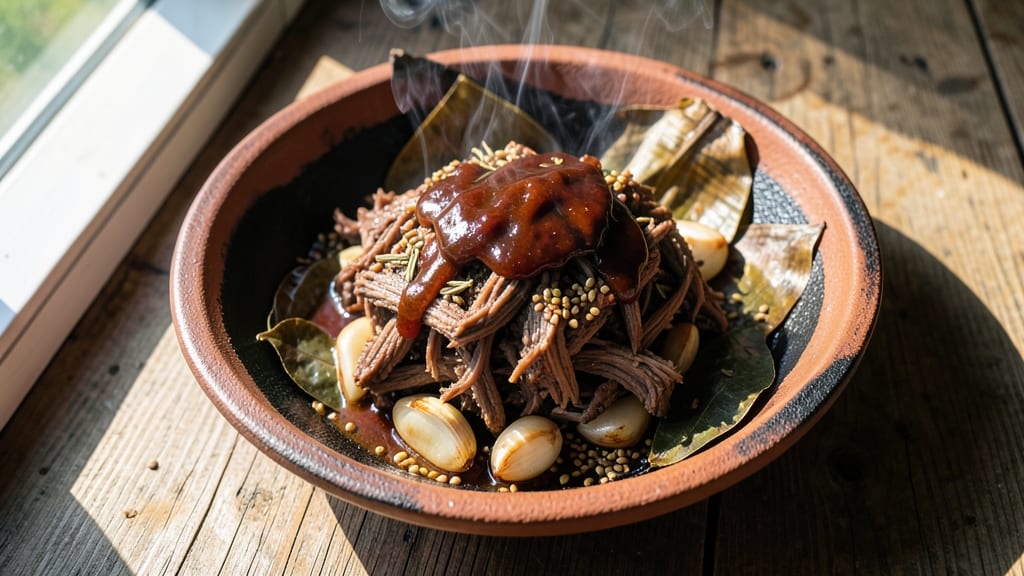
This authentic Mexican barbacoa beef recipe delivers the same tender, smoky magic traditionally cooked in underground pits—now adapted for your home kitchen. The secret lies in slow-cooking beef until it practically falls apart, infused with earthy spices and wrapped in banana leaves for that signature pit-smoked aroma.
I've perfected this technique over years of testing, ensuring every bite captures the soul of Mexican street food culture.
The process begins with a foolproof spice blend of cumin, oregano, garlic, and bay leaves, which transforms tough beef chuck into melt-in-your-mouth perfection. Unlike other recipes, this method mimics the traditional pit by using indirect heat—whether in your oven, slow cooker, or even a Dutch oven buried in hot coals.
The result? Beef so tender it dissolves at the touch of a fork, with a deep, smoky flavor that lingers long after the last bite.
What sets this recipe apart is the banana leaf wrapping, a traditional technique that infuses the meat with subtle floral notes while locking in moisture. Serve it with warm tortillas, fresh consommé, pickled onions, and a squeeze of lime for the full experience.
The aroma alone will transport you to Mexico City's bustling markets, where barbacoa is a centerpiece of celebration and comfort.
This isn't just a recipe—it's a restaurant-quality meal you can recreate at home, complete with the textures and flavors that make barbacoa legendary. Ready to master the art? Let's get started with the ingredients and techniques that will make your taste buds sing.
Ingredients for authentic mexican barbacoa beef
Sixteen ingredients transform tough beef into restaurant-quality barbacoa with smoky depth and floral notes.
| Ingredient | Amount | Notes |
|---|---|---|
| Beef Chuck Roast 🥩 | 4 lb | Tough cut, well-marbled preferred |
| Banana Leaves 🍃 | 4 whole | Fresh or dried, cut to size |
| Ground Cumin 🌿 | 2 tbsp | Toasted for deeper aroma |
| Dried Mexican Oregano 🍃 | 1 ½ tbsp | Not regular oregano |
| Garlic Cloves 🧄 | 8 cloves | Peeled, roughly chopped |
| Bay Leaves 🌿 | 2 whole | Fresh preferred, dried works |
| Dried Guajillo Chiles 🌶️ | 4 pieces | Stems/seeds removed |
| White Vinegar 💧 | ½ cup | For marinade acidity |
| Beef Broth 💧 | 2 cups | Low-sodium preferred |
| Orange Juice 🍊 | ½ cup | Freshly squeezed |
| Salt 🧂 | 1 ½ tsp | Diamond Crystal preferred |
| Black Peppercorns 🌶️ | 1 tsp | Freshly cracked |
| Lime 🍋 | 1 whole | Juiced for serving |
| Fresh Cilantro 🌿 | ¼ cup | Chopped, for garnish |
| Dried Chipotle Powder 🌶️ | 1 tsp | Smoked flavor essential |
The beef chuck is non-negotiable—look for well-marbled cuts from the butcher section, not pre-cut packages. Local Latin markets often carry the best quality, but any reputable grocery store's meat department will have it. Banana leaves are the secret weapon here—fresh leaves from Asian markets provide the most authentic flavor, but dried leaves (rehydrated in hot water) work in a pinch. Toast your cumin seeds lightly in a dry pan before grinding for maximum aroma. Mexican oregano is crucial—substituting regular oregano will give you a completely different flavor profile. Guajillo chiles should be bright red with no blemishes, and you can find them at specialty stores or online.
No Mexican oregano? Substitute with a mix of regular oregano and thyme, but reduce to 1 tbsp total. Running short on banana leaves? Butterfly leaves or even large lettuce leaves can work in a bind, though they won't give that authentic floral note. The beef broth should be low-sodium or homemade—store-bought versions can make the dish too salty. For the chiles, if you can't find guajillo, ancho chiles work beautifully too. Fresh garlic is ideal, but garlic powder at half the amount will suffice if needed. The lime should be freshly juiced—bottled lime juice lacks the bright acidity that balances the rich beef.
This dish tastes even better the next day, so make extra portions if you can. Store leftovers in an airtight container in the fridge for up to 5 days, or freeze for 3 months. The banana leaves can be dried and stored in a cool, dark place for up to 6 months. For serving, keep the tortillas warm in a cloth-lined basket and garnish with fresh cilantro and lime wedges. The aroma alone will make your kitchen smell like a Mexican street market—worth every minute of slow cooking
Why You'll Love This Recipe
- Hands-Off Cooking: I swear by this method—just sear the chuck roast, wrap it in banana leaves with the spices, and let the oven or smoker do the work. No stirring, no basting, no hovering over the stove like a nervous parent.
- Deep, Smoky Magic: That cumin and Mexican oregano combo? It’s like a warm hug for your taste buds, especially when the banana leaves infuse the beef with their natural sweetness. The garlic cloves roasted right in there? Absolute perfection.
- Leftovers That Shine: Between us, barbacoa tastes better the next day—tender enough to shred with a fork, packed with flavor. I freeze half the batch for lazy Mondays or last-minute potlucks, and no one ever guesses it’s reheated.
- Budget Stretch: A chuck roast feeds six for less than $20, and the spices cost pennies. Honestly, this is how I feed my whole extended family without breaking the bank—plus, the banana leaves add that restaurant-quality touch without the price tag.
Step-by-step instructions for authentic Mexican barbacoa beef
Transform tough chuck roast into tender, smoky perfection using traditional techniques.
Prepare the Spice Paste and Marinade
Toast the 2 tablespoons ground cumin and 1.5 tablespoons dried Mexican oregano in a dry skillet over medium heat for 1-2 minutes until fragrant. This releases their essential oils for maximum flavor. While still warm, transfer to a bowl and add the 4 pieces dried guajillo chiles, 8 cloves garlic, 2 whole bay leaves, 1 teaspoon dried chipotle powder, 1.5 teaspoons salt, and 1 teaspoon cracked black peppercorns.
Toast the spices for 30 seconds to deepen their aroma before adding ½ cup white vinegar and ½ cup orange juice. Mash the mixture into a thick paste using a mortar and pestle or the back of a spoon. This marinade will tenderize the meat and infuse it with complex, smoky flavors. The acidity from the vinegar and citrus helps break down tough muscle fibers while the toasted spices create that signature barbacoa depth.
Coat and Rest the Beef
Pat the 4-pound beef chuck roast dry with paper towels—this ensures a better seal when wrapped and promotes crispy edges. Spread the spice paste evenly over all surfaces, pressing it into the meat so it adheres completely. The paste should coat the beef thoroughly, including the edges and any crevices.
Place the coated roast in a resealable plastic bag or airtight container, seal tightly, and refrigerate for at least 4 hours or up to 24 hours. This resting period allows the marinade to penetrate deeply, transforming the tough beef into tender, flavorful meat. The longer it marinates, the more pronounced the flavors will be, but even 4 hours makes a noticeable difference. Remove the beef from the fridge 1 hour before cooking to bring it to room temperature for more even cooking.
Prepare the Banana Leaf Wraps
Cut the 4 whole banana leaves into 12-inch squares if they're not already this size. If using dried leaves, soak them in warm water for 10 minutes to soften before handling. Banana leaves add a subtle floral note and help retain moisture during cooking. Lay one leaf flat on your work surface and place the marinated beef in the center.
Fold the sides of the leaf inward, then fold the bottom up over the beef, creating a tight, secure bundle. The leaf should completely encase the meat, preventing it from drying out. If using multiple leaves, overlap the edges to create a sealed packet. The natural oils in the leaves will infuse into the meat, adding another layer of authentic flavor. Secure the bundle with kitchen twine if needed, but ensure it's not too tight to allow heat circulation.
Slow-Cook the Barbacoa
Preheat your smoker or oven to 250°F. If using a smoker, add wood chips (preferably oak or hickory) for that classic smoky aroma. Place the banana leaf-wrapped beef on the smoker grates or in a Dutch oven if oven-cooking. Smoke or bake for 6-8 hours until the internal temperature reaches 200-205°F and the meat is fork-tender.
During the cooking process, the banana leaves will soften and release their natural juices, creating a moist environment that keeps the beef tender. The low temperature ensures the connective tissue breaks down slowly, resulting in melt-in-your-mouth texture. Check the temperature periodically after 4 hours to ensure it stays within the 250°F range. If using an oven, place a water pan on the lower rack to maintain moisture. The meat is done when it easily shreds with two forks and the internal temperature reaches the target range.
Shred and Serve with Traditional Accompaniments
Remove the barbacoa from the heat and let it rest for 10-15 minutes before unwrapping. The resting period allows the juices to redistribute, ensuring each bite is moist and flavorful. Unwrap the banana leaves carefully and use two forks to shred the beef against the grain into ¼-inch thick pieces. The meat should pull apart easily, revealing a rich, dark exterior and tender interior.
Serve the barbacoa on warm corn tortillas with traditional accompaniments: sliced lime wedges for brightness, chopped fresh cilantro for freshness, and a side of warm beef broth for dipping. The smoky, spiced beef pairs beautifully with the tangy lime and the fresh herbs. For an authentic experience, serve with charro beans, grilled onions, and a simple green salad. The contrast of textures and temperatures makes each bite unforgettable.
Pro Tips For Making Authentic Mexican Barbacoa Beef
- SEAR THE MEAT FIRST: Hit the beef chuck roast with a hot, dry skillet—no oil needed—until it develops a deep brown crust. I learned this the hard way: skipping the sear means flavor gets stuck in the pan instead of the meat, and your barbacoa will taste more like broth than smoky, caramelized perfection.
- USE WHOLE GARLIC CLOVES: Toss in 6-8 unpeeled garlic cloves with the cumin and oregano while the meat slow-cooks. The skins burst open, releasing flavor without overpowering—peeled garlic burns too fast and turns bitter. (Yes, even if you’re impatient like me.)
- WRAP IN BANNANA LEAVES TIGHT: Fold the banana leaves like a burrito—overlap the edges and crimp them with foil to trap steam. I used to leave gaps, and the meat dried out by the end. Tight wrapping keeps it juicy and gives that authentic, tender texture.
- ADD CHILI POWDER LATE: Stir in 1-2 tablespoons of chili powder (preferably ancho or guajillo) only in the last 30 minutes of cooking. This prevents the heat from turning bitter and lets the smoky, earthy flavors shine. (Your future self will thank you.)
Regional styles of this recipe
Mexico City Style
In Mexico City, barbacoa is traditionally cooked in underground pits using maguey leaves (a local agave plant) instead of banana leaves. The leaves impart a distinct earthy flavor that’s become iconic in the city.
For an authentic touch, substitute banana leaves with maguey leaves if available—soak them in warm water for 15 minutes to soften before wrapping. The cooking time remains the same, but the aroma will be richer and more complex.
I first tried this version at a taquería in Coyoacán, and the difference was immediate—deep, smoky, and slightly sweet. 🌿
Northern Mexico (Coahuila)
In Coahuila, barbacoa often includes whole head of garlic (not just cloves) and dried pasilla chiles instead of guajillo. The garlic is roasted whole, then peeled and mashed into the marinade for an intense, sweet garlic flavor.
For this regional twist, add 4 whole garlic heads to the marinade (roast them first at 400°F for 20 minutes until charred). The pasilla chiles add a deeper, slightly bitter note that balances the richness of the beef.
This style is heartier and often served with charro beans and grilled onions.
Central Mexico (Puebla)
Puebla’s version of barbacoa incorporates mole negro elements—think chocolate and cinnamon in the marinade. Add ½ teaspoon ground cinnamon and 1 ounce dark chocolate (70% cocoa) to the spice paste for a unique sweet-smoky depth. The chocolate should be finely chopped and melted into the marinade with the orange juice.
This fusion style is less common but absolutely delicious, especially when paired with warm tortillas and avocado slices. I discovered this variation at a family-run fonda in Cholula, and it’s now a favorite for special occasions.
Oaxaca Adaptation
In Oaxaca, barbacoa often features epazote (a Mexican herb with a licorice-like flavor) and dried hoja santa leaves. Add 2 tablespoons chopped fresh epazote and 2 dried hoja santa leaves (crushed) to the marinade for a bright, herbal note.
The hoja santa leaves can also be used to wrap the beef instead of banana leaves—they add a citrusy aroma that’s unmistakably Oaxacan. Serve this version with tostadas and a side of salsa verde. The epazote is non-negotiable here; it’s what gives this regional style its signature freshness. 🌶️
Modern Home Adaptations
If you don’t have a smoker, don’t worry—this recipe works beautifully in a slow cooker or Dutch oven. For the slow cooker, place the wrapped beef in the pot with 1 cup beef broth and cook on low for 8-10 hours.
In a Dutch oven, cover with a lid and bake at 275°F for 6-7 hours with a water pan underneath. For extra smokiness, add 1-2 wood chips (oak or hickory) to the Dutch oven before covering.
These methods keep the beef tender and flavorful while being accessible for home cooks. 🔥
Nutrition facts
Frequently asked questions
Can I substitute banana leaves with something else?
If you can't find banana leaves, use butterfly leaves or even large lettuce leaves as a substitute. For a more authentic flavor, try maguey leaves (common in Mexico City) or hoja santa leaves (used in Oaxaca). Soak dried leaves in warm water for 10-15 minutes before wrapping to soften them. The leaves help retain moisture and add subtle floral notes, but the dish will still be delicious without them.
How do I know when the barbacoa is fully cooked?
The beef is perfectly cooked when it reaches an internal temperature of 200-205°F and easily shreds with two forks. The meat should pull apart effortlessly, revealing tender, darkly colored pieces. If you're unsure, check the temperature with a meat thermometer—this is the most reliable method. The long cooking time ensures all connective tissues break down, resulting in that signature melt-in-your-mouth texture.
What's the best way to store and reheat leftovers?
Store cooked barbacoa in an airtight container in the fridge for up to 5 days or freeze for 3 months. To reheat, place the beef in a skillet with a splash of beef broth or water and warm over low heat for 5-10 minutes, stirring occasionally. Avoid microwaving as it can make the meat dry. The flavors actually improve after the first day, so this dish tastes even better the next day!
Can I make barbacoa without a smoker?
Yes! This recipe works perfectly in a slow cooker (8-10 hours on low) or Dutch oven (6-7 hours at 275°F). For extra smokiness in the Dutch oven, add 1-2 wood chips (oak or hickory) before covering. The key is maintaining low, indirect heat—this breaks down the tough fibers just like traditional pit cooking. Just be patient; the slow process is what creates that legendary tenderness.
What's the difference between Mexican oregano and regular oregano?
Mexican oregano has a completely different flavor profile—it's earthier, slightly citrusy, and more complex than Mediterranean oregano. Regular oregano will give your barbacoa a completely different (and less authentic) taste. If you can't find Mexican oregano, substitute with a mix of regular oregano and thyme (reduce to 1 tablespoon total), but the flavor won't be identical. For the best results, seek out Mexican oregano in Latin markets or online.