
Main Courses
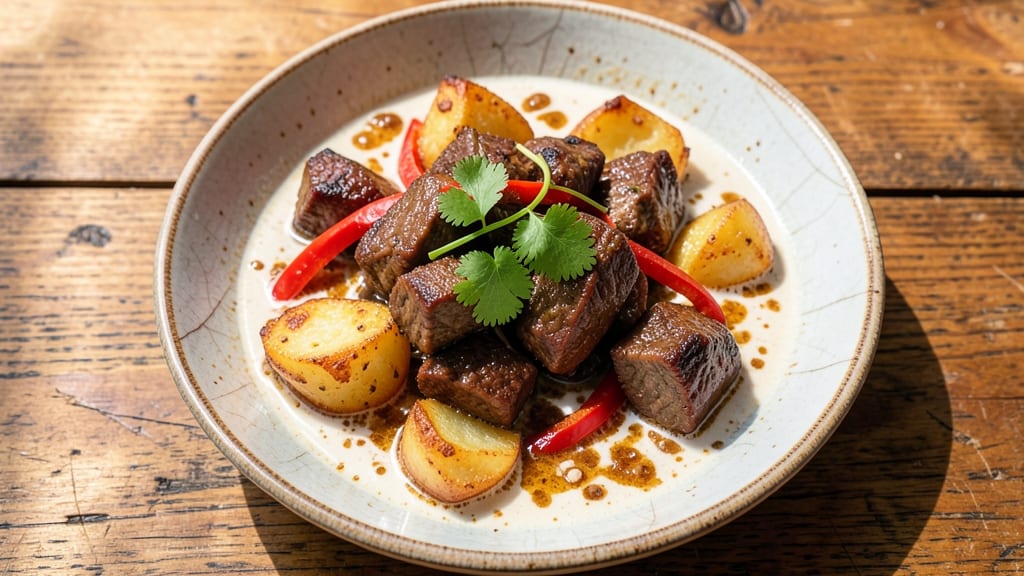
This authentic Thai beef Massaman curry brings the rich, aromatic flavors of Thailand straight to your kitchen—where slow-cooked beef, creamy coconut milk, and fragrant peanut sauce create a luxurious dish. The secret lies in balancing sweet, spicy, and savory notes, just like the curry pastes sold in Bangkok markets.
I’ve perfected this recipe over years of testing, ensuring every spoonful delivers that perfect harmony of textures and flavors.
The process starts with a proper curry paste—whether homemade or store-bought—simmered in coconut milk until fragrant and rich. The beef, seared to a golden crust, then melts into tender perfection as it cooks low and slow.
Peanuts and tamarind add depth, while potatoes and bell peppers soak up the velvety sauce, creating a dish that’s both comforting and restaurant-worthy.
What makes this curry truly special is its balance: the sweetness of coconut milk, the nutty richness of peanuts, and the subtle heat of Thai spices. Each bite is a symphony of flavors, with tender beef and creamy sauce that clings to every noodle or rice grain.
Serve it with steamed jasmine rice and a crisp cucumber salad to cut through the richness—this is Thai comfort food at its finest.
This recipe delivers authentic results without shortcuts. The slow cooking ensures deep, complex flavors, while traditional techniques—like blooming the spices in coconut milk—guarantee a taste that transports you to Thailand. Ready to master this dish? Let’s get started.
Ingredients for authentic thai beef massaman curry
Here’s what you’ll need for this rich, aromatic Thai curry—where slow-cooked beef meets creamy coconut and nutty peanut sauce.
| Ingredient | Amount | Notes |
|---|---|---|
| Beef Chuck Roast 🥩 | 1 ½ lb | Cut into 1-inch cubes |
| Red Curry Paste 🌶️ | 2 tbsp | Store-bought or homemade |
| Coconut Milk 🥥 | 1 can (13.5 oz) | Full-fat for creaminess |
| Peanut Butter 🥜 | ½ cup | Creamy, unsweetened |
| Tamarind Paste 🍋 | 1 tbsp | Or substitute lime juice |
| Potatoes 🥔 | 1 lb | Russet, peeled and cubed |
| Red Bell Pepper 🌶️ | 1 whole | Seeded and sliced |
| Yellow Onion 🧅 | 1 whole | Sliced into half-moons |
| Garlic Cloves 🧄 | 4 cloves | Minced |
| Peanuts 🥜 | ¼ cup | Crushed for garnish |
| Coconut Sugar 🍯 | 2 tbsp | Or brown sugar |
| Fish Sauce 🍶 | 1 tbsp | Red Boat brand preferred |
| Kosher Salt 🧂 | 1 tsp | Diamond Crystal preferred |
| Black Peppercorns 🌶️ | ½ tsp | Freshly cracked |
| Vegetable Oil 🫒 | 2 tbsp | For searing beef |
The beef is everything here—chuck roast gives that melt-in-your-mouth texture, but sirloin or flank steak works in a pinch. Grab a package from Costco or your local Asian market if they carry it pre-cut. For the curry paste, Maesri or Thai Kitchen brands are my go-tos—they’ve got that perfect balance of sweet, spicy, and savory. If you’re feeling adventurous, make your own by blending lemongrass, galangal, and kaffir lime leaves with the spices. The coconut milk? Full-fat only—it’s worth the extra cost for that luxurious creaminess. And don’t skimp on the peanuts: Trader Joe’s has the best-priced crushed ones for garnish.
No tamarind paste? Lime juice plus a pinch of sugar works in a bind, though it won’t be identical. Fish sauce is non-negotiable for that umami punch—Red Boat is the gold standard, but Squid Brand is a solid backup. Running low on coconut sugar? Brown sugar or honey (if not vegan) does the job, though the flavor won’t be exactly the same. The potatoes should be Russet or Yukon Gold—they hold up best to slow cooking. For the bell pepper, red or yellow both work, but red adds a touch of natural sweetness. And if you’re short on peanuts for garnish, toasted cashews are a great swap.
This curry tastes even better the next day—plan ahead and make a double batch. Store leftovers in an airtight container in the fridge for up to 5 days, or freeze portions for 3 months. The sauce thickens as it cools, so add a splash of coconut milk when reheating. Serve it over jasmine rice (steamed to perfection) and top with extra peanuts and a sprinkle of fresh cilantro if you’ve got it. The rice soaks up all that rich sauce—trust me, you’ll want seconds.
Why You'll Love This Recipe
- One-Pot Magic: I swear by this—just brown the beef, toss in the curry paste and coconut milk, then let it simmer. No chopping, no fuss, and the rich peanut butter and tamarind blend right into the sauce without extra stirring.
- Sweet-Savory Balance: That tamarind paste cuts through the richness of the peanut butter and beef, giving it this perfect tangy-sweet depth. It’s the kind of flavor that makes you slow down mid-bite—honestly, I’ve caught myself savoring it like dessert.
- Leftovers That Shine: This curry actually improves the next day. The beef gets even more tender, and the peanut sauce thickens just enough to coat every bite. I make a double batch on Sundays—it’s my lazy weeknight lifesaver.
- Budget-Friendly Luxury: Chuck roast is cheap, and the other ingredients stretch far. A single can of coconut milk and a jar of peanut butter feed four people, and the tamarind paste lasts for months. It’s restaurant-quality without the price tag.
Step-by-step instructions for authentic Thai beef Massaman curry
Here's how to make this rich, slow-cooked curry that balances heat, sweetness, and depth perfectly.
Prepare the Beef and Vegetables
Cut the 1.5 lb beef chuck roast into 1-inch cubes—this ensures even cooking and tender meat. Pat them dry with paper towels to help them sear properly. Peel and cube the 1 lb potatoes into 1-inch pieces, and slice the red bell pepper into ½-inch strips. Cut the yellow onion into ½-inch half-moons and mince the 4 cloves garlic. Set everything aside—you'll use them in the next steps.
I like to prep all my vegetables first so I can focus on cooking without distractions. The potatoes will soak up all that delicious sauce, while the peppers add a touch of freshness that balances the richness. Don't skip the garlic—it's the aromatic backbone of this curry.
Sear the Beef for Deep Flavor
Heat the 2 tbsp vegetable oil in a large, heavy pot over medium-high heat until shimmering. Working in batches if needed, add the beef cubes and sear for 2-3 minutes per side until they develop a deep golden-brown crust. Remove the beef and set it aside—it'll finish cooking later.
This searing step is crucial. The caramelized crust adds layers of flavor that you won't get from just simmering the beef. If your pot gets crowded, don't rush—work in batches. You want each piece to have that perfect crust before adding the other ingredients.
Build the Curry Base
In the same pot, reduce the heat to medium and add the 2 tbsp red curry paste, stirring for 1 minute until fragrant. Add the sliced onion and cook for 3 minutes until softened. Stir in the minced garlic and cook for 30 seconds until aromatic. Pour in the 1 can (13.5 oz) coconut milk and scrape up any browned bits from the bottom of the pot.
This is where the magic happens. The curry paste releases its complex flavors, and the coconut milk creates a velvety base. Don't skip scraping the bottom—those bits are packed with flavor. If you're using tamarind paste, add it now along with the 2 tbsp coconut sugar, 1 tbsp fish sauce, 1 tsp kosher salt, and ½ tsp cracked black peppercorns. Stir everything together and let it simmer for 5 minutes to meld the flavors.
Simmer the Curry to Perfection
Return the seared beef to the pot and add the cubed potatoes and sliced red bell pepper. Bring the mixture to a gentle simmer, then reduce the heat to low. Cover and let it cook for 1 hour to 1 hour 15 minutes, stirring occasionally, until the beef is fork-tender and the potatoes are easily pierced with a fork.
This slow cooking is key—it allows all the flavors to develop and the meat to become melt-in-your-mouth tender. If the curry starts to look too thick, add a splash of water or coconut milk to loosen it. You want a sauce that coats the back of a spoon but isn't watery.
Finish with Peanut Butter and Garnish
Once the beef is tender, stir in the ½ cup peanut butter and simmer for another 5 minutes until it's fully incorporated and the sauce is smooth. Taste and adjust the seasoning—add more fish sauce for saltiness, coconut sugar for sweetness, or black pepper for heat. Remove from heat and let it rest for 10 minutes to thicken slightly.
Before serving, garnish with the ¼ cup crushed peanuts. This adds a delightful crunch and ties all the flavors together. Serve the curry hot over steamed jasmine rice—each bite should be a perfect balance of creamy, spicy, sweet, and savory. Enjoy it with a side of fresh herbs like cilantro or Thai basil if you like!
Pro Tips For Making Authentic Thai Beef Massaman Curry
- Sear the Beef First: Skip the "quick sear" trap—cut the chuck roast into 1.5-inch chunks and brown them in batches over medium-high heat for 3-4 minutes per side. The crust locks in flavor and prevents the meat from turning mushy later, especially since Massaman curry cooks low and slow. (Yes, it’s extra work, but the payoff is worth it.)
- Bloom the Paste Properly: After searing the beef, remove it and add the red curry paste to the same pot with 1 tablespoon of oil. Cook it for 5-7 minutes, stirring constantly, until it darkens and smells like a Thai street stall. This step actually deepens the flavors—don’t rush it, even if the paste looks "done" earlier.
- Use Full-Fat Coconut Milk: Reach for the can with the highest fat percentage (60% or more) and let it sit at room temperature for 10 minutes before opening. The cream layer on top adds richness, and the fat helps emulsify the peanut butter later. Skimping here makes the curry taste thin and one-dimensional.
- Balance the Tamarind: Tamarind paste is sour, and it’s easy to overdo it. Start with 1 tablespoon, taste the curry after simmering, then add more in ½-teaspoon increments. If it’s too sharp, a pinch of sugar or a splash of coconut cream can fix it—but there’s no bringing back a curry that’s gone too far.
Make-ahead tips for this dish
Prep Ahead for Flavor
Make the curry paste 1 day ahead—store it in an airtight container in the fridge. This lets the spices bloom and deepen in flavor. I blend my paste with lemongrass, galangal, and kaffir lime leaves for that authentic touch.
If using store-bought, check the label—Maesri or Thai Kitchen pastes are pre-blended and ready to go. 🌶️
Slow-Cooker Shortcut
For hands-off cooking, transfer the seared beef, curry paste, coconut milk, and spices to a 6-quart slow cooker. Cook on low for 6-7 hours or high for 3-4 hours, then stir in potatoes and peanuts at the end.
This method keeps the beef tender while letting you prep other components—like rice or cucumber salad—without stress. ⏰
Freezer-Friendly Sauce
Save time by making just the sauce 3 months ahead. Simmer the curry paste, coconut milk, and aromatics in a pot, then cool completely before storing in a freezer-safe bag.
When ready to cook, thaw overnight in the fridge, then add the seared beef and simmer for 30-45 minutes to finish. The sauce thickens beautifully when reheated. ❄️
Double Batch for Leftovers
Massaman curry tastes even better the next day, so double the recipe for easy lunches. Store in airtight containers—glass Pyrex works best—and refrigerate for up to 5 days.
Reheat gently on the stovetop with a splash of coconut milk to restore creaminess. The flavors meld overnight, making it perfect for meal prep. 💫
Rice Prep Trick
Cook jasmine rice in bulk and store it in the fridge for up to 4 days. Use a rice cooker for foolproof results—just add 1 cup rice to 1.5 cups water and let it do the work.
Reheat portions in the microwave for 2 minutes, then fluff with a fork. Warm rice soaks up the curry sauce beautifully, turning leftovers into a satisfying meal. 🍚
Garnish on Demand
Keep crushed peanuts, fresh cilantro, and lime wedges separate until serving. Store peanuts in a small jar at room temperature, and refrigerate herbs in a damp paper towel. This keeps everything fresh and lets you customize garnishes—add Thai basil for a brighter note or chili flakes for extra heat. 🌿
Nutrition facts
Frequently asked questions
Why does Massaman curry have peanuts when it's not a peanut dish?
Massaman curry gets its nutty depth from peanuts, which were historically added by Muslim traders to the royal Thai cuisine. The peanuts create a rich, velvety texture that balances the creamy coconut milk and sweet tamarind. Unlike Thai peanut sauce, Massaman uses peanuts as a key ingredient—not just a garnish—making it uniquely comforting and hearty.
Can I substitute beef with chicken or pork?
Yes, but adjust cooking times! Chicken thighs work best (cook for 25-30 minutes after searing) as they stay tender longer. Pork shoulder also works but needs 1 hour 30 minutes total simmering. For chicken breast, reduce time to 20 minutes—they dry out quickly. The key is tender meat that absorbs the sauce perfectly.
What makes this curry different from green or red curry?
Massaman stands out with its milder heat, sweeter profile (thanks to coconut sugar), and peanut base. While green/red curries rely on fresh herbs and chili, Massaman uses dried spices like cinnamon and cardamom for warmth. It's also richer—often served with potatoes and peanuts—making it Thailand's answer to a creamy, comforting stew.
How do I fix a curry that's too spicy?
Balance the heat by adding 1 tbsp more coconut sugar or 1 tsp tamarind paste> to sweeten, or stir in ½ cup coconut milk> to dilute. For immediate relief, squeeze in 1 lime>—the acidity cuts through the capsaicin. If you prefer milder heat, reduce the curry paste to 1 tbsp> next time and add more coconut sugar.
Can I make this in an Instant Pot?
Sear the beef first, then add all ingredients except peanuts. Cook on high pressure for 20 minutes>, then quick-release. Stir in peanuts at the end. The Instant Pot cuts cooking time to 30 minutes> total while keeping the beef tender. Just watch the sauce—it may need a splash of coconut milk if it thickens too much.