
Tips
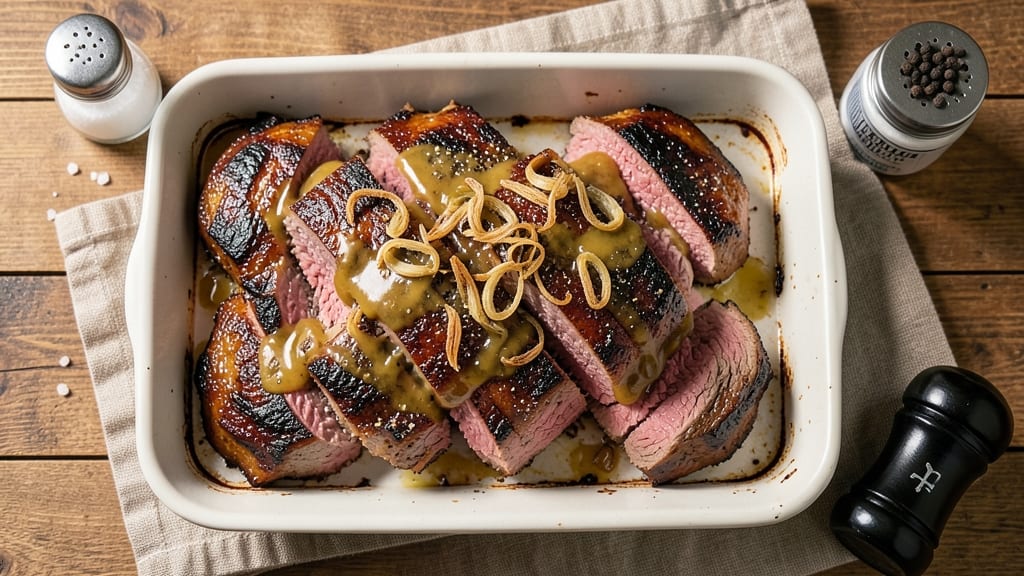
This baked beef tri tip recipe delivers a juicy, restaurant-quality steak with a perfect reverse-seared crust and tender cores—no grill required. The secret lies in low-and-slow baking followed by a high-heat sear, transforming tough cuts into melt-in-your-mouth perfection.
I’ve perfected this technique over years of testing, ensuring every bite is succulent and flavorful without the guesswork.
The process starts with a dry brine that locks in moisture, followed by a simple yet bold seasoning blend of coarse salt, black pepper, and garlic powder.
After baking at a precise 275°F until the internal temperature reaches 115°F, the tri tip gets a quick sear in a screaming-hot cast-iron skillet for that coveted crust. This method guarantees a steak that’s juicy to the core with a caramelized exterior, every time.
What sets this recipe apart is the attention to detail—resting the meat properly before slicing against the grain ensures maximum tenderness. Serve with classic sides like garlic mashed potatoes or a fresh garden salad, or elevate it with a modern twist like roasted root vegetables and a red wine reduction.
The result? A steak so impressive, it’ll fool even the most discerning guests.
Whether you’re hosting a dinner party or treating yourself to a special meal, this tri tip recipe delivers foolproof results with minimal effort. The technique is simple, but the outcome is undeniably restaurant-quality—rich, flavorful, and impossible to resist. Let’s get started on creating your best steak yet.
Ingredients for baked beef tri tip
Restaurant-quality steak starts with these precise ingredients—juicy beef, bold seasonings, and a perfect sear.
| Ingredient | Amount | Notes |
|---|---|---|
| Beef Tri Tip Roast 🥩 | 2 ½ lb | Center-cut, 1.5-2 inches thick |
| Diamond Crystal Kosher Salt 🧂 | 1 ½ tbsp | Coarse grain preferred |
| Freshly Ground Black Pepper 🌶️ | 1 ½ tsp | Cracked peppercorns preferred |
| Garlic Powder 🧄 | 1 tsp | Freshly ground preferred |
| Extra-Virgin Olive Oil 🫒 | 2 tbsp | For dry brine application |
| Unsalted Butter 🧈 | ½ cup | Cold, cubed for searing |
| Fresh Rosemary 🌿 | ¼ cup | Chopped, stems removed |
| Fresh Thyme 🌿 | ¼ cup | Leaves only, chopped |
| Garlic Cloves 🧄 | 4 cloves | Minced for herb blend |
| Red Wine 🍷 | ½ cup | Dry, bold variety (Cabernet Sauvignon) |
| Beef Broth 💧 | ½ cup | Homemade or high-quality store-bought |
| Balsamic Vinegar 🍶 | 1 tbsp | For pan deglazing |
| Yellow Onion 🧅 | 1 whole | Thinly sliced for garnish |
| Fresh Parsley 🌿 | ¼ cup | Chopped, for garnish |
The beef cut matters most here. Center-cut tri tip delivers the best marbling and tenderness—avoid flank cuts or overly lean options. Most butchers will trim it for you, but if you're buying from a grocery store, look for a 1.5-2 inch thick roast with visible fat cap. Costco and Whole Foods are reliable sources for high-quality cuts. For the dry brine, use Diamond Crystal kosher salt—it dissolves more easily than table salt and enhances flavor without over-salting. Freshly cracked black peppercorns add depth that pre-ground can't match, so invest in a good grinder if you don't already have one.
No red wine? Beef broth with an extra splash of balsamic works perfectly—just add 1 tablespoon more vinegar to compensate. The herb blend can be prepped ahead and stored in the fridge for 5 days or frozen for 3 months. If you're short on fresh rosemary or thyme, dried works at one-third the amount, but fresh is ideal for that restaurant-quality aroma. The olive oil should be extra-virgin for the dry brine—it's worth the splurge. For the sear, unsalted butter creates a richer crust than salted, which can make the crust too salty. If you're concerned about dairy, use ghee instead—it has a higher smoke point.
This recipe excels when prepped ahead. Dry brine the tri tip overnight for maximum moisture retention, then pat dry before seasoning. The herb blend can be made 3 days in advance and stored in an airtight container. For serving, slice against the grain for maximum tenderness—this is non-negotiable for tri tip. Leftovers reheat beautifully in a 350°F oven for 10-15 minutes, wrapped in foil with a splash of beef broth. The steak actually improves the next day as flavors meld, so plan accordingly for dinner parties.
Why You'll Love This Recipe
- One-Pan Magic: I swear by this—just rub the tri tip with olive oil, salt, pepper, and garlic powder, then pop it in the oven. No chopping, no fuss, and the pan cleans itself while you eat.
- Crispy-Creamy Payoff: That first bite? Perfectly seared crust with tender, juicy meat inside—like a steakhouse cut but way easier. The kosher salt and garlic powder work their magic without overpowering.
- Weeknight or Weekend: Throw it on the table for a lazy Sunday brunch (yes, really) or a no-stress dinner after work. Slice it thin for sandwiches or serve it whole for a crowd—it’s that adaptable.
- Leftovers That Don’t Suck: Between us, most roasts turn into sad, dry scraps. Not this one. The tri tip stays juicy for days, so I make a double batch and repurpose it into tacos, salads, or even breakfast hash. No waste, all win.
Step-by-step instructions for baked beef tri tip with reverse-seared crust
Master this technique for a perfect crust that seals in juices while keeping the interior tender and flavorful.
Prepare the Dry Brine and Herb Blend
Pat the 2.5 lb beef tri tip roast completely dry with paper towels—this is critical for developing that signature crust. In a small bowl, combine 1.5 tbsp Diamond Crystal kosher salt, 1.5 tsp freshly ground black pepper, and 1 tsp garlic powder. Rub this mixture evenly over the entire surface of the tri tip, pressing firmly so it adheres. For the herb blend, finely chop 0.25 cup fresh rosemary and 0.25 cup fresh thyme, then mix with the 4 minced garlic cloves. Spread this mixture evenly over the salted surface.
Place the seasoned tri tip on a wire rack set over a baking sheet. Refrigerate uncovered for at least 4 hours—this dry brine process ensures deep flavor penetration and a perfect crust. I like to do this overnight if possible, as the longer dry time yields better results. The meat should feel firm to the touch after brining, indicating proper moisture loss.
Reverse-Sear the Tri Tip in the Oven
Preheat your oven to 250°F. Once the tri tip reaches room temperature (about 30 minutes out of the fridge), place it on the wire rack and transfer to the oven. Roast for 1 hour and 30 minutes, rotating the pan halfway through for even cooking. The goal here is to cook the meat to an internal temperature of 115°F—this is the reverse-sear method at work, ensuring a perfectly pink center.
Check the temperature using a meat thermometer inserted into the thickest part of the roast. The exterior should still look raw at this stage, but the internal temperature is what matters. If the meat reaches 115°F before the hour and 30 minutes are up, you can remove it slightly early, but don't rush this step. The slow cook ensures even doneness without overcooking the exterior.
Create the Searing Crust with Butter and Wine
While the tri tip rests, heat a large oven-safe skillet over medium-high heat. Add 2 tbsp extra-virgin olive oil and 0.5 cup cold unsalted butter, letting the butter melt and foam subsides. Place the tri tip in the skillet, fat-side down, and sear for 3 minutes until a deep golden-brown crust forms. Flip and sear the other side for another 3 minutes. Remove the skillet from heat and let it rest for 5 minutes—this residual heat will help develop the crust further.
Deglaze the skillet by adding 0.5 cup red wine and 0.5 cup beef broth, scraping up all the browned bits from the bottom with a wooden spoon. Simmer for 5 minutes until the liquid reduces by half. Stir in 1 tbsp balsamic vinegar and let it simmer for another 2 minutes until slightly thickened. This sauce will complement the crust beautifully.
Rest and Slice for Maximum Juiciness
Transfer the skillet with the tri tip to a 425°F oven and roast for an additional 10-15 minutes until the internal temperature reaches 125-130°F. This final step ensures the crust is fully set while keeping the interior tender. Remove the tri tip from the oven and let it rest on a cutting board for 10 minutes—this resting period is crucial for redistributing the juices throughout the meat.
Slice the tri tip against the grain into 0.5-inch thick slices. Arrange the slices on a platter, drizzle with the reduced wine sauce, and garnish with thinly sliced yellow onion and chopped fresh parsley. Serve immediately with your favorite sides—each slice should be juicy and tender with a perfectly crisp crust that seals in all the flavor.
Pro Tips For Making Baked Beef Tri Tip
- SEAR FIRST, BAKE SECOND: I used to skip the stovetop sear and just toss the tri tip straight into the oven—big mistake. Get that pan screaming hot with olive oil, then sear the meat 2-3 minutes per side until deep brown. The crust locks in flavor and keeps the juices from escaping during baking.
- SALT LIKE IT’S 1950: Diamond Crystal kosher salt is finer than table salt, so don’t eyeball it. Use about 1.5 teaspoons per pound of meat, pressed into every crevice—including the fat cap. This isn’t just seasoning; it’s a flavor bomb that needs time to penetrate.
- WATCH THE FAT CAP: The tri tip’s fat cap is your friend, but it’s also the part that turns to grease hell if ignored. After the initial sear, flip the roast fat-side up and let it render for the first 10 minutes of baking. If it pools too much, tilt the pan occasionally to keep it from burning.
- REST IT LIKE YOUR LIFE DEPENDS ON IT: I know, I know—you’re starving and the meat looks perfect. But cutting into it too soon is like stabbing a balloon full of juice. Tent it loosely with foil and let it rest 15-20 minutes. The temperature will drop 10-15 degrees, and the juices will redistribute instead of pooling on your plate.
Common mistakes when making this recipe
Skipping the Dry Brine
I can’t stress this enough—skipping the dry brine is the #1 mistake home cooks make. The dry brine (salt + herbs applied 4+ hours ahead) transforms the texture by drawing out moisture, then reabsorbing it to create a juicier, more flavorful steak.
If you’re short on time, at least brine for 2 hours—but overnight is ideal. Pro tip: Pat the meat completely dry before brining; any moisture left behind prevents that perfect crust from forming. 🌡️
Overcooking the Interior
Many people treat tri tip like a traditional roast and cook it straight through to medium or well-done. Big mistake! Tri tip is best served medium-rare to medium (125-130°F internal temp). Using a meat thermometer is non-negotiable—guessing leads to tough, dry meat.
If your tri tip hits 115°F and still looks raw outside, that’s normal (this is reverse searing!). The final sear will crisp the exterior while keeping the center tender. Trust the thermometer, not your eyes.
Rushing the Resting Time
After searing, the temptation is to slice immediately—don’t! Resting the tri tip for 10-15 minutes lets the juices redistribute, ensuring every bite is moist. I’ve seen people cut into it too soon and end up with a dry, disappointing steak.
Place the meat on a cutting board, loosely tent it with foil, and let it rest while you finish the sauce or sides. Patience here makes all the difference. ⏰
Using the Wrong Pan for Searing
A nonstick skillet or thin stainless steel won’t give you that deep, caramelized crust. Use a heavy cast-iron skillet (like Lodge) for even heat distribution and maximum browning.
If your pan isn’t oven-safe, transfer the seared tri tip to a baking sheet for the final 425°F oven finish. Also, don’t overcrowd the pan—leave space for the meat to sear, not steam. A crowded pan leads to uneven cooking and a soggy crust.
Ignoring the Fat Cap
The fat cap on tri tip isn’t just for looks—it basils the crust and adds flavor. If your butcher trims it too aggressively, ask for at least ¼ inch of fat left on.
During searing, render the fat slowly over medium heat before cranking up to high—this creates a flavorful crust and prevents flare-ups. If your tri tip has minimal fat, add 1 tbsp extra olive oil to the pan before searing. 🧈
Skipping the Sauce Step
The reduced wine sauce isn’t just for show—it elevates the dish by tying together all the flavors. Deglazing the pan with red wine and beef broth captures all those browned bits (fond) that pack serious flavor.
If you’re in a hurry, a quick 1-minute deglaze with balsamic vinegar still adds depth. Serve the sauce generously over the sliced steak to keep every bite juicy and aromatic.
Nutrition facts
Frequently asked questions about baking beef tri tip
How long should I dry brine the tri tip? For best results, dry brine the tri tip for at least 4 hours, but overnight (12-24 hours) is ideal. This process creates a deeper flavor and helps develop that signature crust. If you're short on time, 2 hours minimum will still improve texture and taste. Just
Can I bake tri tip without the reverse-sear method?
Yes, but you'll miss the perfect crust! Traditional baking at 350°F until reaching 130°F internal temp works, but the reverse-sear (baking to 115°F then searing) creates a superior crust while keeping the interior juicy. For a quick alternative, bake at 375°F for 30-40 minutes until internal temp hits 130°F, then sear briefly in a hot pan.
What's the best way to slice tri tip?
Always slice against the grain into ½-inch thick slices for maximum tenderness. Look for the grain pattern (muscle fibers) before cutting. For presentation, fan the slices slightly on a warm platter. Pro tip: Use a sharp knife and cut through the bone if present—this makes slicing easier and creates cleaner pieces. Never slice with the grain or you'll end up with chewy meat.
How do I adjust cooking time for a thicker/thinner tri tip?
Use a meat thermometer as your guide, not time. For a 1.5-inch thick roast, aim for 115°F internal temp before searing. Thicker cuts (2+ inches) may need 10-15 extra minutes at 250°F. Thinner cuts (<1.5 inches) will cook faster—check at 45 minutes. Always finish with the high-heat sear regardless of thickness to develop that perfect crust.
What are the best sides to serve with baked tri tip?
Classic pairings include garlic mashed potatoes, roasted root vegetables, or a fresh garden salad. For a modern twist, try creamy polenta, grilled asparagus, or a red wine reduction sauce. The wine sauce from this recipe works beautifully drizzled over sliced steak. Avoid heavy sides that compete with the rich beef—light, flavorful accompaniments let the tri tip shine.