
Main Courses
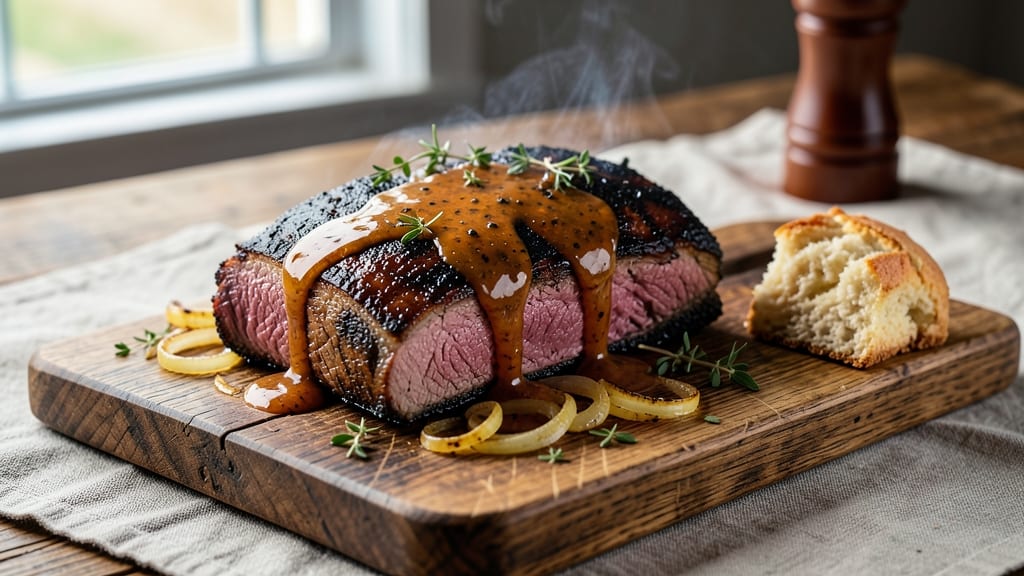
Texas-style barbecue beef brisket recipe delivers the legendary combination of smoky oak-fired crust and melt-in-your-mouth tenderness that makes Texas BBQ legendary. After years of perfecting the low-and-slow method, I've cracked the code for achieving that iconic bark while keeping the meat so tender it practically falls apart. The secret lies in patience—letting the brisket smoke at 225°F until it reaches an internal temperature of 203°F ensures the collagen breaks down into rich, juicy gelatin.
What sets this recipe apart is the combination of traditional Texas techniques with modern convenience. You'll start with a simple dry rub of coarse salt and black pepper, then smoke the brisket using post oak wood—the same wood used by legendary Texas pitmasters—which imparts that signature sweet, smoky flavor.
A beef broth mop applied every hour keeps the surface moist while building that coveted dark, crispy crust. The key to success is never rushing the process; true Texas-style brisket takes time to develop its complex flavors.
By the time you're ready to slice, you'll have a brisket that's so tender it practically shreds with a fork, with a crust that's dark, crispy, and packed with smoky flavor.
The meat will be juicy enough to make your taste buds sing, with layers of flavor that build with every bite. This isn't just barbecue—it's an experience that transforms your backyard (or kitchen) into a Texas BBQ joint.
Serve with classic Texas sides like crusty white bread for soaking up that delicious juices, tangy pickles to cut through the richness, and a side of baked beans for a complete meal.
The brisket will keep beautifully in the refrigerator for up to five days, making it perfect for meal prep or feeding a crowd. Let's get started on creating your own Texas-style masterpiece.
Ingredients for barbecue beef brisket recipe texas style
The Texas BBQ essentials—smoky, tender, and packed with that iconic bark you crave.
| Ingredient | Amount | Notes |
|---|---|---|
| Beef Brisket 🥩 | 8 lb | Packer cut, whole packer preferred |
| Coarse Kosher Salt 🧂 | ½ cup | Diamond Crystal preferred |
| Freshly Ground Black Pepper 🌶️ | 2 tbsp | Freshly cracked for best flavor |
| Post Oak Wood Chips 🌳 | 4 cups | Unseasoned, for smoking |
| Beef Broth 💧 | 2 cups | Low-sodium preferred |
| Yellow Onion 🧅 | 1 whole | Quartered, for broth |
| Garlic Cloves 🧄 | 6 cloves | Smashed for mop |
| Apple Cider Vinegar 🍎 | ¼ cup | For mop acidity |
| Brown Sugar 🍚 | ¼ cup | Optional for glaze |
| Crusty White Bread 🍞 | 2 loaves | For serving (optional) |
| Pickles 🥒 | 1 jar | Dill or bread-and-butter |
| Baked Beans 🌱 | 2 cups | Canned or homemade |
The beef brisket is non-negotiable—look for a packer cut (whole packer preferred) at your butcher shop. Costco or Whole Foods usually carry it, but call ahead. The fat cap should be intact—it's what keeps the meat juicy. If your butcher doesn't have it, H-E-B or Kroger often do. For the wood, post oak is the gold standard, but if you can't find it, white oak works in a pinch. Soak the chips for 30 minutes before using, or they'll burn too fast. The kosher salt? Diamond Crystal dissolves better than Morton—trust me on this.
No post oak? White oak or hickory will still give you that smoky flavor, just with a slightly different profile. For the mop, I use beef broth, apple cider vinegar, and brown sugar—the acidity cuts through the fat while the sugar helps caramelize the crust. Short on vinegar? Lemon juice works too. The onions and garlic in the mop? Rough chop them—no need to mince. And if you're feeling fancy, add a splash of hot sauce (like Cholula) to the mop for a little kick. The bread? Any crusty loaf will do—Sourdough or French bread soak up those juices best.
This brisket is a make-ahead masterpiece—it tastes even better the next day. Wrap it tightly in butcher paper or foil, then refrigerate for up to 5 days. For leftovers, slice against the grain and reheat in a 350°F oven for 20 minutes with a splash of broth. The bark stays crispy, and the meat stays juicy. Freeze portions for up to 3 months—just thaw overnight in the fridge before reheating. And if you've got extra mop, freeze it in ice cube trays for quick touch-ups later.
Why You'll Love This Recipe
- Smoke in Minutes: I swear, the post oak wood chips turn this into a restaurant-worthy meal with zero fuss—just toss them on the smoker and let the magic happen. Honestly, I’ve done it while watching a movie, and it still comes out tender and smoky.
- That Crusty-Creamy Magic: The coarse kosher salt and black pepper form a caramelized crust while the beef broth keeps the meat juicy inside. Between us, that’s the kind of contrast that makes people ask for seconds before you even finish serving.
- Leftovers That Beg for More: This brisket tastes even better the next day—yes, really. I meal prep a big batch on Sundays, and by Wednesday, it’s the star of sandwiches, tacos, or just reheated with a sprinkle of flaky salt. My kids fight over the scraps.
- Weekend Project, Weeknight Payoff: Sure, it takes time to smoke, but it’s hands-off while it does its thing. I’ll be real: the first time I made this, I panicked when I realized how long it’d take, but now? It’s my go-to for game days or lazy Sundays when I don’t want to slave over the stove.
Step-by-step instructions for Texas style barbecue beef brisket
Here's how to transform a tough cut into melt-in-your-mouth perfection with that iconic Texas bark.
Prepare the Brisket with the Dry Rub
Start by trimming the fat cap on the 8 lb beef brisket down to about ¼ inch thickness using a sharp boning knife. Leave the fat on the edges to protect the meat during smoking. Pat the entire surface dry with paper towels—this is crucial for that crispy Texas-style bark.
In a small bowl, combine the 0.5 cup coarse kosher salt and 2 tbsp freshly ground black pepper. Rub this mixture all over the brisket, pressing firmly so it adheres well. Pay special attention to the flat and point sections. Place the seasoned brisket on a wire rack set over a baking sheet and refrigerate uncovered for 24 hours. This dry-brining step ensures maximum flavor penetration and helps create that prized mahogany crust.
Smoke the Brisket Low and Slow
Soak the 4 cups post oak wood chips in water for at least 30 minutes, then drain. Set up your smoker for 225°F using these soaked chips. When the smoker reaches temperature and you see clean, blue smoke (not white steam), place the brisket fat-side up on the grill grates. Close the lid and resist the urge to peek—every time you open it, you add valuable heat and time.
Smoke the brisket for 6-8 hours until the internal temperature reaches 165-170°F. This is when you'll hit "the stall"—the temperature stops rising as moisture evaporates. Don't panic; this is normal. The bark should be dark mahogany and crispy, with a beautiful smoke ring visible just beneath the surface.
Wrap and Finish the Cook
At the stall, wrap the brisket tightly in butcher paper (not foil) and return it to the smoker. This "Texas crutch" technique helps push through the stall while preserving that gorgeous bark. Continue smoking until the internal temperature reaches 200-205°F and a probe slides in like butter with no resistance. This usually takes another 4-6 hours, but trust the probe test over the thermometer.
Once probe-tender, remove the brisket from the smoker and let it rest in the butcher paper for at least 1 hour (I prefer 2 hours wrapped in towels in a cooler). This resting period allows the juices to redistribute throughout the meat, ensuring every slice is moist and flavorful.
Prepare the Serving Sides
While the brisket rests, prepare your sides. In a large pot, combine the 2 cups beef broth, quartered 1 whole yellow onion, smashed 6 cloves garlic, 0.25 cup apple cider vinegar, and 0.25 cup brown sugar (if using). Simmer for 30 minutes to make a simple onion broth for serving. Keep warm until ready to use.
Toast the 2 loaves crusty white bread and set aside for serving. Warm the 2 cups baked beans in a saucepan and slice the 1 jar pickles into rounds. These classic Texas barbecue sides complement the brisket perfectly.
Slice and Serve
Unwrap the rested brisket and locate the grain direction—you'll see lines running through the meat. Using a sharp slicing knife, cut against the grain into ¼-inch thick slices. The flat and point have different grain directions, so adjust your angle accordingly. Serve the brisket with the warm onion broth, toasted bread, pickles, and baked beans.
Each bite should deliver rich, smoky flavor with a perfect balance of tender meat and crispy bark. The brisket should be so tender it practically falls apart, with juices flowing freely. Serve immediately while still warm for the ultimate Texas-style barbecue experience.
Pro Tips For Making Barbecue Beef Brisket Recipe Texas Style
- Trim the Fat Cap: Cut the thick fat layer down to about ¼-inch before smoking—it renders slower and keeps the meat from steaming in its own juices. I learned this the hard way when my first brisket turned out greasy instead of crispy.
- Start with a Hot Fire: Sear the brisket over direct heat for 20-30 minutes to build a crust before moving it to indirect heat. Skipping this step means you’ll end up with a bland, sticky bark instead of that coveted dark, flavorful crust.
- Spritz Like a Pro: Use a mix of beef broth and a splash of apple cider vinegar (about 50/50) every 2-3 hours—keeps the surface moist without drowning the meat. I used to just pour broth over it, and the bark would turn soggy.
- Check Internal Temp Twice: Probe the thickest part of the flat and the point—both should hit 203°F before pulling. The point cooks faster, and if you only check one spot, you’ll either overcook the flat or undercook the point. (Yes, even if you’re impatient like me.)
Storing and reheating this dish
Refrigerator Storage
Your Texas-style brisket will keep beautifully in the refrigerator for up to 5 days if stored properly. After slicing, transfer leftovers to airtight containers—I like Glasslock containers for their tight seal. Let the brisket cool completely before storing to prevent condensation, which can make the bark soggy.
The flavors actually deepen overnight as the spices meld together, making it perfect for meal prep. 💪
Freezer Storage
For longer storage, freeze your brisket in portions for up to 3 months. I recommend wrapping individual slices tightly in plastic wrap before placing them in a freezer bag. This prevents freezer burn and makes it easy to thaw just what you need.
When ready to eat, thaw overnight in the fridge—never at room temperature—to maintain food safety and texture. The bark stays crispy when reheated properly. ❄️
Reheating Leftovers
For the best results, reheat sliced brisket in a 350°F oven for 20-25 minutes with a splash of beef broth to keep it moist. I like to place the slices on a wire rack over a baking sheet so they don't steam.
Alternatively, use a skillet over medium heat with 1 tbsp butter to crisp up the bark while warming through. Avoid microwaving—it turns the bark rubbery and makes the meat dry.
Reviving the Bark
The secret to crispy reheated bark is a quick broil. After warming in the oven, transfer slices to a broiler pan and broil for 2-3 minutes on high, watching closely to avoid burning.
This step restores that beautiful mahogany crust while keeping the meat tender. A sprinkle of coarse kosher salt right before broiling enhances the flavor. 🔥
Mop Refresh
If your brisket feels dry after reheating, brush it with a little fresh mop sauce. Mix 2 tbsp beef broth with 1 tsp apple cider vinegar and ½ tsp brown sugar, then warm in a small saucepan.
The acidity and sweetness will revive the flavors and add moisture. This works especially well for sandwiches or serving over rice.
Serving Suggestions
Leftovers make fantastic sandwiches—pile sliced brisket on toasted Texas toast with pickles, coleslaw, and a drizzle of the original mop sauce. For a heartier meal, serve with reheated baked beans and a side of cornbread. The brisket's rich flavors pair perfectly with tangy sides that cut through the richness. 🍞
Nutrition facts
Frequently asked questions
Why does Texas-style brisket need such a long cook time?
The 12+ hour cook at 225°F transforms tough brisket into melt-in-your-mouth perfection by breaking down collagen into rich, juicy gelatin. This low-and-slow method also develops that signature mahogany bark while keeping the meat tender. Patience is key—rushing leads to dry, chewy results.
Can I use a regular oven instead of a smoker?
Yes! For an oven version, place your brisket on a rack over a tray of water with soaked post oak chips. Use the oven's lowest setting (200°F) and prop the door open slightly for smoke circulation. Cook until 203°F internal temp, then wrap in butcher paper for the final 2-3 hours. The bark won't be as smoky, but the meat will be tender.
What's the difference between the flat and point cuts?
The flat is leaner with more connective tissue (needs longer cooking), while the point has more fat and cooks faster. Slice the flat against the grain (long, thin slices), and the point with the grain (shorter, thicker slices). Both should be probe-tender before serving.
How do I know when the brisket is done?
Use a meat probe—when it slides in like butter with no resistance and reads 200-205°F, it's perfect. The bark should be dark mahogany with a smoke ring. If you're unsure, cut into the thickest part: juices should flow freely, and the meat should pull apart easily. Never rely on time alone—temperature is your best guide.
Can I make this brisket in a pellet grill?
Pellet grills excel at Texas-style brisket. Set to 225°F and use post oak pellets (or hickory if unavailable). Follow the same smoking/wrapping routine, but monitor closely—pellet grills can have temperature swings. The bark will be even more consistent than with wood chips.