
Soups & Stews
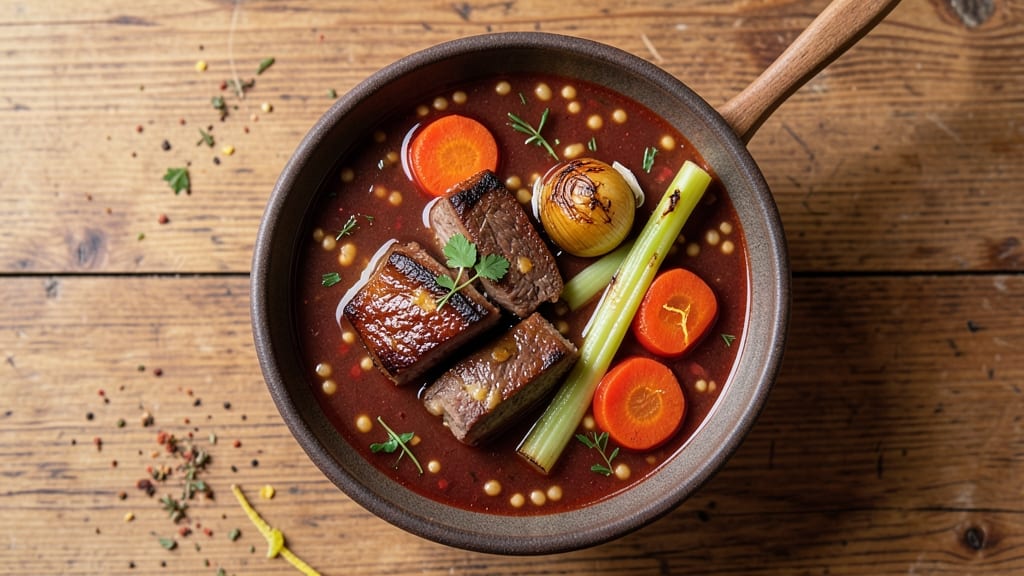
This Barefoot Contessa beef barley soup delivers the kind of deep, satisfying flavor that makes winter dinners feel like a warm hug. 💛 The secret lies in a rich red wine fond that builds layers of complexity, while perfectly browned beef and hearty barley create a stew that's both comforting and elegant.
I've perfected this recipe over years of testing, ensuring every spoonful delivers that perfect balance of savory, earthy, and slightly sweet notes.
The foundation begins with properly browning the beef—this crucial step develops the deep, caramelized flavors that set this soup apart from ordinary versions.
We'll build the broth slowly with aromatic vegetables, herbs, and that signature red wine reduction, then let the barley soak up all that rich liquid until it's tender but still holds its shape. The result is a soup that's hearty enough to stand alone but sophisticated enough for company.
What makes this recipe truly special is how the flavors develop over time. The longer it simmers, the more complex and layered the taste becomes, with the wine's acidity cutting through the richness of the beef and barley.
Each bite offers a perfect harmony of textures—tender beef, chewy barley, and silky broth—all finished with a touch of fresh parsley for brightness.
Serve this soup with a slice of crusty bread to soak up every last drop, or pair it with a simple green salad for a complete meal. The beauty of this recipe is its versatility—it's equally at home as a weeknight dinner or an impressive centerpiece for a holiday gathering.
Here's how to make it perfectly every time.
Ingredients for barefoot contessa beef barley soup
Rich red wine and perfectly browned beef create this soul-warming winter classic.
| Ingredient | Amount | Notes |
|---|---|---|
| Chuck Roast Beef 🥩 | 2 ½ lb | Cut into 1-inch cubes |
| Yellow Onion 🧅 | 1 whole | Chopped into 1/2-inch pieces |
| Carrots 🥕 | 3 medium | Peeled and cut into 1-inch pieces |
| Celery Stalks 🌿 | 3 whole | Chopped into 1-inch pieces |
| Garlic Cloves 🧄 | 4 cloves | Minced finely |
| Pearl Barley 🌾 | 1 cup | Rinsed before cooking |
| Dry Red Wine 🍷 | 1 cup | Bold Cabernet Sauvignon preferred |
| Beef Broth 🥫 | 4 cups | Low-sodium preferred |
| Tomato Paste 🍅 | 2 tbsp | Smooth, not chunky |
| Fresh Thyme 🌿 | 2 sprigs | Leaves only, stems removed |
| Fresh Parsley 🌿 | ¼ cup | Chopped for garnish |
| Bay Leaves 🌿 | 2 whole | Dried, not fresh |
| Olive Oil 🫒 | 2 tbsp | Extra-virgin for browning |
| Salt 🧂 | 1 ½ tsp | Kosher or sea salt |
| Black Pepper 🌶️ | ½ tsp | Freshly ground |
The beef is non-negotiable—chuck roast delivers that melt-in-your-mouth texture after hours of simmering. Costco or Whole Foods carry excellent cuts, but any well-marbled beef works. Look for vibrant red color and visible fat marbling. The wine should be bold and dry—Cabernet Sauvignon or Merlot from a trusted producer. I always grab a bottle I'd drink straight, like Apothic or Bogle Vineyards. For the barley, Pearl Barley is key—it holds its shape better than steel-cut varieties. Rinsing it first removes excess starch that can make the soup gummy.
No red wine? Dry sherry or beef broth with 1 tbsp balsamic vinegar works in a pinch. Fresh thyme is ideal, but dried at one-third the amount gets you close. The tomato paste can be swapped for 1 cup crushed tomatoes if you prefer. For extra depth, add 1 tsp smoked paprika with the tomato paste. The carrots and celery should be roughly chopped—no need for precision here. If you're short on time, pre-cut vegetable mixes from the frozen section save chopping. The bay leaves add subtle earthiness, but don't skip them—they're what makes this soup taste homemade.
This soup tastes even better the next day as flavors meld. Store in an airtight container in the fridge for up to 5 days, or freeze for 3 months. I like to portion it into individual containers for easy lunches. The barley thickens as it cools, so add a splash of broth when reheating. For serving, keep the fresh parsley separate until ready to eat—it wilts quickly in hot soup. Garnish with a drizzle of the reserved red wine for extra elegance.
Why You'll Love This Recipe
- No-Chop Nightmare: I swear by this one—just roughly chop the onion, carrots, and celery (no fancy dicing needed) and toss them in. The chuck roast does all the heavy lifting while you sip wine and pretend you’re not cooking.
- Garlic Bomb Depth: That slow-cooked garlic? It’s the star—soft, sweet, and layered with the beef’s rich, melt-in-your-mouth tenderness. Honestly, I’ve tried other soups, but this one’s the only one where the flavor builds like a good novel.
- Leftovers That Lie: Between us, this soup tastes better the next day. I make a double batch, freeze half, and pretend I’m some kind of meal-prep guru. (Spoiler: I’m not, but it works.)
- Budget Powerhouse: Chuck roast is cheap, but it transforms into something luxurious—no fancy cuts required. My grocery bill thanks me, and my family acts like I slaved over it. (They’re not wrong, but they don’t need to know the secret.)
Step-by-step instructions for Barefoot Contessa beef barley soup
This hearty stew builds flavor through careful browning and slow simmering—key to that rich, wine-infused fond.
🔥 Step 1: Brown the Beef for Deep Flavor
Heat the 2 tbsp olive oil in a large Dutch oven over medium-high heat until shimmering. Working in batches (don't overcrowd), add the 2.5 lb chuck roast beef cut into 1-inch cubes and brown on all sides for 3-4 minutes per batch. You're looking for deep golden-brown crusts—this creates the flavor foundation.
As you brown, remove the beef to a plate and set aside. The rendered beef fat will stay in the pot to flavor the vegetables. If the pan looks dry, add 1 tbsp olive oil—but don't rush this step. Proper browning takes time and patience. Real talk: Skimping here means a bland soup.
🍳 Step 2: Sauté Vegetables Until Softened
In the same Dutch oven, add the 1 whole yellow onion chopped into ½-inch pieces, 3 medium carrots cut into 1-inch pieces, and 3 whole celery stalks chopped into 1-inch pieces. Cook for 8-10 minutes until the vegetables soften and the onion becomes translucent.
Add the 4 cloves minced garlic and cook for another 30 seconds until fragrant. Here's where it gets fun—stir in the 2 tbsp tomato paste and cook for 1 minute to remove its raw taste. The tomato paste will deepen the soup's richness and balance the acidity of the wine.
🍳 Step 3: Deglaze with Wine and Simmer
Pour in the 1 cup dry red wine (Cabernet Sauvignon works best) and scrape up all the browned bits from the bottom of the pot with a wooden spoon. This deglazing step captures all that meaty flavor. Let the wine simmer for 3-4 minutes until reduced by half.
Add the browned beef back to the pot along with the 4 cups beef broth, 1 cup rinsed pearl barley, 2 sprigs fresh thyme leaves, 2 whole bay leaves, 1.5 tsp salt, and 0.5 tsp black pepper. Bring to a boil, then reduce heat to low and cover. Let it simmer for 1 hour 15 minutes until the beef is fork-tender.
⏰ Step 4: Finish with Fresh Herbs
After simmering, remove the 2 sprigs fresh thyme and 2 whole bay leaves (they've done their job). Stir in the 0.25 cup chopped fresh parsley just before serving. This final step brightens the soup with freshness—don't skip it. Taste and adjust seasoning if needed, adding more salt or pepper as necessary.
The barley should be tender but still have a slight bite. If you prefer softer barley, simmer for an additional 10-15 minutes. Let the soup rest for 5 minutes before serving—this allows flavors to meld and the barley to finish absorbing the broth.
Pro Tips For Making Barefoot Contessa Beef Barley Soup
- Sear the Chuck Roast First: That beef won’t melt in your mouth if it’s just simmered raw—get it golden brown in a hot pot with a splash of oil first. I used to skip this, and the soup always tasted like it needed more time. Two minutes per side, high heat, until it’s deep brown. The crust locks in flavor and keeps the meat tender.
- Cut Celery and Carrots Uniformly: No one wants mushy veggies or rock-hard chunks. Dice the celery and carrots into ¼-inch pieces—small enough to cook through but big enough to stay recognizable. My grandmother used to eyeball it, but I learned the hard way that consistency matters. A sharp knife and steady hand make this easier than it sounds.
- Deglaze the Pot Aggressively: After browning the beef, don’t just splash in the broth—scrape up those browned bits with a wooden spoon. That’s where the flavor lives. Let it simmer for a full minute before adding anything else, or you’ll lose half the depth of taste. I know, it’s an extra step, but it’s the thing that makes this soup taste restaurant-quality.
- Add Barley Last, Then Simmer: If you toss the barley in too early, it’ll turn to mush. Stir it in 15 minutes before the soup finishes, then let it cook until it’s tender but still holds its shape. I used to rush this, and the soup ended up gluey. Patience here means better texture—trust me, your spoon will thank you.
Essential equipment for perfect results
Dutch Oven Essentials
A 6-8 quart Dutch oven is your secret weapon for this recipe—its heavy base distributes heat evenly, preventing hot spots that can burn the bottom while the top stays cool.
I swear by Le Creuset signature or Lodge cast iron—both handle the high heat of browning and the gentle simmering required. If you're on a budget, a Calphalon enameled Dutch oven works beautifully too. Just avoid thin, lightweight pots—they'll warp under the heat. 🔥
Wooden Spoon Must-Have
Never use metal utensils when deglazing with wine—it scratches your Dutch oven and ruins future recipes. A long-handled wooden spoon (I love OXO Good Grips) is perfect for scraping up those flavorful browned bits.
The wooden handle also protects your hands from the hot pot. Pro tip: Keep a separate spoon just for soup-making to avoid cross-contamination with other dishes.
Precision Thermometer
While you won't need one for this recipe, a meat thermometer (like Thermoworks Smoke) is worth the investment for future projects. It helps verify when beef reaches 165°F internal temperature, though in this soup, texture is more important than exact doneness.
For barley, there's no thermometer needed—just taste test for tenderness. The key is patience, not precision here. ⏰
Fine-Mesh Strainer
If you're using fresh herbs like thyme or parsley, a fine-mesh strainer (I use OXO Good Grips) comes in handy for rinsing and draining them before chopping. It also helps remove any stray bits of herb stems that could make your soup look unappealing.
For the barley, give it a quick rinse in the strainer before adding to remove excess starch that can make the soup gummy. 🌿
Liquid Measuring Cup
Precision matters when measuring liquids like red wine and beef broth. A clear, easy-to-read measuring cup (I prefer Pyrex) helps you pour exactly 1 cup of wine and 4 cups of broth without spills.
For the wine, use the same cup you'd drink from—it's the only way to ensure you're using a proper 5-ounce pour per serving. A splash too much can make your soup taste overwhelmingly boozy. 🍷
Chef's Knife & Cutting Board
While not essential, a sharp 8-inch chef's knife (like Wüsthof) and cutting board (I recommend Teakha bamboo) make prep a breeze. You'll need to chop onions, carrots, celery, and garlic efficiently.
A dull knife makes this process frustrating—take 5 minutes to sharpen your blade before starting. For speed, use the claw grip technique to keep fingers safe while chopping. 💪
Nutrition facts
Frequently asked questions
Why does the Barefoot Contessa recipe use red wine instead of white?
The bold red wine creates a rich, deep fond that complements the beef's richness. White wine would overpower the dish with too much acidity. The wine's tannins also help tenderize the meat while adding complexity that builds beautifully during the 1 hour 15 minutes simmer. For a similar flavor without alcohol, use dry sherry or beef broth with balsamic vinegar.
Can I substitute pearl barley for another grain?
Pearl barley is ideal because it holds its shape while absorbing flavor, but you can use wild rice blend or short-grain brown rice instead. For a quicker option, try couscous (cook time: 5 minutes instead of 1 hour 15 minutes). Just reduce the broth by 1 cup if using a faster-cooking grain to maintain proper texture.
What's the best way to reheat leftover soup?
Reheat gently on the stove over low heat with a splash of beef broth to restore moisture. Microwaving can make the barley mushy. For best results, warm for 3-4 minutes, stirring occasionally. If the soup seems too thick after reheating, add more broth or water to reach your preferred consistency.
How can I make this soup vegetarian?
Replace the beef with mushrooms (cremini or portobello) and tofu or tempeh for protein. Brown the mushrooms first to develop their umami flavor, then proceed with the recipe. Use vegetable broth instead of beef broth, and add 1 tsp soy sauce with the tomato paste for depth. The wine still works beautifully with these substitutions!
Why does my soup taste bland after simmering?
Bland flavor usually means the beef wasn't properly browned or the wine wasn't reduced enough. Next time, focus on getting deep golden crusts on the beef and simmer the wine until it reduces by half. Also check your seasoning—taste as you go and adjust with more salt or pepper. For extra depth, add 1 tsp smoked paprika with the tomato paste.