
Main Courses
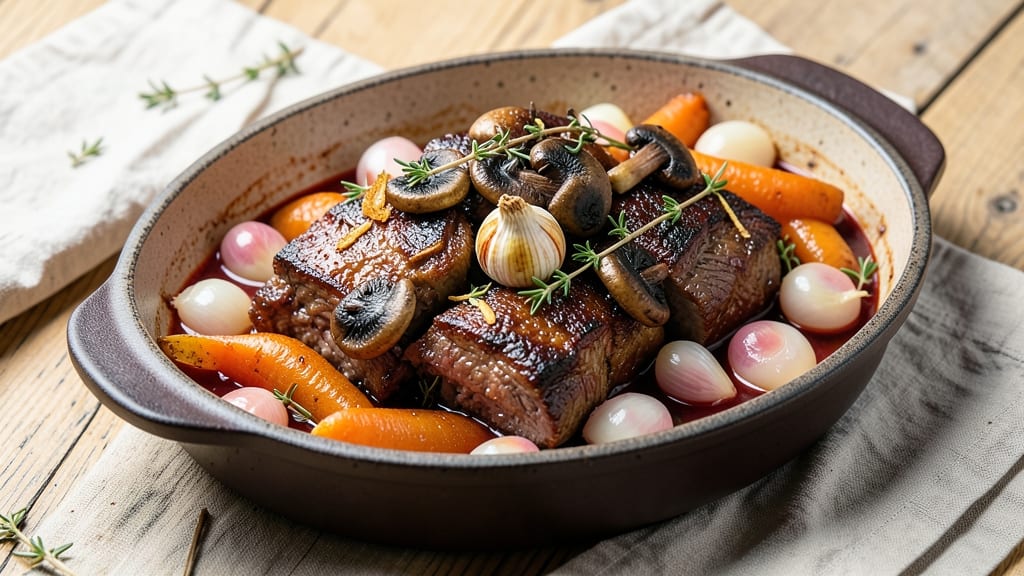
This Barefoot in Paris beef bourguignon recipe transforms a classic French technique into a cozy, weeknight-friendly masterpiece—rich with deep wine flavors and tender beef that falls apart at the touch.
The secret lies in slow braising, where beef and mushrooms simmer in red wine until the meat becomes fork-tender and the sauce reduces to a velvety, aromatic fond. I’ve adapted the traditional method to work in a home kitchen, using simple ingredients to achieve restaurant-quality results without the fuss.
The beauty of this dish is in its patience—letting the wine and aromatics develop over hours creates layers of flavor that no shortcut can replicate. A good red wine (like Pinot Noir or Merlot) infuses the beef with earthy depth, while pearl onions and carrots add natural sweetness.
The mushrooms, sautéed until golden, form the base of the sauce, creating a rich, umami-packed fond that clings to every bite. This is comfort food at its finest, perfect for chilly evenings or special gatherings.
By the time you serve this dish, your kitchen will smell like a Parisian bistro, and your guests will never guess it took just a few hours of hands-off cooking.
The beef emerges so tender it melts in your mouth, while the sauce—thickened with flour and butter—coats each piece with a glossy, wine-infused sheen. Pair it with crusty bread to soak up every last drop, and you’ll have a meal that feels both elegant and deeply satisfying.
Whether you’re hosting dinner or treating yourself to a luxurious weeknight meal, this beef bourguignon delivers the essence of French home cooking—warm, inviting, and impossible to resist.
The best part? It gets better as it sits, so leftovers are just as delicious the next day. Let’s get started on creating this timeless classic.
Ingredients for barefoot in paris beef bourguignon
Rich, wine-kissed beef and earthy mushrooms—this cozy French classic needs just 14 ingredients.
| Ingredient | Amount | Notes |
|---|---|---|
| Beef Chuck Roast 🥩 | 2 lb | Cut into 2-inch cubes |
| Red Wine 🍷 | 2 cups | Dry, bold variety like Merlot |
| Mushrooms 🍄 | 16 oz | Cremini or button, sliced |
| Carrots 🥕 | 3 whole | Peeled, cut into chunks |
| Pearl Onions 🧅 | 12 whole | Peeled, halved lengthwise |
| Garlic Cloves 🧄 | 6 cloves | Minced, fresh preferred |
| All-Purpose Flour 🌾 | 2 tbsp | For thickening sauce |
| Unsalted Butter 🧈 | 4 tbsp | Cold, cubed for richness |
| Fresh Thyme 🌿 | 2 sprigs | Or 1 tsp dried thyme |
| Fresh Rosemary 🌿 | 1 sprig | Or 1/2 tsp dried rosemary |
| Beef Broth 💧 | 1 cup | Low-sodium preferred |
| Olive Oil 🫒 | 2 tbsp | For searing beef |
| Salt 🧂 | 1 ½ tsp | Kosher or sea salt |
| Black Pepper 🌶️ | ½ tsp | Freshly ground preferred |
The beef is everything here. Chuck roast gives that melt-in-your-mouth texture—sirloin stays too firm. Grab it from the butcher counter if possible; pre-packaged works too. For the wine, Merlot or Pinot Noir are perfect—whatever's open in your cabinet. The mushrooms? Cremini or button, sliced thin. Trader Joe's usually has pre-sliced packages, but fresh is always better. Pearl onions can be tricky to peel, so I often use frozen ones (they're pre-peeled and ready to go).
No red wine? Beef broth with 1 tbsp balsamic vinegar works in a pinch. Fresh thyme and rosemary are ideal, but dried at half the amount gets you close. The flour needs to be lightly toasted in the butter—don't skip this step, or the sauce will taste raw. For the butter, European-style unsalted (like Plugrá) adds more flavor than regular. The carrots can be baby carrots if that's what you've got—just cut them into even chunks so they cook at the same rate.
This dish tastes even better the next day, so make extra. Store leftovers in the fridge for up to 5 days or freeze for 3 months. I like to portion it into containers with a little extra sauce on top—just reheat covered on low. The wine sauce thickens as it cools, so add a splash of broth if it seems too thick when reheating. Trust me, the smell alone will have everyone gathering in the kitchen.
Why You'll Love This Recipe
- One-Pot Magic: Honestly, this dish is a lifesaver—just sear the chuck roast, dump in wine, veggies, and herbs, then let it slow-cook. No chopping boards full of scraps, no multiple pans, and honestly? The smell alone makes my kitchen feel like a Parisian bistro by 6 PM.
- Wine-Infused Richness: That deep red wine reduction? It’s where the magic happens—the beef gets fork-tender while soaking up all those earthy mushroom and caramelized onion flavors. Between us, the first bite is the reason I don’t even try to replicate it any other way.
- Leftovers That Shine: I make this on Sundays because the second night is just as good—if not better. The flavors meld overnight, and reheating it is a dream (just a splash of water or wine to loosen it up). My kids even ask for it, and that’s saying something.
- Budget-Friendly Luxury: Chuck roast is cheap, but it feels fancy—especially when paired with pearl onions and mushrooms. I’ll be real: this is my go-to for date nights or when friends drop by unexpectedly. Everyone thinks I slaved over it, but the secret’s out now.
Step-by-step instructions for deep wine-braised beef with mushroom fond
Here's how to create this rich, comforting dish that tastes like a Parisian bistro.
Sear the Beef Until Deeply Browned
Heat the 2 tablespoons olive oil in a heavy Dutch oven over medium-high heat until shimmering. Working in batches to avoid crowding, add the 2 lb beef chuck roast cut into 2-inch cubes and sear for 3-4 minutes per side until deeply browned and caramelized. This step develops incredible flavor in the fond we'll create later.
Don't rush this process—you want that beautiful crust that will dissolve into the sauce. Once all beef is browned, remove it from the pot and set aside on a plate. You'll notice the oil will be rich and dark from all those browned bits—this is called fond, and it's pure flavor.
Sauté Vegetables and Deglaze the Pot
In the same Dutch oven, add 4 tablespoons unsalted butter and let it melt completely. Add the 16 oz sliced mushrooms, 3 whole peeled carrots cut into chunks, and 12 whole pearl onions halved lengthwise. Cook for 5-6 minutes until the vegetables begin to soften and the mushrooms release their moisture.
Add the 6 cloves minced garlic, 2 sprigs fresh thyme, and 1 sprig fresh rosemary. Stir for 30 seconds until fragrant. Pour in the 2 cups red wine and scrape up all those browned bits from the bottom of the pot—this is crucial for maximum flavor. Let the wine simmer for 3-4 minutes until reduced by about half.
Build the Rich Braising Liquid
Sprinkle the 2 tablespoons all-purpose flour over the vegetables and stir to combine. Cook for 1 minute to toast the flour slightly. Slowly pour in the 1 cup beef broth, stirring constantly to create a smooth sauce. Add the seared beef back to the pot along with the 1.5 teaspoons salt and 0.5 teaspoon black pepper. Bring to a gentle simmer.
Here's the thing—this is where patience pays off. Partially cover the Dutch oven with a lid and let it simmer gently for 2 hours on the stovetop or transfer to a 325°F oven for the same time. You want the beef to become fork-tender and the sauce to thicken beautifully. Check occasionally and add a splash of water if the liquid gets too low.
Finish and Rest for Maximum Flavor
Once the beef is fork-tender (it should pull apart easily with a fork), remove the thyme and rosemary sprigs. Taste the sauce and adjust seasoning if needed. For a richer finish, remove the pot from heat and stir in the remaining 2 tablespoons unsalted butter, letting it melt into the sauce.
Let the bourguignon rest for 15 minutes before serving. This resting time allows all the flavors to meld together perfectly. Serve with crusty bread or mashed potatoes to soak up that delicious sauce—every bite should be rich, tender, and full of deep wine flavor.
Pro Tips For Making Barefoot In Paris Beef Bourguignon
- SEAR THE ROAST UNTIL IT BROWNS: I learned this the hard way—skipping the deep sear means flavorless braising liquid. Use a heavy pot (Dutch oven if you have one) and let the beef sit undisturbed for 3-4 minutes per side until it’s dark golden, almost black in spots. That crust locks in juices and builds the sauce’s depth.
- PEEL AND TRIM CARROTS UNEVENLY: No need for perfect rounds—roughly chop carrots into 1-inch chunks, leaving the skin on the curved sides. They’ll soften faster and absorb the wine reduction better, especially if you blanch them for 2 minutes first. (Yes, even if you’re impatient like me.)
- DEGLAZE WITH THE WINE IMMEDIATELY: Don’t let that browned beef sit—pour in the red wine right after removing the roast and scrape every bit of fond from the bottom. If you wait, you’ll lose half the flavor. Use a wooden spoon and work fast; the alcohol burns off quickly, but that’s when the magic happens.
- SKIP THE PEARL ONIONS IF THEY’RE TOO SMALL: Those tiny pearl onions? They disappear into mush. Instead, halve them lengthwise or use whole small shallots for better texture. If you’re set on pearls, blanch them first to soften them faster—no one wants a dish full of overcooked bits. (Your future self will thank you.)
Regional styles of this barefoot in paris beef bourguignon
Classic French Technique
This dish originates from the Burgundy region of France, where cooks traditionally braise beef in red wine to create a rich, velvety sauce. The slow cooking process allows the beef to become tender while developing deep, complex flavors from the wine and aromatics.
In Parisian bistros, it's often served with crusty baguettes or buttery mashed potatoes to soak up every last drop of sauce. 🍷
The key to authentic French bourguignon lies in the wine reduction—a technique called réduction—where the alcohol cooks off, concentrating the flavors. The mushrooms form the base of the sauce, creating a rich, umami-packed fond that's essential for that signature depth.
I always use a dry red wine like Merlot or Pinot Noir, as their tannins and acidity balance beautifully with the beef.
Modern American Adaptations
In the U.S., we've made this dish more approachable by simplifying some steps. For example, many home cooks use pre-sliced mushrooms and frozen pearl onions to save time without sacrificing flavor. The Barefoot in Paris version keeps it true to tradition but adds a homey touch with its straightforward instructions.
I often swap the beef broth for a splash of beef consommé to add extra richness—it's a little secret that makes the sauce even more luxurious.
Another American twist is using a Dutch oven for braising, which is more common in home kitchens than the traditional French marmite. This heavy pot distributes heat evenly, ensuring the beef cooks perfectly every time.
For a quicker version, some chefs use a pressure cooker, reducing the cooking time to about 1.5 hours while still delivering tender beef.
Italian-Inspired Variations
Across the Alps in Italy, this dish takes on a different character. In regions like Piedmont, you might find a version called Bollito al Barolo, where beef is braised in Barolo wine instead of Burgundy.
The Italians often add a touch of tomato paste to the sauce, giving it a slightly sweeter, more vibrant profile. I've experimented with this and found that 1 tablespoon of tomato paste added during the wine reduction step adds a lovely depth without overpowering the dish. 🍅
Another Italian influence is the use of different herbs—sometimes adding a bay leaf or even a splash of white wine to the sauce. The Italians also tend to serve their braised beef with polenta or risotto instead of potatoes, which pairs beautifully with the rich sauce.
If you're feeling adventurous, try swapping the mashed potatoes for creamy polenta—it's a game-changer!
German Comfort Twists
In Germany, this dish might be served as Rindergulasch, a hearty stew that often includes paprika and caraway seeds for a warm, slightly sweet flavor. The Germans take their braised beef even slower, sometimes cooking it for 3-4 hours to achieve an almost falling-apart texture.
I've tried adding 1 teaspoon of sweet paprika to the flour mixture before adding the broth, and it adds a lovely smoky note that complements the wine beautifully. 🌶️
Another German touch is serving the dish with Spätzle—tiny egg noodles that soak up the sauce like a dream. If you can't find Spätzle, regular egg noodles work in a pinch.
The Germans also often add a few slices of bacon to the pot during the braising process, which adds a smoky depth that pairs perfectly with the wine. It's a small change that makes a big difference!
Vegetarian-Friendly Adaptations
For those who want to enjoy the flavors of bourguignon without the beef, a vegetarian version swaps the meat for hearty mushrooms, eggplant, or even king oyster mushrooms. The key is to use ingredients that can absorb the wine sauce and hold their shape during braising.
I've had great success with a mix of portobello mushrooms and eggplant, sliced thickly to mimic the texture of beef. The sauce clings to them beautifully, creating a satisfying, meaty alternative. 🍄
To make it even more substantial, I add chickpeas or lentils to the pot during the final hour of cooking. They soak up the sauce and add a nice protein boost.
The secret to success here is to use a thicker wine reduction—about 1.5 cups instead of 2—to ensure the sauce coats everything properly. A sprinkle of nutritional yeast at the end adds a cheesy, umami note that really elevates the dish.
Nutrition facts
Frequently asked questions
Can I use a different cut of beef for this recipe?
While chuck roast is ideal for its tenderness when braised, you can substitute with stew beef or even bottom round if needed. Avoid lean cuts like sirloin—they won't become tender enough. For best results, cut your chosen beef into 2-inch cubes and sear them thoroughly before braising.
What if I don't have red wine? Can I substitute?
Use 2 cups beef broth with 1 tablespoon balsamic vinegar for depth, or swap for 1 cup beef broth + 1 cup cranberry juice for a sweeter profile. For wine lovers, even a dry white wine works in a pinch—just reduce it longer to concentrate the flavor. The key is maintaining the liquid volume and acidity.
How do I know when the beef is fully cooked?
The beef should be fork-tender—meaning it should easily pull apart with a fork and have no pink centers. For 2-inch cubes, this typically takes 2 hours of braising. If using a meat thermometer, aim for 203°F in the thickest piece. The sauce should also thicken noticeably as the beef releases moisture.
Can I make this recipe in a slow cooker?
Yes! Sear the beef first, then transfer everything to a slow cooker and cook on low for 7-8 hours or high for 4-5 hours. The slow cooker's gentle heat will achieve the same tender results. Just add 1/2 cup extra broth to prevent drying out. The sauce may need thickening with a cornstarch slurry before serving.
Why does my sauce taste bitter? How can I fix it?
Bitterness often comes from over-reducing the wine or using too much thyme/rosemary. To fix it, stir in 1 tablespoon tomato paste or 1 teaspoon sugar to balance the flavors. For prevention: don't reduce the wine below 1 cup, and remove herb sprigs before serving. A splash of beef broth can also dilute any harshness.