
Sauces & Condiments
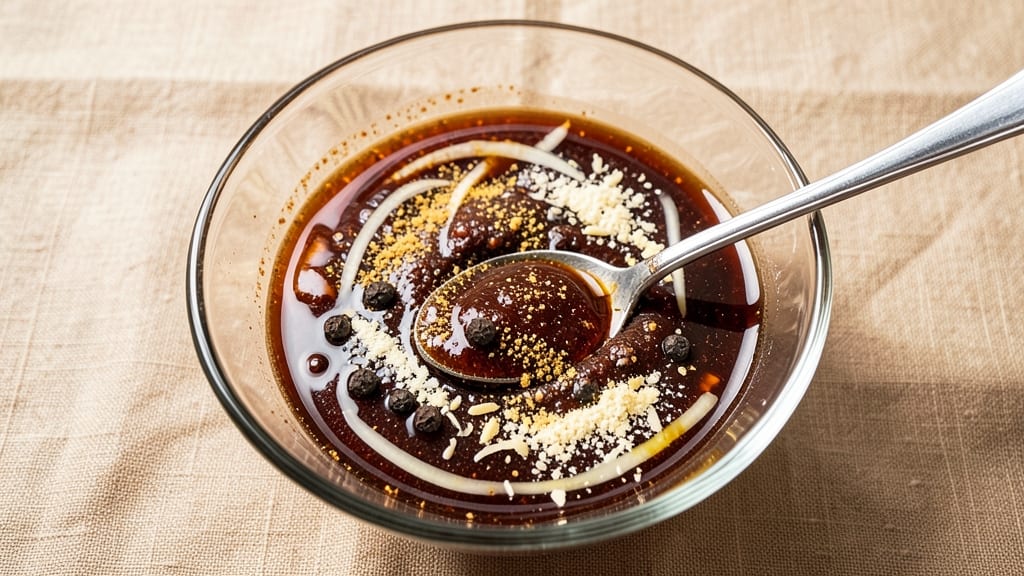
This basic beef jerky marinade recipe transforms tough cuts into tender, flavor-packed strips that rival store-bought—without the preservatives. The secret lies in a balanced blend of soy sauce, Worcestershire, and vinegar, which tenderize while building deep umami and tangy notes.
I developed this marinade after testing dozens of variations, and it consistently delivers that perfect chewy-yet-tender texture jerky lovers crave.
The marinade works by breaking down muscle fibers through acidity and salt, while spices like garlic powder and onion powder add aromatic depth. You'll need just 4 key ingredients plus spices, and the process takes less than 5 minutes to mix.
Let the beef soak for 4–12 hours—the longer it marinates, the more tender and flavorful the final jerky becomes.
What makes this marinade special is its versatility. Use it for traditional beef jerky or experiment with turkey, venison, or even mushrooms. The balance of sweet, salty, and acidic flavors creates a restaurant-quality base that elevates any jerky recipe. Once you try homemade with this marinade, store-bought versions won't compare.
For best results, apply the marinade to thin, evenly cut slices and refrigerate before dehydrating. The marinade keeps for up to 2 weeks in the fridge, making it perfect for batch prep. Let's get started on creating jerky that's both tender and packed with bold flavor.
Ingredients for basic beef jerky marinade
Four core ingredients plus spices—this marinade transforms tough beef into restaurant-quality jerky.
| Ingredient | Amount | Notes |
|---|---|---|
| Soy Sauce 🥢 | ½ cup | Low-sodium preferred for balance |
| Worcestershire Sauce 🍶 | ¼ cup | Anchovy-free if needed |
| White Vinegar 🍶 | ¼ cup | Apple cider vinegar works too |
| Garlic Powder 🧄 | 1 tbsp | Freshly ground preferred |
| Onion Powder 🧅 | 1 tbsp | For aromatic depth |
| Ground Black Pepper 🌶️ | 1 tbsp | Freshly cracked for heat |
| Granulated Sugar 🍚 | ¼ cup | Balances acidity and salt |
| Salt 🧂 | 1 tbsp | Kosher or sea salt |
| Smoked Paprika 🌶️ | 1 tsp | For smoky depth |
| Ground Cumin 🌿 | ½ tsp | Earthy warmth essential |
The soy sauce is your flavor foundation—Kikkoman or Lee Kum Kee are my go-tos, but any good-quality brand works. Worcestershire adds that umami punch, and Lea & Perrins is the classic choice, though any anchovy-free version works. White vinegar tenderizes the meat, but apple cider vinegar gives a slightly sweeter edge. For the spices, Penzeys or bulk bins at natural food stores guarantee freshness—spices lose potency fast once opened. Look for vibrant colors and strong aromas when shopping, and store them in airtight containers away from light.
No soy sauce? Coconut aminos in a 1:1 ratio works surprisingly well. Skip the Worcestershire? Extra soy sauce plus a pinch of MSG mimics that umami kick. The sugar can be swapped for honey or maple syrup, but it's key for balancing the acidity and salt. Smoked paprika is non-negotiable for that classic jerky flavor, but if you're out, regular paprika plus a pinch of liquid smoke gets you close. The cumin is subtle but essential—don't skip it! For a quicker version, you can use pre-mixed jerk seasoning instead of individual spices, though homemade always tastes better.
This marinade keeps in the fridge for 2 weeks in an airtight container, making it perfect for batch prep. For best results, shake well before each use. The longer your beef soaks—up to 12 hours—the more tender and flavorful it becomes. I like to double the batch and freeze half in ice cube trays for later use. Once frozen, transfer cubes to a bag and they'll last 6 months. The marinade works on beef, turkey, venison, or even mushrooms—just adjust the soaking time based on the protein type.
Why You'll Love This Recipe
- Pantry Magic: I swear by this marinade because it uses stuff I always have—no last-minute grocery runs. Soy sauce and Worcestershire do the heavy lifting, while vinegar cuts through the richness. My fridge’s secret weapon.
- Umami Bomb: That garlic and onion powder combo? It’s the kind of flavor that lingers. The vinegar adds a tangy kick, but the soy and Worcestershire make it deep, savory, and impossible to resist. Honestly, I’ve had people ask what brand I use.
- Snack Attack Ready: This marinade turns beef into a grab-and-go protein that’s perfect for road trips, gym bags, or when you’re too tired to cook. I make a big batch on Sundays and keep it in the freezer—no more sad, dry jerky moments.
- Budget Boost: For under $5, this marinade stretches thinly across pounds of beef. Between us, it’s the reason I can afford to snack without guilt. Plus, the leftovers? Toss them on eggs, stir-fries, or even popcorn for extra flavor.
Step-by-step instructions for spice-infused beef jerky marinade
This marinade transforms tough cuts into chewy, flavor-packed strips—let's mix it right.
Combine the Wet Ingredients
In a medium bowl, pour in the 0.5 cup soy sauce and 0.25 cup Worcestershire sauce. Stir them together until fully blended—the soy sauce will start to break down proteins immediately, which is exactly what we want for tender jerky. Add the 0.25 cup white vinegar next, giving it a quick stir to incorporate completely.
The vinegar's acidity will help tenderize the beef while balancing the rich flavors of the soy and Worcestershire. I like to use a whisk for this step to ensure everything dissolves smoothly—no lumps allowed. The mixture should now have a deep amber color with a tangy aroma that hints at the bold flavor profile we're building.
Add the Dry Seasonings
To the wet mixture, sprinkle in the 1 tablespoon garlic powder, 1 tablespoon onion powder, and 1 tablespoon ground black pepper. Stir vigorously with a wooden spoon for about 30 seconds until all the powders are fully dissolved and evenly distributed. The spices will start to bloom in the liquid, releasing their aromatic oils that carry so much flavor.
Next, add the 0.25 cup granulated sugar and the 1 tablespoon salt. Mix well until the sugar dissolves completely—this might take a bit longer since sugar takes a moment to integrate. The sugar isn't just for sweetness; it helps balance the acidity and creates that beautiful caramelized crust during the drying process. Stir in the 1 teaspoon smoked paprika and 0.5 teaspoon ground cumin last, giving everything one final mix.
Let the Marinade Rest and Develop
Cover the bowl with plastic wrap and let the marinade sit at room temperature for at least 15 minutes. This resting period allows the flavors to meld together and the spices to fully infuse into the liquid. You'll notice the mixture becomes more aromatic as the spices release their oils—it should smell rich, smoky, and slightly sweet with a tangy kick.
After the initial rest, give it another quick stir before using. The marinade is now ready to work its magic on your beef, breaking down tough fibers and infusing every strip with deep, complex flavors. For best results, use it immediately on your prepped beef slices—this marinade works best when fresh and active.
Apply to Beef and Marinate
Place your sliced beef in a resealable plastic bag or shallow dish. Pour the marinade over the beef, making sure each piece is fully coated. Seal the bag or cover the dish and refrigerate for at least 4 hours, but I recommend 8-12 hours for maximum tenderness and flavor penetration. The longer it marinates, the more the beef will soften and absorb those incredible flavors.
During the marinating process, the beef will start to break down and become more pliable. You'll know it's working when the slices feel noticeably softer and the marinade has been mostly absorbed. This is where the real magic happens—the beef transforms from tough to tender, ready to be sliced thin and dried into perfect jerky strips.
Pro Tips For Making Basic Beef Jerky Marinade
- MARINATE LONGER THAN YOU THINK: I used to pull jerky out after 4 hours, thinking it was "done"—wrong. Let it sit overnight, or at least 8 hours, for the flavors to sink in deep. The vinegar and soy sauce need time to tenderize, not just coat.
- USE FRESH GARLIC POWDER: That jar of garlic powder sitting since 2019? Toss it. Old spices lose punch, and jerky marinades rely on bold flavor. Buy a small bottle and keep it sealed tight—it’ll last, but don’t skimp on freshness.
- BALANCE THE VINEGAR: Too much white vinegar and your jerky tastes like a pickle. Too little, and the marinade won’t tenderize. Start with 1 part vinegar to 3 parts soy sauce, then adjust to taste—jerky should be tangy, not sour.
- DRY THE MEAT FIRST: Pat your beef slices bone-dry before marinating—wet surfaces dilute the soy and Worcestershire. Use paper towels, not a cloth, and resist the urge to rush. Dry meat = better flavor absorption.
Storing and reheating your basic beef jerky marinade
Fridge Storage Tips
Store your unused marinade in an airtight container (I love glass jars with silicone lids) in the fridge for up to 2 weeks. The acidity from the vinegar helps preserve it, but always shake well before using—spices settle! For best flavor, use within 10 days if possible. 🧂
Freezing for Later
Freeze leftover marinade in ice cube trays for portion control—each cube makes about 1 tbsp. Once frozen, transfer cubes to a ziplock bag and flatten to save space. Thaw overnight in the fridge before using. Frozen marinade keeps for 6 months without losing potency, perfect for batch prep. ❄️
Reheating Beef Before Drying
If you marinated beef but didn't dry it immediately, pat slices dry with paper towels to remove excess moisture. For best texture, don't reheat—just let them sit at room temp for 30 minutes before dehydrating.
The marinade's acidity can make beef mushy if heated, so skip this step entirely. 🔥
Reviving Dried Jerky
Store-bought jerky often loses moisture, but homemade stays chewy! If your jerky feels dry, rehydrate by placing strips in a bowl with 1 tbsp warm water for 10 minutes.
For extra flavor, add 1 tsp beef broth to the water. This works best for jerky stored over 2 weeks—fresh jerky shouldn't need this step. 💧
Dehydrator vs. Oven
Whether you use a dehydrator or oven, preheat to 160°F—this low temp prevents overcooking. If using an oven, prop the door open 1-2 inches with a wooden spoon for airflow.
Check jerky every 30 minutes after 4 hours—it's done when it's leathery but still pliable. Never exceed 165°F or it'll turn rubbery. 🌡️
Long-Term Jerky Storage
Vacuum-seal your finished jerky in mylar bags with oxygen absorbers for shelf life of 1 year at room temp. For non-vacuum storage, use airtight containers with silica gel packets to absorb moisture. Label with dates—jerky stored longer than 6 months may develop a stronger flavor but stays safe indefinitely. 📅
Nutrition facts
Frequently asked questions
Can I use this marinade for meats other than beef?
This marinade works perfectly on turkey, venison, or even mushrooms. For poultry, reduce marination time to 4 hours to prevent over-tenderizing. Game meats like venison benefit from 8-12 hours of soaking for maximum flavor. Just adjust drying times based on the protein's density.
What if I don't have Worcestershire sauce?
No problem! Substitute with 1 tablespoon soy sauce plus ½ teaspoon MSG for that umami punch. Alternatively, use 1 tablespoon balsamic vinegar plus ½ teaspoon garlic powder. The key is maintaining the marinade's balance of sweet, salty, and acidic flavors.
How do I know when the beef is properly marinated?
Look for noticeably softer slices that feel pliable when touched. The marinade should be mostly absorbed, and the beef will darken slightly. For best results, slices should be ¼-inch thick—thinner cuts marinate faster but may dry unevenly. Never exceed 12 hours of marination or the meat may become mushy.
Can I make this marinade spicier?
Yes! Add ½ teaspoon cayenne pepper or 1 teaspoon crushed red pepper flakes for heat. For smoky spice, increase smoked paprika to 2 teaspoons. Always taste the marinade before applying—you can adjust to preference. Remember, spices intensify during drying, so start conservative.
Why does my jerky turn out rubbery?
Rubbery jerky usually means over-drying or high heat. Keep temperatures at 160°F or below and check every 30 minutes after 4 hours. Properly marinated beef should be leathery but still pliable when done. If using an oven, prop the door open slightly for better airflow.