
Main Courses
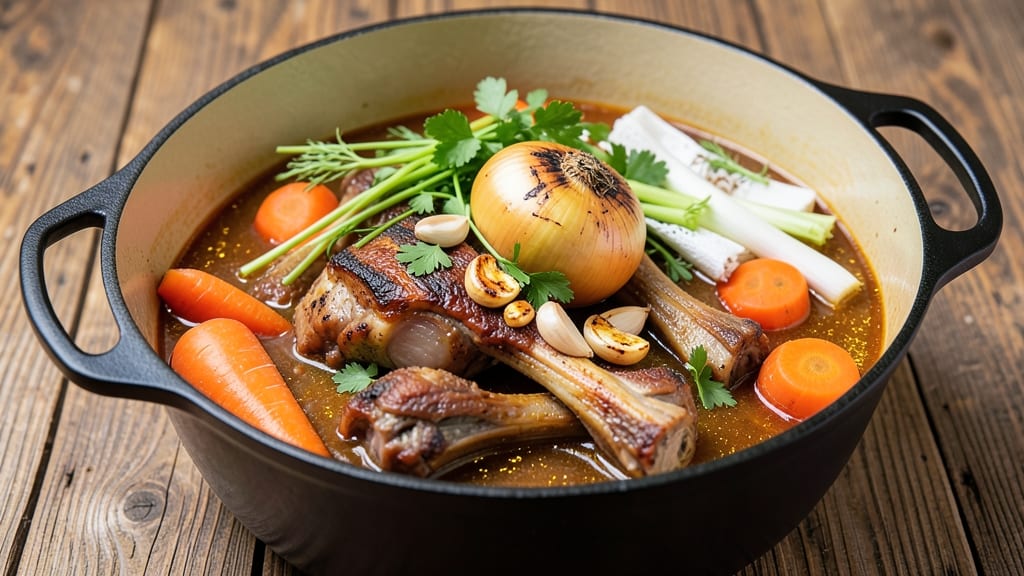
This basic beef stock recipe transforms humble bones and aromatics into a rich umami foundation for soups, stews, and sauces. The slow simmering process extracts deep flavor from beef bones, vegetables, and herbs, creating a versatile liquid that elevates any dish.
What makes this recipe special is its simplicity—just a few ingredients and patience yield restaurant-quality results at home.
The core technique involves roasting bones for maximum flavor development before simmering them with aromatic vegetables and herbs. This process unlocks the gelatin and collagen in the bones, resulting in a stock that's naturally rich and deeply flavorful.
The key to success lies in proper straining and reducing, which concentrates the flavor without overcooking the aromatics.
By following this method, you'll end up with a golden, aromatic liquid that's perfect for braising, deglazing pans, or serving as a base for risottos and sauces. The stock keeps well in the freezer, making it a practical pantry staple for home cooks who want to build flavor from scratch.
Optional variations include using different bone types or adding wine for depth, but the fundamental technique remains the same. This recipe is the building block for countless meals—let's create your flavor foundation today.
Ingredients for basic beef stock
Transform humble bones and aromatics into a restaurant-quality umami foundation for countless dishes.
| Ingredient | Amount | Notes |
|---|---|---|
| Beef Bones 🦴 | 3 lb | Raw or roasted, marrow and knuckle preferred |
| Yellow Onion 🧅 | 1 whole | Peeled, halved lengthwise, root intact |
| Carrots 🥕 | 2 lb | Whole, unpeeled, scrubbed clean |
| Celery Stalks 🧆 | 4 whole | Trimmed, cut into 3-inch pieces |
| Garlic Cloves 🧄 | 6 cloves | Peeled, smashed for deeper flavor |
| Fresh Parsley Stems 🌿 | 1 bunch | Tough stems only, tied with twine |
| Fresh Thyme Sprigs 🌿 | 4 whole | Stems intact, tied with twine |
| Fresh Bay Leaves 🍃 | 2 whole | Dried leaves work at half quantity |
| Black Peppercorns 🌶️ | 1 tbsp | Crushed lightly for subtle seasoning |
| Coarse Sea Salt 🧂 | 1 tsp | Diamond Crystal preferred for clarity |
| Cold Water 💧 | 12 cups | Filtered or spring water preferred |
| Apple Cider Vinegar 🍏 | 1 tbsp | Brightens stock color and flavor |
The bones are the heart of this stock—marrow and knuckle bones yield the richest gelatin, while neck or shank bones add depth. Costco and local butchers often sell beef bones in bulk, or check the meat section of Whole Foods for pre-packaged options. Avoid bones with excessive meat clinging, as this can make the stock cloudy. For maximum flavor, roast the bones at 425°F for 20-30 minutes before simmering, which caramelizes the surfaces and intensifies the umami. The aromatics—onion, carrots, celery—form the holy trinity of stock building; their natural sugars caramelize during roasting, creating a flavorful base. Organic produce from farmers markets adds subtle sweetness, but conventional store-bought works perfectly well.
No fresh herbs? Dried thyme and bay leaves work at half the quantity, though fresh imparts superior complexity. Running short on vinegar? A splash of lemon juice serves the same brightening purpose. The water should be cold to prevent immediate gelatin release, which would make straining difficult. For a deeper flavor profile, consider adding 1/2 cup dry red wine during the simmering process, though it's not essential. The stock's clarity improves with proper straining—use a fine-mesh sieve or cheesecloth-lined colander for the cleanest results. If you're using a slow cooker, reduce the water by 2 cups to account for evaporation during the longer cook time.
This stock freezes beautifully—portion into ice cube trays or quart-sized containers for easy use. It maintains peak quality for up to 6 months in the freezer, though the first few batches will be most flavorful. For immediate use, refrigerate in a sealed container; it will develop a thin layer of fat on top, which can be skimmed off before using. The stock reduces slightly as it cools, so plan for about 10% less volume when chilled. Label containers with the date to track freshness. When reheating, do so gently over low heat to preserve the delicate flavors, and never boil—simmering maintains the stock's integrity.
Why You'll Love This Recipe
- No Chopping Chaos: I just toss in a whole onion, a few carrots, and celery stalks—no fancy dicing, no peeling if I’m lazy. The bones do all the heavy lifting while I sip coffee and pretend I’m not cooking.
- Deep Umami Magic: That first sip? Chef’s kiss. The roasted bones caramelize into rich, meaty goodness while the garlic cloves melt into golden perfection—no bouillon packet could ever compete with this real-deal flavor.
- Freezer-Friendly Gold: I make a big batch on Sundays, freeze it in jars, and pull it out for soups, risottos, or even braised short ribs later. No waste, no stress—just pure convenience when I’m too tired to think.
- Budget Booster: Beef bones are cheaper than steak cuts, and this recipe stretches into meals for days. Honestly, it’s my secret for making fancy dinners feel affordable without sacrificing taste.
Step-by-step instructions for basic beef stock recipe
Transform simple ingredients into a deeply flavorful foundation for countless dishes.
Prepare the Bones and Aromatics
If using raw beef bones, rinse them thoroughly under cold water to remove any blood or impurities. Pat them dry with paper towels—this step prevents cloudiness in your finished stock. Place the 3 lb beef bones in a large stockpot, arranging them in a single layer to maximize surface area for flavor extraction.
Add the peeled, halved yellow onion and the 2 lb carrots whole to the pot. The celery stalks should be trimmed and cut into 3-inch pieces for even cooking. Tuck the 6 smashed garlic cloves, tied parsley stems, thyme sprigs, and 2 bay leaves into the aromatics. Lightly crush the 1 tbsp black peppercorns and sprinkle them over the bones along with the 1 tsp coarse sea salt. The vinegar will be added later to brighten the flavor.
Cover with Cold Water and Simmer
Pour in the 12 cups cold water until the bones and aromatics are completely submerged. The water should cover everything by at least 2 inches. Place the pot over medium-high heat and bring to a full rolling boil. Once boiling vigorously, immediately reduce the heat to maintain a gentle simmer.
This simmering process is critical—boiling too hard can create a cloudy stock. You're aiming for small, consistent bubbles breaking the surface. Skim any foam or impurities that rise to the top during the first 30 minutes using a fine-mesh skimmer or ladle. This ensures a crystal-clear finished product.
Cook for Deep Flavor Development
Simmer uncovered for 4 hours. The longer cook time extracts maximum gelatin and collagen from the bones, creating a rich, velvety texture. Stir occasionally to prevent the aromatics from sticking to the bottom, but avoid vigorous stirring which can create foam.
After 4 hours, add the 1 tbsp apple cider vinegar. This acidifier brightens the stock's color and enhances its umami depth. Continue simmering for another 2-3 hours until the stock has reduced slightly and developed a deep golden color. The bones should be easily separable from the meat when tested with tongs.
Strain and Finish
Line a fine-mesh strainer with cheesecloth or a coffee filter for extra clarity. Carefully strain the stock into a large bowl or measuring cups, pressing gently on the solids to extract maximum flavor without releasing sediment. Discard the bones and aromatics.
Taste the stock and adjust seasoning if needed. It should be subtly sweet from the carrots, with notes of onion and celery. The finished stock should yield about 8-10 cups. Store in airtight containers in the refrigerator for up to 5 days or freeze for up to 3 months.
Pro Tips For Making Basic Beef Stock
- BLANCH BONES FIRST: I learned this the hard way—roasting beef bones until they’re deep brown and crackling isn’t just for show. It caramelizes the bone marrow, which turns your stock from basic to deeply flavorful. Skip the roast, and you’re left with something that tastes like it came from a box.
- CHOP VEGETABLES SMALL: No, I’m not talking about tiny dice—aim for ½-inch chunks for carrots and celery, and thin slices for onion. Smaller pieces release flavor faster and dissolve into the stock instead of sitting like forgotten garnishes. (Yes, even if you’re impatient like me.)
- SKIP THE BOIL: Let the stock simmer gently—small bubbles breaking the surface, not a rolling frenzy. Boiling burns the aromatics and makes the stock cloudy. If you’re not sure, stick a wooden spoon in: if it’s hard to hold for 10 seconds, you’re too hot.
- ADD GARLIC LATE: Crush the cloves first, but toss them in only after 2 hours of simmering. Raw garlic can turn bitter, and you want that sweet, mellow flavor to shine. (Pro move: wrap them in cheesecloth so you don’t fish them out later.)
Storing and reheating this recipe
Refrigerator Storage
Let your beef stock cool completely before transferring it to airtight glass containers—I use Pyrex with snap-on lids for easy handling. Store in the refrigerator at 40°F or below for up to 5 days.
The stock will develop a thin layer of fat on top, which you can skim off before using. I always taste it before refrigerating to ensure the seasoning is balanced, as flavors can concentrate slightly as it cools. 💧
Freezer Storage
For long-term storage, portion your stock into quart-sized freezer bags or ice cube trays—this makes it easy to grab just what you need for recipes. Leave 1 inch of headspace to prevent expansion cracks, and squeeze out excess air to avoid freezer burn.
Label each container with the date, as homemade stock freezes beautifully for up to 6 months while maintaining peak flavor. I like to freeze it in 1-cup portions for convenience in sauces and braises. ❄️
Thawing Techniques
Never thaw beef stock at room temperature—always transfer it to the refrigerator overnight for safe defrosting. If you're in a hurry, place the sealed container in cold water (like an ice bath) and change the water every 30 minutes until thawed.
For immediate use, you can also microwave it on low power in 30-second intervals, stirring between each interval. Avoid boiling it during reheating to preserve its delicate flavors. 🔥
Reheating Methods
Reheat stock gently over low heat on the stovetop, stirring occasionally to prevent scorching. For stovetop reheating, use a heavy-bottomed pot and maintain a gentle simmer—never bring it to a full boil, as this can break down the stock's gelatin and make it cloudy.
If you're using the microwave, heat in 1-minute intervals, stirring well between each, until it reaches 165°F. Always taste and adjust seasoning after reheating, as evaporation can concentrate flavors. ✨
Using Frozen Stock
Frozen stock can be used directly from the freezer in recipes like soups and stews—just add it straight from the bag or container. For sauces or braises, thaw it first to control the liquid consistency better.
If you notice any ice crystals, stir them gently into the liquid as it heats. I often use frozen stock in risottos or gravies where the texture won’t be an issue. The flavor remains rich and concentrated, making it perfect for dishes where depth matters most. 💫
Nutrition facts
Frequently asked questions
What's the best type of beef bones for maximum flavor?
For the richest, most gelatinous stock, use a mix of marrow bones (for deep flavor) and knuckle or neck bones (for collagen). Avoid bones with excessive meat, as this can make your stock cloudy. If you're short on time, shank bones work well too—they're flavorful and rich in gelatin.
Can I make beef stock without roasting the bones first?
Yes, but roasting bones at 425°F for 20-30 minutes caramelizes their surfaces, creating deeper umami flavor. If skipping roasting, simply rinse bones thoroughly and add them directly to cold water. The stock will still be flavorful, but less concentrated. For best results, roast when possible.
Why does my beef stock turn cloudy?
Cloudiness usually means either over-boiling (which breaks down collagen) or not skimming impurities during the first 30 minutes. Always simmer gently and skim foam regularly. For extra clarity, strain through cheesecloth after the initial straining. The slight cloudiness in homemade stock is normal and doesn't affect flavor.
How can I make this stock vegetarian?
Replace beef bones with mushroom stems, onion skins, and carrot tops (simmered longer) plus 1 tbsp soy sauce or miso paste for umami depth. Use vegetable bouillon instead of salt, and add tomato paste for color. The simmering time increases to 6-8 hours for maximum flavor extraction.
Can I use this stock immediately after making it?
Yes! Let it cool slightly first (about 1 hour) to prevent temperature shock when refrigerating. For immediate use, simply strain and use in recipes like braises or soups. The stock will continue developing flavor as it cools, so taste before using. For best results, refrigerate overnight to let flavors meld.