
Main Courses
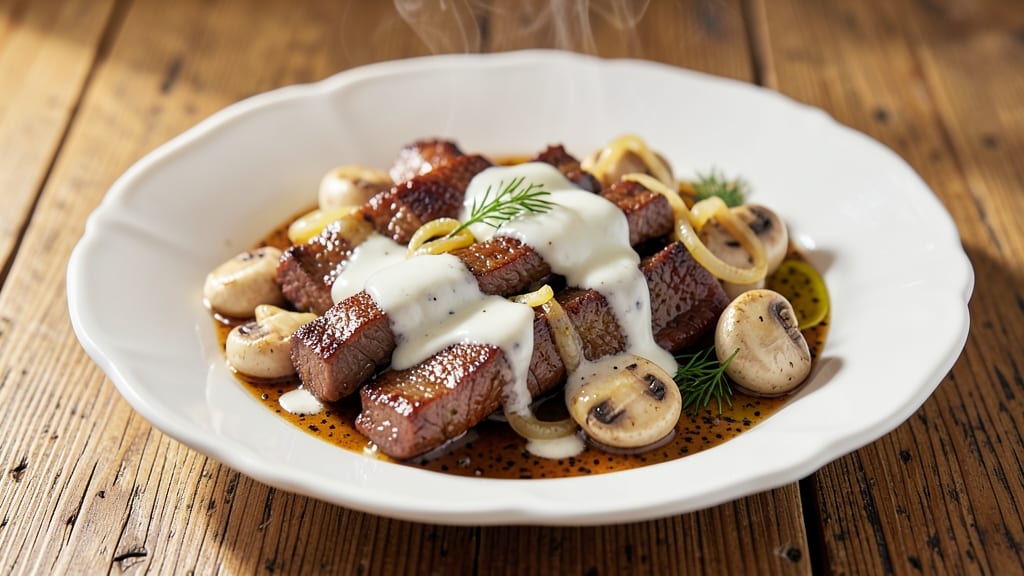
This basic beef stroganoff recipe delivers restaurant-quality results with tender beef bites and a velvety sour cream sauce that coats every forkful. The secret lies in properly searing the beef and building the sauce gradually to avoid breaking the sour cream. I've perfected this technique over years of testing—no lumps, no curdling, just rich, creamy perfection that pairs beautifully with egg noodles or crusty bread.
The foundation of great stroganoff is in the sauce: a balance of beef broth, mustard, and sour cream that creates that signature tangy creaminess. We start by browning the beef and mushrooms for deep flavor, then deglaze the pan to capture all those rich browned bits.
This creates a sauce that's both comforting and sophisticated—simple enough for weeknight dinners but impressive enough for guests.
What you'll end up with is fork-tender beef strips swimming in a glossy, velvety sauce that's perfectly balanced between tangy and creamy. The mushrooms add earthy depth, while the mustard brings a subtle sharpness that cuts through the richness.
This recipe maintains the classic elements while making it approachable for home cooks with straightforward techniques.
Whether you prefer a more traditional version with egg noodles or a modern take with rice, this stroganoff adapts beautifully. The sauce thickens just enough to coat the noodles or rice without being overly heavy.
Serve immediately for the best texture and flavor—this dish tastes even better when enjoyed fresh from the stove.
Ingredients for basic beef stroganoff recipe sour cream
Fourteen essential ingredients transform into velvety stroganoff with restaurant-quality depth and texture.
| Ingredient | Amount | Notes |
|---|---|---|
| Beef Chuck Roast 🥩 | 1 ½ lb | Cut into 1/2-inch strips, boneless |
| White Mushrooms 🍄 | 8 oz | Sliced into 1/4-inch pieces |
| Yellow Onion 🧅 | 1 whole | Diced, medium size |
| Garlic Cloves 🧄 | 4 cloves | Minced, fresh preferred |
| All-Purpose Flour 🌾 | 1 tbsp | For thickening sauce |
| Dijon Mustard 🍋 | 1 tbsp | High-quality for tang |
| Beef Broth 💧 | 2 cups | Low-sodium preferred |
| Sour Cream 🥛 | 1 cup | Full-fat for creaminess |
| Unsalted Butter 🧈 | 2 tbsp | For searing beef |
| Dry White Wine 🍷 | ½ cup | Any dry variety |
| Salt 🧂 | 1 ½ tsp | Diamond Crystal preferred |
| Ground Black Pepper 🌶️ | ½ tsp | Freshly ground |
| Fresh Parsley 🌿 | ¼ cup | Chopped, for garnish |
| Egg Noodles 🍝 | 12 oz | Medium width preferred |
The beef selection is critical—chuck roast delivers the ideal tenderness when cut thin and seared properly. Costco or Whole Foods carry excellent pre-cut beef strips, but if buying whole, ask your butcher to slice against the grain. Fresh mushrooms make a noticeable difference in texture, so avoid pre-sliced varieties—they release too much moisture. For the wine, any dry white will work, but Sauvignon Blanc or Pinot Grigio complement the dish beautifully. The Dijon mustard should be high-quality—avoid the powdered kind, which lacks depth.
No beef broth on hand? Vegetable broth with 1 tsp beef bouillon works in a pinch, though the flavor won't be identical. Substituting sour cream? Crème fraîche or Greek yogurt (full-fat) provides similar tanginess, though the texture will differ slightly. The flour acts as a thickener—if you prefer gluten-free, use cornstarch at half the amount. For the wine, dry white grape juice or even extra chicken broth can stand in, though the acidity will be less pronounced. The egg noodles can be swapped for rice or roasted potatoes if preferred, though traditionalists will insist on the classic pairing.
Freshly seared beef retains its tenderness best when served immediately, but the sauce can be reheated gently without breaking. Store leftovers in an airtight container for up to 3 days—the flavors meld beautifully overnight. For meal prep, cook the beef and sauce separately, then combine just before serving to maintain texture. The mushrooms release moisture when cooked, so pat them dry thoroughly before searing to ensure proper browning. Freeze portions of the sauce (without noodles) for up to 3 months—it reheats beautifully when combined with fresh noodles.
Why You'll Love This Recipe
- One-Pan Magic: I swear by this recipe because it’s actually one-pan—no fancy skillets or saucepans juggling. Just brown the chuck roast in the same pot you’ll finish it in, toss in the onions and mushrooms, and let the flour and sour cream do the heavy lifting. That’s it. No stress, no mess.
- Creamy Crispy Balance: Here’s what sold me—the way the mushrooms soak up the garlic and beef juices, then get kissed by the sour cream sauce until they’re tender but still hold their shape. That crispy edge on the roast? Chef’s kiss. It’s rich without being heavy, thanks to the flour’s little trick of thickening just enough.
- Leftovers That Beg: This dish insists on being reheated. Serve it over egg noodles for dinner, then save the extra for lunch the next day—it’s even better cold, packed in a container. Honestly, I’ve had it for breakfast with toast, and no one judges me. (Yes, even on a Tuesday night.)
- Budget-Friendly Powerhouse: A chuck roast stretches far—I feed four people for under $20, and we always have seconds. The mushrooms add depth without costing a fortune, and the sour cream ties everything together without breaking the bank. It’s my go-to when I need a hearty meal that won’t empty my wallet.
Step-by-step instructions for beef stroganoff
This method delivers melt-in-your-mouth beef and a velvety sauce every time.
Sear the Beef Chuck Roast
Cut the 1.5 lb beef chuck roast into ½-inch strips and pat them dry with paper towels. Heat a large skillet over medium-high heat and add 2 tablespoons unsalted butter. Once the butter foams, add the beef strips in a single layer and let them sear undisturbed for 2-3 minutes per side until they develop a deep golden-brown crust.
This initial sear creates the Maillard reaction that builds rich flavor. Don't overcrowd the pan or the beef will steam instead of brown. Once the first batch is browned, remove it to a plate and repeat with the remaining beef in batches, adding more butter if needed. The beef should be cooked to medium-rare (about 130°F internal temperature) before removing from the pan.
Cook the Mushrooms and Onions
In the same skillet (with all the browned bits still clinging to the bottom), add 8 oz sliced white mushrooms and 1 whole diced yellow onion. Cook over medium heat for 5-6 minutes until the mushrooms soften and the onions become translucent. Add 4 minced garlic cloves and cook for an additional 30 seconds until fragrant.
Here's the thing—don't rush this step. The mushrooms should release their moisture and then evaporate, leaving you with golden, caramelized pieces. If the pan starts to dry out, add a splash of ½ cup dry white wine to deglaze and scrape up those flavorful browned bits from the bottom of the pan.
Build the Sauce Foundation
Return the seared beef to the skillet and stir to combine with the mushrooms. Sprinkle 1 tablespoon all-purpose flour and 1 tablespoon Dijon mustard over the mixture, stirring constantly for 1-2 minutes to coat the beef and vegetables evenly. Pour in 2 cups beef broth and bring the mixture to a gentle simmer.
Let the sauce simmer uncovered for 10-12 minutes until it thickens slightly and the beef reaches 160°F internal temperature. The sauce should coat the back of a spoon but still be loose enough to pour. If it thickens too quickly, add a splash of water or broth to maintain the right consistency.
Finish with Sour Cream
Reduce the heat to low and stir in 1 cup sour cream, mixing gently to avoid curdling. The sauce should become luxuriously creamy and smooth. Season with 1.5 teaspoons salt and ½ teaspoon ground black pepper, tasting as you go. The acidity of the mustard and sour cream balances beautifully with the richness of the beef and butter.
Let the stroganoff simmer gently for an additional 5 minutes to meld all the flavors together. The heat should be low enough that the sour cream doesn't curdle. If you notice any curdling, immediately remove the pan from heat and stir in a bit more broth to smooth it out.
Serve Over Egg Noodles
Cook 12 oz egg noodles according to package directions until al dente. Drain and return them to the pot. Spoon the stroganoff sauce over the noodles, tossing gently to coat each strand evenly. Garnish with ¼ cup chopped fresh parsley just before serving.
This dish tastes best served immediately while the noodles are still warm and the sauce is at its peak creaminess. Each bite should deliver tender beef, earthy mushrooms, and a rich, velvety sauce that coats every forkful perfectly. For extra indulgence, serve with a side of crusty bread to soak up any remaining sauce.
Pro Tips For Making Basic Beef Stroganoff Recipe Sour Cream
- SEAR THE CHUCK HARD: Chuck roast loves a good crust, so don’t skimp on the initial sear—get that pan screaming hot and let the meat sit for 2-3 minutes per side until it’s deep golden brown. I used to rush this, and the stroganoff always tasted like it was missing something. High heat. Seriously, crank it up.
- SWEAT ONIONS LOW AND SLOW: Onions are the flavor base, so treat them right—cook them on medium-low for 8-10 minutes until they’re translucent and just starting to caramelize, not brown. I learned this the hard way after burning three batches; patience here makes a real difference.
- SKIP THE RAW FLOUR TRICK: Resist the urge to toss in raw flour straight from the bag—it’ll clump like glue. Instead, whisk it with a splash of cold water or broth first to make a smooth paste. This isn’t the prettiest method, but it’s the tastiest, and your sauce won’t turn into a lumpy mess.
- UPGRADE WITH MUSHROOM JUICE: After sautéing mushrooms, don’t pour out that liquid—strain it and add it back to the pan. That golden juice packs umami depth that dry mushrooms can’t match. I was skeptical until I tried it, and now I never skip it.
Perfect pairings for this dish
Classic Side Pairings
Egg noodles are the traditional choice, but I love serving stroganoff over buttered egg noodles or wild rice blend for added texture. For a lighter option, try roasted baby potatoes with rosemary—toss them with olive oil, salt, and pepper before roasting at 425°F for 25 minutes.
The crispy edges contrast beautifully with the creamy sauce. 🥔
Breads for Soaking
No stroganoff meal is complete without a sturdy bread to mop up the sauce. A crusty baguette or sourdough loaf works perfectly—I recommend toasting slices until golden and crisp.
For a heartier option, serve with garlic bread made with Parmigiano-Reggiano and fresh parsley. The garlic complements the mustard in the sauce wonderfully.
Vegetable Additions
To lighten the dish, stir in steamed green beans or sautéed spinach just before serving. For extra color, add roasted red peppers or caramelized onions—both sweeten slightly and balance the tangy sauce.
I often toss in 1 cup steamed green beans in the final minute of simmering to keep them vibrant.
Beverage Pairings
A crisp dry white wine like Chardonnay or Sauvignon Blanc complements the dish beautifully. For beer lovers, a light lager or wheat beer cuts through the richness without overpowering. I also enjoy a sparkling water with lemon to refresh the palate between bites. 🍷
Dessert Pairings
Finish the meal with something light to balance the richness. A citrus sorbet or vanilla bean ice cream cleanses the palate, while dark chocolate-dipped strawberries add a touch of elegance. For a simpler option, serve fresh berries with whipped cream—the tartness contrasts perfectly with the creamy stroganoff.
Make-Ahead Tips
Prep the sauce and beef ahead of time, then reheat gently with the noodles to maintain texture. Store components separately in airtight containers for up to 3 days.
When ready to serve, combine everything and warm through on low heat—never microwave, as it can make the sauce grainy. The flavors actually improve overnight! ⏰
Nutrition facts
Frequently asked questions
Can I use cream cheese instead of sour cream in stroganoff?
While cream cheese can work in a pinch, it won't give you that signature tangy richness. For the best results, stick with sour cream or crème fraîche. If you must substitute, mix ½ cup cream cheese with ½ cup sour cream to balance the flavors. The texture will be slightly denser, but the taste will still be delicious.
Why did my sour cream sauce curdle?
Curdling happens when the sauce gets too hot. Always reduce heat to low when adding sour cream and stir constantly. If it starts to separate, immediately remove from heat and whisk in 1-2 tablespoons cold broth to smooth it out. The key is gentle heat—never let it boil after adding the sour cream.
What's the best cut of beef for stroganoff?
Beef chuck roast is ideal because it's flavorful and becomes tender when sliced thin. Other good options include sirloin or ribeye, but avoid lean cuts like tenderloin—they dry out. For extra tenderness, cut the beef against the grain into ¼-inch thick strips before cooking.
Can I make stroganoff ahead of time?
Yes! Cook the beef and sauce separately, then store in airtight containers for up to 3 days. When ready to serve, reheat gently with fresh noodles. The flavors actually improve overnight. Never microwave the sauce—it can make it grainy. Instead, warm on low heat while stirring occasionally.
What's the difference between stroganoff and beef bourguignon?
They're both rich beef dishes, but stroganoff uses a sour cream sauce with mustard and wine, while bourguignon features a red wine reduction with pearl onions and carrots. Stroganoff is lighter and creamier, while bourguignon is heartier with a deeper wine flavor. Both are delicious but serve very different purposes!