
Main Courses
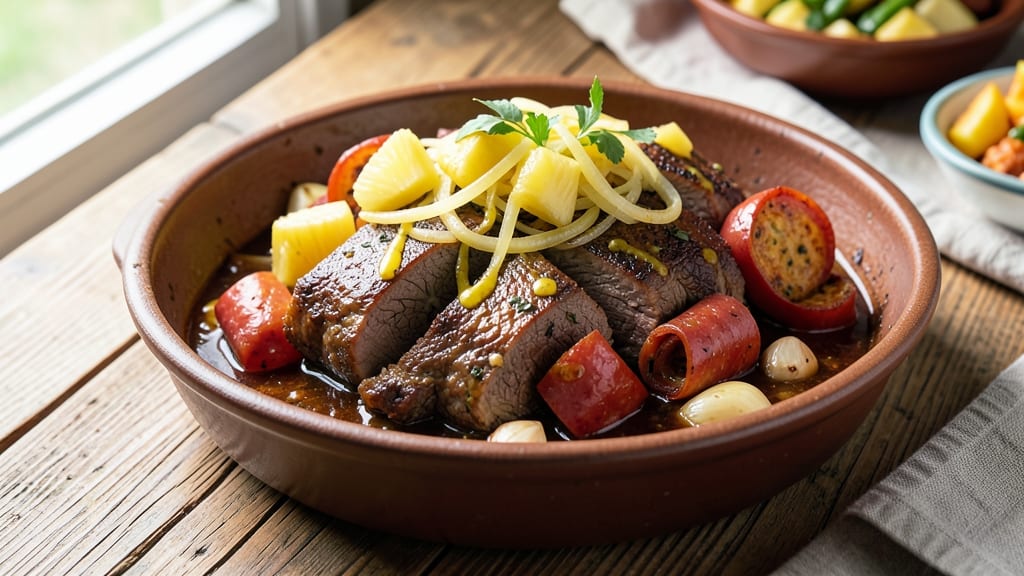
This Batangas beef caldereta delivers the rich, tangy-sweet flavors of Filipino home cooking with a crispy chorizo twist that elevates every bite. 🌟 The secret lies in slow-braising tender beef until it melts in your mouth, then balancing the deep umami with pineapple's bright acidity and a touch of calamansi for that signature Batangas zing.
What makes this version special is the crispy chorizo bites that add texture without overpowering the hearty stew.
The recipe stays true to tradition while offering modern flexibility—whether you're simmering it on the stove for hours or using a slow cooker for hands-off cooking. Potatoes and cauliflower soak up the rich sauce, while liver (if using) adds depth that traditionalists swear by.
The sauce thickens beautifully as it reduces, creating that perfect balance between velvety and slightly chunky.
By the time you serve this dish, you'll have a steaming pot of golden-brown beef, crispy chorizo pieces, and vegetables swimming in a sauce that's both tangy and sweet.
The aroma alone will have everyone gathering around the table. This is comfort food at its finest—warm, satisfying, and packed with the kind of flavors that make you crave seconds.
Perfect for family dinners, potlucks, or impressing guests with authentic Filipino flavors. The leftovers reheat beautifully, making it an ideal meal for busy weeks. Let's get cooking!
Ingredients for batangas beef caldereta
Sixteen ingredients for a dish that's rich, tangy, and packed with crispy chorizo bites.
| Ingredient | Amount | Notes |
|---|---|---|
| Beef Chuck Roast 🥩 | 3 lb | Cut into 1.5-inch cubes |
| Chorizo Sausage 🌭 | 1 lb | Filipino-style, sliced into rounds |
| Yellow Onions 🧅 | 2 whole | Thinly sliced, about 3 cups |
| Garlic Cloves 🧄 | 8 cloves | Minced, about 2 tbsp |
| Fresh Pineapple 🍍 | 1 cup | Chopped, about 1/2 small pineapple |
| Calamansi Juice 🍋 | ¼ cup | Substitute with 1 tbsp lime + 1 tbsp lemon |
| Beef Liver 🍖 | ½ lb | Optional, sliced thin |
| Russet Potatoes 🥔 | 2 lb | Cut into 1-inch chunks |
| Cauliflower 🥬 | 1 head | Cut into florets |
| Tomatoes 🍅 | 4 whole | Ripe, quartered |
| Bay Leaves 🍃 | 2 whole | For depth of flavor |
| Black Peppercorns 🌶️ | 1 tsp | Freshly cracked |
| Salt 🧂 | 2 tsp | Kosher or sea salt |
| Olive Oil 🫒 | ½ cup | For browning meat |
| Soy Sauce 🍜 | 2 tbsp | For umami depth |
The beef is the backbone—chuck roast gives that melt-in-your-mouth tenderness. Look for well-marbled cuts at your butcher or Costco's bulk section for the best value. If you can't find Filipino chorizo, Spanish chorizo or even kielbasa works in a pinch, but it won't be quite the same. The pineapple should be fresh (not canned) for that bright acidity that cuts through the richness. Trader Joe's usually carries good quality pineapple year-round. For the calamansi juice, if you're outside the Philippines, mix lime and lemon—it's the closest substitute you'll get.
No beef liver? Skip it entirely—this dish still shines without it. The potatoes and cauliflower should be sturdy varieties that hold up to long cooking. Russet potatoes are ideal, and if you're using pre-cut florets, don't worry about separating them further. The tomatoes can be any ripe variety, but heirloom tomatoes add a nice sweetness. For the bay leaves, dried works fine if you're in a hurry, but fresh adds a more complex flavor. The soy sauce is non-negotiable here—use light soy for the best balance. If you're making this ahead, the flavors actually improve overnight as everything melds together.
This dish reheats beautifully—honestly better the next day once all the flavors have time to develop. Store leftovers in an airtight container in the fridge for up to 4 days, or freeze for 3 months. The sauce thickens as it cools, so you might need to add a splash of water when reheating. For crispy chorizo bites, brown them separately before adding to the pot—this is where the magic happens. If you're short on time, use a slow cooker on low for 6-8 hours instead of stovetop braising.
Why You'll Love This Recipe
- One-Pot Magic: I swear by this recipe when I’m too tired to scrub pots—just brown the beef, toss in the onions and garlic, add the rest, and let it simmer. The chorizo’s oil renders into the sauce, so you’re basically cooking with flavor already infused.
- Sweet-Savory Balance: That first bite of pineapple cutting through the rich beef? It’s like a party in your mouth. The chorizo adds smoky depth, but the pineapple’s brightness keeps it from feeling heavy—honestly, I reach for seconds without even thinking.
- Leftovers That Shine: This dish only gets better the next day. The beef gets fork-tender, the sauce thickens just right, and I’ve reheated it for lunch three times without anyone complaining. (Yes, even my picky husband.)
- Budget-Friendly Feast: A single beef chuck roast and a pack of chorizo stretch to feed four—sometimes five, if we’re really hungry. The onions and garlic are cheap staples, and pineapple rounds out the meal without breaking the bank. My wallet thanks me every time.
Step-by-step instructions for Batangas beef caldereta
Here's how to create this rich, pineapple-kissed braise with perfectly crispy chorizo bites.
🔥 Step 1: Brown the Beef and Chorizo for Deep Flavor
Heat the 0.5 cup olive oil in a large Dutch oven over medium-high heat. Working in batches, add the 3 lb beef chuck roast cut into 1.5-inch cubes, spreading them out in a single layer. Let them sear undisturbed for 3-4 minutes until deeply browned on all sides—this builds the rich foundation for your caldereta.
Remove the beef and set aside. In the same pot, add the 1 lb chorizo sausage sliced into rounds and cook for 2-3 minutes until the edges begin to crisp. The chorizo should release its fat and develop a golden crust—this is where the authentic Batangas flavor starts. Transfer the chorizo to a plate and keep warm.
👨🍳 Step 2: Sauté Aromatics Until Fragrant
In the same Dutch oven, add the 2 whole yellow onions sliced thinly and cook for 5-6 minutes until softened and translucent. Stir in the 8 cloves garlic minced and cook for another 30 seconds until the garlic releases its sweet aroma—don't let it brown or it'll turn bitter.
Add the 4 whole tomatoes quartered and cook for 4-5 minutes until they break down into a chunky sauce. Here's the thing—this step develops the tomato base that will thicken your caldereta beautifully. If the mixture looks dry, add 2 tablespoons water to help it cook down smoothly.
🥘 Step 3: Build the Braising Liquid
Return the browned beef and chorizo to the pot. Pour in the 0.25 cup calamansi juice (or lime-lemon substitute) and 2 tablespoons soy sauce. Add 2 whole bay leaves, 1 teaspoon cracked black peppercorns, and 2 teaspoons salt. The acidity from the calamansi will tenderize the beef while the soy sauce adds umami depth.
Pour in 2 cups water (enough to just cover the beef), then add the 1 cup fresh pineapple chopped. Bring to a gentle boil, then reduce heat to low and cover. Let it simmer for 1 hour—this initial braising breaks down the tough beef fibers and infuses all the flavors together.
🍳 Step 4: Add Vegetables and Simmer to Perfection
After the initial hour, add the 2 lb russet potatoes cut into 1-inch chunks and 1 head cauliflower cut into florets. If using, add the 0.5 lb beef liver sliced thin—it'll cook quickly and add a luxurious richness. Stir gently to combine, then continue simmering uncovered for another 45-60 minutes until the beef is fork-tender and the vegetables are easily pierced with a fork.
The key here is patience—the longer it simmers, the more the flavors meld together. You'll know it's done when the beef pulls apart easily and the sauce has thickened into a glossy, pineapple-infused glaze. If it's too thin, uncover and simmer longer to reduce.
⏰ Step 5: Rest and Serve with Crispy Chorizo
Let the caldereta rest for 10 minutes before serving. This resting period allows the juices to redistribute throughout the dish, ensuring every bite is moist and flavorful. During this time, you can crisp up the chorizo slices again by pan-frying them in a little olive oil for 1-2 minutes until golden and bubbly.
Serve the caldereta hot, garnished with the crispy chorizo on top. The contrast between the tender beef, sweet pineapple, and crispy chorizo bites is what makes this Batangas dish so special. Pair it with steamed rice to soak up all that delicious sauce—you'll want to savor every last drop.
Pro Tips For Making Batangas Beef Caldereta
- Brown the Beef First: Don’t skip the deep sear—get that chuck roast screaming hot in a dry pan until it’s dark golden. I learned this the hard way: skipping this step leaves the meat tough and the stew bland. Two minutes per side, no rush, and resist the urge to add liquid until it’s properly browned.
- Slice Pineapple Thin: Cut the pineapple into ¼-inch slices, not chunks. Thin slices cook faster and release their juices evenly, balancing the richness of the beef and chorizo. Thick pieces turn mushy and water down the sauce—no one wants that.
- Simmer, Don’t Boil: Keep the heat low enough that the liquid barely bubbles at the edges. Caldereta needs time to develop depth, not a rushed, watery mess. After the first 30 minutes, drop the heat and let it work—patience here makes all the difference.
- Toast the Chorizo: Remove the chorizo after browning the beef and fry it separately in the same pan until the fat renders and the casing crisps. This adds a smoky, concentrated flavor that disappears if you leave it in the pot. Trust me, it’s worth the extra 5 minutes.
Common mistakes when making this recipe
Skipping the Sear
One of the biggest mistakes is skipping the sear on the beef and chorizo. That initial browning creates the Maillard reaction, which builds deep, caramelized flavors that can't be replicated later.
I've made this dish without searing, and while it's still edible, it lacks that rich, meaty depth that makes Batangas caldereta special. Use a heavy-bottomed Dutch oven to ensure even browning, and don't crowd the pan—work in batches if needed. 🔥
Underestimating Simmer Time
Rushing the simmering process is another common error. Beef chuck needs at least 1 hour of gentle simmering just to begin breaking down, followed by another 45-60 minutes with vegetables. I've seen people cut this time short, resulting in tough beef that's barely tender.
The sauce also needs time to thicken naturally—don't be tempted to add cornstarch unless absolutely necessary. Trust the process, and let it cook low and slow.
Ignoring the Resting Period
Serving caldereta immediately after cooking is a mistake I've made too many times. That 10-minute rest allows the juices to redistribute throughout the beef and vegetables, ensuring every bite is moist and flavorful.
Skipping this step means you'll end up with dry meat and a thin sauce. Use this time to crisp up those chorizo slices again—they'll add the perfect textural contrast when served. ⏰
Overcrowding the Pot
Adding all ingredients at once can lead to uneven cooking and a watery sauce. I recommend adding potatoes and cauliflower separately after the initial hour of braising. This ensures the beef and chorizo cook through first while the vegetables absorb the rich flavors without steaming.
If your pot looks crowded, consider cooking in two batches or using a larger pot. The goal is to maintain a gentle simmer, not a boil.
Using the Wrong Chorizo
Not all chorizo is created equal, and using the wrong type can throw off the entire dish. Filipino-style chorizo is essential for that authentic Batangas flavor.
If you can't find it, Spanish chorizo is your next best option—avoid Mexican chorizo, which is much spicier and doesn't have the same fat content. The chorizo should be crispy when fried, adding texture and richness that balances the tender beef. 🌭
Skipping the Calamansi
While you can substitute with lime and lemon, skipping the calamansi entirely means missing out on that signature Batangas tang. The acidity from calamansi (or its substitute) tenderizes the beef and brightens the rich tomato sauce.
If you're outside the Philippines, mix 1 tbsp lime juice with 1 tbsp lemon juice for the closest approximation. Don't skip this step—it's what makes this caldereta uniquely Batangas. 🍋
Nutrition facts
Frequently asked questions
Can I make Batangas beef caldereta in a slow cooker? For a slow cooker version, brown the beef and chorizo first in a skillet, then transfer everything to your slow cooker. Add all remaining ingredients (including 2 cups water) and cook on low for 6-8 hours or high for 4-5 hours. The slow cooker method actually enhances the flavors as they meld together over time. Just
What makes this recipe different from regular Filipino caldereta?
This Batangas version stands out with its pineapple-tinged sauce and crispy chorizo bites that aren't typically found in other regional caldereta recipes. The use of calamansi juice (or lime-lemon substitute) gives it that signature Batangas tang, while the slow braising technique creates a richer, more velvety texture compared to quicker versions. The combination of beef, chorizo, and vegetables creates a more complex flavor profile than traditional chicken-based caldereta.
How do I store and reheat leftovers?
Store leftovers in an airtight container in the fridge for up to 4 days or freeze for 3 months. When reheating, add a splash of water or broth to prevent the sauce from thickening too much. For the best results, reheat on the stovetop over medium-low heat until bubbling, then stir in the crispy chorizo at the end. The flavors actually improve overnight as everything melds together, making leftovers even more delicious!
Is beef liver really necessary in caldereta?
No, beef liver is completely optional! This recipe works beautifully without it. The liver adds a luxurious richness that some traditionalists love, but it's not essential for the dish's signature flavor. If you choose to include it, add it during the final 15 minutes of cooking so it doesn't overcook. For a vegetarian version, simply omit it and increase the beef portion slightly for heartiness.
Can I use other meats besides beef?
While beef is traditional, you can adapt this recipe with pork shoulder or chicken thighs for a different flavor profile. If using pork, increase cooking time by 15-20 minutes as it's more tender. For chicken, use bone-in thighs to stay true to the braising method. The cooking technique remains the same, but the meat selection will change the dish's richness. Just remember that beef gives that authentic caldereta depth that's hard to replicate with other proteins.