
Main Courses
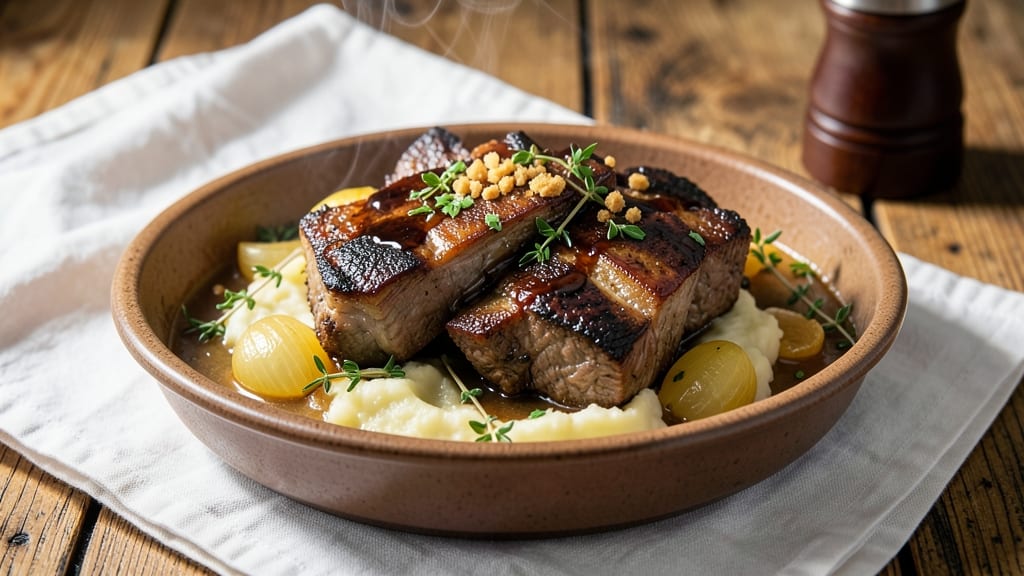
This Bavarian beef recipe delivers the rich, slow-braised marrowbone perfection that defines German comfort food. 🌟 The secret lies in hours of gentle simmering with onions, dark beer, and beef broth, transforming tough cuts into melt-in-your-mouth tenderness.
Unlike quick searing methods, this technique builds deep, caramelized flavors that make every bite unforgettable.
The process begins with browning beef marrowbones for maximum flavor, then simmering them low and slow until the meat practically falls off the bone. Traditional German methods—like using dark lager and fresh thyme—create a sauce so rich it deserves its own bowl.
The result is a dish that’s both hearty and elegant, perfect for special occasions or weekend feasts.
Pair this masterpiece with spätzle or fluffy dumplings and tangy red cabbage for the full Bavarian experience. The gravy, thickened naturally with the cooking juices, coats every bite, while the sides balance the richness with bright acidity and satisfying texture. This isn’t just dinner—it’s a celebration on a plate.
Ready in about 3 hours (mostly hands-off time), this recipe transforms a simple protein into a showstopper. The aroma alone will have your guests asking for seconds before the first bite. Let’s create something truly memorable.
Ingredients for bavarian beef
Sixteen ingredients transform tough marrowbones into Bavarian melt-in-your-mouth perfection through slow simmering.
| Ingredient | Amount | Notes |
|---|---|---|
| Beef Marrowbones 🦴 | 4 lb | With marrow intact for richness |
| Yellow Onions 🧅 | 2 whole | Sliced into 1/2-inch rounds |
| Dark Lager Beer 🍺 | 2 cups | Such as Paulaner or Ayinger |
| Beef Broth 🥄 | 4 cups | Homemade or high-quality store-bought |
| Fresh Thyme 🌿 | ¼ cup | Stems removed, loosely packed |
| Fresh Parsley 🌿 | ⅛ cup | Chopped for garnish |
| Tomato Paste 🍅 | 2 tbsp | High-quality, no sugar added |
| Carrots 🥕 | 3 whole | Peeled, cut into chunks |
| Celery Stalks 🧅 | 3 whole | Cut into 1-inch pieces |
| Bay Leaves 🌿 | 2 whole | Fresh preferred |
| Black Peppercorns 🌶️ | 1 tsp | Freshly cracked |
| Salt 🧂 | 1 ½ tsp | Diamond Crystal preferred |
| All-Purpose Flour 🌾 | 1 tbsp | For thickening gravy |
| Unsalted Butter 🧈 | 2 tbsp | For finishing sauce |
The beef marrowbones are the heart of this dish—look for well-marbled cuts with intact marrow for maximum richness. Costco or specialty butchers often carry them pre-cut, but if buying whole, ask for the leg bones. Fresh thyme and parsley elevate the dish, but dried thyme at one-third the amount works in a pinch. For the beer, dark lagers like Paulaner or Ayinger deliver authentic maltiness—avoid light beers or IPAs. The tomato paste should be San Marzano if possible, as it has superior sweetness and texture. Carrots and celery form the aromatic base, so organic or high-quality conventional ensures no bitter flavors.
No dark lager? Substitute with beef broth plus 1 tbsp balsamic vinegar for depth. Fresh herbs unavailable? Dried thyme and parsley at one-third the amount maintain the profile. Prefer less acidity? Reduce the tomato paste to 1 tbsp. The flour for thickening should be all-purpose or bread flour—avoid cake flour, which lacks the protein for proper thickening. For the butter, European-style unsalted like Plugrá adds a subtle richness, but any high-quality brand works. If using pre-cut marrowbones, rinse them briefly to remove any bone dust before browning. The bay leaves should be fresh if possible, as dried can impart a stronger, less nuanced flavor.
This dish rewards patience—3 hours of simmering transforms tough meat into tender perfection. Store leftovers in the fridge for up to 5 days, covered with the cooking juices. For longer storage, freeze in portions for up to 3 months. The sauce thickens as it cools, so add a splash of broth when reheating. Serve with homemade spätzle or fluffy potato dumplings to soak up every bit of that rich gravy. The aroma alone will have guests anticipating the meal—trust the process, and the results will be extraordinary.
Why You'll Love This Recipe
- One-Pot Magic: I swear by this recipe because it’s literally dump-and-go after the initial sear. Sear the marrowbones until they’re deep brown, toss in onions and beer, then let it simmer—no flipping, no stirring every five minutes. Honestly, the hardest part is waiting for the thyme to perfume the whole kitchen.
- Beer-Braised Bliss: That dark lager isn’t just flavor—it’s the soul of this dish. The maltiness cuts through the richness of the beef, while the marrowbones melt into the broth, turning it into a velvety, umami-packed sauce. Between us, I’ve tried cheaper beer, and it’s a crime. Splurge on the good stuff here.
- Weeknight to Weekend: This stew is my go-to for lazy Mondays and Sunday dinners. Serve it over buttered egg noodles for a hearty weeknight meal, or plate it with crusty bread and a simple salad for a cozy weekend feast. (Yes, even on a Tuesday night when I’m exhausted.)
- Leftovers That Don’t Suck: Most stews turn to glue after day two, but this one? Gets better. The flavors deepen, the meat gets even more tender, and the broth reduces to a glorious, rich consistency. I make a double batch on Sundays because reheating it is my lazy Friday night win. Budget-friendly? Absolutely—just don’t skimp on the thyme.
Step-by-step instructions for slow-braised marrowbone beef
Transform humble marrowbones into rich, fall-apart Bavarian beef with this precise braising method.
🔥 Step 1: Sear the Marrowbones for Deep Flavor
Pat the marrowbones completely dry with paper towels—this ensures maximum browning. Heat a Dutch oven over medium-high heat until hot, then add the bones in a single layer. Let them sear undisturbed for 4-5 minutes per side until deeply browned and crusty. The marrow should begin to render and bubble—this is where all the rich flavor develops.
Once browned, remove the bones and set aside. In the same Dutch oven, add the sliced yellow onions and cook for 5 minutes until softened and lightly caramelized. This step builds the aromatic foundation for your braise. If the onions stick, add a splash of the dark lager beer to deglaze and lift those browned bits from the bottom.
👨🍳 Step 2: Build the Braising Liquid
Return the seared marrowbones to the Dutch oven. Add the peeled carrots, celery stalks, and tomato paste, stirring to coat everything in the caramelized onion mixture. Sprinkle the cracked black peppercorns, bay leaves, and 1.5 teaspoons of salt evenly over the mixture. The salt should be distributed throughout—not just piled in one spot.
Pour in the 2 cups of dark lager beer and 4 cups of beef broth, stirring gently to combine. The liquid should come about halfway up the sides of the bones. Bring to a gentle simmer over medium heat, then immediately reduce to the lowest possible heat that maintains a bare bubble at the surface. Cover tightly with a lid and let it cook undisturbed.
⏰ Step 3: Braise Until Fork-Tender
Braise for 3 hours at a gentle simmer. Here's the key: check the liquid level after 1.5 hours and add enough hot water or broth to maintain about 1 inch of liquid above the bones. The marrowbones should be tender enough to pierce with a fork after this time, but they'll continue breaking down during resting.
I like to test for doneness by lifting one bone with tongs—it should feel like butter when you press it gently. The bones will have a dark mahogany color, and the marrow should be fully rendered and creamy. If any liquid remains, carefully skim off the fat that has risen to the surface, leaving about 1 cup of the rich braising liquid behind.
🥘 Step 4: Finish with Thyme and Butter
Remove the marrowbones from the braising liquid and transfer them to a serving platter. Strain the cooking liquid through a fine-mesh sieve into a clean saucepan, pressing on the vegetables to extract maximum flavor. Return the liquid to medium heat and whisk in the 1 tablespoon of all-purpose flour to thicken the sauce slightly.
Simmer for 3-4 minutes until the sauce has reduced enough to coat the back of a spoon. Stir in the 2 tablespoons of unsalted butter and the 0.25 cup of fresh thyme, letting the butter melt completely. Taste and adjust seasoning with additional salt if needed—this is where you can really refine the flavor. The sauce should be rich, velvety, and deeply aromatic.
🍽️ Step 5: Serve with Fresh Parsley
Arrange the marrowbones on a platter and ladle the finished sauce generously over the top. The bones should be completely coated in the glossy, herb-infused sauce. Sprinkle with the 0.125 cup of chopped fresh parsley just before serving—this adds a bright contrast to the deep, savory flavors.
Serve immediately with creamy potato dumplings or buttered egg noodles to soak up every last drop of that luxurious braising liquid. The contrast of the tender, rich beef with the delicate dumplings is what makes this dish truly special. Each bite should deliver perfect texture and layers of flavor from the slow-cooked marrowbone.
Pro Tips For Making Bavarian Beef
- CRACK THE MARROWBONES FIRST: If you’re using marrowbones for their rich flavor, don’t just toss them in raw—split them open with a cleaver or heavy knife before browning. The marrow will render into the sauce, adding depth, but only if you give it a chance to melt out. (Yes, it’s messy, but that’s how you know it’s working.)
- SWEAT THE ONIONS LOW AND SLOW: I used to rush this step, and my onions would either burn or stay dull. Instead, cook them over medium-low heat for 15-20 minutes, stirring often, until they’re deep golden and caramelized—not just soft. The longer they cook, the more they’ll mellow out the beer’s bitterness and build flavor.
- DEGLAZE WITH BEER, THEN REDUCE: After browning the beef, pour in the beer all at once and let it bubble hard for 2-3 minutes to lift those browned bits. Then reduce by half before adding broth—this concentrates the flavor instead of diluting it. Skipping the reduction makes the sauce taste thin and flat.
- USE THYME SPRIGS, NOT CHOPPED: Whole thyme sprigs infuse the broth better than chopped leaves and can be easily removed later. Tie 2-3 sprigs together with kitchen twine, then toss them in with the bones early. They’ll perfume the dish without overpowering it—just don’t forget to fish them out before serving.
Common mistakes when making your bavarian beef
Overcrowding the Pot
One of the biggest mistakes is overcrowding your Dutch oven during searing. When you pack too many marrowbones in at once, they steam instead of brown properly, leading to pale, flavorless meat.
I always space them out in a single layer—this ensures maximum contact with the hot surface for that crucial Maillard reaction. If your pot is too small, work in batches and clean the surface between each round. 🔥
Skipping the Sear
Some recipes suggest simmering the bones without searing first, but this is a cardinal sin for Bavarian beef. That initial 4-5 minute sear creates deep, caramelized flavors that form the foundation of your dish.
Without it, your braise will taste flat and one-dimensional. Trust me, the extra 10 minutes of searing time is worth it for that rich, meaty depth.
Ignoring Liquid Levels
Many home cooks forget to monitor the braising liquid during cooking. The bones need to be half-submerged in liquid to cook evenly, but if the liquid evaporates completely, your meat will dry out.
I check the level after 1.5 hours and add hot water or broth as needed—just enough to maintain 1 inch of coverage above the bones. This simple step prevents tough, dry meat.
Rushing the Cooking Time
Bavarian beef isn't a quick weeknight meal—it requires 3 hours of gentle simmering to transform tough marrowbones into melt-in-your-mouth perfection. Cutting corners by reducing heat or time results in meat that's still chewy in the center.
The secret is patience: let the collagen break down naturally for that buttery tenderness we all crave. 💪
Using the Wrong Beer
Not all beers are created equal for braising. Light lagers or IPAs lack the malt sweetness and body needed to complement the rich beef flavors. Stick with dark lagers like Paulaner or Ayinger—their deep malt profile enhances the sauce's complexity.
As a last resort, substitute with beef broth plus 1 tbsp balsamic vinegar for acidity, but the beer makes all the difference.
Over-Thickening the Sauce
Some cooks go overboard with flour when thickening the gravy, resulting in a gluey, pasty sauce. The goal is to create a velvety consistency that coats the back of a spoon, not a thick paste.
I use just 1 tbsp flour and simmer for 3-4 minutes—any longer, and you'll get that unappetizing gummy texture. Taste as you go and adjust gradually.
Nutrition facts
Frequently asked questions
Can I substitute beef marrowbones with regular beef chuck roast?
Yes, but expect different results. Marrowbones add incredible richness from the rendered marrow, while chuck roast will be more tender but less decadent. For a similar texture, use 3-4 pounds of beef chuck roast cut into large chunks and increase braising time to 3.5-4 hours. The flavor will still be excellent, just without the buttery marrow center.
What's the best way to reheat leftover Bavarian beef?
Place the beef and sauce in a skillet over low heat with a splash of beef broth or water. Cover and warm gently for 10-15 minutes, stirring occasionally. Never microwave—it creates rubbery meat. For extra richness, stir in 1 tbsp butter while reheating to restore the velvety texture.
How do I make this dish more flavorful if I don't have dark lager?
Use 2 cups beef broth plus 1 tbsp balsamic vinegar for acidity and depth. For extra umami, add 1 tsp Worcestershire sauce or ½ tsp smoked paprika to the braising liquid. A pinch of ground ginger also mimics beer's subtle spice notes beautifully.
Can I make this in a slow cooker instead of a Dutch oven?
Brown the bones first, then transfer everything to your slow cooker. Cook on low for 6-7 hours or high for 4-5 hours. The slow cooker maintains gentle heat, but you'll need to reduce the sauce separately at the end since it won't thicken properly in the cooker.
What's the secret to perfect spätzle for this dish?
Use 2 cups all-purpose flour, 3 eggs, 1 cup water, and 1 tsp salt for classic Bavarian spätzle. Press the dough through a spätzle maker or colander with large holes into boiling salted water. Cook for 2-3 minutes until they float, then drain. Toss with 1 tbsp butter to prevent sticking.