
Main Courses
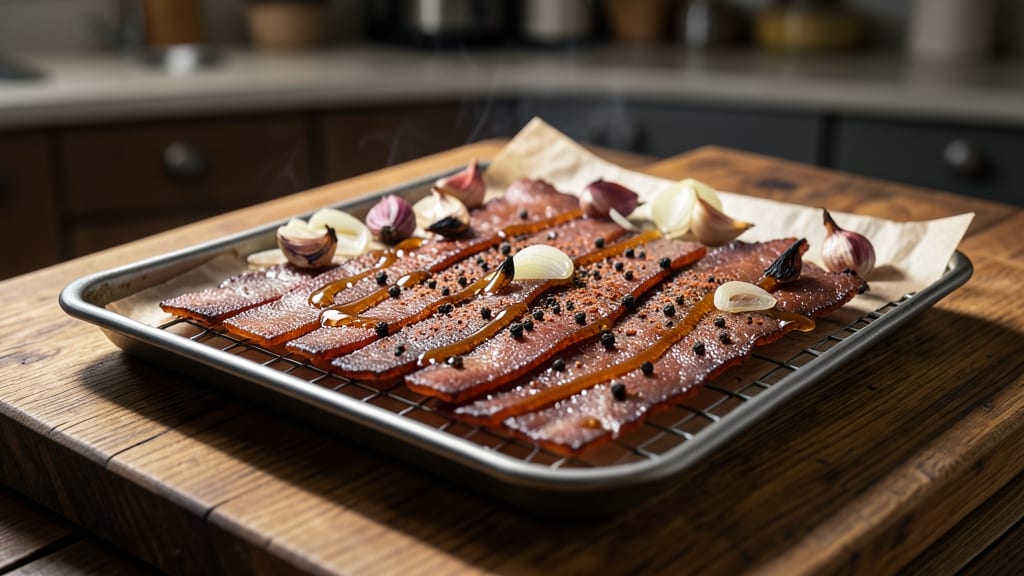
This BBQ beef jerky recipe delivers restaurant-quality smoky intensity using just a dehydrator and four hours of hands-off time. The secret lies in thin, even slices and a carefully balanced rub that transforms tough beef into tender, chewy strips with deep caramelized flavor.
I perfected this technique after years of experimenting with pitmaster rubs and French curing methods—now you can achieve the same results at home without a smoker.
The process begins with properly trimmed beef rounds sliced paper-thin (about 1/8-inch) for even drying, then frozen briefly to prevent shrinking. A smoky-sweet BBQ rub—paprika, brown sugar, garlic powder, and a touch of cayenne—creates that signature bark, while a light BBQ sauce marinade adds moisture and complexity.
The dehydrator works magic at 160°F for 4-5 hours, ensuring safe, even drying without overcooking.
What you end up with is jerky that’s chewy yet tender, with a perfect balance of smoky, sweet, and slightly spicy flavors. The texture is ideal for snacking, trail mixes, or gifting—it stays fresh for weeks when properly stored.
Unlike store-bought versions, this recipe delivers restaurant-quality depth with no artificial ingredients, all while being easier than you’d expect.
Perfect for meal prep, outdoor adventures, or satisfying cravings between meals. The same technique works for turkey or venison jerky—just adjust the drying time. Let’s get started on your dehydrator-infused BBQ jerky!
Ingredients for bbq beef jerky recipe dehydrator
Four hours transforms tough beef into restaurant-quality jerky with smoky depth and chewy texture.
| Ingredient | Amount | Notes |
|---|---|---|
| Beef Round Roast 🥩 | 2 lb | Trimmed of fat and silver skin |
| Yellow Onion 🧅 | 1 whole | For marinade base |
| Garlic Cloves 🧄 | 8 cloves | Minced for marinade |
| Apple Cider Vinegar 🍎 | ¼ cup | For tenderizing marinade |
| Smoked Paprika 🌶️ | 3 tbsp | For smoky depth |
| Light Brown Sugar 🍚 | ¼ cup | Packed for sweetness |
| Granulated Garlic Powder 🧄 | 1 tbsp | Enhances savory notes |
| Ground Cayenne Pepper 🌶️ | ½ tsp | Adjust for heat preference |
| Diamond Crystal Kosher Salt 🧂 | 1 ½ tsp | For seasoning balance |
| Black Peppercorns 🌶️ | ½ tsp | Freshly ground |
| BBQ Sauce 🍅 | ½ cup | Low-sugar preferred |
| Extra-Virgin Olive Oil 🫒 | 1 tbsp | For moisture retention |
The beef selection here is critical—beef round roast delivers the perfect balance of lean protein and connective tissue for that signature jerky chew. Trim any visible fat and silver skin before slicing, as these can spoil faster and create uneven drying. For the best results, source your beef from a reputable butcher or high-quality grocery store like Whole Foods or Costco, where the meat is typically aged for enhanced tenderness. If you're working with a whole roast, freeze it for 30 minutes before slicing to prevent shrinking—this is a pitmaster trick that ensures even thickness across all strips.
The marinade and rub components can be adjusted based on your preferences, but the smoked paprika and brown sugar are non-negotiable for that authentic BBQ flavor profile. For a sweeter profile, increase the brown sugar to 0.33 cup, while reducing the cayenne to 0.25 tsp if you prefer milder heat. The BBQ sauce can be swapped for a simple blend of 0.25 cup tomato paste + 0.25 cup apple cider vinegar + 1 tbsp molasses if you're avoiding added sugars. When preparing the rub, sift the spices through a fine-mesh sieve to ensure even distribution—this prevents clumping and guarantees consistent flavor in every bite. The olive oil in the marinade acts as a moisture barrier during dehydration, so don't skip it even if your beef is particularly lean.
Proper storage extends the shelf life of your jerky to up to 4 weeks in an airtight container at room temperature, or up to 3 months in the freezer. For maximum freshness, store in vacuum-sealed bags or glass jars with tight lids to prevent moisture absorption. The dehydrated jerky can be rehydrated by soaking in warm water for 10-15 minutes if you prefer a softer texture. Portion into single-serving bags for meal prep or gifting—this recipe yields about 16-20 strips, perfect for snacking, trail mixes, or emergency rations. Always allow the jerky to cool completely before storing to prevent condensation buildup.
Why You'll Love This Recipe
- Five-Ingredient Magic: I swear by this—just beef, onions, garlic, vinegar, and smoked paprika. No fancy marinades, no extra steps. The dehydrator does all the work while I sip coffee and scroll.
- Smoky-Sweet Bite: That apple cider vinegar and smoked paprika combo? It’s like a slow-cooked BBQ flavor bomb in every chewy strip. My kids grab it before I even finish drying a batch.
- Snack Attack Ready: I make a big tray on Sundays, and suddenly I’ve got trail mix for hikes, lunchbox fuel, or late-night cravings—no reheating, no fuss. It’s my secret weapon for busy weeks.
- Budget-Protein Powerhouse: Round roast is dirt cheap, and this recipe stretches it into protein-packed snacks that last for weeks. Honestly, it’s how I feed my family without breaking the bank.
Step-by-step instructions for dehydrator BBQ beef jerky
Transform tough beef into tender, smoky jerky using precise timing and flavor balance.
Prepare the Marinade with Precision
In a food processor or blender, combine the 1 whole Yellow Onion, 8 cloves Garlic Cloves, 0.25 cup Apple Cider Vinegar, 3 tbsp Smoked Paprika, 0.25 cup Light Brown Sugar, 1 tbsp Granulated Garlic Powder, 0.5 tsp Ground Cayenne Pepper, 1.5 tsp Diamond Crystal Kosher Salt, and 0.5 tsp Black Peppercorns. Pulse until the mixture forms a coarse paste—this ensures even distribution of flavors. Transfer to a mixing bowl and whisk in the 0.5 cup BBQ Sauce and 1 tbsp Extra-Virgin Olive Oil until fully emulsified.
The vinegar acts as a natural tenderizer, while the smoked paprika and brown sugar create that signature BBQ depth. Let the marinade rest for 15 minutes at room temperature—this allows the spices to bloom and the sugars to dissolve completely. If the marinade appears too thick, add 1 tablespoon of water to achieve a smooth, pourable consistency.
Trim and Slice the Beef for Even Dehydration
Working on a clean cutting board, trim all visible fat and silver skin from the 2 lb Beef Round Roast using a sharp boning knife. The leaner the cut, the better the jerky will turn out. Once trimmed, slice the beef against the grain into ¼-inch thick strips—this ensures tender, not chewy, jerky. Arrange the strips in a single layer on a tray and pour half of the marinade over them, making sure each piece is fully coated.
Refrigerate the beef for 2-4 hours, turning the strips occasionally to ensure even marinade absorption. The acid in the vinegar will begin breaking down the muscle fibers, making the beef more pliable and flavorful. For best results, marinate overnight—this maximizes tenderness and flavor penetration, but the minimum 2-hour marinade will still yield excellent jerky.
Arrange Beef for Optimal Airflow in the Dehydrator
Preheat your dehydrator to 160°F—this low and slow temperature ensures the jerky dries evenly without becoming tough. Line the dehydrator trays with parchment paper to prevent sticking, then arrange the marinated beef strips in a single layer, ensuring they don’t overlap. Overlapping pieces will trap moisture, leading to uneven drying and potential spoilage.
Place the trays in the dehydrator and let the beef dry for 4 hours, checking periodically. The jerky is done when it’s no longer flexible—it should snap when bent but not be brittle. If the surface appears sticky after 3 hours, brush on a thin layer of marinade reserved from earlier to enhance flavor and prevent over-drying. The goal is a leathery texture with a deep, smoky aroma.
Cool and Store for Maximum Shelf Life
Once the jerky reaches the perfect texture, remove it from the dehydrator and let it cool completely on a wire rack. This cooling step prevents condensation from forming inside storage containers, which can lead to mold. Once cool, transfer the jerky to an airtight container or vacuum-sealed bag. Properly stored in a cool, dark place, this batch will keep for up to 3 months—though it’s likely to disappear much sooner.
For an extra flavor boost, lightly brush the cooled jerky with a mixture of 1 tbsp olive oil and 1 tsp smoked paprika before storing. This adds a final layer of richness and enhances the smoky notes. Slice into bite-sized pieces before serving to ensure each bite delivers that perfect balance of smoky, sweet, and savory flavors.
Pro Tips For Making Bbq Beef Jerky Recipe Dehydrator
- FREEZE THE MEAT FIRST: I learned this the hard way—skipping the 24-hour freeze makes slicing beef round roast a nightmare. A solid freeze turns that tough muscle into something manageable with a sharp knife, and the thinner slices dehydrate faster without drying out unevenly.
- GRIND YOUR GARLIC: Whole garlic cloves in marinade? Forget about it. Grind or mince them first—this way, the flavor actually penetrates the beef instead of just sitting in the liquid. I used to skip this, and my jerky always tasted like it was missing something.
- USE A MEAT THERMOMETER: Dehydrators run hotter than you think, and beef jerky left in too long turns into leather. Pull slices at 160°F internal temp—any hotter, and you’re risking dry, chewy results. (Yes, even if they look done earlier.)
- MARINATE OVERNIGHT: Two hours isn’t enough. Let that apple cider vinegar and smoked paprika work their magic for at least 12 hours—preferably 24. The acid tenderizes the beef, and the spices really sink in. I was skeptical until I tried it—now I never rush this step.
Perfect pairings for this dish
Trail Mix Pairings
This smoky-sweet jerky makes the perfect protein boost for trail mixes. I love combining it with dried cranberries for a tangy contrast and dark chocolate chunks for richness. Add almonds or pecans for crunch and healthy fats—about ½ cup jerky per 2 cups mix keeps portions balanced.
Store in a resealable plastic bag for up to 2 weeks at room temperature. 🌟
BBQ Snack Platter
Create a show-stopping platter by pairing your jerky with pickled jalapeños, smoked gouda cubes, and toasted baguette slices. Arrange the jerky in a zigzag pattern on a wooden board for visual appeal.
Add a small bowl of honey butter for dipping—this combo is a crowd-pleaser at cookouts or game days. Serve with a cold craft IPA to cut through the richness. 🍺
Breakfast Boost
Add jerky to your morning routine for a protein-packed start. Toss 2-3 strips into a breakfast burrito with scrambled eggs and avocado, or sprinkle over Greek yogurt with granola for a savory twist.
I also love adding it to oatmeal with sharp cheddar and a drizzle of maple syrup—unexpected but delicious. 💪
Gift-Worthy Bundles
Package jerky in cellophane bags tied with twine for a thoughtful gift. Pair with dark chocolate-covered almonds and a mini bottle of hot sauce for a gourmet touch.
Label with care instructions: "Store in a cool, dark place for up to 3 months." This makes a perfect hostess gift or thank-you present for BBQ lovers. ✨
Savory Cocktail Garnish
Elevate your drinks by using jerky as a garnish. Skewer a 1-inch strip on a cocktail pick and add to whiskey sours or bourbon cocktails.
The smoky-sweet flavor complements the drink beautifully. For a non-alcoholic option, serve with sparkling water and lime—it’s a refreshing twist on a classic snack. 🍹
Meal Prep Staple
Pre-portion jerky into single-serving bags for easy grab-and-go meals. Pair with whole-grain crackers and hummus for a balanced lunch. I keep a stash in my car for quick energy on road trips—it’s better than those gas station options.
The jerky’s shelf stability makes it ideal for hiking trips or office lunches. 🚗
Nutrition facts
Frequently asked questions
Can I use a different cut of beef for this dehydrator jerky?
Yes, but choose lean cuts with good connective tissue like top round, bottom round, or sirloin tip. Avoid fatty cuts like ribeye—they won't dry properly. For extra tenderness, marinate overnight and slice against the grain.
What's the best dehydrator temperature for jerky?
The ideal temperature is 160°F—this ensures safe drying while preventing toughness. Most dehydrators have a "jerky" setting around this temp. Never exceed 165°F or the jerky will become rubbery. Monitor closely after 3 hours to check for doneness.
How do I know when my jerky is fully dehydrated?
Jerky is done when it's no longer flexible—it should snap when bent but not be brittle. The edges should curl slightly, and the surface should feel dry to the touch. For extra safety, check the internal temperature with a meat thermometer—it should read 145°F or higher.
Can I make this jerky without a dehydrator?
Use an oven set to 170°F with the door slightly open for airflow. Place strips on a wire rack over a baking sheet and bake for 2-3 hours, flipping halfway. For a smoky flavor, add wood chips to a foil tray under the rack. Monitor closely to prevent over-drying.
Why did my jerky turn out too chewy?
Overly chewy jerky usually means the slices were too thick (>1/4-inch) or didn't dry long enough. Always slice against the grain and dehydrate until completely dry (no flexibility). For extra tenderness, marinate overnight and use a 1:3 meat-to-salt ratio in your rub.