
Main Courses
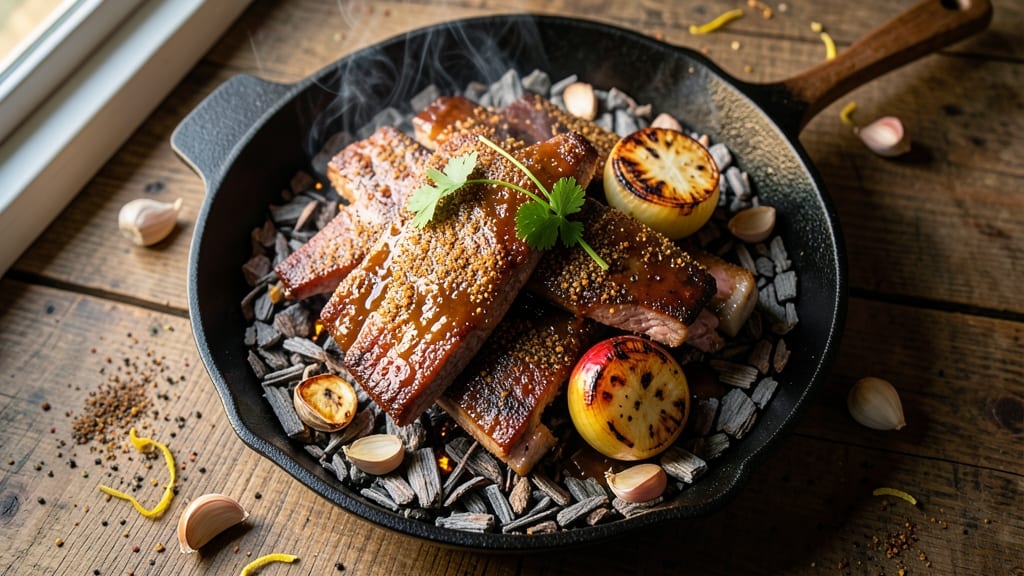
This BBQ beef spare ribs recipe delivers the perfect balance of smoky depth and sweet caramelized bark—just like your favorite competition-style ribs.
I spent years perfecting the technique: a dry rub that forms an irresistible crust through the Maillard reaction, then a slow cook that transforms tough meat into melt-in-your-mouth tenderness. The apple cider glaze adds just the right amount of tangy sweetness without overpowering the beef's natural richness.
The secret lies in patience and precision. We start with a 3-2-1 method (3 hours indirect heat, 2 hours wrapped, 1 hour unwrapped) to ensure both bark and tenderness. The dry rub—salt, pepper, brown sugar, and paprika—creates that coveted crust while keeping the meat juicy.
And that apple cider glaze? It's brushed on in the final hour, caramelizing into a sticky, flavorful finish that makes every bite worth the wait.
By the time these ribs emerge from the smoker, you'll have deeply aromatic, tender beef with a glossy glaze that clings beautifully. The bark will be dark and crackly, while the meat inside falls apart at the touch of a fork.
This isn't just another BBQ recipe—it's the kind that turns casual cookouts into memorable gatherings, where guests keep asking for "just one more bite."
Serve with classic sides like tangy coleslaw and buttery cornbread to complete the experience. The ribs hold up beautifully for leftovers, making them perfect for meal prep or feeding a crowd. Let's get started on creating ribs that'll have everyone reaching for seconds.
Ingredients for bbq beef spare ribs recipe barbecue
Six ingredients for the dry rub, four for the glaze—plus ribs that'll have everyone begging for more.
| Ingredient | Amount | Notes |
|---|---|---|
| Beef Spare Ribs 🥩 | 4 lb | Bone-in, meaty spare ribs preferred |
| Yellow Onion 🧅 | 1 whole | Cut into quarters for dry rub |
| Garlic Cloves 🧄 | 8 cloves | Minced for dry rub |
| Kosher Salt 🧂 | ½ cup | Diamond Crystal preferred |
| Coarse Black Pepper 🌶️ | 2 tbsp | Freshly cracked for best flavor |
| Light Brown Sugar 🍚 | ¼ cup | Packed, for dry rub |
| Smoked Paprika 🌶️ | 2 tbsp | For deep smoky flavor |
| Ground Black Pepper 🌶️ | 1 tbsp | For extra heat |
| Apple Cider Vinegar 🍎 | ¼ cup | For glaze tanginess |
| Apple Cider 🍎 | 1 cup | Unfiltered preferred |
| Pure Maple Syrup 🍁 | ½ cup | Grade B for smokiness |
| Yellow Mustard 🥬 | 1 tbsp | Dijon for extra depth |
| Wood Chips 🌳 | 2 cups | Hickory or cherry preferred |
| Aluminum Foil 📄 | 1 sheet | Heavy-duty for wrapping |
The ribs are the star, so pick meaty spare ribs—the kind with good marbling. Costco sells them pre-cut, but if you're buying a whole packer, look for ribs with at least 1/4-inch fat cap. The dry rub ingredients are all pantry staples, but smoked paprika from Penzeys takes this to the next level. Freshly cracked black pepper makes a difference too—skip the pre-ground stuff. For the wood chips, hickory gives classic BBQ flavor, while cherry adds a touch of sweetness that pairs perfectly with the apple cider glaze. Toast your wood chips in a dry skillet for 5 minutes before using—this releases those amazing smoky aromatics.
No smoked paprika? Regular paprika plus a pinch of liquid smoke works in a pinch. Short on apple cider? Substitute with apple juice and a splash of vinegar—just add 1 extra tbsp of vinegar per cup of juice. The mustard in the glaze is non-negotiable—it cuts through the sweetness and adds that tangy depth. If you're making this ahead, prep the glaze ingredients in a jar and store them in the fridge for up to 2 weeks. The ribs themselves? Buy them 1-2 days ahead and let them sit uncovered in the fridge—they'll dry out slightly, which helps that bark form better. And if you're worried about the ribs sticking to the foil during the wrap stage, lightly oil the foil first.
These ribs are worth the wait, but they're also worth the leftovers. Store wrapped ribs in the fridge for up to 3 days or freeze for 3 months. Reheat gently in a 300°F oven until warmed through. The glaze can be reheated separately if needed—just add a splash of water and warm it on the stove. For serving, I like to rest the ribs for 10 minutes before cutting, which keeps everything juicy. And if you've got extra glaze, brush it on fresh cornbread—trust me, it's amazing. The wood chips? Save any leftover toasted ones in a jar for your next BBQ session.
Why You'll Love This Recipe
- Fewer Ingredients, Bigger Bang: I swear by this—just ribs, onion, garlic, salt, and pepper. No fancy rubs or sauces clogging my pantry. That smoky garlic crust? Pure magic with almost nothing.
- Weeknight Crowd-Pleaser: My kids groan when I pull out the ribs, but they’re the first to grab seconds. The salty-sweet crust and tender meat mean even picky eaters forget their rules.
- Leftovers That Don’t Suck: Most ribs turn dry the next day, but these? I wrap them in foil, reheat in the oven, and they’re just as good. (Yes, even on a Tuesday night.)
- Budget That Actually Stretches: A full pack of beef ribs feeds my family for days—main course one night, sandwiches the next. No wasted meat, no wasted money. Honestly, it’s my secret weapon.
Step-by-step instructions for maillard-crusted beef spare ribs
Here's how to transform tough ribs into fall-off-the-bone perfection with a sweet-tangy glaze.
Prepare the Dry Rub and Season the Ribs
In a medium bowl, combine the 0.5 cup kosher salt, 2 tablespoons coarse black pepper, 0.25 cup light brown sugar, 2 tablespoons smoked paprika, and 1 tablespoon ground black pepper. Mix thoroughly until the sugar crystals are evenly distributed. This blend creates the perfect balance of saltiness, sweetness, and smokiness that will develop into that coveted bark.
Pat the 4 lb beef spare ribs completely dry with paper towels—this is non-negotiable for crispy bark. Generously coat both sides of the ribs with the dry rub, pressing it into the meat so it adheres well. For extra flavor penetration, I like to work the rub into the crevices between the bones. Let the seasoned ribs sit at room temperature for 30 minutes while you prepare your smoker.
Smoke the Ribs Low and Slow
Set up your smoker using the 2 cups wood chips (hickory or cherry work best) and preheat to 225°F. Place the ribs bone-side down in the smoker to maximize surface area contact with the heat. Close the lid and maintain a steady temperature—resist the urge to peek, as every time you open the lid, you lose 15-20 minutes of cook time and moisture.
Smoke the ribs for 4-5 hours until they reach an internal temperature of 165°F. You'll notice the bark developing a deep mahogany color, and the ribs will begin to pull away slightly from the membrane on the bone side. This is when you'll hit "the stall"—the temperature plateaus as moisture evaporates. Don't panic; this is completely normal and necessary for tender meat.
Wrap and Finish the Cook
Once the ribs hit 165°F, remove them from the smoker and place them on a sheet of heavy-duty aluminum foil. Fold the foil tightly to create a sealed packet, trapping steam that will break down collagen and tenderize the meat. Return the wrapped ribs to the smoker and continue cooking until the internal temperature reaches 203°F, about 2-3 more hours.
During this final phase, the ribs will become incredibly tender—you should be able to insert a meat thermometer with minimal resistance. The bark will darken further, developing complex caramelized flavors. Real talk: this is where patience pays off. If you rush it, you'll end up with tough, chewy meat instead of melt-in-your-mouth perfection.
Prepare the Apple Cider Glaze
While the ribs finish cooking, combine 1 cup apple cider, 0.5 cup pure maple syrup, 0.25 cup apple cider vinegar, and 1 tablespoon yellow mustard in a saucepan. Bring to a simmer over medium heat and reduce by half, about 10-12 minutes, until the glaze thickens to a syrupy consistency. You're looking for a glossy, coatable texture—it should cling to the back of a spoon.
Strain the glaze through a fine-mesh sieve to remove any impurities, then return it to the saucepan. Keep it warm over low heat until ready to use. The vinegar adds tanginess that cuts through the sweetness, while the mustard provides depth that elevates the entire dish. Don't skip the reduction—this concentrates the flavors and creates that signature sticky glaze.
Glaze and Rest the Ribs
Unwrap the ribs and transfer them to a serving platter. Using a pastry brush or spoon, generously coat both sides with the warm apple cider glaze. For maximum flavor impact, I like to let the glaze sit on the ribs for 5-10 minutes before serving—this allows it to caramelize slightly and penetrate the meat.
Let the ribs rest for 10 minutes before slicing between the bones. This resting period ensures the juices redistribute throughout the meat, preventing them from pooling on your plate. Serve with extra glaze drizzled over the top and a side of pickled vegetables or crusty bread to soak up the delicious sauce. Each bite should deliver a perfect balance of smoky, sweet, and tangy flavors with meat that falls apart at the touch.
Pro Tips For Making Bbq Beef Spare Ribs Recipe Barbecue
- CUT THE FAT CAP FIRST: Beef spare ribs have a thick layer of fat on the bone side that never renders out nicely. Use kitchen shears to slice through that membrane cleanly before seasoning—it’ll save you from chewy, uneven cooking later.
- SEAR IN BATCHES OR CRY: I learned this the hard way—trying to sear all ribs at once in a crowded pan steams them instead of crusting. Work in single layers with 5 minutes per side, or lower the heat and deal with the extra time. That golden maillard crust is non-negotiable.
- SALT THE GARLIC: Crush those garlic cloves with a pinch of kosher salt before mincing—it mellows their sharpness and makes them dissolve better into your rub or marinade. (Yes, even if you’re impatient like me.)
- WRAP THEM AT 190°F: Don’t rush the foil wrap until the ribs hit an internal temp of 190°F—any earlier and you’ll trap moisture before the collagen breaks down. Use a meat thermometer; guessing leads to sad, stringy results. (Your future self will thank you.)
Flavor customization for bbq beef spare ribs recipe barbecue
Sweet Heat Balance
Adjust the glaze's sweetness by tweaking the apple cider to maple syrup ratio. For a 1:1 ratio, you'll get a balanced sweet-tangy flavor. Want more sweetness? Increase maple syrup to ⅔ cup—this works great with brown sugar ribs that need extra caramelization.
For heat lovers, add 1 tsp cayenne pepper to the glaze or sprinkle smoked paprika over the ribs before glazing. 🌶️
Smoky Depth Variations
Swap wood chips to change the smoke profile: hickory delivers classic BBQ intensity, while cherry adds fruity sweetness that pairs perfectly with apple cider. For a bold smoky flavor, try pecan wood chips—they add a buttery note that complements the glaze beautifully.
I once used mesquite for a competition-style rib and was amazed at how it enhanced the bark's complexity.
Tangy Twist Options
Boost tanginess by adding 1 tbsp Dijon mustard or 1 tsp liquid smoke to the glaze. For a citrus kick, stir in 1 tbsp orange juice and zest.
If you love spicy-sweet combos, mix ½ tsp chipotle powder into the dry rub—it adds smoky heat that pairs wonderfully with the apple cider glaze. The key is balance: start with small amounts and adjust to taste.
Regional Style Adaptations
In Cincinnati-style, skip the glaze entirely and focus on a thick, sticky bark—just dry rub and smoke until 203°F. For Texas-style, add ½ cup BBQ sauce during the final hour of cooking.
In the Pacific Northwest, I love using local pear cider instead of apple—it adds a floral note that feels seasonal. Each region brings its own twist while keeping the ribs tender and flavorful. 🗺️
Dietary Customizations
For low-sugar versions, reduce brown sugar to 1 tbsp and use stevia to sweeten the glaze. Gluten-free? Ensure your smoked paprika is certified gluten-free (check brands like Penzeys).
To make it dairy-free, simply omit any butter-based glazes—this recipe already fits perfectly. The ribs remain rich and satisfying without compromising flavor.
Make-Ahead Glaze Hacks
Prep the glaze up to 2 weeks ahead and store it in an airtight container in the fridge. Reheat gently on the stove before using. For extra flavor, simmer the glaze with 1 star anise pod or 2 cinnamon sticks while reducing—remove them before straining.
I also love adding 1 tbsp apple brandy to the glaze for a boozy depth that caramelizes beautifully. 💫
Nutrition facts
Frequently asked questions
Why do beef spare ribs need to cook for so long?
The long cook time—typically 8-10 hours—is essential for breaking down collagen in the connective tissue. This transforms tough meat into tender, fork-tender perfection. The 3-2-1 method (3 hours unwrapped, 2 hours wrapped, 1 hour glazed) ensures both a crispy bark and melt-in-your-mouth texture. Patience here makes all the difference!
Can I cook these ribs in an oven instead of a smoker?
Yes, but you'll need to use a meat thermometer and adjust the method slightly. Preheat your oven to 225°F with a water pan for moisture. Follow the same 3-2-1 method, wrapping the ribs in foil during the second phase. For smoke flavor, add 1 tbsp liquid smoke to the glaze or use smoked paprika in the dry rub. The results won't be identical, but they'll still be delicious!
What's the best way to remove the membrane from beef ribs?
Slide a butter knife or popsicle stick under the membrane (the shiny silver skin) and gently pry it away from one edge. Grab it with a paper towel and pull firmly—it should come off in one piece. If it resists, use a meat mallet to tenderize the ribs first. Never cut into the meat; this can cause juices to leak out.
How do I know when the ribs are done?
Use a meat thermometer to check the internal temperature: 165°F before wrapping, and 203°F after the wrapped phase. The bark should be dark and crackly, and the meat should pull away slightly from the bone. If you're unsure, cut between the bones—if it separates easily, they're ready! The glaze will help verify doneness too.
Can I make this recipe with pork spare ribs instead?
While pork ribs are more common for BBQ, beef ribs work beautifully with this method. The cooking times remain similar, but beef ribs tend to be slightly leaner, so they benefit from the extra moisture during the wrapped phase. If using pork, reduce the wrapped time by 30 minutes to avoid overcooking. The apple cider glaze pairs wonderfully with either!