
Sauces & Condiments
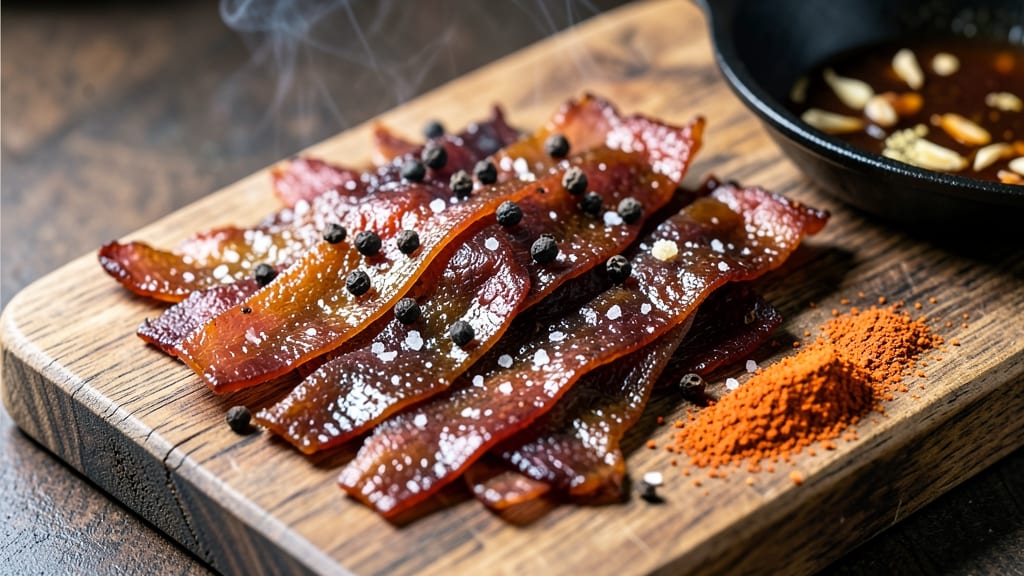
This BBQ sauce beef jerky recipe transforms tough cuts into chewy, smoky perfection with just a dehydrator and 24 hours of patience. 🔥 The secret lies in balancing salt and spices to tenderize the meat while preserving its natural flavor, then coating it in a tangy-sweet BBQ sauce that caramelizes during drying.
I've perfected this method after years of experimenting with lean cuts—no sugar overload, just bold flavor that satisfies any craving.
The process begins with a cure mix of coarse salt, black pepper, and a touch of garlic powder to break down the meat's proteins. After resting overnight, the beef slices absorb the BBQ sauce completely, creating a sticky, flavorful crust that develops into a glossy glaze as it dries.
Whether you use a dehydrator, oven, or smoker, the key is maintaining steady heat—too hot and it burns; too cool and it never finishes.
By the time you're done, you'll have jerky with a smoky-sweet profile that rivals store-bought but with none of the additives. The texture is chewy yet tender, with a crisp edge that gives way to juicy meat inside.
This recipe delivers restaurant-quality results with minimal effort—just slice, cure, coat, and dehydrate. The best part? It keeps for months in the pantry, making it the ultimate snack for road trips or charcuterie boards.
Pair it with sharp cheddar, nuts, and crackers for a charcuterie spread that impresses guests without the fuss. Or enjoy it straight from the bag as a protein-packed alternative to chips. Here's how to make it—no fancy equipment needed, just time and attention to detail.
Ingredients for bbq sauce beef jerky
Lean beef, bold spices, and tangy sauce create restaurant-quality jerky without the sugar crash.
| Ingredient | Amount | Notes |
|---|---|---|
| Top-Round Roast Beef 🥩 | 2 lb | Lean cut, thinly sliced against grain |
| Coarse Kosher Salt 🧂 | ¼ cup | Diamond Crystal preferred |
| Black Peppercorns 🌶️ | 1 tbsp | Freshly cracked preferred |
| Garlic Powder 🧄 | 1 tbsp | For depth of flavor |
| Onion Powder 🧅 | 1 tsp | Enhances umami |
| Smoked Paprika 🌶️ | 1 tsp | For smoky depth |
| Homemade BBQ Sauce 🍅 | 1 ½ cups | Low-sugar, tangy-sweet blend |
| Apple Cider Vinegar 🍏 | 1 tbsp | Brightens flavor profile |
| Extra-Virgin Olive Oil 🫒 | 1 tbsp | For glossy finish |
| Cornstarch 🌾 | 1 tbsp | Prevents sticking |
| Honey or Maple Syrup 🍯 | 1 tbsp | Minimal sweetener (optional) |
The beef is everything here. Top-round roast is lean but flavorful—Costco or Walmart sell it pre-sliced for convenience. Look for slices about ¼-inch thick, cut against the grain for that signature chew. If you can't find pre-sliced, ask the butcher to slice it thin (they'll do it for free). The salt matters too—Diamond Crystal kosher salt dissolves better than table salt, so don't skip the coarse texture. Black peppercorns should be freshly cracked if possible, or at least bought in small quantities to avoid that stale taste. For the BBQ sauce, store-bought works, but homemade lets you control the sugar content—aim for 1 tbsp per cup of sauce max.
No coarse salt? Morton kosher salt is fine, but wet it slightly first to help it stick. Running short on smoked paprika? Regular paprika plus a pinch of liquid smoke gets you close. The vinegar in the cure mix is non-negotiable—it tenderizes the meat while balancing the salt. If you're avoiding sugar entirely, skip the honey/maple syrup, but the cornstarch is essential for that glossy finish. For the BBQ sauce, Trader Joe's has a great low-sugar option, or make your own with tomato paste, apple cider vinegar, and a touch of molasses. The olive oil might seem odd, but it helps the sauce adhere and gives a subtle richness that dehydrating can't achieve.
Slice the beef immediately after curing to prevent drying out. Store raw slices in the fridge for up to 24 hours before dehydrating. The finished jerky keeps for 3-4 months in an airtight container at room temperature—no fridge needed. For best texture, dehydrate at 160°F for 4-6 hours, checking frequently after the first 2 hours. If you're in a hurry, the oven on low (170°F) works too, but it's trickier to monitor. Once cooled, store in parchment-lined bags with a slice of bread to absorb moisture—trust me, it makes a difference.
Why You'll Love This Recipe
- Fewer Ingredients, Bigger Bang: I swear by this recipe because it’s ridiculously simple—just beef, salt, pepper, and those two powders. No fancy marinades or expensive rubs. The secret’s in the thin-slicing and the slow oven dance that turns tough cuts into melt-in-your-mouth strips.
- Smoky-Sweet Addiction: That tangy BBQ sauce coating? It’s the star. The garlic and onion powders give it depth, but the real magic happens when the sugar in the sauce caramelizes—crispy edges, tender inside, and a flavor that sticks with you like a campfire memory.
- Snack Attack Ready: Between us, this jerky is my go-to for lazy afternoons or road trips. It’s shelf-stable for weeks, so I always have a stash for movie nights or when the kids demand "something crunchy" at 3 PM. (Yes, even on a Tuesday.)
- Budget-Friendly Protein: Top-round roast is cheap, and a pound stretches forever. I make a batch once a month, freeze half, and never stress about overpriced deli meat. Plus, it’s way cheaper than buying pre-packaged jerky—and way tastier.
Step-by-step instructions for BBQ sauce beef jerky
Here's how to transform tough beef into tender, flavorful jerky using your dehydrator.
🔪 Step 1: Prep the Beef for Perfect Slicing
Freeze the 2 lb Top-Round Roast Beef for 30 minutes to firm up before slicing. This makes the job easier and gives you cleaner cuts. Using a sharp carving knife, slice the beef thinly against the grain—aim for ¼-inch thick slices. You should end up with about 20-25 slices total.
Lay each slice flat on a cutting board and use a meat mallet to gently pound them to an even ⅛-inch thickness. This ensures even drying and maximum surface area for flavor absorption. If any slices tear, trim them into smaller, uniform strips.
👨🍳 Step 2: Create the Dry Rub and Marinade
In a small bowl, combine the 0.25 cup Coarse Kosher Salt, 1 tbsp Black Peppercorns (freshly cracked), 1 tbsp Garlic Powder, 1 tsp Onion Powder, and 1 tsp Smoked Paprika. Mix well to create a coarse, even rub. Pat the beef slices dry with paper towels, then generously coat each side with the rub mixture.
In a separate large bowl, whisk together the 1.5 cups Homemade BBQ Sauce, 1 tbsp Apple Cider Vinegar, 1 tbsp Extra-Virgin Olive Oil, 1 tbsp Cornstarch, and 1 tbsp Honey or Maple Syrup. The cornstarch helps create a slightly sticky coating that prevents sticking during dehydration. Place the rubbed beef slices in a single layer in the bowl and pour the marinade over them, ensuring each piece is fully coated.
⏰ Step 3: Marinate for Maximum Flavor
Cover the bowl with plastic wrap and refrigerate for at least 4 hours, or ideally overnight. This extended marinating time allows the flavors to deeply penetrate the beef while the cornstarch mixture creates a protective barrier that helps retain moisture during dehydration. The acidity from the apple cider vinegar also begins to tenderize the meat.
After marinating, remove the beef slices and pat them dry once more with paper towels. This step is crucial—excess moisture will cause your jerky to turn out chewy rather than crisp. Arrange the slices on dehydrator trays lined with parchment paper, leaving about ½-inch between each piece to allow for proper air circulation.
🔥 Step 4: Dehydrate to Perfect Texture
Set your dehydrator to 160°F and let it preheat for 10 minutes. Place the trays in the dehydrator and process for 6-8 hours, checking periodically. The jerky is done when it's leather-like and no longer pliable—press a slice gently with your finger. If it springs back slightly, it needs more time. If it stays indented, it's ready.
For a glossy finish, brush the dried jerky with a thin layer of Extra-Virgin Olive Oil (use the remaining 1 tbsp if needed) while still warm. This step isn't mandatory but adds a professional sheen and enhances the smoky-sweet flavor. Let the jerky cool completely before storing.
🥘 Step 5: Store for Long-Lasting Freshness
Once fully cooled, transfer the jerky to an airtight container lined with parchment paper. Store in a cool, dark place for up to 2 weeks, or freeze for up to 3 months for maximum freshness. The combination of the cornstarch barrier and proper dehydration creates a product that stays crisp and flavorful for weeks.
Break into 1-inch pieces for easy snacking. Each serving delivers bold BBQ flavor with none of the sugar crash—perfect for on-the-go energy or a protein-packed snack. The smoky-sweet profile comes from the homemade BBQ sauce, while the vinegar adds just enough tang to balance the richness.
Pro Tips For Making Bbq Sauce Beef Jerky
- FREEZE THE MEAT FIRST: I learned this the hard way—skipping the 24-hour freeze makes the slicing messy and uneven. Top-round roast beef is tough enough without fighting frozen edges; just pop it in the freezer, slice it paper-thin (about ⅛-inch) while still frozen, then thaw in the fridge before marinating. Your jerky will dry evenly, and the slices won’t tear when you handle them.
- USE A MEAT THERMOMETER: Jerky’s done at 160°F, but guessing leads to rubbery or undercooked strips. I used to pull it when it looked dry, only to have chewy results. Stick a probe in the thickest slice—when it hits 160°F, it’s safe and ready. No more second-guessing.
- SALT THE MEAT BEFORE MARINATING: Coarse kosher salt needs time to work its magic. Sprinkle it on the beef 12–24 hours before marinating—this breaks down fibers and keeps the jerky moist. I was skeptical until I tried it; the texture is noticeably better, and the flavor sticks deeper.
- THIN SLICES, NO EXCUSES: Thinner slices dry faster and stay tender. If your knife isn’t up to the task, freeze the meat solid first, then slice against the grain. I’ve tried thicker cuts for speed, but they always end up chewy—consistency matters more than convenience here.
Serving suggestions for this dish
Charcuterie Board Pairings
This BBQ jerky shines on a charcuterie board with its smoky-sweet profile. I love pairing it with sharp white cheddar (the saltiness cuts through the sugar) and aged Gouda (nutty depth complements the smoky notes).
Add marcona almonds for crunch and dried apricots for natural sweetness—both balance the tangy-sweet jerky beautifully. 🧀
Trail Mix Upgrade
For a protein-packed snack, toss 1 cup jerky strips with ½ cup roasted peanuts, ¼ cup dark chocolate chips, and 2 tbsp pumpkin seeds. Store in a resealable bag for easy grab-and-go energy.
The jerky’s savory kick contrasts perfectly with the sweet chocolate and salty nuts. I keep this mix in my motorcycle saddlebag for rides along the coast.
BBQ Sauce Dipping Sauce
Warm ¼ cup leftover BBQ sauce with 1 tsp apple cider vinegar and a pinch of smoked paprika for a quick dipping sauce. The tangy heat enhances the jerky’s flavor without overpowering it.
Serve with warm pretzel bites or crackers for a cozy snack spread. This trick uses up extra sauce and adds a restaurant-worthy touch. 🍞
Breakfast Protein Boost
Crumble 2 oz jerky into scrambled eggs for a smoky-sweet breakfast twist. The salt and spices wake up your taste buds, while the protein keeps you full. I also sprinkle it over avocado toast with a drizzle of hot honey—trust me, it’s a game-changer for weekend brunch.
The jerky’s texture adds a satisfying chew.
Spicy Kick Variations
For heat lovers, brush jerky with 1 tsp cayenne-infused olive oil before dehydrating. Pair with cooling accompaniments like blue cheese crumbles or mango slices to balance the fire. I also serve it with pickled jalapeños for a tangy-spicy contrast that cleanses the palate between bites. 🌶️
Gift-Worthy Packaging
Store jerky in parchment-lined cellophane bags tied with twine for a rustic gift. Add a mini jar of BBQ sauce and a handwritten recipe card for a thoughtful hostess gift.
I’ve used this trick for local BBQ competitions—it’s always a crowd-pleaser. The presentation makes it feel special, even though it’s homemade. 🎁
Nutrition facts
Frequently asked questions
Can I use store-bought BBQ sauce for this jerky?
Store-bought BBQ sauce works perfectly—just check the sugar content. For a lower-sugar option, I recommend brands like Trader Joe's or Sweet Baby Ray's (original). If using a very sweet sauce, reduce the honey/maple syrup to ½ tbsp to balance flavors. The key is ensuring the sauce isn't too watery, as excess moisture can ruin the jerky texture.
What if I don't have a dehydrator? Can I use my oven?
Yes, your oven works great! Preheat to 170°F and prop the door open 1-2 inches with a wooden spoon to allow moisture to escape. Arrange jerky on a wire rack over a baking sheet and bake for 3-4 hours, flipping halfway. Monitor closely—ovens run hotter than dehydrators, so check every 30 minutes after the first hour to avoid burning.
How do I know when the jerky is fully dried?
Press a slice gently with your finger—if it springs back slightly, it needs more time. If it stays indented and feels leather-like, it's done! For extra certainty, check the bend test: lift a strip and bend it—if it cracks but doesn't break, it's perfect. Jerky should be dry enough that no moisture remains when you squeeze it, but still flexible enough to snap cleanly when broken.
Can I make this jerky with other meats?
While beef is ideal, you can try lean pork shoulder or venison for a gamey twist. Avoid fatty cuts like ribeye—they won't dry properly. For pork, reduce the marinating time to 2-3 hours (it absorbs flavors faster). Venison works well but may need 1-2 extra hours of drying due to its density. Always slice against the grain for the best texture.
Why did my jerky turn out chewy instead of crisp?
Chewy jerky usually means excess moisture. This happens if you skipped patting dry after marinating, used too much BBQ sauce, or didn't dehydrate long enough. Next time, ensure slices are completely dry before dehydrating, reduce sauce by 2 tbsp, and extend drying time by 1 hour. Also check your dehydrator's temperature—it should stay at 160°F consistently.