
Main Courses
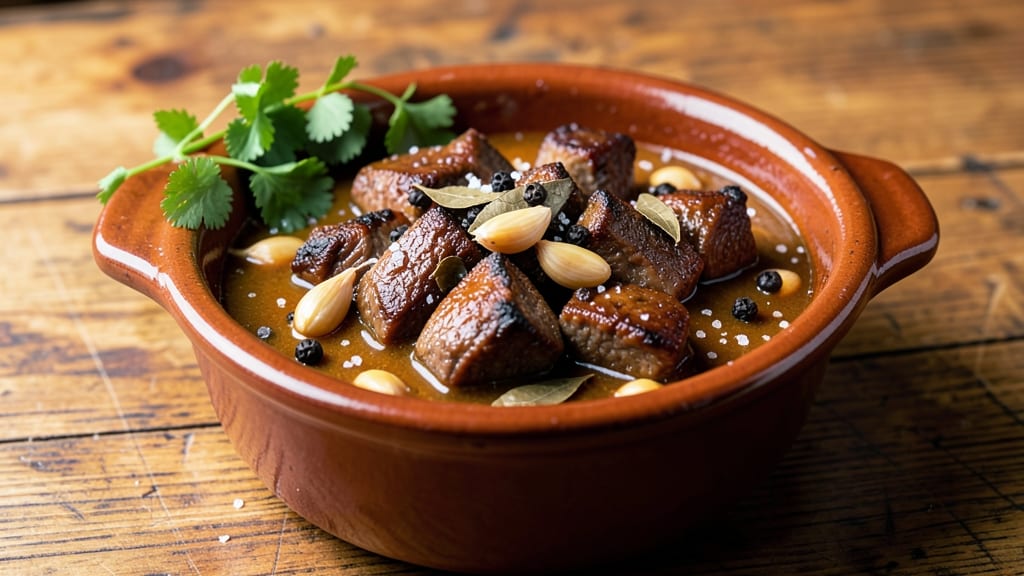
This beef adobo Filipino style recipe transforms tough cuts into melt-in-your-mouth tenderness using the magic of soy vinegar and garlic. The secret lies in the long braising process that infuses every bite with savory depth and tangy brightness—just like your lola used to make.
What makes this dish special is how simple ingredients create complex flavors, with vinegar acting as both a preservative and flavor enhancer.
The recipe begins with marinating beef in a blend of soy sauce, vinegar, garlic, and peppercorns, which tenderizes the meat while building layers of umami. After a slow simmer, the sauce reduces to a glossy, sticky glaze that coats each piece perfectly.
The result is restaurant-quality beef adobo with crispy edges and tender centers, all achieved in one pot.
This dish pairs beautifully with steamed rice to soak up every drop of that rich, savory sauce. The aromatic garlic and vinegar combination creates a dish that's as comforting as it is flavorful.
Whether you're cooking for family gatherings or a weeknight dinner, this recipe delivers authentic Filipino flavors that will impress everyone at the table.
Ready in about 2 hours, this beef adobo is perfect for meal prep and tastes even better the next day. The slow-cooked method ensures maximum flavor penetration, making every bite worth the wait. Let's get started on this timeless Filipino classic!
Ingredients for beef adobo recipe filipino style
Six core ingredients transform tough beef into restaurant-quality adobo with crispy edges and tender centers.
| Ingredient | Amount | Notes |
|---|---|---|
| Beef Chuck Roast 🥩 | 3 lb | Cut into 2-inch chunks |
| Cane Vinegar 🍶 | 1 ½ cups | White vinegar substitute |
| Soy Sauce 🍶 | 1 cup | Light or dark preferred |
| Garlic Cloves 🧄 | 10 cloves | Peeled and smashed |
| Black Peppercorns 🌶️ | 1 tbsp | Whole, lightly crushed |
| Bay Leaves 🌿 | 2 whole | Dried, standard size |
| Olive Oil 🫒 | 2 tbsp | For searing beef |
| Onion 🧅 | 1 whole | Yellow or red, sliced |
| Salt 🧂 | 1 ½ tsp | Kosher or sea salt |
| Sugar 🍚 | 1 tbsp | White granulated |
| Hard-Boiled Eggs 🥚 | 2 whole | Optional for garnish |
| Steamed White Rice 🍚 | 3 cups | For serving (cooked) |
The beef is non-negotiable—chuck roast delivers the best texture and flavor. Look for cuts with good marbling at Filipino markets or your local butcher; if you can't find chuck, brisket or short ribs work too. The vinegar matters just as much—cane vinegar is traditional, but white vinegar works in a pinch. For garlic, fresh is best, but if you're short on time, jarred minced garlic (no salt added) is fine. The soy sauce should be light or dark, but avoid low-sodium versions—they lack depth. Buy a small bottle of cane vinegar if you don't have it; it's worth the splurge for authentic flavor.
No cane vinegar? White vinegar or apple cider vinegar will do, though the flavor will be slightly milder. Short on garlic? Garlic powder at half the amount works, but fresh is ideal. The hard-boiled eggs are optional but add a classic touch—slice them thinly for garnish. For the sugar, brown sugar can be used, but white granulated dissolves more smoothly. If you're making this ahead, double the vinegar and soy sauce for a more concentrated flavor base. The onions can be yellow, red, or even shallots—whatever you have on hand. The key is to sauté them until soft before adding the beef to build flavor.
This dish tastes even better the next day as the flavors meld. Store leftovers in an airtight container in the fridge for up to 5 days or freeze for 3 months. The sauce thickens as it cools, so add a splash of water or vinegar when reheating if it's too stiff. For meal prep, portion into individual containers with rice—just reheat and serve. The beef stays tender for days, making this a perfect family dinner or potluck dish. If you have extra sauce, freeze it in ice cube trays for quick flavor boosts later.
Why You'll Love This Recipe
- Pantry Magic: I swear by this one—just vinegar, soy sauce, and a handful of garlic. No fancy ingredients, no last-minute grocery runs. The chuck roast practically cooks itself while you chop a few cloves and crush some peppercorns.
- Tangy-Savory Balance: That first sip of the sauce—sweet, salty, with a vinegar bite—is chef’s kiss. The beef gets fork-tender, soaking up the flavors until every bite is rich and layered, not too sour, not too bland. Honestly, it’s the kind of dish that makes you go back for thirds.
- Leftovers That Shine: Between us, this recipe begs for seconds—and then thirds the next day. The sauce thickens beautifully when reheated, turning slightly glossy, and the beef stays juicy. I make it on Sundays just so I can eat it all week, packed in bento boxes or slathered on rice.
- Weeknight Workhorse: No searing, no basting, no fussing. Simmer it low and slow while you prep dinner or even watch a movie. By the time you’re ready, the kitchen smells like home, and cleanup is just one pot to rinse. (Yes, even on a Tuesday night.)
Step-by-step instructions for beef adobo Filipino style
Transform tough beef into tender, flavorful bites using this precise method.
Sear the Beef for Deep Flavor
Heat a large Dutch oven over medium-high heat and add the 2 tablespoons olive oil. Once shimmering, add the 3 lb beef chuck roast cut into 2-inch chunks, working in batches to avoid crowding. Sear for 3-4 minutes per side until the beef develops a deep golden brown crust. This step locks in juices and builds the foundation for rich flavor.
Remove the seared beef and set aside. In the same pot, add the 1 whole onion sliced and cook for 2 minutes until softened. Add the 10 cloves garlic cloves and 1 tablespoon lightly crushed black peppercorns, stirring for 30 seconds until fragrant. This aromatic base will infuse the adobo with depth.
Build the Adobo Sauce
Pour in the 1.5 cups cane vinegar and 1 cup soy sauce, scraping up any browned bits from the bottom of the pot. Add the 1.5 teaspoons salt and 1 tablespoon sugar, then bring to a boil over high heat. Once boiling, reduce heat to medium-low and add the 2 whole bay leaves.
Return the seared beef to the pot, ensuring it's fully submerged in the sauce. The liquid should cover the beef by about ½ inch. If needed, add ¼ cup water to maintain proper liquid levels. The goal is to create a balanced sauce that tenderizes the meat without becoming too thin.
Simmer Until Tender
Cover the pot and simmer for 1 hour to 1 hour 15 minutes over low heat, stirring occasionally. You'll notice the beef gradually releases from the bone and becomes fork-tender. The sauce should reduce slightly, developing a glossy consistency and deep mahogany color.
Check for doneness by piercing the largest piece of beef with a fork. It should slide in easily with no resistance. If the sauce reduces too quickly and starts to stick, add 2-3 tablespoons water to maintain moisture. The key is patience—this slow cooking transforms tough chuck roast into melt-in-your-mouth bites.
Finish and Serve
Once the beef is tender, remove the bay leaves and discard them. Taste the sauce and adjust seasoning if needed—add more salt if too mild or more cane vinegar for added tang. The sauce should balance sweet, salty, tangy, and umami flavors perfectly.
Serve the beef adobo hot over 3 cups steamed white rice, spooning the rich sauce over the top. Garnish with the 2 whole hard-boiled eggs sliced if desired. The rice acts as a perfect vessel to soak up every last drop of that flavorful sauce, creating a complete meal that delivers authentic Filipino comfort in every bite.
Pro Tips For Making Beef Adobo Recipe Filipino Style
- Sear the Beef First: After burning my first batch of adobo because I skipped this, I now swear by searing the beef chuck roast in batches—medium-high heat, 3-4 minutes per side—until deep brown. That crust locks in flavor when the vinegar and soy sauce later braise it. (Yes, even if you’re impatient like me, don’t rush this.)
- Use Whole Peppercorns: Cracking peppercorns releases oils that muddy the sauce, so I toss in 10-12 whole black peppercorns tied in cheesecloth. They infuse the adobo without turning it into a pepper slurry—my grandmother’s trick, and it actually changes the outcome.
- Simmer, Don’t Boil: After hours of simmering, I learned the hard way that boiling adobo turns the beef chuck roast tough. Keep the heat low enough that only tiny bubbles break the surface—like a lazy simmer—and the meat stays fork-tender. (Your future self will thank you.)
- Add Vinegar Gradually: Dumping all the cane vinegar at once makes the beef chuck roast tough. I add half the vinegar first, simmer for 20 minutes, then add the rest. This lets the meat absorb the acid slowly—no more rubbery beef, just melt-in-your-mouth texture. (Sounds weird, but it works.)
Creative variations of this beef adobo recipe filipino style
Classic Pork Adobo
Swap the beef for pork shoulder cut into 2-inch chunks—this version cooks faster (about 45 minutes) and absorbs the vinegar-soy sauce beautifully. Use the same marinade but reduce the simmer time by 30 minutes since pork tenderizes quicker. The result is crispy edges with juicy, melt-in-your-mouth meat. 🥓
Vegetarian Adobo
For a plant-based twist, replace the beef with firm tofu pressed and cubed or portobello mushrooms sliced thick. Marinate them in the same sauce for 20 minutes before simmering for 25-30 minutes.
Add 1 cup coconut milk at the end for creaminess. The texture won’t be identical, but the tangy, savory flavors shine through. 🌱
Spicy Adobo
Add 1-2 tbsp Calabrian chili paste or 2-3 slices of fresh siling labuyo (Filipino chili) to the sauce for heat. For extra depth, include 1 tsp ground coriander and ½ tsp turmeric during the simmer.
The chili balances the sweetness of the sugar and adds a smoky kick. Adjust to taste—start with 1 tbsp if you're sensitive to spice. 🌶️
Slow Cooker Adaptation
Transfer the seared beef, onions, garlic, and sauce to a 6-quart slow cooker instead of a Dutch oven. Cook on low for 6-7 hours or high for 4 hours, stirring occasionally.
The slow cooker’s gentle heat ensures even tenderness without monitoring. Perfect for busy weeknights—just press start and let it work its magic. ⏰
Creamy Adobo
Stir in ½ cup coconut milk or heavy cream during the last 10 minutes of simmering for a luxurious texture. This version pairs beautifully with steamed jasmine rice and adds a velvety contrast to the tangy sauce.
The creaminess also makes it feel indulgent while keeping the dish authentically Filipino. 🥥
Meatball Adobo
Form the beef mixture into 1.5-inch meatballs before searing, using the same marinade. Simmer for 1 hour 30 minutes until the meatballs are tender. Serve with toothpicks for easy handling—great for parties! For extra flavor, add 1 tbsp fish sauce to the marinade. 🍴
Nutrition facts
Frequently asked questions
Can I use white vinegar instead of cane vinegar?
Yes, you can substitute white vinegar or apple cider vinegar for cane vinegar, though the flavor will be slightly milder. For the most authentic taste, cane vinegar's subtle sweetness and depth are ideal, but white vinegar works in a pinch. Just note that the sauce may have a sharper tang.
How do I know when the beef is fully cooked?
The beef is done when it's fork-tender and easily separates from the bone. Pierce the largest piece with a fork—it should slide in with no resistance. The sauce should also reduce to a glossy consistency, coating the beef evenly. Total cooking time is about 1 hour to 1 hour 15 minutes on low heat.
Can I make this recipe in a slow cooker?
Transfer the seared beef, onions, garlic, and sauce to a 6-quart slow cooker instead of a Dutch oven. Cook on low for 6-7 hours or high for 4 hours, stirring occasionally. The slow cooker's gentle heat ensures even tenderness with minimal effort—perfect for busy weeknights.
Why does my adobo sauce turn too thin?
If the sauce becomes too thin, it likely needs more time to reduce. Simmer uncovered for an additional 10-15 minutes to thicken it. If it's still too watery, remove the beef, reduce the sauce over high heat until syrupy, then return the beef to coat. Avoid adding too much liquid initially—stick to the ½-inch coverage guideline.
What's the best way to store leftovers?
Store leftovers in an airtight container in the fridge for up to 5 days or freeze for 3 months. The sauce thickens as it cools, so add a splash of water or vinegar when reheating. Portion into individual containers with rice for easy meal prep—just reheat and serve!