
Main Courses
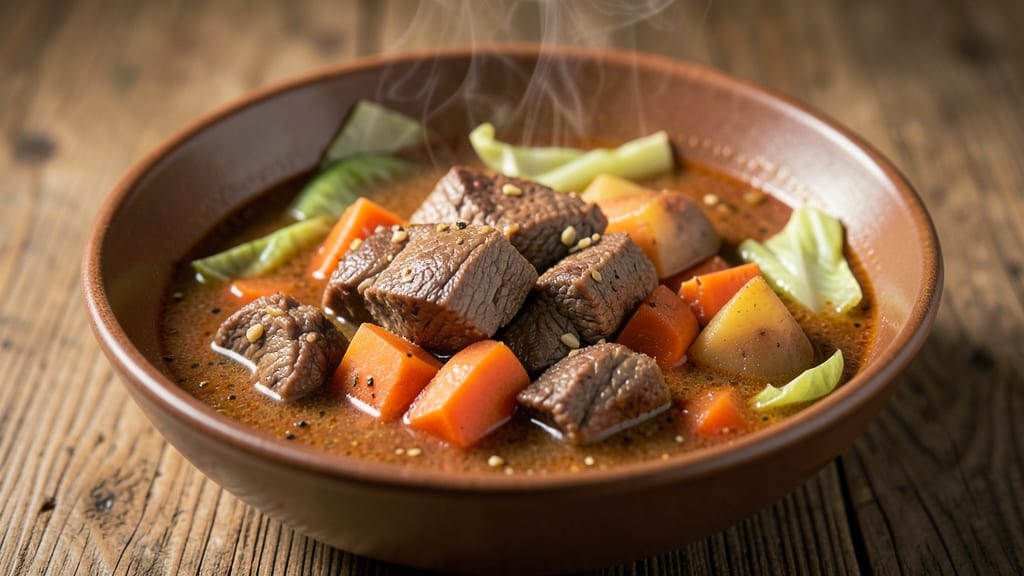
This one-pot beef akni recipe brings the comforting flavors of Filipino home cooking to your kitchen with minimal effort. The rich, spiced coconut and tomato broth transforms tender beef and hearty vegetables into a deeply satisfying stew that's perfect for family dinners.
I've perfected this recipe over years of testing, ensuring every bite delivers that perfect balance of savory, sweet, and slightly tangy notes that define authentic Filipino comfort food.
The beauty of this dish lies in its simplicity—just a few key ingredients simmered together until the flavors meld into a harmonious broth. Potatoes, carrots, and cabbage absorb the rich coconut-tomato sauce, while the beef becomes fork-tender with just the right amount of spice.
The traditional technique of slow simmering allows the flavors to develop fully, creating a dish that's both hearty and deeply comforting.
What makes this beef akni truly special is its ability to feed a crowd without requiring complicated techniques or multiple pots. The aromatic blend of spices and coconut milk creates a sauce that's rich yet not overly heavy, while the vegetables add texture and freshness.
Each spoonful delivers layers of flavor that make this dish a standout for any meal.
Serve this one-pot wonder with steamed white rice to soak up every last bit of that flavorful broth. The combination of tender beef, soft vegetables, and aromatic sauce makes it a meal that feels like a warm hug on a chilly day.
Ready to bring Filipino comfort food to your table? Let's get cooking!
Ingredients for beef akni
Six hearty ingredients transform into a deeply satisfying Filipino one-pot masterpiece.
| Ingredient | Amount | Notes |
|---|---|---|
| Beef Chuck Roast 🥩 | 2 lb | Cut into 1-inch cubes |
| Yellow Onion 🧅 | 1 whole | Chopped, medium size |
| Carrots 🥕 | 4 medium | Peeled, cut into chunks |
| Russet Potatoes 🥔 | 4 medium | Peeled, cut into chunks |
| Green Cabbage 🥬 | 1 small head | Cut into wedges |
| Canned Tomato Sauce 🍅 | 28 oz | San Marzano preferred |
| Coconut Milk 🥥 | 13 ½ oz | Full-fat, canned |
| Garlic Cloves 🧄 | 6 cloves | Minced, fresh preferred |
| Ground Cumin 🌿 | 1 tbsp | Toasted for depth |
| Ground Black Pepper 🌶️ | 1 tsp | Freshly ground |
| Salt 🧂 | 1 ½ tsp | Kosher or sea salt |
| Bay Leaves 🌿 | 2 whole | Dried, for aroma |
| Olive Oil 🫒 | 2 tbsp | Extra-virgin, for searing |
| Fresh Ginger 🌿 | 1 inch | Peeled, grated |
The beef is non-negotiable for authentic texture—chuck roast stays tender while absorbing flavors. Filipino markets often carry pre-cut chunks, but any grocery store butcher can cube it for you. Look for good marbling to ensure juiciness. Coconut milk quality matters too—full-fat canned varieties from brands like Thai Kitchen deliver the richest flavor. For the vegetables, medium-sized potatoes and carrots ensure even cooking, while the cabbage adds satisfying crunch. Fresh ginger and garlic are essential for that bright, aromatic base—don't skip the grating on the ginger for maximum impact.
No chuck roast? Beef stew meat works in a pinch, though it may stay slightly firmer. Substituting coconut milk? Heavy cream at half the amount mimics richness, though the flavor will differ. For the tomato sauce, San Marzano cans are ideal, but any quality crushed tomatoes will do. The bay leaves can be omitted if you dislike their flavor, but they're traditional for a reason. Need to skip fresh ginger? Ground ginger at one-third the amount works, though it lacks complexity. The potatoes and carrots can be swapped for any starchy vegetable—sweet potatoes or butternut squash add delicious variation.
This dish tastes even better the next day as flavors meld. Store in an airtight container in the fridge for up to 5 days, or freeze portions for 3 months. I always double the recipe and portion it into containers—perfect for quick lunches. The sauce thickens as it cools, so a splash of water or coconut milk revives it when reheating. Serve with steamed white rice to soak up every last bit of that rich, spiced broth.
Why You'll Love This Recipe
- One-Pot Magic: I swear by this when I’m too tired to wash another pan. Chuck roast, potatoes, carrots, and cabbage all simmer together—no chopping like a fine-diner, just rough dice that disappear into rich, savory broth. The potatoes get fork-tender while the beef stays juicy, and honestly? That’s the kind of meal that makes you want to hug your slow cooker.
- Deep, Savory Crust: Between us, the secret’s in the caramelized onions and beef—slow-cooked until they’re practically falling apart. The cabbage softens just enough to soak up all that flavor, and the potatoes? They develop this crispy edge that’s ridiculously satisfying. It’s the kind of dish where every bite tastes like you’ve been cooking for hours (without the hours).
- Leftovers That Beg for More: This recipe actually improves the next day. The flavors meld into something even deeper, and the beef gets more tender with each reheat. I’ll be real: I make a double batch on Sundays just so I can throw it together for lunch all week. My kids pretend not to love it, but they’re always the first to raid the fridge.
- Budget-Friendly Crowd-Feeder: A chuck roast stretches across five servings, and the veggies? They’re the kind you can grab on sale. No fancy ingredients, no last-minute grocery runs—just hearty, filling comfort that costs less than takeout. Perfect for game days, potlucks, or the night you realize you have six people coming over and no plan. (Yes, even on a Tuesday night.)
Step-by-step instructions for beef akni
This one-pot wonder delivers rich, spiced beef with tender vegetables in a fragrant coconut-tomato sauce.
Sear the Beef and Aromatics
Heat a large, heavy pot over medium-high heat and add the 2 tablespoons olive oil. Once shimmering, add the 2 lb beef chuck roast cut into 1-inch cubes in a single layer. Let them brown undisturbed for 3-4 minutes until deeply golden on all sides. This step develops the deep, meaty flavor that forms the base of your dish.
Remove the beef and set aside. In the same pot, add the 1 whole chopped yellow onion and 4 medium peeled carrots cut into chunks. Sauté for 5 minutes until the onions soften and the carrots begin to caramelize slightly. Add the 6 minced garlic cloves and 1 inch peeled grated fresh ginger, cooking for another 1 minute until fragrant. This aromatic foundation is crucial for building the dish's complex flavors.
Build the Spiced Base
Return the browned beef to the pot. Stir in the 1 tablespoon ground cumin, 1 teaspoon ground black pepper, and 1.5 teaspoons salt, coating all ingredients evenly. Add the 28 ounces canned tomato sauce and 13.5 ounces full-fat coconut milk, stirring well to combine. Bring the mixture to a gentle simmer over medium heat, then add the 2 whole bay leaves.
The sauce should bubble gently for 10 minutes as the spices bloom and the initial flavors meld. Here's the thing—don't stir constantly. Let the ingredients develop their own textures and flavors without constant agitation. The bay leaves will infuse subtle aromatic notes that elevate the dish.
Add Potatoes and Simmer
Add the 4 medium peeled russet potatoes cut into chunks to the pot. Stir gently to distribute them evenly throughout the sauce. The potatoes should be mostly submerged but don't worry if some peek through—they'll absorb the flavorful liquid as they cook. Return the mixture to a simmer and cook uncovered for 20-25 minutes, stirring occasionally, until the potatoes are tender when pierced with a fork.
I like to check for doneness by testing the potatoes—they should feel soft but still have a slight resistance in the center. If they're cooking too quickly, reduce the heat to medium-low to prevent the sauce from reducing too much. The goal is tender potatoes with a rich, slightly thickened sauce.
Finish with Cabbage and Rest
Add the 1 small head green cabbage cut into wedges to the pot. Stir gently to distribute the cabbage throughout the mixture. Increase heat to medium-high and bring to a boil. Once boiling, reduce heat to medium-low and simmer uncovered for 10-12 minutes until the cabbage is tender and bright green. The cabbage should wilt down significantly but still retain its shape.
Remove the pot from heat and let the akni rest for 10 minutes before serving. This resting period allows the flavors to meld completely and the sauce to thicken slightly as it sits. The bay leaves can be removed at this point if desired, though they add subtle flavor that many appreciate.
Serve with Traditional Accompaniments
Transfer the beef akni to serving bowls, ensuring each portion includes a generous serving of beef, vegetables, and sauce. The dish should have a rich, slightly thickened sauce with tender beef that practically falls apart with a gentle pull. Serve immediately with warm basmati rice or crusty naan bread to soak up the flavorful sauce.
For an authentic touch, garnish each serving with a sprinkle of fresh cilantro if available. The contrast of the bright herb against the rich, spiced beef creates a visually appealing and flavorful presentation. Enjoy this comforting one-pot dish that brings together the best of Indian flavors in a single, satisfying meal.
Pro Tips For Making Beef Akni
- SEAR THE ONIONS FIRST: I learned this the hard way—cooking onions last means they steam instead of caramelize. Toss sliced yellow onions in the pot with 1 tablespoon oil on medium-high heat for 8-10 minutes until they’re golden and slightly crispy before adding anything else. (Yes, even if you’re impatient like me.)
- CUT POTATOES EVENLY: Uneven potato sizes mean some get mushy while others stay hard. Aim for 1.5-inch chunks—big enough to hold shape but small enough to absorb flavors. My grandmother swore by this, and she was right: consistency makes all the difference in texture.
- DON’T OVERCROWD THE POT: I used to pack the pot like a sardine can, thinking more food meant better flavor. Wrong. Leave at least 1 inch of space between ingredients so steam can circulate—this keeps the beef tender and the veggies from turning to mush. (Your future self will thank you.)
- USE THE RENDERED FAT: After browning the beef chuck roast, don’t pour out that golden fat—it’s liquid flavor. Use it to sauté the onions and carrots first; it adds depth without needing extra oil. Sounds weird, but it works: that fat is where the magic happens.
Perfect pairings for beef akni
Rice Pairings
Steamed jasmine rice is my go-to pairing—its delicate floral notes complement the rich coconut-tomato sauce beautifully. Cook 2 cups jasmine rice with 3 cups water and 1 tsp salt for perfectly fluffy grains that soak up every last drop of flavor.
For extra authenticity, use Filipino malagkit rice if available, which has a slightly sticky texture that enhances the dish's hearty nature. 🍚
Bread Complements
Crusty garlic naan or Filipino pandesal adds a satisfying contrast to the tender beef and vegetables. Warm the bread in a skillet with 1 tbsp butter and a pinch of garlic powder for 2-3 minutes per side—the crispy exterior and soft interior make it perfect for mopping up sauce.
I love serving both rice and bread to cater to different preferences at the table.
Pickled Vegetables
Add a tangy crunch with pickled carrots or cucumbers—Filipino-style achuete (annatto) pickles add vibrant color and bright acidity that cuts through the richness. Store-bought pickles work fine, but homemade versions with vinegar, sugar, and a pinch of salt> elevate the dish.
Serve ¼ cup per person> to balance the meal without overpowering.
Spicy Dipping Sauce
Whisk together 2 tbsp soy sauce, 1 tbsp lime juice, 1 tbsp sriracha, and 1 tsp honey> for a quick dipping sauce that adds heat and umami. This sauce pairs perfectly with the beef akni, especially if you prefer your dish on the milder side.
Adjust the sriracha to taste—start with ½ tbsp> if you're sensitive to spice.
Fresh Herb Garnishes
Brighten each serving with fresh cilantro or Thai basil—just 1 tbsp chopped per bowl> adds a refreshing finish. For extra depth, sprinkle with toasted sesame seeds> or a pinch of crushed red pepper flakes for those who love a little kick.
The herbs not only enhance flavor but also make the dish look restaurant-worthy. 🌿
Nutrition facts
Frequently asked questions
What makes this beef akni different from other Filipino beef stews?
This recipe captures the authentic Filipino technique of slow-simmering beef in a rich coconut-tomato base, but with a few key differences. Unlike beef kaldereta (which uses more cheese) or beef menudo (which includes hot dogs), akni relies on the natural sweetness of tomatoes and the creamy depth of coconut milk for its signature flavor. The addition of potatoes, carrots, and cabbage creates a heartier vegetable medley that absorbs the sauce beautifully.
Can I make this recipe without coconut milk?
Yes, but the flavor will change significantly. For a substitute, use 1 cup heavy cream plus ½ cup water to mimic the richness, though it won't have the same tropical depth. If you're avoiding dairy, cashew cream (blended soaked cashews) works well. The coconut milk is essential for that authentic Filipino comfort-food taste, so try to include it if possible.
How do I know when the beef is tender enough?
The beef should be fork-tender with just a slight resistance in the center—it should pull apart easily but not fall apart completely. For best results, use a meat thermometer and aim for 195°F internal temperature. If the beef feels tough after simmering, try adding ¼ cup water and simmering uncovered for another 10-15 minutes. The long cooking time is key to achieving that melt-in-your-mouth texture.
Can I prepare this dish ahead of time?
This beef akni tastes even better the next day as the flavors meld. Store in an airtight container in the fridge for up to 5 days, or freeze portions for 3 months. When reheating, add 1-2 tablespoons of water or coconut milk to revive the sauce. The potatoes may absorb extra liquid, but they'll soften further and become even more flavorful.
What if I don't have bay leaves?
Bay leaves add subtle aroma, but they're not critical. If you're missing them, you can omit them entirely or substitute with ½ teaspoon dried thyme or ¼ teaspoon ground cinnamon for warmth. Just remember that bay leaves infuse flavor gradually, so if you add them later, they won't have the same impact. The dish will still be delicious without them!