
Main Courses
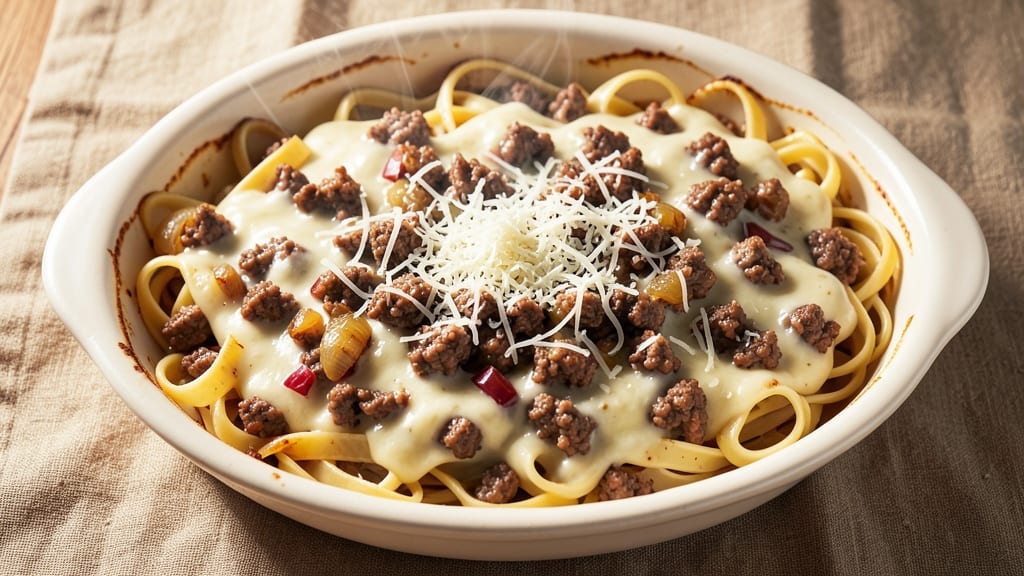
This beef alfredo casserole recipe transforms a simple one-pan meal into a restaurant-worthy dish with tender beef, creamy alfredo sauce, and perfectly cooked pasta—all baked to golden perfection.
The secret lies in browning the beef first to develop deep flavor, then layering it with fettuccine and a velvety cheese sauce that becomes irresistibly bubbly in the oven.
What sets this apart is the foolproof technique for achieving a sauce that's rich but not greasy, with just the right balance of tangy cream and nutty parmesan.
The beauty of this recipe is its simplicity: just one pan means minimal cleanup, while the slow baking process ensures the beef stays juicy and the pasta absorbs the sauce without turning mushy.
I've perfected the timing so the top gets beautifully browned while the bottom remains tender—no soggy corners here. The result is a hearty, comforting dish that's perfect for family dinners or meal prep, with every bite delivering that perfect harmony of flavors and textures.
By the time it emerges from the oven, you'll have a dish that looks like it took hours to prepare but actually comes together in under an hour. The creamy alfredo sauce clings to each strand of pasta, while the beef stays fork-tender and flavorful.
This is the kind of meal that disappears quickly, leaving everyone asking for seconds—and with leftovers that reheat beautifully for the next day.
Whether you're feeding a crowd or planning ahead for busy nights, this beef alfredo casserole delivers restaurant-quality results with minimal effort. The instructions walk you through every step, from browning the beef to achieving that perfect golden crust on top.
Let's get started on creating a dish that's sure to become a new favorite.
Ingredients for beef alfredo casserole
Restaurant-quality beef alfredo starts with these 15 simple yet powerful ingredients—each playing its part in that creamy, bubbly perfection.
| Ingredient | Amount | Notes |
|---|---|---|
| Ground Beef (Chuck Roast) 🥩 | 2 lb | 80% lean for best flavor |
| Fettuccine Pasta 🍝 | 16 oz | Uncooked, medium width |
| Heavy Cream 🥛 | 2 cups | Full-fat for richness |
| Parmesan Cheese 🧀 | 1 ½ cups | Freshly grated from block |
| Garlic Cloves 🧄 | 6 cloves | Minced for sauce base |
| Yellow Onion 🧅 | 1 whole | Diced, medium size |
| Butter 🧈 | ½ cup | Unsalted, cubed |
| All-Purpose Flour 🌾 | ¼ cup | For sauce thickening |
| Beef Broth 💧 | 1 ½ cups | Low-sodium preferred |
| Worcestershire Sauce 🍶 | 1 tbsp | For umami depth |
| Salt 🧂 | 1 ½ tsp | Kosher or sea salt |
| Black Pepper 🌶️ | ½ tsp | Freshly ground |
| Italian Seasoning 🍃 | ½ tsp | Dried blend preferred |
| Mozerella Cheese 🧀 | 1 cup | Shredded, low-moisture |
| Panko Breadcrumbs 🍞 | ¼ cup | For golden crust |
The beef is where all the magic begins. Chuck roast gives you that melt-in-your-mouth texture—sirloin stays too tough. Most grocery stores carry pre-ground chuck, but if you're buying a whole roast, ask the butcher to cube it for you. Costco or Walmart usually have it pre-packaged, which saves time. Look for good marbling—those little fat streaks are what make the sauce rich. For the pasta, De Cecco or Barilla are my go-tos, but any quality fettuccine works. The key is medium width—it holds sauce better than thin strands. And don't skip browning the beef first—this develops the deep flavor that makes the whole dish sing.
No heavy cream? Full-fat coconut milk works in a pinch, though the flavor will be slightly different. Freshly grated Parmesan is non-negotiable here—pre-grated gets clumpy and lacks that nutty punch. Trader Joe's sells pre-grated, but I always grab a wedge from the deli counter. For the garlic, roast it first to mellow the flavor—toss the minced cloves with a pinch of salt and roast at 400°F for 8-10 minutes. The Worcestershire sauce adds that savory depth, but if you're avoiding it, soy sauce at half the amount does the trick. Italian seasoning? Rao's is my favorite brand—it's got that perfect balance of oregano, basil, and thyme. The mozzarella should be low-moisture to avoid a soggy casserole, and Kraft 2% Milk shredded works perfectly.
This casserole tastes even better the next day—plan ahead. The sauce thickens as it sits, and the flavors meld beautifully. Store leftovers in an airtight container for 4-5 days in the fridge, or freeze portions for up to 3 months. For reheating, cover with foil and bake at 350°F until bubbly. The breadcrumbs on top? Toast them first in a dry pan for 3-4 minutes—they'll get extra crispy and add that perfect crunch. Make a double batch if you can—it disappears fast around here, and the leftovers make amazing lunches.
Why You'll Love This Recipe
- One-Pot Magic: I swear by this recipe because it’s actually one-pan—no boiling pasta separately, no messy sauces splattering. Just brown the chuck roast, toss in the fettuccine raw, pour on that creamy garlic-heavy mixture, and let it bake. My counter stays clean, and my kids still think I’m a hero.
- Creamy Garlic Hug: That heavy cream and Parmesan combo? It’s like a warm embrace for your taste buds. The ground beef browns deep, the garlic infuses the sauce until it’s rich and fragrant, and the melted cheese on top? Honestly, it’s the kind of dish that makes me forget I’m cooking—just eating bites straight from the pan.
- Leftovers That Don’t Suck: Between us, most casseroles turn into sad, dry bricks the next day. Not this one. The fettuccine soaks up just enough sauce to stay tender, and the beef stays juicy. I reheat portions in mugs for microwave lunches, and no one complains—my roommate even asks for seconds.
- Budget-Friendly Feast: Chuck roast is cheap, pasta fills you up, and heavy cream stretches with a little milk if needed. I’ve fed six people for under $15 with this, and the leftovers stretch for another meal. It’s my go-to when grocery money’s tight, but no one ever guesses it’s “budget-friendly.”
Step-by-step instructions for beef alfredo casserole
Here's how to create a rich, cheesy masterpiece in one pan—creamy, hearty, and ready in under an hour!
Cook the Pasta and Brown the Beef
Start by boiling the 16 oz fettuccine pasta in salted water according to package directions until al dente—about 1-2 minutes less than suggested. Drain and set aside, reserving 1 cup pasta water. In the same pot, heat 2 tablespoons olive oil over medium-high heat and add the 2 lb ground beef (chuck roast). Cook until no longer pink, breaking it into small pieces—this ensures even distribution later. Drain excess fat, leaving about 1 tablespoon for flavor.
While the beef cooks, dice the 1 whole yellow onion and mince the 6 cloves garlic cloves. Add these to the beef along with 1.5 tsp salt, 0.5 tsp black pepper, and 0.5 tsp Italian seasoning. Cook for 3-4 minutes until fragrant and softened. This step builds the flavor foundation—don't rush it! The onions should be translucent and the garlic should smell amazing.
Make the Creamy Alfredo Sauce
In a large bowl, whisk together the 2 cups heavy cream, 1.5 cups Parmesan cheese, and 1 tbsp Worcestershire sauce until smooth. In a separate skillet, melt the 0.5 cup butter over medium heat and whisk in the 0.25 cup all-purpose flour to create a roux. Cook for 1-2 minutes until bubbly but not browned—this prevents a raw flour taste.
Slowly pour in the 1.5 cups beef broth while whisking constantly to avoid lumps. Let the sauce simmer for 3-4 minutes until slightly thickened. Here's the thing—if the sauce looks too thick, add 2-3 tablespoons of reserved pasta water to loosen it. The goal is a velvety consistency that coats the back of a spoon.
Combine Everything in One Pan
In a large, deep baking dish (at least 9x13 inches), combine the cooked pasta, beef mixture, and Alfredo sauce. Stir gently but thoroughly to distribute everything evenly. Fold in the 1 cup mozzarella cheese until melted and creamy. If the mixture feels dry, add more reserved pasta water 1 tablespoon at a time until it reaches your desired consistency—it should be thick but still pourable.
This is where the magic happens: the residual heat from the pasta and beef will help melt the cheese smoothly. If you notice any unmelted cheese, sprinkle a few drops of warm pasta water over it to encourage melting. The casserole should look rich and inviting, with a glossy sheen from the sauce.
Top and Bake to Golden Perfection
Sprinkle the 0.25 cup Panko breadcrumbs evenly over the top of the casserole. This creates a crispy, crunchy contrast to the creamy filling. Bake at 375°F for 20-25 minutes until the top is golden brown and bubbly. The breadcrumbs should look toasted, not pale—this ensures that perfect textural contrast.
For the final touch, broil for 1-2 minutes on high to deepen the color and add extra crispiness. Watch closely to avoid burning! Once done, let the casserole rest for 5 minutes before serving. This resting period allows the sauce to set slightly, making it easier to slice and serve.
Serve and Enjoy
Use a spatula to gently scrape the bottom of the dish—you'll find all those delicious browned bits that add so much flavor. Serve the casserole family-style or portion into individual bowls. Each bite should deliver creamy Alfredo sauce, tender pasta, and perfectly seasoned beef—all topped with a crispy, golden crust. Pair it with a simple green salad and crusty bread for a complete meal!
Pro Tips For Making Beef Alfredo Casserole
- Brown the Beef Properly: I learned this the hard way—skipping a full brown on chuck roast ground beef means your casserole will taste more like a meatloaf than a rich, savory dish. Cook it in batches over medium-high heat until the edges are dark and the meat releases its juices, then drain all that fat. That’s where the flavor lives, and you don’t want it swimming in your sauce.
- Pre-Cook the Pasta: This isn’t the prettiest method, but it’s the tastiest. Cook the fettuccine al dente, drain it, and toss it with a little olive oil to prevent sticking. Then spread it out on a baking sheet to cool completely before mixing it into the casserole. Cold pasta absorbs the creamy sauce better and keeps the texture from turning mushy when baked.
- Sauté the Garlic Right: After browning the beef, don’t just toss in whole garlic cloves and hope for the best. Mince them finely and cook them in the same pan for 30 seconds until fragrant but not browned. Burnt garlic ruins the whole dish—trust me, I’ve served it at dinner parties. If you’re in a rush, use garlic powder (½ teaspoon), but fresh is worth the effort.
- Add the Cream Gradually: Heavy cream is temperamental, especially when mixed with hot beef. Instead of dumping it all in at once, whisk in about half first to temper the mixture, then slowly add the rest while stirring constantly. This keeps the sauce from curdling and ensures a silky, velvety texture. Stir in the Parmesan last—it melts better when the sauce is just off the heat.
Best sauces and condiments for this beef alfredo casserole
Classic Alfredo Sauce
The creamy foundation of this dish is the Alfredo sauce, and the key to perfection lies in balancing richness with just enough acidity. I always start by making a simple roux with ½ cup butter and ¼ cup all-purpose flour, cooked until bubbly but not browned.
Then, I whisk in 1.5 cups beef broth and let it simmer until slightly thickened. For the creamy element, I blend 2 cups heavy cream with 1.5 cups freshly grated Parmesan cheese and 1 tbsp Worcestershire sauce—the Worcestershire adds depth without overpowering. 🧈
Umami Boosters
To elevate the flavor profile, I incorporate umami-rich ingredients that make the sauce sing. A splash of soy sauce (just 1 tsp) or a pinch of fish sauce (½ tsp) adds savory complexity. For a vegetarian twist, nutritional yeast (2 tbsp) provides a cheesy, umami kick.
The secret is balancing these ingredients so they enhance, not dominate, the creamy richness. I always taste as I go—this sauce should be velvety but never bland.
Crispy Toppings
The golden crust on top isn't just for looks—it adds a delightful textural contrast. I use ¼ cup Panko breadcrumbs for their light, airy crunch, but you could also try crushed cornflakes or grated Parmesan mixed with breadcrumbs.
For extra flavor, I toast the breadcrumbs in a dry pan for 3-4 minutes until fragrant before sprinkling them on top. A final broil for 1-2 minutes ensures that perfect golden finish. 🍞
Herb Infusions
Fresh herbs brighten up the rich flavors of the Alfredo sauce without overpowering it. I like to stir in 1 tbsp chopped fresh parsley or basil at the end, but you could also try thyme or rosemary for a more robust flavor.
For a spicy kick, add ½ tsp red pepper flakes to the sauce while it simmers. The herbs should be finely chopped so they distribute evenly throughout the dish.
Cheese Variations
While Parmesan and mozzarella create the classic flavor, you can experiment with other cheeses for exciting twists. For a sharper taste, swap ½ cup of the Parmesan for Pecorino Romano. For a smokier profile, add ¼ cup smoked Gouda.
If you love creaminess, try cream cheese (4 oz) blended into the sauce for extra richness. The key is to maintain balance—too much cheese can make the sauce overly heavy, so adjust gradually.
Sauce Thickeners
If your sauce feels too thin, there are several ways to thicken it without altering the texture. A classic method is to whisk in 1 tbsp cornstarch mixed with 2 tbsp cold water until smooth, then simmer for 2-3 minutes.
For a gluten-free option, use ½ cup mashed potatoes or ½ cup pureed cauliflower as a natural thickener. Always add these ingredients gradually and stir constantly to avoid lumps. The sauce should coat the back of a spoon but still be pourable. ✨
Nutrition facts
Frequently asked questions
Can I use a different type of pasta for this beef alfredo casserole?
While fettuccine works perfectly, penne or rigatoni hold the sauce beautifully too. For extra heartiness, try rotini or farfalle. Avoid thin spaghetti—it can get lost in the sauce. Just cook your pasta 1-2 minutes less than package instructions for that perfect al dente texture when baked.
How do I prevent the casserole from getting watery when reheating?
This happens when the sauce separates. To fix it, stir in 1 tablespoon cornstarch mixed with 2 tablespoons cold water while reheating. For next time, cover leftovers tightly with foil and reheat at 350°F for 15-20 minutes—the residual heat helps the sauce re-emulsify naturally. Never microwave uncovered!
What's the best way to make this dish ahead of time?
Prepare everything up to the baking step, then refrigerate the unbaked casserole for up to 24 hours. When ready to bake, add 10-15 minutes to your baking time (cover with foil if worried about over-browning). For freezing, assemble completely, cover tightly with plastic wrap and foil, and freeze for up to 3 months. Thaw overnight in the fridge before baking.
Can I make this casserole without heavy cream?
Yes! Replace the heavy cream with 2 cups full-fat coconut milk for a dairy-free version, or use 2 cups Greek yogurt mixed with ½ cup milk for tangier flavor. For richness, add ¼ cup melted butter to the sauce. The texture will be slightly different but still delicious—just stir frequently while baking to prevent separation.
Why did my casserole turn out greasy?
This usually happens from too much butter or not draining excess fat from the beef. For next time, drain the beef thoroughly after browning, leaving just 1 tablespoon fat for flavor. Also ensure your sauce thickens properly—simmer it longer if needed, or add a cornstarch slurry. The sauce should coat the back of a spoon but remain smooth, not oily.