
Soups & Stews
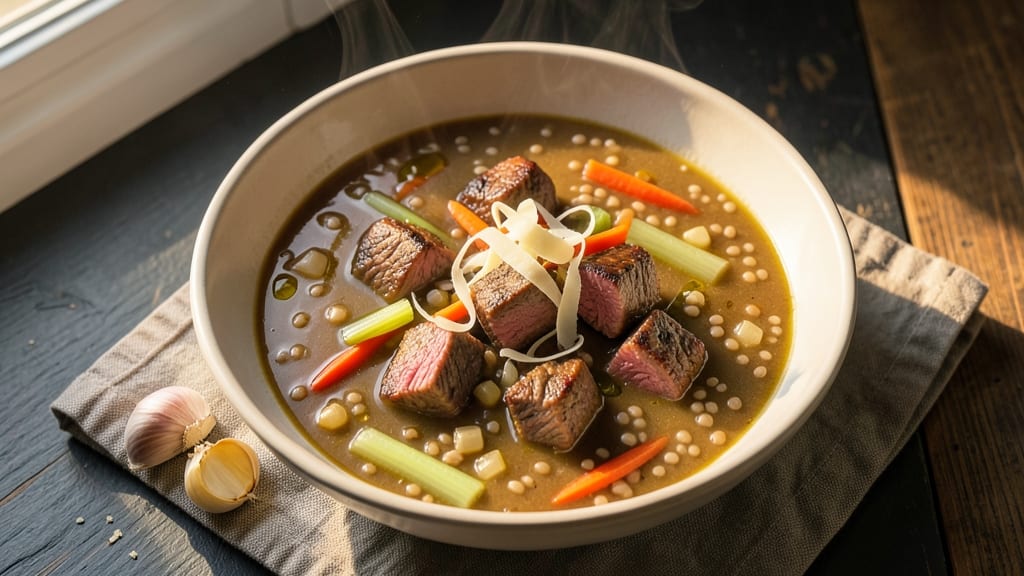
Jamie Oliver’s beef and barley soup delivers restaurant-quality comfort in a single pot, perfect for chilly evenings. The secret lies in slow simmering—2 hours at a gentle boil—to develop deep, savory flavors while tenderizing beef and barley.
This isn’t just soup; it’s a hearty, umami-packed masterpiece that transforms simple ingredients into something extraordinary.
Start with browning the beef for a rich foundation, then build layers of flavor with onions, carrots, and celery—Jamie’s signature sofrito—before adding barley and herbs. The key is patience: letting the broth reduce concentrates the taste, creating a velvety, satisfying consistency that coats every spoonful.
No shortcuts here; this is slow-cooked perfection that tastes even better the next day.
What makes this recipe stand out is the balance—tender beef, chewy barley, and a broth so flavorful it’s almost like a hug in a bowl. The aroma alone will fill your kitchen with warmth, while the garnish of fresh parsley adds a bright finish.
It’s the kind of dish that feels like a homemade hug, especially when served with crusty bread to soak up every last drop.
Whether you’re feeding a crowd or treating yourself to a cozy night in, this soup delivers foolproof results with minimal effort. The beauty of Jamie’s method is its versatility: use leftover roast beef, swap in mushrooms, or add a splash of red wine for extra depth.
Ready in under 3 hours, it’s the ultimate weeknight winner that tastes like a Sunday roast.
Ingredients for beef and barley soup recipe jamie oliver
Sixteen ingredients transform into Jamie Oliver’s legendary beef and barley soup—rich, umami-packed, and restaurant-quality in one pot.
| Ingredient | Amount | Notes |
|---|---|---|
| Chuck Roast Beef 🥩 | 2 lb | Cut into 1-inch cubes, boneless |
| Yellow Onions 🧅 | 2 whole | Medium, thinly sliced |
| Carrots 🥕 | 3 whole | Medium, peeled, cut into chunks |
| Celery Stalks 🌿 | 3 whole | Cut into 1-inch pieces |
| Garlic Cloves 🧄 | 4 cloves | Minced, fresh preferred |
| Pearl Barley 🌾 | 1 cup | Rinsed thoroughly |
| Fresh Thyme 🌿 | 2 sprigs | Or 1 tsp dried thyme |
| Fresh Parsley 🌿 | ¼ cup | Chopped, for garnish |
| Tomato Paste 🍅 | 2 tbsp | High-quality, no sugar added |
| Beef Stock 💧 | 6 cups | Homemade or quality store-bought |
| Red Wine 🍷 | 1 cup | Dry, bold variety like Cabernet |
| Olive Oil 🫒 | 2 tbsp | Extra-virgin for browning |
| Salt 🧂 | 1 ½ tsp | Diamond Crystal preferred |
| Black Pepper 🌶️ | ½ tsp | Freshly cracked |
| Bay Leaves 🍃 | 2 whole | Removed before serving |
The beef selection is critical here. Chuck roast delivers that signature fall-apart texture—sirloin or ribeye won’t tenderize properly. Look for well-marbled cuts at Whole Foods or your local butcher shop; the fat renders beautifully during the long simmer. For stock, Kitchen Basics or Pacific Foods brands offer the deepest flavor. Fresh thyme and bay leaves elevate the broth, but if you’re short on time, dried thyme at half the amount works in a pinch. The tomato paste adds umami depth—Mutti or San Marzano are premium choices, but any quality brand will suffice.
No red wine? Substitute with extra beef stock and a splash of balsamic vinegar—the acidity mimics the wine’s brightness. Swapping barley? Pearl barley is ideal, but wheat berries or farro add texture. For extra richness, mushrooms or roasted root vegetables can join the sofrito. The onions, carrots, and celery—Jamie’s holy trinity—should be cut uniformly for even cooking. If you’re using pre-chopped veggies, pat them dry first to prevent a watery broth. The garlic? Freshly minced releases more flavor than jarred, but if you’re in a hurry, one extra clove of jarred will do.
This soup tastes even better the next day as flavors meld. Store in an airtight container in the fridge for up to 5 days, or freeze for 3 months in portions. For reheating, low heat on the stovetop prevents curdling. Garnish with fresh parsley just before serving—store stems in a jar of water for up to a week. The barley thickens as it cools, so add a splash of stock if it’s too dense when reheated. Leftovers make fantastic lunches; portion into containers with crusty bread for a complete meal.
Why You'll Love This Recipe
- One-Pot Magic: I swear by this recipe because it’s literally dump-and-simmer. Chuck roast stays tender while the onions, carrots, and celery mellow into sweetness—no fancy techniques, just a big pot and patience. Honestly, the hardest part is waiting for the barley to plump up.
- Deep Umami Bomb: That slow-cooked chuck roast? It melts into the broth like butter, while the garlic and barley add layers of earthy richness. The carrots caramelize just enough to give it a subtle sweetness—every spoonful tastes like a hug from your grandma’s kitchen.
- Meals for Days: Between us, this soup triples better. Make a big batch on Sunday, and you’ve got lunch for Wednesday, dinner for Friday, and a freezer stash for when you’re too tired to cook. The barley holds up perfectly, so it’s never sad leftovers.
- Budget Hero: Chuck roast is cheap, and this recipe stretches it into five hearty servings. No fancy cuts, no wasted ingredients—just pure, satisfying flavor that makes grocery bills feel less painful. Plus, the veggies are basic and always affordable. Win.
Step-by-step instructions for beef and barley soup
This hearty soup builds rich flavor through careful layering—start with a deep meat sear, then let aromatics and wine infuse before simmering everything together.
Sear the Beef for Maximum Flavor
Heat the 2 tablespoons olive oil in a large Dutch oven over medium-high heat until shimmering. Working in batches to avoid crowding, add the 2 lb chuck roast beef cut into 1-inch cubes, searing each side for 2-3 minutes until deeply browned. This step creates the Maillard reaction that forms the soup's foundation.
As you sear, resist the urge to stir constantly—let the beef develop a crust. Once all pieces are browned, transfer them to a plate and set aside. You'll notice the pan will have beautiful browned bits clinging to the bottom—this is flavor gold that we'll deglaze later. Keep the heat at medium-high for the next step.
Build the Aromatic Base
Add the 2 whole yellow onions, 3 whole carrots, and 3 whole celery stalks to the same Dutch oven. Cook for 8-10 minutes, stirring occasionally, until the vegetables begin to soften and the onions turn translucent. This process releases their natural sugars, which will caramelize slightly and deepen the soup's flavor profile.
Next, add the 4 cloves minced garlic and cook for 30 seconds until fragrant—don't let it burn, or you'll taste bitterness. Stir in the 2 tablespoons tomato paste, coating all the vegetables and browned bits. This creates a rich, umami-packed base that will form the soup's backbone. Cook for another 1 minute while you prepare the remaining ingredients.
Deglaze and Combine All Ingredients
Pour in the 1 cup red wine, scraping up all the browned bits from the bottom of the pot with a wooden spoon. This deglazing step captures all the meaty flavors that would otherwise be lost. Let the wine simmer for 2-3 minutes until reduced by half, allowing its alcohol to cook off and its depth to concentrate.
Add the 6 cups beef stock, 1 cup rinsed pearl barley, 1.5 teaspoons salt, 0.5 teaspoon black pepper, 2 sprigs fresh thyme, and 2 whole bay leaves. Stir well to combine, then return the seared beef to the pot. Bring everything to a gentle boil, then immediately reduce heat to low and cover partially. The soup should simmer gently—if it boils vigorously, it will cook too quickly and the barley won't absorb enough liquid.
Simmer Until Tender and Flavorful
Let the soup simmer uncovered for 1 hour 15 minutes, stirring occasionally. The barley should be tender but still hold its shape when bitten—it should have a slight bite to it, not be mushy. The beef should be fork-tender, falling apart easily when pierced with a fork. If the soup reduces too much and becomes too thick, add ½ cup hot water or beef stock to maintain the proper consistency.
After the initial simmering, taste and adjust seasoning if needed. The soup should be rich and savory, with the wine's acidity cutting through the meaty flavors. If it needs more depth, add a pinch more salt or a splash of red wine. The barley should be plump and the beef should be falling apart—this is when you know you've achieved that perfect balance of textures.
Finish and Serve with Fresh Herbs
Once the soup reaches the perfect tenderness, remove the bay leaves and thyme sprigs—they've served their purpose and can be discarded. Stir in the 0.25 cup chopped fresh parsley just before serving to brighten the dish with a fresh, herbal note. The parsley should be added at the very end to preserve its vibrant color and fresh flavor.
Ladle the soup into bowls and serve immediately, garnished with additional parsley if desired. Each spoonful should deliver a perfect balance of tender beef, chewy barley, and richly flavored broth. The soup continues to improve as it sits, so if you have leftovers, they'll taste even better the next day as the flavors meld further. Pair with crusty bread to soak up every last drop of that hearty broth.
Pro Tips For Making Beef And Barley Soup Recipe Jamie Oliver
- SEAR THE BEEF FIRST: High heat for 3-4 minutes per side—don’t skimp. That crust locks in flavor and keeps the chuck from turning to mush later, even if you’re impatient like me. (Yes, I’ve learned the hard way.)
- CHOP VEGETABLES UNIFORM: Cut onions, carrots, and celery into ½-inch dice—no random chunks. Jamie’s recipe relies on even cooking, and jagged edges mean some veg will turn to mush while others stay tough. (I used to eyeball it. Now I measure.)
- SIMMER LOW AND LONG: Keep the heat at a gentle bubble, not a rolling boil. Chuck needs 2.5–3 hours to fall apart, and rushing it makes the broth cloudy and the meat dry. (I’ve burned the house down trying to speed this up.)
- ADD BARLEY LATE: Stir in the barley only in the final 20–25 minutes—it soaks up liquid fast. If you add it too early, you’ll end up with a watery soup or undercooked grains. (I’ve done both. You don’t want to.)
Common mistakes when making perfect results
Overcrowding the Pot
One of the biggest mistakes is trying to sear all the beef at once. When you overcrowd the Dutch oven, the temperature drops, and the beef steams instead of browning properly. This leads to pale, bland meat that lacks the deep, caramelized flavor we want.
Instead, work in batches—sear half the beef first, then remove it to a plate before adding the second batch. This ensures each piece develops that beautiful crust. 🔥
Skipping the Deglaze
Many cooks rush past the deglazing step, but this is where the magic happens. Those browned bits stuck to the bottom of the pot are packed with flavor.
When you pour in the red wine and scrape them up, you're capturing all that richness that would otherwise go down the drain. Don't skip this step—it's what transforms good soup into extraordinary soup.
Using the Wrong Barley
Not all barley is created equal. If you use quick-cooking barley or substitute it with other grains like rice or quinoa, you'll end up with a mushy texture that lacks the satisfying chew we want.
Stick with pearl barley—it's the only variety that holds its shape while still softening enough to be delicious. Always rinse it thoroughly before adding to remove any bitter starches.
Boiling Too Vigorously
The soup needs to simmer gently, not boil vigorously. When you boil it too hard, the barley cooks unevenly and the broth can become cloudy. Keep the heat at low and maintain just a gentle simmer.
If you see bubbles forming rapidly, reduce the heat further. This slow cooking is what develops those deep, complex flavors we're after.
Ignoring the Resting Time
After simmering, resist the urge to serve immediately. Let the soup sit off the heat for 10-15 minutes before serving. This allows the flavors to meld together and the barley to absorb any remaining liquid.
The beef will also continue to tenderize slightly during this time. Trust me, that extra waiting time makes all the difference in the final result. 💫
Overlooking the Fresh Herbs
Adding the fresh parsley at the very end isn't just for presentation—it adds a bright, fresh contrast to the rich, meaty flavors. If you add it too early, it will wilt and lose its vibrant color.
Always stir in the parsley just before serving to maintain that fresh, herbal note that brightens up the entire bowl.
Nutrition facts
Frequently asked questions
Can I use ground beef instead of chuck roast for this recipe?
While ground beef will work in a pinch, it won't deliver the same rich, tender texture that chuck roast provides. The slow simmer time would turn ground beef into a paste. If you must substitute, use steak-cut beef (like top round) and cut it into small cubes—it won't be as flavorful, but it will hold its shape better than ground meat. For best results, stick with chuck roast for that signature fall-apart tenderness.
How do I adjust this recipe for a slow cooker?
Transfer all ingredients to your slow cooker after searing the beef and deglazing the pan. Cook on low for 6-7 hours or high for 3-4 hours, stirring occasionally. The barley will absorb more liquid in the slow cooker, so add ½ cup beef stock if it becomes too thick. The beef will be extra tender, but you may need to shred it slightly for easier eating.
What can I do if my barley is undercooked after 1.5 hours?
If the barley still has a hard bite after the full simmering time, it's likely because your stove runs hotter than expected. Add ½ cup hot water and continue simmering uncovered for another 15-20 minutes. If it's still firm, the barley may need more time—try simmering for 30-45 minutes longer. For next time, check your barley package for recommended cooking times (pearl barley typically needs 45-60 minutes total).
Can I make this soup ahead of time?
This soup tastes even better the next day! Store in an airtight container in the fridge for up to 5 days, or freeze for 3 months. Reheat gently on the stovetop over low heat—never microwave, as it can make the barley mushy. Stir in a splash of beef stock if the soup thickens too much when reheated. The flavors deepen overnight, making it perfect for meal prep.
What's the best way to reheat leftovers?
Reheat leftovers on the stovetop using low heat—never high—to prevent the barley from breaking down. Add 2-3 tablespoons of beef stock or water per bowl to loosen the soup. If using the microwave, cover with a damp paper towel and heat in 30-second intervals, stirring between each. For best texture, reheat just until hot, then let sit for 2 minutes before serving. The gentle reheating preserves the barley's chewiness.