
Soups & Stews
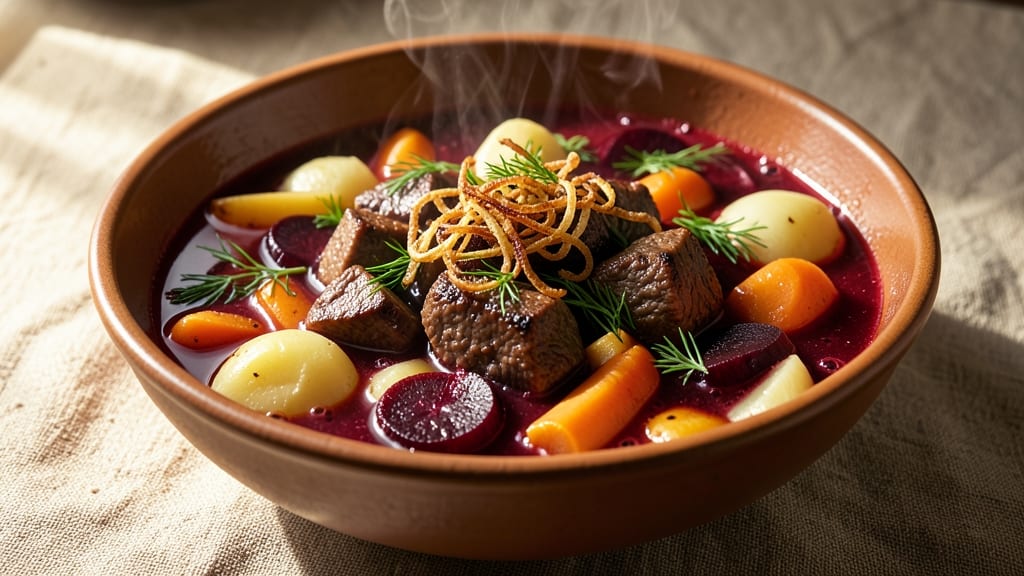
This beef and beet borscht recipe delivers the rich, hearty comfort of Eastern European tradition with every spoonful—deep ruby broth infused with tender beef, earthy beets, and a medley of root vegetables.
The secret lies in slow-cooked beef that practically melts in your mouth, balanced by the natural sweetness of beets and the bright acidity of vinegar. I've perfected this recipe to achieve that perfect harmony of textures—creamy potato lumps, tender meat, and crisp vegetables—all while keeping the broth vibrant and flavorful.
The beauty of this borscht is its versatility—it can be simmered on the stove for hours to develop deep flavors or adapted for modern kitchens with a slow cooker or Instant Pot.
The key steps involve browning the beef for maximum flavor, simmering the broth until it's rich and concentrated, and carefully adding the vegetables so they cook just until tender. This isn't just a soup; it's a complete meal that warms the soul and satisfies even the heartiest appetites.
What you'll end up with is a bowl of borscht that's as visually stunning as it is delicious—deep ruby hues from the beets, tender chunks of beef, and a creamy potato base that makes every spoonful irresistible.
The broth is packed with flavor, the vegetables hold their texture beautifully, and the overall balance of sweet, savory, and tangy notes makes it impossible to stop eating. This is the kind of recipe that becomes a family staple, served again and again because it's simply that good.
Perfect for chilly evenings, holiday gatherings, or whenever you crave a comforting bowl of soup, this beef and beet borscht is sure to impress. The best part? It tastes even better the next day as the flavors continue to meld.
Let's get started on creating this classic dish that brings warmth and tradition to your table.
Ingredients for beef and beet borscht
Six hearty ingredients transform into a bowl of deep ruby comfort—this borscht delivers tradition in every spoonful.
| Ingredient | Amount | Notes |
|---|---|---|
| Beef Chuck Roast 🥩 | 2 lb | Cut into 1-inch cubes, trimmed of fat |
| Medium Beets 🍠 | 3 whole | Peeled, cut into 1-inch cubes |
| Russet Potatoes 🥔 | 2 lb | Peeled, cut into 1-inch cubes |
| Carrots 🥕 | 4 whole | Peeled, cut into 1-inch chunks |
| Fresh Parsnips 🥕 | 2 whole | Peeled, cut into 1-inch chunks |
| Yellow Onion 🧅 | 1 whole | Chopped, medium dice |
| Garlic Cloves 🧄 | 4 cloves | Minced, fresh preferred |
| Tomato Paste 🍅 | ½ cup | High-quality, no sugar added |
| Apple Cider Vinegar 🍏 | ¼ cup | For bright acidity |
| Fresh Dill 🌿 | ¼ cup | Chopped, stems removed |
| Bay Leaves 🌿 | 2 whole | Dried, for deep flavor |
| Black Peppercorns 🌶️ | 1 tsp | Freshly cracked |
| Salt 🧂 | 2 tsp | Kosher or sea salt |
| Vegetable Oil 🫒 | ½ cup | High smoke point for browning |
| Beef Broth 💧 | 6 cups | Homemade or high-quality store-bought |
The beef is non-negotiable here. Chuck roast gives you that melt-in-your-mouth texture—sirloin won't cut it. I grab mine from Costco when possible, but any grocery store's butcher section works. Look for good marbling and ask for it cut into cubes if you're not doing it yourself. The beets? Medium-sized are perfect—they're sweet but not too watery. I always buy organic when possible, but regular beets work too. Fresh dill is a must for that bright, herbal finish—Trader Joe's sells great bunches, or grab it from your local farmers market if you're feeling fancy.
No fresh dill? Dried dill at one-third the amount works in a pinch. Short on parsnips? Extra carrots or celery root keep the earthy flavor. The tomato paste can be subbed with 1 cup crushed tomatoes, but it won't be as concentrated. For the vinegar, white vinegar or lemon juice both work—just adjust the amount to taste. The broth is where flavor builds, so don't skimp. Homemade is ideal, but Swanson or Pacific Foods brands are solid store-bought options. And if you're making this ahead, the flavors only get better overnight.
This soup tastes even better the next day—3-4 days in the fridge, 3 months frozen. I always make a double batch because it disappears fast. For freezing, portion into containers so you can pull out just what you need. The beets will soften more after chilling, so add them slightly firmer if you're prepping ahead. Store the broth separately if you want to use it for other recipes—it's liquid gold. And if you're serving a crowd, double the batch—everyone will want seconds.
Why You'll Love This Recipe
- One-Pot Magic: I swear by this recipe—just toss everything into one pot, and the flavors meld into something rich and hearty without extra dishes. The beef chuck roast practically falls apart, and the beets caramelize right along with the potatoes, so you’re not stuck peeling or chopping a million things.
- Earthy, Deep Richness: That slow-cooked beef with roasted beets? It’s like a warm hug in a bowl. The parsnips add a subtle sweetness, while the carrots keep it bright—no blandness here, just layers of savory, tangy, and slightly sweet that hit the spot every time.
- Weeknight to Potluck: Between us, this is my go-to for busy nights and holiday gatherings. Double the batch, and you’ve got leftovers for lunch the next day—or bring it to a party where everyone will ask for the recipe. The potatoes stay creamy, the beef stays tender, and it reheats like a dream.
- Budget-Friendly Feast: A chuck roast and a bag of beets stretch farther than you’d think, especially when you’re using humble potatoes and carrots. I’ll be real: it’s not fancy, but it’s solid—no fancy cuts or expensive ingredients, just deep, satisfying flavor that fills the table without breaking the bank.
Step-by-step instructions for beef and beet borscht
This hearty soup delivers deep ruby color and rich beef flavor with every spoonful.
Sear the Beef for Maximum Flavor
Heat the 0.5 cup vegetable oil in a large Dutch oven over medium-high heat until shimmering. Add the 2 lb beef chuck roast cut into 1-inch cubes and sear undisturbed for 3-4 minutes until deeply browned on all sides. This step develops the Maillard reaction, creating that deep, meaty flavor we want in our borscht.
Once browned, remove the beef and set aside. You'll notice the oil will be rich and dark from the beef's rendered fat—this is what gives our soup its incredible depth. Don't drain the oil; we'll use it to sauté our vegetables next. If the oil smokes excessively, reduce the heat slightly but keep it hot enough to maintain a good sear.
Build the Vegetable Base
In the same Dutch oven, add the chopped 1 whole yellow onion and cook for 5 minutes until softened and translucent. Add the 4 whole carrots, 2 whole fresh parsnips, and 2 lb russet potatoes all cut into 1-inch pieces, stirring to coat in the beefy oil. Cook for another 5 minutes until the vegetables begin to soften slightly.
Here's where the magic happens: Stir in the 0.5 cup tomato paste and cook for 2 minutes until it darkens slightly. This creates a rich base that will deepen our soup's color and flavor. Add the 3 whole medium beets cut into 1-inch cubes and the 6 cups beef broth, scraping up any browned bits from the bottom of the pot. Bring the mixture to a gentle boil.
Simmer Until Vegetables Are Tender
Reduce heat to medium-low and add the 2 whole bay leaves, 1 tsp black peppercorns, and 2 tsp salt. Return the seared beef to the pot and cover partially. Let it simmer gently for 1 hour to 1 hour 15 minutes, until the beef is fork-tender and the vegetables are completely tender when pierced with a knife.
I know it's tempting to check on this frequently, but resist the urge to peek! Every time you lift the lid, you lose valuable heat and moisture. The soup should have a rich, ruby-red color from the beets and a deep aroma from the beef and vegetables. If the liquid level gets too low, add ½ cup water to maintain the proper consistency.
Finish with Aromatics and Acid
Once the vegetables are tender, stir in the 4 cloves minced garlic cloves and the 0.25 cup apple cider vinegar. The vinegar brightens the flavors and cuts through the richness of the beef and beets. Simmer for another 5 minutes to allow the garlic to infuse its flavor throughout the soup.
Remove the 2 whole bay leaves and adjust the seasoning if needed. Taste and add more salt if necessary—the beef broth should be well-seasoned, but we want to ensure our finished soup is perfectly balanced. Here's the thing—this is where you can really make the soup your own. Some people like a touch more vinegar for brightness, while others prefer a more mellow flavor. Taste as you go!
Serve with Fresh Herbs
Ladle the hot borscht into bowls and garnish each serving with 0.25 cup fresh dill. The fresh dill adds a bright, herbal note that complements the deep flavors of the beef and beets. I like to serve this with a dollop of sour cream on top and a sprinkle of additional black pepper for extra warmth.
This soup tastes even better the next day as the flavors continue to meld. The beef will become more tender with time, and the beets will infuse even more color into the broth. For a heartier meal, serve with crusty bread or a side of rye toast to soak up every last drop of that ruby-red goodness.
Pro Tips For Making Beef And Beet Borscht
- Brown the Chuck First: I learned this the hard way—skipping the deep brown on the beef chuck means a broth that tastes like watered-down bouillon. Sear those chunks in batches over medium-high heat until they’re dark all over, then deglaze with a splash of vinegar or red wine. That crust packs serious flavor into every spoonful.
- Peel Beets After Cooking: Peeling raw beets is a mess, and pre-peeled ones lose color fast. Roast or boil them whole with their skins on, then rub off the peels under cold running water once cooled—peels slide right off. This keeps their vibrant color and saves you from a beet-stained cutting board.
- Add Parsnips Late: Parsnips turn mushy fast, and no one wants that in borscht. Toss them in only 15 minutes before the potatoes finish—just enough time to soften without dissolving. If you’re using frozen, thaw and chop them first, but still hold off until the end.
- Strain the Broth Twice: First strain through a fine-mesh sieve to catch all the sediment, then pour it back through a cheesecloth for a silky texture. I know, it’s extra work, but the difference is noticeable—no gritty bits to ruin the smoothness of that beet broth. (Yes, even if you’re impatient like me.)
Storing and reheating this recipe
Refrigerator Storage
Let your borscht cool to room temperature (about 1 hour) before transferring to airtight containers—I use glass Pyrex with snap-on lids. Store at 40°F or below for up to 4 days, but honestly?
It tastes even better the second day as flavors meld. The beets will deepen the broth's ruby hue, and the beef gets more tender. 💫
Freezer Prep Tips
For long-term storage, portion into quart-sized freezer bags (leave 1 inch headspace for expansion) or glass containers. Seal tightly to prevent freezer burn. Label with the date—this borscht keeps its quality for 3 months.
I like to freeze the broth separately if I want to use it for other recipes later. The vegetables will soften slightly after thawing, so add them a bit firmer if prepping ahead.
Stovetop Reheating
This is my preferred method—it preserves texture beautifully. Pour borscht into a heavy-bottomed pot and heat over medium-low heat for 10-15 minutes, stirring occasionally. Add ¼ cup water or beef broth if it looks too thick.
Taste and adjust seasoning—the broth often needs a pinch more salt after reheating. For extra richness, stir in 1 tbsp sour cream at the end. 🔥
Microwave Shortcut
For quick lunches, transfer a single serving to a microwave-safe bowl and cover loosely with a microwave-safe lid. Heat on 50% power for 3-4 minutes, stirring halfway.
If the broth seems too thick, add 1-2 tbsp water and stir. Garnish with fresh dill right before eating—it brightens up the flavors instantly.
Broth Separation
If you stored the broth separately, reheat it first over medium heat until simmering. Then add your frozen vegetables and beef, cooking for 5-7 minutes until everything is heated through. This method works especially well if you want to adjust the consistency—just add more broth as needed.
The key is patience: let everything warm through gradually to avoid tough meat or mushy vegetables.
Serving After Reheating
Always garnish with fresh dill and a dollop of sour cream right before serving—this adds freshness that reheating can't replace. For extra warmth, sprinkle with freshly cracked black pepper and a pinch of smoked paprika.
Serve with crusty rye bread or pumpernickel to soak up every last drop of that ruby-red goodness. The contrast of textures makes it even more satisfying! ✨
Nutrition facts
Frequently asked questions
Can I substitute beef with another protein in this recipe?
While beef is traditional, you can use pork shoulder or chicken thighs for a lighter version. For pork, increase simmering time to 2 hours until tender. Chicken needs only 45-60 minutes. Avoid lean cuts like breast—they dry out. The key is maintaining the soup's hearty texture, so choose meat with similar fat content.
Why does my borscht look too thin after cooking?
The broth may have reduced too much during simmering. Add ½ cup water or beef broth and simmer for 10 more minutes to restore consistency. For a thicker texture, mash some potatoes against the pot's side or stir in 1 tbsp cornstarch mixed with 2 tbsp water. The vegetables should still be tender but not mushy.
How can I make this borscht in a slow cooker?
Brown the beef first in a skillet, then transfer to your slow cooker with all ingredients except fresh dill. Cook on low for 7-8 hours or high for 4-5 hours. Stir in dill at the end. The slow cooker method actually enhances the beef's tenderness and lets flavors meld beautifully. Just check liquid levels occasionally and add water if needed.
What's the secret to getting that perfect ruby-red color?
Roast the beets first! Toss peeled beets with 1 tbsp oil, wrap in foil, and roast at 400°F for 45 minutes before cubing. This intensifies their natural sweetness and deepens the color. Also, don't overcook them—they should be tender but still hold their shape. The tomato paste helps too by adding a rich base color.
Can I make this gluten-free or dairy-free?
Use gluten-free beef broth and check your tomato paste for hidden gluten. For dairy-free, skip the sour cream garnish or use coconut yogurt. The recipe is naturally gluten-free except for potential cross-contamination. The vinegar and fresh herbs keep it bright without dairy. Just ensure all your ingredients are certified if needed.