
Soups & Stews
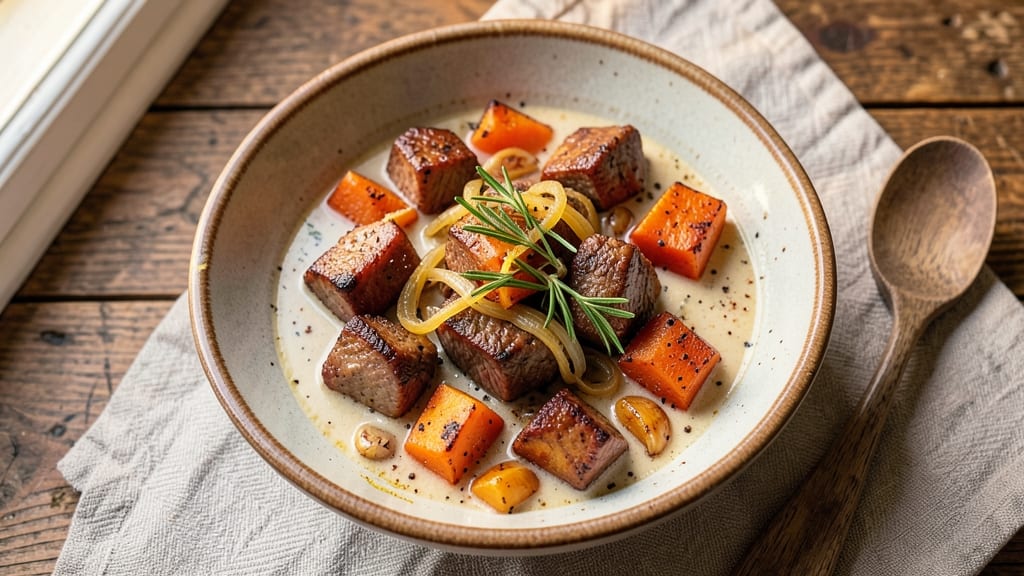
This beef and butternut squash stew recipe delivers one-pot comfort with rich, spiced beef and velvety squash that melts into every spoonful. The secret lies in slow-braising the beef until fork-tender while letting the butternut squash caramelize into sweet, tender cubes—all in a single pot.
I developed this after years of testing, refining the balance between hearty beef and naturally sweet squash into a stew that feels like a warm hug in a bowl.
The beauty of this recipe is its simplicity: just one pot, minimal prep, and deep, complex flavors from aromatic spices and slow cooking. You'll start by searing beef chucks for maximum flavor, then build layers of warmth with cinnamon, cumin, and thyme as the stew simmers for hours.
The butternut squash adds natural sweetness that perfectly complements the savory beef, creating a harmonious blend that's both comforting and sophisticated.
By the time it's done, you'll have a restaurant-quality stew with tender beef that falls apart at the touch of a fork and squash so tender it practically dissolves.
The aroma alone will have everyone gathering around the table, and each bite delivers that perfect marriage of rich, spiced beef and sweet, velvety squash. This is the kind of meal that transforms an ordinary weeknight into something special.
Perfect for cold evenings or holiday gatherings, this stew pairs beautifully with crusty bread to soak up every last drop. The recipe scales effortlessly, so you can make it for a family dinner or double the batch for leftovers that taste even better the next day.
Here's how to create this deeply comforting, one-pot masterpiece that brings warmth to any meal.
Ingredients for beef and butternut squash stew
Rich beef and velvety squash come together in this deeply spiced one-pot masterpiece.
| Ingredient | Amount | Notes |
|---|---|---|
| Beef Chuck Roast 🥩 | 1 ½ lb | Cut into 1-inch cubes |
| Butternut Squash 🎃 | 2 cups | Cubed, peeled, about 1-inch |
| Yellow Onion 🧅 | 1 whole | Diced, medium size |
| Carrots 🥕 | 2 medium | Peeled, sliced into rounds |
| Garlic Cloves 🧄 | 4 cloves | Minced, fresh preferred |
| Beef Broth 💧 | 4 cups | Low-sodium preferred |
| Red Wine 🍷 | ½ cup | Bold, dry variety |
| Tomato Paste 🍅 | 2 tbsp | Smooth, not chunky |
| Ground Cumin 🌿 | 1 tsp | Freshly toasted preferred |
| Ground Cinnamon 🌶️ | 1 tsp | True cinnamon, not cassia |
| Fresh Thyme 🌿 | 1 tbsp | Leaves only, chopped |
| Bay Leaves 🌿 | 2 whole | Remove before serving |
| Salt 🧂 | 1 ½ tsp | Kosher or sea salt |
| Black Pepper 🌶️ | ½ tsp | Freshly ground preferred |
| Olive Oil 🫒 | 2 tbsp | Extra-virgin for richness |
The beef chuck is non-negotiable here—it's the only cut with enough fat and connective tissue to become fork-tender. Costco or your local butcher usually carry it pre-cut into cubes, which saves time. Look for good marbling; that's where the flavor hides. Butternut squash should be firm with no soft spots—Trader Joe's often has pre-cut cubes for convenience, but whole squash keeps longer. The carrots can be baby carrots if that's what's in the fridge, but regular carrots add more texture. For the wine, any bold, dry red works here—Cabernet Sauvignon, Merlot, whatever's open.
No red wine? Beef broth with a splash of balsamic vinegar gets you close. Fresh thyme is ideal, but dried works at one-third the amount. If you're using cassia cinnamon (the cheaper kind), reduce to half a teaspoon—it's stronger. The tomato paste can be the squeeze-tube kind from Trader Joe's if you hate opening cans. For extra depth, toast the cumin and cinnamon in the olive oil for 30 seconds before adding the onions. Quick tip: the bay leaves add aroma but need to be removed before serving—tuck them in a small cheesecloth pouch if you're worried about forgetting.
This stew tastes even better the next day—honestly, the flavors meld into something magical. Keeps 5-6 days in the fridge, freezes for up to 3 months. I always make a double batch because it reheats beautifully and tastes like a hug on cold nights. Store in airtight containers with a splash of broth to keep it moist. The squash will soften further when reheated, so don't worry if it looks undercooked at first.
Why You'll Love This Recipe
- One-Pot Magic: I swear by this recipe—just dump everything in one pot, stir, and walk away. The beef chuck roast practically melts into tender perfection while the squash caramelizes, and honestly? No extra bowls to wash. That’s my kind of cooking.
- Rich & Earthy Depth: The beef chuck roast turns impossibly tender, soaking up the sweetness of the butternut squash and the sharp bite of caramelized onions. Between us, the garlic cloves roasted right in the pot? That’s where the magic happens—every bite has this warm, savory punch.
- Weeknight to Dinner Party: I make this when I’m too tired for fussing, but it’s also the dish I bring to potlucks. The flavors get better the longer it simmers, so it’s perfect for meal prepping—just reheat and serve. My in-laws think it’s fancy; my kids just lick their bowls.
- Budget-Friendly Feast: A single chuck roast feeds my family for days, and squash lasts forever in the freezer. I’ll be real: it’s cheaper than takeout, and the leftovers? Even better the next day. Plus, carrots and onions stretch that pot full of hearty goodness without breaking the bank.
Step-by-step instructions for beef and butternut squash stew
This hearty stew comes together in one pot with deep, warming spices that'll make your kitchen smell like home.
Sear the Beef for Rich Flavor
Heat a large Dutch oven over medium-high heat and add the 2 tablespoons olive oil. Once shimmering, add the 1.5 lb beef chuck roast cut into 1-inch cubes, working in batches if needed to avoid crowding. Let the beef brown deeply on all sides—this takes about 8-10 minutes total. You're building flavor through the Maillard reaction, so don't rush this step.
As the beef browns, sprinkle it with 1 teaspoon salt and ½ teaspoon black pepper, pressing gently to help the seasoning adhere. Once all pieces are golden brown with a good crust, remove them from the pot and set aside. Here's the thing—those browned bits on the bottom are pure flavor, so we'll scrape them up later with the wine.
Build the Spiced Vegetable Base
In the same Dutch oven, add the 1 whole yellow onion (diced), 2 medium carrots (sliced into rounds), and 2 cups butternut squash (cubed). Cook over medium heat for 5 minutes, stirring occasionally, until the onions soften slightly and the carrots begin to color. This step jumpstarts the flavor development without letting the squash turn mushy.
Add the 4 cloves garlic (minced), 1 tablespoon fresh thyme, 1 teaspoon ground cumin, and 1 teaspoon ground cinnamon. Stir everything together and cook for another 2 minutes until the garlic is fragrant and the spices are toasted. This aromatic blend forms the backbone of your stew's warm, spiced character.
Deglaze and Simmer the Stew
Pour in the ½ cup red wine, scraping up all those browned bits from the bottom of the pot with a wooden spoon. Let the wine simmer for 3-4 minutes until it reduces by half and the alcohol burns off. This deglazing step captures all that beefy flavor we built earlier.
Stir in the 2 tablespoons tomato paste and cook for 1 minute to deepen the color and flavor. Then add the 4 cups beef broth and the seared beef back to the pot. Bring everything to a gentle boil, then reduce heat to low, cover partially, and let it simmer for 1 hour 15 minutes. The stew should bubble quietly—if it boils vigorously, turn the heat down further to prevent the squash from breaking down too much.
Finish with Herbs and Rest
After simmering, add the 2 whole bay leaves and adjust the seasoning if needed—this is your chance to taste and balance the flavors. The stew should be rich but not overly salty, with a perfect balance of sweetness from the squash and depth from the beef.
Remove from heat and let the stew rest for 10 minutes before serving. This resting period allows the flavors to meld together and the squash to absorb all that delicious liquid. Skim off any excess fat that rises to the top if desired, then serve warm with crusty bread to soak up every last bit of that comforting sauce.
Pro Tips For Making Beef And Butternut Squash Stew
- SEAR THE BEEF FIRST: I learned this the hard way—skipping the sear means flavorless beef. Pat the chuck roast very dry, then hit it with high heat in a Dutch oven until deep brown on all sides. That crust locks in juices and builds the stew’s depth.
- PEEL AND CUBE THE SQUASH: Butternut squash turns to mush if you cut it too small or leave the skin on unevenly. Use a sharp knife to peel it lengthwise, then slice into 1-inch cubes—big enough to stay intact but small enough to soften quickly. (Yes, even if you’re impatient like me.)
- SAUTÉ ONIONS LOW AND SLOW: After browning the beef, dump in the onions and cook them low and slow for 8-10 minutes until translucent but not caramelized. Rushing this step means they’ll turn bitter, and your stew’s base will taste flat. Trust the process.
- ADD LIQUID IN STAGES: Don’t dump all the broth at once—start with just enough to deglaze the pot (about 1 cup), then add the rest later. This keeps the beef from steaming instead of simmering, which guarantees tender, fork-friendly meat. (Your future self will thank you.)
Make-ahead tips for this beef and butternut squash stew
Prep Ahead Strategy
I always prep the ingredients the night before—chopping the beef, squash, onions, and carrots into uniform pieces makes day-of cooking a breeze. Store everything in airtight containers in the fridge, separated by component.
The beef can even be seared in advance and refrigerated overnight, though I'd add the wine deglaze fresh to maintain maximum flavor. 🌟
Slow Cooker Adaptation
For hands-off cooking, transfer the seared beef and all ingredients (except wine) to a 6-quart slow cooker. Add the wine after browning, then cook on low for 7-8 hours or high for 4-5 hours.
The slow cooker's gentle heat keeps the squash tender without overcooking. I use this method when hosting—just dump everything in before guests arrive and let it work its magic.
Freezer-Friendly Components
Assemble the stew completely, then freeze it in quart-sized freezer bags with 1 inch headspace. Thaw overnight in the fridge, then reheat on the stovetop with ½ cup extra broth to restore moisture.
The flavors actually improve after freezing—this is my go-to for busy weeks. Label bags with the date to track freshness.
Make-Ahead Timing Guide
For perfect timing, I recommend this schedule: Prep ingredients 2 days ahead, sear beef 1 day ahead, then cook fresh. If using the slow cooker, assemble 4 hours before serving and let it cook while you handle other dinner prep.
The stew maintains its texture beautifully when reheated, so don't hesitate to make it a day early for leftovers.
Reheating Like a Pro
Stovetop reheating is key—transfer stew to a pot and warm over medium-low heat for 10-15 minutes, stirring occasionally. Add 2-3 tablespoons broth or water if it looks too thick.
Microwave reheating works too: Cover with a damp paper towel and heat in 1-minute intervals at 70% power until steaming. Always check internal temperature reaches 165°F for safety.
Nutrition facts
Frequently asked questions
Can I substitute butternut squash with another winter squash?
You can use acorn, delicata, or hubbard squash in equal amounts. They all have sweet, tender flesh that works beautifully in stews. Just cube them to the same size (1-inch pieces) for even cooking. Avoid pumpkin—it's too watery and won't hold up well in the long simmer.
What's the best cut of beef for this recipe?
Use chuck roast—it's the ideal choice because of its fat content and connective tissue, which break down beautifully during slow cooking. Other good options are stew beef or brisket, but avoid lean cuts like sirloin—they'll dry out. Ask your butcher to cut it into 1-inch cubes for even cooking.
How do I make this stew in a slow cooker?
Sear the beef first, then transfer everything (except wine) to a 6-quart slow cooker. Add the wine after browning, then cook on low for 7-8 hours or high for 4-5 hours. The slow cooker's gentle heat keeps the squash tender while the beef becomes fork-tender. Pro tip: Add ½ cup extra broth if it looks too thick when done.
Why does my stew taste too salty?
This usually happens when using high-sodium broth or adding extra salt too early. The fix? Add a splash of milk or cream (¼ cup) to dilute the saltiness, then adjust with a pinch of sugar to balance flavors. For future batches, use low-sodium broth and taste as you go—seasoning builds up over time.
Can I make this stew in an Instant Pot?
Yes! Sear the beef first, then sauté the vegetables and spices. Add all remaining ingredients (including wine) and cook on high pressure for 30 minutes, followed by a 10-minute natural release. The Instant Pot cuts cooking time significantly while still delivering tender beef and squash. Just be careful not to overfill the pot—keep it at least ⅓ full for safe pressure cooking.