
Main Courses
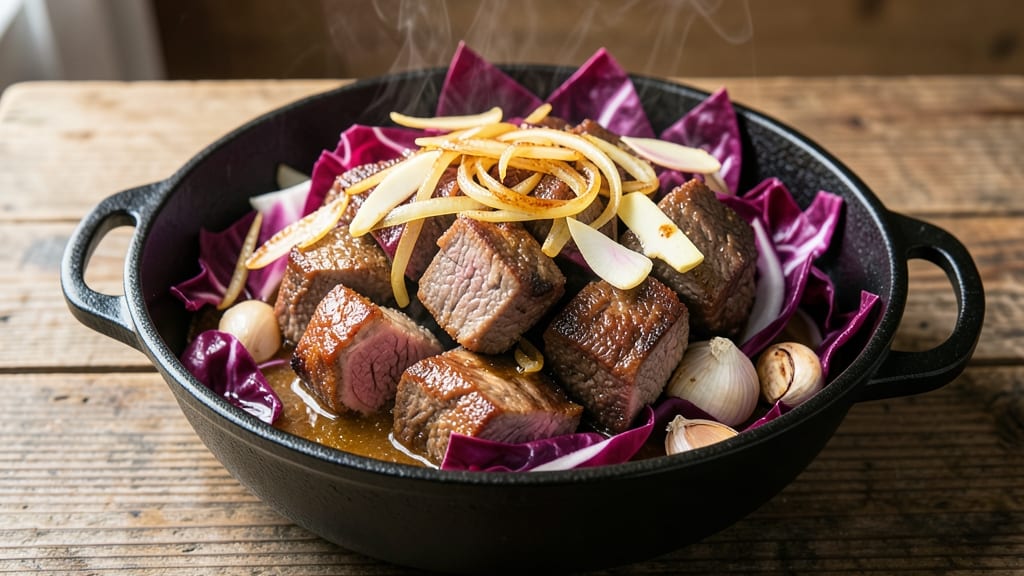
This beef and cabbage hot pot recipe delivers restaurant-quality comfort in one simmering pot, where tender beef and crisp-tender cabbage melt into a rich, aromatic broth that tastes like home. The secret lies in slow cooking—allowing tough cuts to transform into fork-tender morsels while preserving the cabbage’s satisfying crunch.
I’ve refined this method over years, balancing traditional techniques with modern shortcuts to ensure foolproof results every time.
The foundation begins with a deep, savory broth built from soy sauce, ginger, and garlic, which infuses the beef and cabbage with layers of umami. Unlike quick stir-fries, this dish rewards patience: the longer it simmers, the more the flavors meld into a harmonious, deeply satisfying bite.
Whether you’re using a stovetop pot, slow cooker, or Instant Pot, the principle remains the same—gentle heat and time create magic.
What you’ll end up with is a steaming bowl of simmered beef and cabbage where each component shines: beef that falls apart at the touch of a fork, cabbage with just the right bite, and a broth so flavorful it deserves its own spoonful.
The aroma alone—warm spices, caramelizing cabbage, and the deep richness of the beef—will have everyone gathering around the table.
Serve with steamed rice to soak up every last drop of that savory broth, or pair it with a cooling side salad to balance the richness. This is the kind of dish that feels like a hug in a bowl, perfect for chilly evenings or family gatherings.
Let’s get cooking—your hot pot awaits.
Ingredients for beef and cabbage hot pot
Simple ingredients that transform into a deeply comforting hot pot experience.
| Ingredient | Amount | Notes |
|---|---|---|
| Chuck Roast 🥩 | 2 lb | Cut into 1.5-inch cubes |
| Green Cabbage 🥬 | 1 whole | Cut into wedges, core removed |
| Yellow Onion 🧅 | 1 whole | Sliced into 1/2-inch thick rounds |
| Fresh Ginger 🌿 | 2 tbsp | Grated, peeled |
| Garlic Cloves 🧄 | 4 cloves | Minced |
| Soy Sauce 🍶 | ½ cup | Light or all-purpose |
| Beef Broth 💧 | 4 cups | Low-sodium preferred |
| Dry Sherry 🍷 | ¼ cup | Or sub with dry white wine |
| Star Anise 🌟 | 2 whole | Lightly crushed |
| Cinnamon Stick 🌿 | 1 whole | 2-inch length |
| Bay Leaves 🍃 | 2 whole | Dried |
| Olive Oil 🫒 | 1 tbsp | Extra-virgin preferred |
| Salt 🧂 | 1 ½ tsp | Diamond Crystal kosher salt |
| Black Peppercorns 🌶️ | ½ tsp | Freshly cracked |
| White Rice 🍚 | 2 cups | Uncooked, long-grain |
The chuck roast is non-negotiable here—it’s the only cut with enough fat and collagen to melt into tender perfection. Costco or local butchers usually have it pre-cut into cubes, which saves time. If buying whole, ask for a well-marbled piece. The cabbage should be firm and crisp; green cabbage holds up better than savoy or red. For the ginger, grab a chunk from the produce section—Trader Joe’s carries pre-peeled pieces, which is a lifesaver. Star anise and cinnamon sticks can be found in the spice aisle or Asian market; Penzeys sells them whole if you want to reuse them for other dishes.
No sherry? Dry white wine or extra beef broth works in a pinch, though sherry adds that caramelized depth. Fresh ginger can be swapped for powdered at one-third the amount, but fresh is always better. The beef broth should be low-sodium—Kitchen Basics or Imagine brands are reliable. If you’re short on time, pre-cut cabbage from the salad bar does the trick (though it won’t caramelize as beautifully). For the aromatics, don’t skip the star anise or cinnamon—those spices are what make this dish sing. And if you’re out of kosher salt, sea salt in a 1:1 ratio works fine.
This dish tastes even better the next day, so double the batch and freeze half. Store leftovers in the fridge for up to 5 days or freeze for 3 months. The rice keeps best in an airtight container for 4 days. Pro tip: Save the broth for soups or gravies—it’s packed with flavor. If you’re using an Instant Pot, the pressure cooker setting cuts prep time in half, but the stovetop version develops more depth. Either way, resist the urge to rush it—patience is what turns this into something truly special.
Why You'll Love This Recipe
- One-Pot Magic: I swear by this when I’m too tired to wash a million dishes. Chuck roast and cabbage simmer together—no extra pans, no fuss—just rich, tender beef and that perfect cabbage crunch. Honestly, the only tool you’ll need is a big pot and a wooden spoon.
- Deep Umami Love: That chuck roast? It melts into buttery perfection while the ginger and garlic caramelize into something seriously addictive. Between us, the first bite makes me close my eyes—it’s that good.
- Leftovers for Days: Make it once, eat it twice (or three times). The flavors actually get better the next day as the beef gets even more tender. I’ll be real: my freezer is full of these containers, and I don’t even mind reheating them.
- Budget Feast: A pound of chuck roast and a whole cabbage stretch across meals for a fraction of takeout. Plus, onions and ginger are always cheap—this is my go-to when I need to feed the family without breaking the bank. (Yes, even on a Tuesday night.)
Step-by-step instructions for simmered beef and cabbage hot pot
Here's how to create a deeply flavorful hot pot with tender beef and cabbage bathed in aromatic broth.
Prepare the Beef and Aromatics
Start by cutting the 2 lb chuck roast into 1.5-inch cubes—this size ensures even cooking and maximum tenderness. Pat them dry with paper towels to help them brown properly. In a large Dutch oven, heat the 1 tablespoon olive oil over medium-high heat until shimmering. Add the beef in a single layer and sear undisturbed for 3-4 minutes until deeply browned on all sides.
While the beef browns, prepare the aromatics: Peel and grate the 2 tablespoons fresh ginger, then mince the 4 cloves garlic cloves. Remove the beef from the pot and set aside. In the same pot, add the sliced 1 whole yellow onion and cook for 3-4 minutes until softened and golden. Add the ginger and garlic, stirring for 30 seconds until fragrant—this builds the flavor foundation for your broth.
Build the Flavorful Broth
Return the browned beef to the pot and add the 4 cups beef broth, 0.5 cup soy sauce, and 0.25 cup dry sherry. Stir to combine, scraping up any browned bits from the bottom of the pot—these contain concentrated flavor. Add the lightly crushed 2 whole star anise, 1 whole cinnamon stick, and 2 whole bay leaves. Bring the mixture to a gentle boil over medium-high heat, then immediately reduce to a simmer and cover partially.
Let the beef simmer for 1 hour, stirring occasionally. This slow cook transforms the tough chuck roast into fork-tender pieces. The spices will infuse the broth with warm, aromatic notes—you'll notice the star anise and cinnamon releasing their essential oils into the liquid. If the broth reduces too much, add a splash of water to maintain the level.
Prepare and Add the Cabbage
While the beef simmers, prepare the 1 whole green cabbage by cutting it into wedges and removing the core. Cut each wedge into 1-inch thick slices—this size ensures the cabbage cooks through without turning mushy. In a separate bowl, combine the 1.5 teaspoons salt and 0.5 teaspoon black peppercorns and toss the cabbage wedges in this mixture to season evenly.
After the beef has simmered for 1 hour, carefully add the seasoned cabbage wedges to the pot. The cabbage should float on top of the beef. Return the pot to a gentle simmer (not a rolling boil) and cover partially. Cook for an additional 25-30 minutes, until the cabbage is tender but still holds its shape. The beef should now be fork-tender with a rich, deep flavor from the long simmer.
Cook the Rice and Finish
While the cabbage cooks, prepare the 2 cups white rice according to package instructions. I like to cook it in a separate pot with 4 cups water and a pinch of salt, bringing it to a boil, then reducing to a simmer for 15-18 minutes until fluffy. The rice should be cooked just until tender—it will continue to absorb moisture from the hot pot.
Once the cabbage is tender and the beef is fork-tender, remove the star anise, cinnamon stick, and bay leaves from the pot. Taste the broth and adjust seasoning if needed—add a splash more soy sauce if it needs more umami, or a pinch of salt if it's too mild. Serve the hot pot directly over the steamed rice, allowing everyone to scoop up the tender beef, cabbage, and flavorful broth together.
Pro Tips For Making Beef And Cabbage Hot Pot
- SEAR CHUCK ROAST FIRST: Chuck roast needs that golden crust to stay juicy—don’t skip it. Heat your pot until it’s screaming hot, then sear the beef in batches (yes, it’s messy) for 2-3 minutes per side until deep brown. I learned this the hard way when my first attempt turned out gray and dry.
- SHRED CABBAGE THINLY: Thick cabbage slices stay tough and bland. Cut the core out, then slice leaves into ¼-inch strips—like ribbons, not chunks. The more surface area, the faster it softens and absorbs flavor. (And no, a food processor won’t give you the same texture.)
- SIMMER LOW AND SLOW: After searing, add liquid and reduce heat to a bare simmer—just enough to see tiny bubbles. Chuck roast needs 2-2.5 hours to melt into tender perfection. I used to rush it, and the beef came out chewy. Patience pays off here.
- GINGER-GARLIC PASTE WINS: Skip whole ginger slices—they turn to mush and lose punch. Grate or mince 1-inch ginger with 4 cloves garlic, then cook it in oil for 30 seconds until fragrant. This paste blends better and adds depth. (Trust me, your hot pot will taste brighter.)
Wine and beer pairings for beef and cabbage hot pot
Red Wine Classics
A bold, medium-bodied red wine like Pinot Noir or Syrah complements this dish beautifully. The earthy notes of Pinot Noir—think black cherry and subtle spice—mirror the cabbage’s caramelized sweetness, while Syrah’s peppery finish enhances the beef’s richness.
I love a Willamette Valley Pinot Noir for its bright acidity, which cuts through the dish’s heartiness. Serve slightly chilled (55-60°F) to let its flavors shine alongside the hot pot’s warmth. 🍷
Dry White Wine
For a lighter option, a crisp dry white wine like Sauvignon Blanc or Dry Riesling offers refreshing contrast. The citrusy brightness of Sauvignon Blanc—especially a New Zealand-style—cleanses your palate between bites of savory beef.
A German Riesling with its hint of honey balances the dish’s umami without overpowering it. Chill to 45-50°F for optimal enjoyment. 🌿
Beer Pairings
A light lager or pilsner works wonders here. Peroni or Heineken provide crisp, effervescent refreshment that tempers the dish’s richness. For something bolder, try a German Helles—its malty sweetness and subtle caramel notes echo the cabbage’s caramelization. Serve at 45°F to highlight its clean, crisp profile. 🍺
Fortified Wine
If you’re using the dry sherry in the recipe, why not continue the theme? A Fino sherry—like Tio Pepe—pairs perfectly, its nutty, dry profile complementing the dish’s deep flavors.
For a sweeter option, a Pedro Ximénez (served slightly chilled) adds a luxurious contrast to the savory hot pot. The sherry’s complexity enhances the beef’s tenderness and the cabbage’s crunch. 🍷
Avoid Heavy Reds
Skip bold reds like Cabernet Sauvignon or Malbec—their tannins can clash with the dish’s delicate cabbage and rich broth. These wines overpower the hot pot’s nuanced flavors, leaving your palate overwhelmed. Instead, opt for the lighter, fruit-forward options above to let the dish’s natural harmony shine. 💡
Nutrition facts
Frequently asked questions
Can I use a different cut of beef for this hot pot?
While chuck roast is ideal, you can substitute with brisket or stew beef—both have enough fat and connective tissue for tender results. Avoid lean cuts like sirloin or flank steak, as they won't become as tender during simmering. If using brisket, cut it into 1-inch cubes and simmer for 1.5 hours instead of 1 hour.
How do I prevent the cabbage from turning mushy?
Keep the cabbage wedges 1-inch thick and cook them separately for the last 25-30 minutes—never boil them. A gentle simmer (small bubbles) preserves texture. For extra crunch, add the cabbage just 15 minutes before serving. Also, avoid overcrowding the pot.
Can I make this in a slow cooker or Instant Pot?
For a slow cooker, brown the beef first, then combine all ingredients and cook on low for 6-7 hours or high for 3-4 hours. For an Instant Pot, sear the beef, then pressure cook on high for 30 minutes (natural release), add cabbage, and cook for 5 minutes more. The Instant Pot version cooks faster but may need extra soy sauce for depth.
What can I serve with this hot pot?
This dish pairs perfectly with steamed jasmine rice or buttered noodles to soak up the broth. For freshness, add a simple cucumber salad or quick-pickled vegetables. A side of blistered green beans or steamed bok choy balances the richness. Don't forget dipping sauces like chili oil or sriracha mayo!
Why does my broth taste weak after simmering?
Weak broth often means insufficient umami or over-dilution. Boost flavor by adding 1 tablespoon fish sauce or 1 teaspoon miso paste during the last 30 minutes of cooking. If the broth reduced too much, add 1/2 cup beef broth and simmer uncovered for 10 minutes to concentrate flavors. Always taste and adjust seasoning before serving.