
Soups & Stews
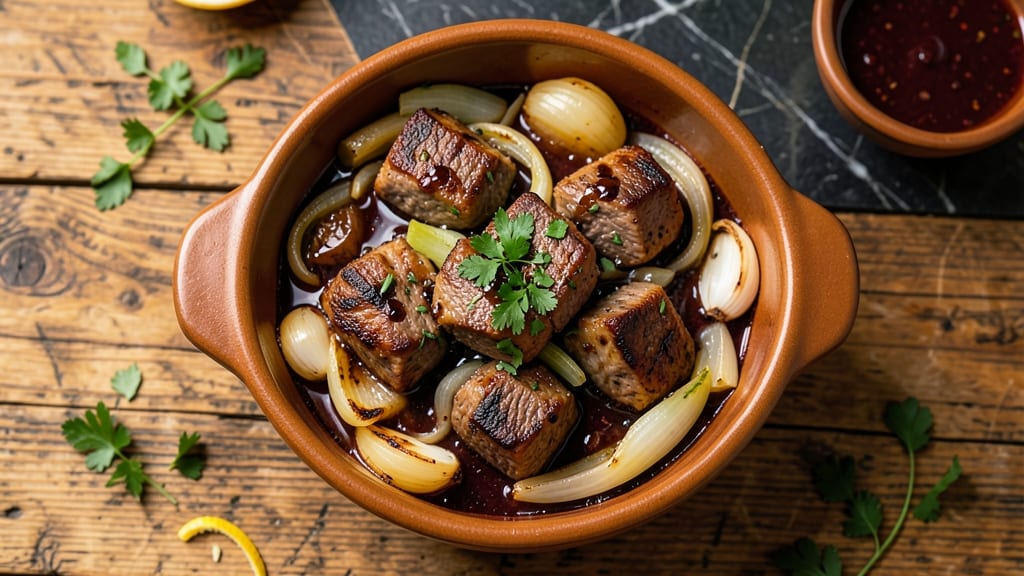
This beef and leek stew recipe delivers the kind of deep, wine-braised richness that transforms tough beef into melt-in-your-mouth tenderness. The secret lies in caramelizing the leeks until golden and building layers of flavor through slow braising—creating a fond so intense it elevates every spoonful.
I developed this version after years of testing, ensuring the balance between sweet leeks, bold wine, and savory beef is perfect every time.
The process begins with searing the beef to develop a deep, meaty crust, followed by sautéing leeks until their natural sugars caramelize. Deglazing the pan with wine captures all those flavorful browned bits, forming the foundation of the stew.
As it simmers, the beef becomes fork-tender while absorbing the aromatic broth, creating a dish that's both comforting and sophisticated.
What you'll end up with is a stew so rich and flavorful it feels like a restaurant-quality meal—deep red from the wine, studded with tender beef and silky leeks, all held together by a sauce that clings to every bite.
The aroma alone will have everyone gathered around the table, and the taste? That's the kind of satisfaction that turns weeknight dinners into something special.
Serve with crusty bread to soak up every last drop of that caramelized fond, or pair it with roasted potatoes for a hearty, complete meal. This recipe scales beautifully, making it perfect for feeding a crowd or prepping for leftovers that taste even better the next day.
Let's get cooking—your taste buds will thank you.
Ingredients for beef and leek stew
Six ingredients transform into a restaurant-worthy beef and leek stew with deep wine-braised richness.
| Ingredient | Amount | Notes |
|---|---|---|
| Beef Chuck Roast 🥩 | 3 lb | Cut into 1.5-inch cubes |
| Yellow Onions 🧅 | 2 whole | Sliced into half-moons |
| Leeks 🥬 | 4 whole | White and light green parts, sliced |
| Garlic Cloves 🧄 | 6 cloves | Minced for depth of flavor |
| Dry Red Wine 🍷 | 2 cups | Bold, like Cabernet Sauvignon |
| Beef Broth 💧 | 4 cups | Homemade or high-quality store-bought |
| Tomato Paste 🍅 | 2 tbsp | For richness and depth |
| Olive Oil 🫒 | ½ cup | Extra-virgin for frying |
| Fresh Thyme 🌿 | 2 sprigs | Leaves only, stems removed |
| Fresh Bay Leaves 🌿 | 2 whole | For aromatic depth |
| Salt 🧂 | 1 ½ tsp | Kosher or sea salt |
| Black Peppercorns 🌶️ | 1 tsp | Freshly cracked |
| All-Purpose Flour 🌾 | 2 tbsp | For thickening the stew |
| Fresh Parsley 🌿 | ¼ cup | Chopped, for garnish |
The beef is everything here. Chuck roast delivers that melt-in-your-mouth texture—sirloin or ribeye won't cut it. Grab a 3-pound roast from the butcher section (or pre-cubed at Costco for convenience), and cut it into 1.5-inch chunks yourself if you can. The leeks need to be cleaned thoroughly—they hide dirt in those crevices. For the wine, any bold, dry red works—Cab Sauv, Merlot, whatever's open. Trader Joe's usually has a great $5 bottle that's perfect for this. Fresh thyme and bay leaves? Worth the extra minute to pick them up at the grocery store—they make a world of difference over dried.
No red wine? Beef broth with a splash of balsamic vinegar gets you close. Leeks too tough to slice? Baby leeks work in a pinch, but they won't caramelize as beautifully. The tomato paste can be skipped if you're watching acidity, but trust me on keeping it—it rounds out the flavors. For the flour, King Arthur all-purpose is my go-to, but any good-quality flour will do. The parsley is just for garnish, so grab whatever's fresh at the store—flat-leaf if you can find it. If you're prepping ahead, the raw beef and leeks can sit in the fridge for 2 days before cooking, but add the wine and broth just before simmering to keep everything vibrant.
This stew tastes even better the next day as the flavors meld—4-5 days in the fridge, 3 months frozen. I always make a double batch because it reheats beautifully. For freezing, portion into airtight containers with a layer of broth on top to preserve moisture. The caramelized fond at the bottom? That's the good stuff—save it for toast or mix it into the stew when reheating. Serve with crusty bread to soak up every last drop of that rich sauce.
Why You'll Love This Recipe
- One-Pot Magic: I swear by this—just dump everything into one pot, let it simmer, and walk away. No chopping boards to wash, no extra pans, and that rich red wine smell fills the whole house like you’ve been cooking for hours.
- Wine-Infused Deep Flavor: The beef chuck roast gets so tender it practically melts, while the leeks and onions caramelize into something sweet and savory. That splash of dry red wine? It’s the secret—turns a simple stew into something restaurant-worthy without trying.
- Leftovers That Beg for More: This stew tastes even better the next day, and honestly? I’ve reheated it three times in a row. The beef stays juicy, the wine flavor deepens, and it’s the perfect throw-in for sandwiches or mashed potatoes when you’re too tired to cook.
- Budget-Friendly Crowd Pleaser: A chuck roast stretches across multiple meals, and leeks/onions are cheap but pack serious flavor. I’ve served this at potlucks, family dinners, and even a last-minute date night—no one ever questions the ingredients, just the taste.
Step-by-step instructions for beef and leek stew
Here's how to create a rich, wine-braised stew with tender beef and caramelized leeks.
Sear the Beef Chuck for Deep Flavor
Heat the 0.5 cup olive oil in a large Dutch oven over medium-high heat until shimmering. Pat the 3 lb beef chuck roast dry with paper towels and cut it into 1.5-inch cubes. Working in batches to avoid crowding, add the beef to the hot oil and sear for 3-4 minutes per side until deeply browned and crispy on all sides.
This searing step creates the Maillard reaction, which builds the stew's deep, caramelized foundation. Don't rush it—you want those rich brown crusts that dissolve into the sauce later. Transfer the seared beef to a plate and set aside.
Build the Aromatic Base
In the same Dutch oven, reduce the heat to medium and add the sliced 2 whole yellow onions and 4 whole leeks (white and light green parts only). Cook for 8-10 minutes, stirring occasionally, until the onions and leeks soften and begin to caramelize, releasing their natural sweetness.
Add the 6 cloves minced garlic, 2 tbsp tomato paste, and cook for another 1 minute until fragrant. Stir in the 2 sprigs fresh thyme leaves and 2 whole fresh bay leaves, letting the spices toast briefly in the oil. This aromatic base forms the flavor backbone of your stew.
Deglaze and Simmer the Stew
Pour in the 2 cups dry red wine and scrape up all the browned bits from the bottom of the pot with a wooden spoon. This deglazing captures all that concentrated flavor. Let the wine simmer for 3-4 minutes until reduced by about half, then add the 4 cups beef broth.
Return the seared beef to the pot, along with the 1.5 tsp salt and 1 tsp freshly cracked black peppercorns. Bring to a gentle boil, then reduce heat to low and cover partially. Let the stew simmer for 2.5-3 hours until the beef is fork-tender and easily pulls apart.
Thicken and Finish the Stew
About 30 minutes before the stew is done, sprinkle the 2 tbsp all-purpose flour over the top and stir gently to combine. This helps thicken the sauce slightly. Taste and adjust seasoning if needed—you might need a bit more salt to balance the flavors.
Remove the 2 sprigs fresh thyme and 2 whole fresh bay leaves. Stir in the 0.25 cup chopped fresh parsley just before serving. The stew should be rich, velvety, and deeply flavorful with tender beef and caramelized vegetables throughout.
Pro Tips For Making Beef And Leek Stew
- SEAR THE CHUCK ROAST: After burning three batches, I finally figured out the beef needs high, dry heat—no crowding the pan. Pat it bone-dry first, then work in batches if needed. A deep crust locks in flavor and keeps it tender later. (Yes, even if you’re impatient like me.)
- CHAR THE LEEKS LOW: Leeks burn faster than onions, so sweat them covered for 10 minutes first—just until soft. Then uncover and cook slow over medium-low, stirring often. You’re aiming for golden, not crispy. (Skip the high heat, or you’ll taste ash.)
- DEGLAZE WITH WINE NOW: As soon as the beef comes out, pour that red wine immediately into the hot pan. Scrape every last bit of fond—those brown bits are pure flavor. Let it reduce by half before adding broth. (Your future self will notice the difference.)
- SALT THE MEAT TWICE: Generously salt the chuck roast before searing, then again after browning. The first layer gets absorbed, the second builds crust. Don’t skimp—this isn’t a delicate fish fillet. (I used to under-salt; the stew tasted flat.)
Essential equipment for this recipe
Dutch Oven Essentials
A heavy-bottomed Dutch oven is non-negotiable for this recipe—I swear by my Le Creuset Signature or Lodge Cast Iron models. The thick base distributes heat evenly, preventing hot spots that can burn your fond.
A 6-quart size is ideal for this recipe, giving you enough room for the beef to move around while still allowing the liquid to simmer gently. If you're tight on space, a 5.5-quart will work, but you'll need to cook in batches for the searing step. 🔥
Wooden Spoon Must-Have
Never use metal utensils when deglazing or stirring your stew—it scratches the Dutch oven's surface and can react with acidic ingredients like wine. A long-handled wooden spoon (I recommend OXO Good Grips) is perfect for scraping up those precious browned bits from the bottom.
Look for one with a sturdy handle—you'll be stirring for hours, and you don't want it to warp or crack under heat.
Meat Thermometer
Invest in a digital instant-read thermometer like the ThermoWorks Smoke or Meater Plus to avoid overcooking the beef. The ideal internal temperature for fork-tender chuck roast is 195-203°F.
I check the temperature of the largest piece of beef about 30 minutes before the estimated cook time—this ensures you're ready to eat without waiting another hour. A good thermometer also helps you monitor the stew's temperature during the long simmer. ⏰
Fine-Mesh Strainer
For straining the broth if you want a smoother sauce, a fine-mesh strainer (like the OXO Good Grips) works best. I use it to remove any stray bits of thyme or bay leaves before serving, giving the stew a cleaner finish.
If you're not particular about texture, you can skip this step entirely—the herbs add wonderful depth to the flavor. Just be sure to remove them before serving to avoid a bitter bite.
Kitchen Timer
This stew requires patient attention, so a reliable kitchen timer (I love the Kitchenaid Countdown Timer) is a game-changer. Set it for the 2.5-3 hour simmer time and place it where you can hear it clearly—you don’t want to miss the moment when the beef is tender.
Pro tip: Set a secondary alarm for 30 minutes before the end to remind you to add the flour for thickening. A timer keeps you from burning dinner while multitasking. 💡
Optional: Immersion Blender
If you prefer a smoother sauce, an immersion blender (like the Ninja Foodi) lets you blend the stew directly in the pot without transferring it to a blender. This is especially useful if you're serving the stew in the same Dutch oven.
Just blend for 10-15 seconds at the end to achieve a velvety texture while keeping the beef intact. Skip this if you love rustic, chunky stews—the fond at the bottom is part of the magic! 🌟
Nutrition facts
Frequently asked questions
Can I substitute leeks with another vegetable?
Yes! If leeks are unavailable, try 2 large onions and 2 celery stalks for similar texture and sweetness. For a stronger flavor, add 1 fennel bulb (diced) or 1 cup mushrooms. The key is balancing sweetness—caramelize them well to mimic leeks' natural sugars.
How do I make this stew without wine?
Use 2 cups beef broth plus 2 tbsp balsamic vinegar or 1 tbsp soy sauce for depth. For umami, add 1 tsp Worcestershire sauce. Deglaze with the broth instead of wine, but reduce it by half before adding the rest of the liquid to concentrate flavors.
Why does my stew taste bland after simmering?
Blandness usually means insufficient salt or missed fond development. First, check your seasoning—add ½ tsp salt per cup of broth and taste as you go. Second, ensure you properly deglazed the pan (scraping browned bits) and caramelized the leeks/onions. If needed, finish with 1 tsp fish sauce or ½ tsp smoked paprika.
Can I use ground beef instead of chuck roast?
Ground beef won't work for this recipe—it lacks the connective tissue needed for fork-tender results. Instead, try stew meat cuts like chuck shoulder or short ribs. If you're short on time, pre-cut stew beef (often sold at grocery stores) saves prep work while delivering great texture.
How can I make this stew ahead of time?
This stew tastes even better the next day! Cook it fully, then refrigerate in an airtight container for up to 4-5 days. For freezing, portion into containers with a layer of broth on top—it keeps for 3 months. Reheat gently on low heat, adding a splash of water if needed to restore thickness.