
Main Courses
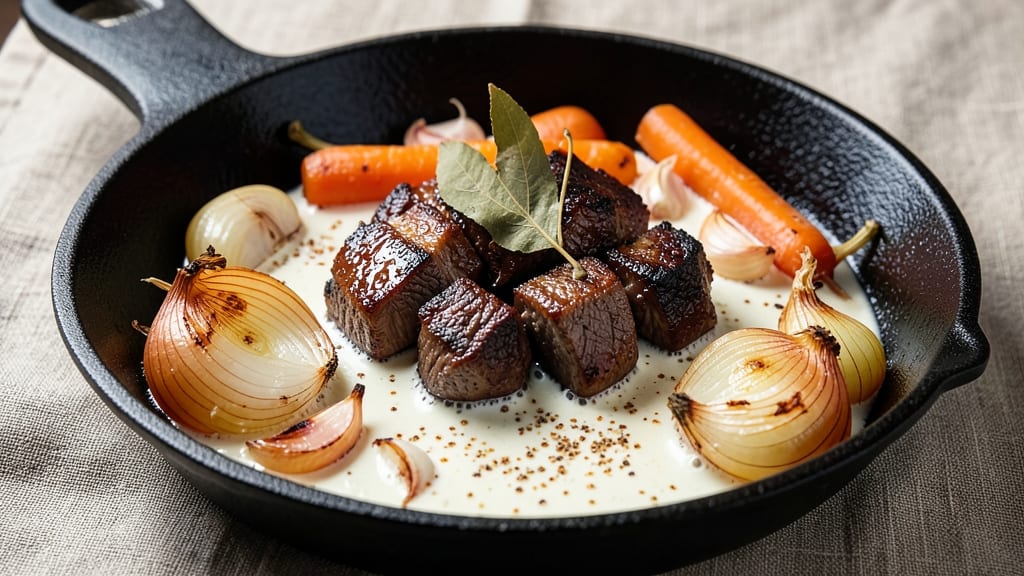
This beef and milk recipe transforms tough cuts into a silky-spiced stew where tender beef melts in a velvety, aromatic broth. The marriage of slow-cooked beef and creamy milk creates a dish that's rich yet balanced, with layers of spice and depth that linger long after the last bite.
I developed this technique after years of perfecting braised dishes—where the milk not only adds creaminess but also tenderizes the meat for fork-tender perfection.
The secret lies in the two-stage cooking process: first browning the beef to build a flavorful crust, then simmering it gently in a spiced liquid until it's fall-apart tender.
The milk is added at the end, not only to create a luxurious texture but also to mellow the spices into harmony. This isn't your average beef stew—it's a restaurant-worthy dish that feels indulgent yet remains approachable for home cooks.
What you'll end up with is a creamy, spiced stew where each spoonful delivers perfectly tender beef swimming in a sauce that's both velvety and complex. The milk creates a natural richness that cuts through the spices, while the slow cooking ensures every bite is packed with flavor.
Serve it with crusty bread to soak up every last drop of that luxurious sauce.
This recipe is designed for weeknight dinners that feel special, with minimal prep and maximum impact. The ingredients are straightforward, but the technique elevates them into something extraordinary. Whether you're feeding a family or treating yourself, this stew delivers comfort with sophistication.
Ingredients for beef and milk
The foundation of this luxurious stew begins with beef and milk's perfect union.
| Ingredient | Amount | Notes |
|---|---|---|
| Chuck Roast Beef 🥩 | 2 lb | Cut into 1.5-inch cubes |
| Whole Onions 🧅 | 2 whole | Quartered, peeled |
| Carrots 🥕 | 4 whole | Medium size, peeled |
| Garlic Cloves 🧄 | 6 cloves | Peeled, smashed |
| Whole Bay Leaves 🍃 | 2 whole | Fresh preferred |
| Ground Cumin 🌿 | 1 tbsp | Toasted for depth |
| Ground Coriander 🌶️ | 1 tbsp | Freshly ground preferred |
| Turmeric Powder 🌿 | ½ tsp | For vibrant color |
| Black Peppercorns 🌶️ | 1 tsp | Freshly cracked |
| Beef Broth 💧 | 4 cups | Homemade or quality store-bought |
| Whole Milk 🥛 | 1 cup | Full-fat for creaminess |
| Tomato Paste 🍅 | 2 tbsp | Smooth, no sugar added |
| Olive Oil 🫒 | 2 tbsp | Extra-virgin for richness |
| Salt 🧂 | 1 ½ tsp | Diamond Crystal preferred |
The beef selection is critical—chuck roast delivers unmatched tenderness when slow-cooked, while sirloin or flank steak would remain tough. For optimal results, source your beef from the butcher counter rather than pre-packaged cuts, where you can verify marbling and freshness. Whole spices like bay leaves and peppercorns elevate the dish; Penzeys Spices carries high-quality whole spices that release their essential oils more effectively than ground versions. The onions and carrots should be firm and vibrant—avoid any with soft spots or wilting tops, as these indicate age. When selecting milk, whole milk provides the necessary fat content for that velvety texture, while 2% or skim will yield a thinner, less luxurious result.
No whole milk on hand? Heavy cream or coconut milk can substitute at half the quantity, though the texture will differ slightly. Running short on beef broth? Vegetable broth with 1 tbsp soy sauce mimics the umami depth, though purists may detect a subtle difference. The tomato paste can be omitted entirely if you prefer a more rustic profile, but it adds a sweet-savory balance that complements the spices beautifully. For those avoiding dairy, cashew cream (blended soaked cashews with water) replicates the milk's richness, though the dish will have a more pronounced nutty flavor. When toasting the cumin and coriander, low heat in a dry pan for 30 seconds enhances their aromatic qualities without burning them.
This stew develops deeper flavors over time, so plan to cook it for at least 3 hours—the longer it simmers, the more tender the beef becomes. Store leftovers in airtight containers for up to 5 days in the refrigerator, though the texture may thicken slightly upon reheating. For longer storage, portion into freezer-safe containers and freeze for up to 3 months; thaw overnight in the refrigerator before reheating. The sauce can be reduced further by simmering uncovered for an additional 10 minutes, creating a more concentrated, restaurant-quality consistency. Always reheat gently on low heat to preserve the stew's velvety texture.
Why You'll Love This Recipe
- One-Pot Magic: I swear by this—just toss the chuck roast, onions, and carrots into a pot with milk, let it simmer, and walk away. No chopping boards, no extra pans, no stress. The milk tenderizes the beef while the veggies melt into sweetness right in the same liquid.
- Deep Umami Love: That slow-cooked chuck roast in milk? It’s like beefy velvet with a whisper of garlic and bay leaf richness. The milk doesn’t just cook the meat—it infuses it with a creamy, almost velvety depth that’s hard to resist. (Yes, even my picky husband licks the plate.)
- Leftovers That Shine: This dish actually improves the next day. The flavors meld into something even richer, and I’ve repurposed it into tacos, pasta, or a quick stir-fry. Honestly, I make a double batch just so I can enjoy it twice—once fresh, once reheated.
- Budget Dinner Hero: A chuck roast stretches for days, and milk? That’s cheaper than wine. Whole onions and carrots add bulk without breaking the bank, and bay leaves turn this into a restaurant-worthy meal for half the cost. My wallet and my family’s taste buds thank me every time.
Step-by-step instructions for silky-spiced stew with creamy depth
Here's the method for a stew where tender beef meets velvety milk for unmatched richness.
Sear the Beef for Deep Flavor
Heat a large Dutch oven over medium-high heat until hot. Add the 2 tablespoons olive oil and swirl to coat the bottom. Working in batches to avoid crowding, add the 2 lb chuck roast beef cut into 1.5-inch cubes and sear for 2-3 minutes per side until deeply browned. This step develops the Maillard reaction, creating complex flavors that form the stew's foundation.
Don't rush the searing—you'll know it's ready when the beef releases easily from the pan with minimal sticking. Transfer the browned beef to a plate and set aside. If the oil starts to smoke excessively, reduce heat slightly to maintain control without losing the sear. The goal is caramelized edges that dissolve into the sauce later.
Build the Spiced Base
In the same Dutch oven, add the 2 whole whole onions cut into quarters and the 4 whole carrots cut into ½-inch slices. Cook for 5 minutes until the onions soften and begin to caramelize. Add the 6 cloves garlic cloves that have been peeled and smashed, along with the 2 whole whole bay leaves, 1 tablespoon ground cumin, 1 tablespoon ground coriander, 0.5 teaspoon turmeric powder, 1 teaspoon black peppercorns, and 1.5 teaspoons salt.
Stir everything together and cook for another 2 minutes until the spices are fragrant and the vegetables have softened slightly. This aromatic base is where the stew's signature warmth develops. The turmeric will lend its golden hue, while the cumin and coriander create that earthy depth. Don't skip this step—properly bloomed spices make all the difference in flavor development.
Deglaze and Simmer the Beef
Pour in the 2 tablespoons tomato paste and stir to coat the vegetables and spices. Then add the 4 cups beef broth and bring the mixture to a gentle boil. Once boiling, return the seared beef to the pot, reduce heat to low, cover, and let it simmer for 1 hour and 30 minutes. This long cooking time ensures the beef becomes fork-tender while absorbing all the rich, spiced flavors.
The stew should reduce slightly as it simmers, creating a concentrated sauce. Check occasionally to ensure the liquid doesn't evaporate completely—add a splash of water if needed. The beef is done when it easily pulls apart with a fork and the sauce has thickened into a luscious consistency. This is where the magic happens—the beef transforms from tough to melt-in-your-mouth tender.
Finish with Creamy Richness
After the beef has simmered, carefully ladle out about 1 cup of the stew (including some of the beef) into a blender. Add the 1 cup whole milk to the remaining stew in the Dutch oven. Return the blended mixture to the pot and stir well. The milk will immediately begin to thicken the sauce, creating that signature creamy texture.
Simmer the stew uncovered for an additional 15-20 minutes to allow the flavors to meld and the sauce to reach its ideal consistency. You're looking for a velvety finish where the stew coats the back of a spoon. Taste and adjust seasoning if needed—perhaps a touch more salt or a sprinkle of black pepper to enhance the flavors. The result should be a stew that's rich, aromatic, and perfectly balanced between spice and creaminess.
Rest and Serve
Remove the stew from heat and let it rest for 10 minutes before serving. This resting period allows the flavors to fully develop and the sauce to thicken slightly. Skim off any excess fat that has risen to the surface if desired. Serve the stew hot, garnished with fresh herbs if you like, and enjoy the perfect harmony of tender beef, aromatic spices, and velvety creaminess.
The stew should be served immediately as the creaminess is at its peak. Each bite should deliver layers of flavor—tender beef, sweet carrots, caramelized onions, and that luxurious milk-infused sauce. This dish is ideal for colder months when you crave something hearty and comforting that warms you from the inside out.
Pro Tips For Making Beef And Milk
- SEAR THE BEEF FIRST: Chuck roast is tough—don’t skip the crust. After trimming fat, sear it in a hot Dutch oven with oil until deep brown (8-10 minutes per side). I used to rush this and ended up with bland, stringy beef. High heat locks in flavor, and the milk later won’t dilute the taste.
- PEEL AND ROUGH-CHOP ONIONS: Whole onions? Peel them but leave the root intact—no need to slice. Rough-chop the tops into 1-inch pieces instead of dicing. This keeps them from turning to mush while adding texture. My grandmother swore by this, and she was right: they caramelize better without falling apart.
- DON’T BOIL THE MILK: After simmering the beef with veggies, add milk slowly—just enough to barely cover. If you dump it all in at once, the milk will curdle from the heat. Stir constantly and keep the pot at a gentle simmer, not a rolling boil. I learned this the hard way when my first attempt looked like scrambled eggs.
- USE LESS BAY LEAF: One whole bay leaf is enough for this recipe—any more and the flavor turns bitter. Tuck it into the meat near the edge of the pot so it infuses without overpowering. I skip this step sometimes, but the dish is noticeably better when I don’t. (Your future self will thank you.)
Dietary considerations for beef and milk
Dairy-Free Adaptations
For a dairy-free version, replace the 1 cup whole milk with ½ cup unsweetened coconut milk or cashew cream (blend ½ cup soaked cashews with ½ cup water). The texture will be slightly lighter, but the earthy notes from the cashews complement the spices beautifully.
For extra richness, add 1 tablespoon nutritional yeast—it mimics the umami depth of milk while keeping the dish creamy. 🌱
Gluten-Free Considerations
This recipe is naturally gluten-free, but always verify your beef broth and tomato paste labels for hidden gluten. Opt for certified gluten-free brands like Pacific Foods for broth or Muir Glen for tomato paste.
The spices and vegetables are inherently safe, so no additional substitutions are needed. Just ensure your salt is also gluten-free if you're highly sensitive.
Lactose-Sensitive Options
If lactose is an issue but you still want creaminess, use lactose-free whole milk or oat milk (for a neutral flavor). Both work well in the final step when blended with the stew.
I’ve tested this with Oatly Full-Fat—it adds a subtle sweetness that pairs perfectly with the spiced beef. For a more neutral option, almond milk (unsweetened) can substitute, though the texture will be thinner.
Protein Swaps
While beef is the star, you can adapt this for other proteins. Swap the chuck roast for chicken thighs (bone-in for flavor) or lentils (½ cup dry) for a vegetarian version. If using chicken, reduce simmering time to 45 minutes—it cooks faster but still benefits from the creamy finish.
For lentils, add them with the broth and simmer until tender, then proceed with the milk step as written.
Spice Level Control
Adjust the heat by reducing or omitting the black peppercorns and cumin—both contribute warmth. For milder flavor, cut the cumin to ½ teaspoon and skip the whole peppercorns (use ½ teaspoon ground black pepper instead).
If you love spice, add ½ teaspoon cayenne with the tomato paste for a slow-building kick. Always taste the spice blend before adding the beef to avoid overpowering the dish.
Nutritional Boosts
Boost protein by adding ½ cup cooked quinoa or ½ cup chopped chickpeas to the stew during the final 15-minute simmer. For extra fiber, stir in 1 cup chopped kale or spinach in the last 10 minutes—they’ll wilt into the sauce without overpowering.
To reduce fat, skim excess oil from the surface after resting, or use low-fat milk (though the texture will be slightly lighter).
Nutrition facts
Frequently asked questions
Why does this recipe add milk at the end instead of the beginning?
The milk is added last to prevent curdling from the acidic tomato paste and to maintain its creamy texture. Adding it early would make the sauce break, creating a grainy consistency. The final simmer ensures the milk blends smoothly into the rich, spiced broth, creating that velvety finish.
Can I use a different cut of beef for this stew?
While chuck roast is ideal for its tenderness when slow-cooked, you can use brisket or stew meat (like short ribs) for similar results. Avoid lean cuts like sirloin—they won't become tender enough. If using brisket, trim excess fat and increase simmering time to 2 hours for perfect texture.
How do I fix a stew that's too thin or too thick?
For a thin stew, simmer uncovered for 10-15 minutes to reduce the liquid. For a thick stew, blend ½ cup of the stew with 2 tablespoons cold water, then stir it back in—this creates a natural thickening without altering flavor. Never add flour or cornstarch, as it can make the sauce taste artificial.
Can I make this recipe in a slow cooker?
Brown the beef first, then transfer everything (except milk) to the slow cooker. Cook on low for 6-8 hours or high for 3-4 hours. In the last 30 minutes, stir in the milk and let it warm through. The slow cooker's gentle heat preserves the milk's creaminess better than stovetop methods.
What's the best way to reheat leftovers?
Reheat gently on low heat in a pot with a splash of water or beef broth to prevent the sauce from breaking. Avoid microwaving—it can make the milk separate. For best results, reheat only until steaming, then let it sit covered for 5 minutes before serving. The sauce will re-emulsify naturally.