
Soups & Stews
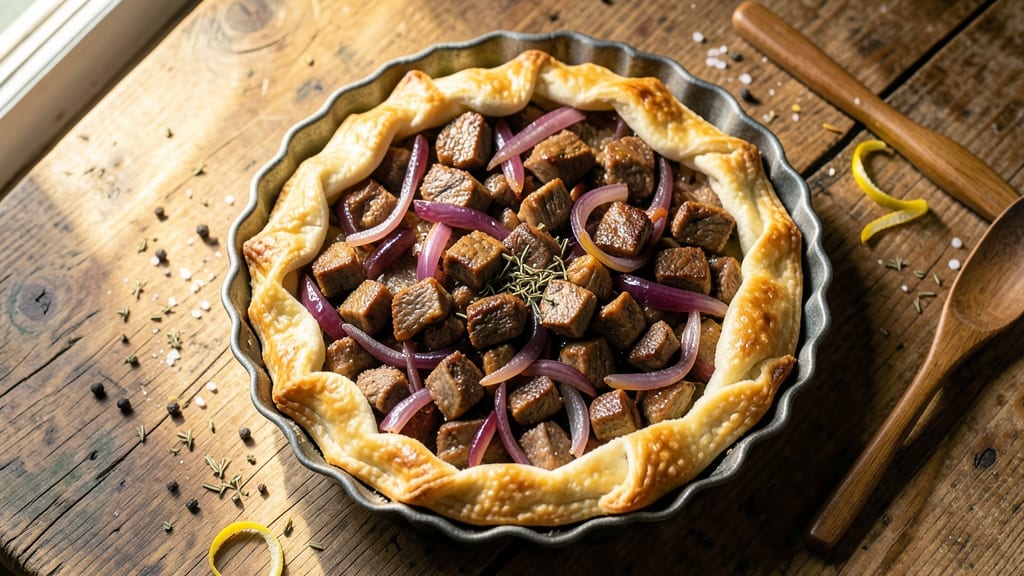
This beef and onion pasty recipe delivers hearty comfort in every bite—golden, flaky pastry hugging tender beef and caramelized onions. The secret lies in a well-balanced dough and slow-cooked filling that transforms tough cuts into melt-in-your-mouth perfection.
Unlike store-bought versions, this homemade pasty achieves that signature crispy crust while keeping the filling juicy and flavorful.
The recipe begins with a simple yet sturdy shortcrust dough that develops into a beautifully flaky shell during baking. Inside, slow-cooked beef and sweet onions meld together with herbs and spices, creating a savory filling that stays moist even after hours in the oven.
The key is proper layering—don't skip the egg wash for that golden finish.
What you'll end up with is a rustic, satisfying dish that's perfect for family dinners or picnic lunches. The contrast between the crispy, buttery crust and tender filling makes each bite irresistible. Serve with a side of gravy or pickled vegetables for the full experience.
Ready in about 1 hour and 15 minutes, this pasty recipe is ideal for meal prep or special occasions. The dough can be made ahead, and the filling can be pre-cooked, making it a convenient yet impressive dish. Let's get started on creating your own homemade pasty!
Ingredients for beef and onion pasty
A perfect balance of flaky crust and savory filling—this pasty delivers rustic comfort with every bite.
| Ingredient | Amount | Notes |
|---|---|---|
| Beef Chuck Roast 🥩 | 1 ½ lb | Cut into 1-inch cubes |
| Yellow Onions 🧅 | 2 whole | Medium size, sliced |
| All-Purpose Flour 🌾 | 3 cups | Plus 2 tbsp for dusting |
| Cold Unsalted Butter 🧈 | 1 cup | Cubed, chilled |
| Ice Water 💧 | ½ cup | For dough elasticity |
| Salt 🧂 | 1 ½ tsp | Diamond Crystal preferred |
| Ground Black Pepper 🌶️ | ½ tsp | Freshly ground |
| Dried Thyme 🌿 | 1 tsp | Or 1 tbsp fresh |
| Large Eggs 🥚 | 1 whole | For egg wash |
| Milk 🥛 | 1 tbsp | For egg wash |
| Vegetable Oil 🫒 | 1 tbsp | For greasing pan |
| Dried Parsley 🌿 | ½ tsp | For garnish |
The beef is where flavor begins. Chuck roast gives that melt-in-your-mouth texture, but round steak works too—just cut it into even pieces. For the onions, yellow or sweet varieties caramelize best. Grab them from the produce section, not the pre-sliced bags (they're too dry). If you're short on time, frozen onion slices thaw perfectly fine. The key is patience—slow cooking transforms tough cuts into tender perfection.
No chuck roast? Ground beef at 1 lb works in a pinch, but texture will differ. For the dough, King Arthur flour yields the best flakiness, but any all-purpose brand works. Short on butter? Vegetable shortening at the same amount keeps the crust crisp. The thyme and parsley can be swapped for dried rosemary at half the amount. Fresh herbs? Use double the quantity. Always measure your salt carefully—Diamond Crystal is finer and more potent than table salt.
The dough can be prepped 2 days ahead and stored wrapped in plastic. The filling keeps 3 days in the fridge before assembly. For make-ahead convenience, assemble the pasty and freeze it unbaked for up to 2 months. Bake straight from frozen, adding 15 minutes to the cooking time. The finished pasty reheats beautifully—just 350°F for 15 minutes until golden and crisp.
Why You'll Love This Recipe
- No-Fuss Filling: I swear by the slow-cooked beef chuck—it practically melts in your mouth after hours in the oven, and those caramelized onions? Chef’s kiss. No fancy knife skills needed; just dice and dump.
- Crispy Edge Magic: That buttery, flaky crust is the star—ice water and cold butter make it happen without a food processor. Honestly, the first time I bit into it, I nearly dropped the whole thing.
- Weeknight to Picnic: Make a batch on Sunday, and you’ve got lunch for the week. Wrap it in foil, toss it in a cooler, and boom—tailgate-worthy meal that’s still ridiculously good cold.
- Budget Hero: Beef chuck is cheaper than steak but just as flavorful, and a single pasty stretches to feed four. Leftovers? Even better reheated—no one will guess it’s from yesterday.
Step-by-step instructions for beef and onion pasty
Master the art of a traditional pasty with this method that delivers a flaky, golden crust and tender beef filling.
Prepare the Beef and Onion Filling
In a large skillet, heat the 1 tablespoon vegetable oil over medium-high heat. Add the 1.5 lb beef chuck roast cut into 1-inch cubes and cook for 5-6 minutes, stirring occasionally, until the beef begins to brown and release its juices. Remove the beef from the skillet and set aside.
In the same skillet, add the 2 whole yellow onions sliced into ¼-inch pieces. Cook for 8-10 minutes until the onions are soft and golden brown, stirring occasionally. The onions should caramelize slightly, adding depth of flavor to the filling. Season the onions with 1.5 teaspoons salt, 0.5 teaspoon ground black pepper, and 1 teaspoon dried thyme. Return the beef to the skillet and combine with the onions. Let the mixture cool slightly before assembling the pasty.
Make the Flaky Pastry Dough
In a large bowl, combine the 3 cups all-purpose flour and 1.5 teaspoons salt. Cut in the 1 cup cold unsalted butter using a pastry cutter or your fingers until the mixture resembles coarse crumbs with pea-sized butter pieces. This step is crucial for achieving that signature flaky texture.
Gradually add the 0.5 cup ice water, one tablespoon at a time, mixing gently with a fork or your hands until the dough just comes together. Avoid overworking the dough—just until it holds together when pressed. Wrap the dough in plastic wrap and refrigerate for 30 minutes to firm up. The cold dough is essential for creating layers of flaky goodness in the final pasty.
Assemble and Shape the Pasty
Preheat your oven to 375°F. On a lightly floured surface, roll out the chilled dough into a ¼-inch thick rectangle about 12x16 inches. Cut the dough into 4 equal rectangles—each will form the top and bottom of a pasty. Keep the extra dough covered to prevent drying.
Divide the beef and onion filling evenly among the 4 dough rectangles. Place 1 tablespoon milk in the center of each dough rectangle, then crack the 1 whole large egg into the milk. Fold each dough rectangle over the filling to create a ½-inch thick package, sealing the edges tightly with a fork or your fingers to prevent filling from leaking out.
Bake Until Golden and Tender
Place the assembled pasties on a parchment-lined baking sheet. Brush the tops with a beaten egg wash made from the remaining 1 tablespoon milk and 1 whole large egg. Bake for 40-45 minutes until the crust is deep golden brown and the filling is bubbling through the slits. The pasties should feel firm to the touch and smell irresistibly savory.
Remove the pasties from the oven and let them rest for 10 minutes before serving. Sprinkle with 0.5 teaspoon dried parsley for a touch of freshness. The filling should be tender and juicy, while the crust remains crisp and flaky—exactly what makes a pasty so satisfying.
Pro Tips For Making Beef And Onion Pasty
- Sear the Chuck First: DESCRIPTION: Don’t skip browning that beef—cut the chuck into 1-inch chunks, then sear them in a hot pan with a splash of oil until deep brown. The crusty edges add flavor that no amount of simmering can replicate, and it keeps the meat tender when baked later.
- Sweat Onions Low and Slow: DESCRIPTION: Yellow onions release their sweetness when cooked gently. Slice them thin (about 1/4-inch), then cook them in the same pan as the beef over medium-low heat for 10-12 minutes—just until soft and translucent. Rushing this step makes them bitter, and bitter onions ruin a pasty.
- Chill the Butter: DESCRIPTION: Cold unsalted butter in the dough isn’t just about flakiness—it’s about control. Cut it into small cubes and keep them in the freezer until you’re ready to mix. When you toss them into flour, they’ll melt slower, giving you time to work the dough without turning it greasy.
- Seal the Pasty Tight: DESCRIPTION: Crimp the edges like you’re closing a jar—pinch the dough together firmly to trap steam inside. If it’s not sealed, the filling will leak out during baking, and you’ll end up with a soggy bottom. A little ice water in the flour mix helps the dough hold together better, even when it’s packed with beef and onions.
Troubleshooting this dish
Dough Too Sticky
If your dough feels too sticky during handling, you've likely added too much ice water. The key is gradual addition—start with 0.3 cups and add 1 tablespoon at a time until it just comes together.
Chill the dough for 30 minutes before rolling, as cold temperatures help firm it up. If it's still sticky, sprinkle a tiny bit of flour on your work surface and knead it in lightly. 💧
Filling Too Dry
Overcooking the beef and onions is the most common cause of dry filling. Remove the beef from the skillet as soon as it browns (5-6 minutes) and set aside. Caramelize the onions just until soft (8-10 minutes), not until completely dry.
Return the beef to the skillet only at the end to reheat briefly. The filling should be moist but not soupy when assembled.
Crust Not Flaky
For that signature flaky texture, keep everything cold! Cut your butter into pea-sized pieces and work quickly when handling the dough. If your crust turns out tough, try using more cold butter (up to 1.25 cups) and chilling the dough for an extra 15 minutes.
Avoid overworking the dough—handle it as little as possible. A pastry cutter works better than fingers for distributing butter evenly.
Pasty Leaking Filling
Sealing the edges properly prevents leaks. After folding the dough over the filling, press the edges with your fingers or use a fork to crimp tightly. For extra security, brush the sealed edges with a bit of beaten egg wash before baking.
If you notice filling escaping during baking, it's likely because the dough wasn't sealed tightly enough—try pressing the edges more firmly next time.
Undercooked Center
If your pasty feels undercooked in the center after 45 minutes, increase the oven temperature to 400°F for the final 10 minutes of baking. Alternatively, tent the pasties with foil to prevent over-browning while they finish cooking.
Use a meat thermometer to check the internal temperature—it should reach 165°F in the center. Let pasties rest for 10 minutes before slicing to allow juices to redistribute.
Pale Crust Color
A pale crust usually means insufficient egg wash or insufficient baking time. For a golden finish, mix 1 whole egg with 1 tablespoon milk for the wash and apply generously.
If your crust is still pale after baking, broil the pasties for 2-3 minutes at the end (watch closely to avoid burning). For even browning, rotate the baking sheet halfway through the baking time. 🌟
Nutrition facts
Frequently asked questions
Can I make this pasty recipe with ground beef instead of chuck roast?
Yes, you can substitute 1 lb ground beef for the chuck roast, but the texture will differ. Ground beef will create a more finely textured filling rather than tender chunks. Brown the meat thoroughly first to develop flavor, then proceed with the recipe as written. For best results, use 80/20 fat ratio ground beef to keep the filling juicy.
How do I store leftovers to keep them crispy?
Cool the pasties completely, then store them in an airtight container at room temperature for up to 2 days. For longer storage, refrigerate for 3-4 days or freeze for 2 months. To reheat, bake at 350°F for 15 minutes until golden. For extra crispiness, place them on a baking sheet and cover with foil to prevent sogginess.
What's the best way to make the dough ahead of time?
Wrap the completed dough in plastic wrap and refrigerate for up to 2 days or freeze for 1 month. Thaw in the fridge overnight before using. For make-ahead convenience, assemble the pasties completely (without baking) and freeze them on a tray before transferring to a bag. Bake straight from frozen, adding 10-15 extra minutes at 375°F.
Can I use a different type of pastry dough?
While this recipe uses shortcrust dough for its sturdy texture, you could experiment with puff pastry for extra flakiness. For a rustic look, try a simple pie crust (reduce butter to ½ cup). Keep in mind that different doughs will affect baking time and texture—puff pastry may require 5-10 fewer minutes at 375°F to prevent over-browning.
What sides pair best with beef and onion pasty?
Traditional pairings include creamy mashed potatoes, buttery corn, or a simple green salad. For a hearty meal, serve with apple sauce or gravy made from the pan drippings. Pickled vegetables like beets or cabbage add a tangy contrast to the rich filling. The pasty's savory flavor also complements crusty bread or dinner rolls.