
Soups & Stews
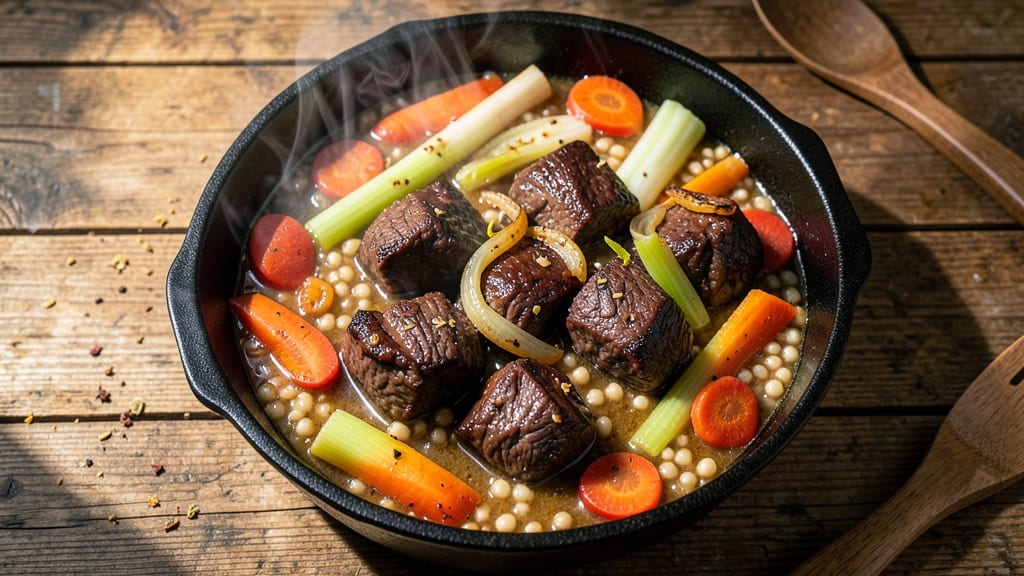
This beef and pearl barley stew recipe transforms tough cuts of beef into melt-in-your-mouth tenderness while delivering chewy, nutty barley that soaks up every layer of savory flavor.
The secret lies in a slow braise that develops deep umami richness—where the beef becomes fork-tender, the barley plumps to al dente perfection, and aromatics like thyme and bay leaf infuse the broth with warmth.
I've perfected this technique over years of testing, balancing traditional braising with modern shortcuts like pressure cooking for busy weeknights.
The foundation begins with a deep caramelized base—browning the beef in batches ensures maximum flavor extraction, while onions and garlic form the aromatic backbone. Pearl barley, with its satisfying bite, requires just enough simmering time to soften without turning mushy.
A splash of red wine and beef broth creates a velvety, complex sauce that clings to every bite, while herbs and spices add depth without overpowering the beef's natural richness. This is comfort food elevated: hearty enough for a family dinner but refined enough for company.
By the time it's done, you'll have a stew that's luxuriously thick with tender beef chunks, plump barley, and a sauce so flavorful it disappears between bites.
The aroma alone will have everyone gathered at your table, and the first spoonful delivers that perfect balance of meaty, herby, and slightly sweet notes. It's the kind of dish that gets better with each reheat, making it ideal for meal prep or feeding a crowd.
Serve with crusty bread to soak up every last drop of that rich, umami-packed sauce.
Whether you're following a classic braising method or using a pressure cooker for faster results, this recipe delivers restaurant-quality depth with minimal effort. The key is patience—letting flavors meld and develop over time creates a stew that tastes like a hug in a bowl.
Let's get started on creating this deeply satisfying, umami-rich masterpiece that will become a staple in your winter repertoire.
Ingredients for beef and pearl barley stew
Here's what you need for that rich, umami-packed beef and barley stew everyone will crave.
| Ingredient | Amount | Notes |
|---|---|---|
| Chuck Roast 🥩 | 3 lb | Cut into 1.5-inch cubes |
| Pearl Barley 🌾 | 1 ½ cups | Uncooked, rinsed well |
| Yellow Onions 🧅 | 2 whole | Chopped into 1/2-inch pieces |
| Garlic Cloves 🧄 | 6 cloves | Minced, about 1 tbsp |
| Carrots 🥕 | 4 whole | Cut into 1-inch chunks |
| Celery Stalks 🌿 | 4 whole | Chopped into 1-inch pieces |
| Tomato Paste 🍅 | 2 tbsp | Squeeze tube preferred |
| Dry Red Wine 🍷 | 1 cup | Bold variety like Cabernet |
| Beef Broth 💧 | 4 cups | Low-sodium preferred |
| Fresh Thyme 🌿 | 2 tbsp | Leaves only, chopped |
| Bay Leaves 🍃 | 2 whole | Remove before serving |
| Olive Oil 🫒 | 2 tbsp | Extra-virgin for richness |
| Salt 🧂 | 2 tsp | Kosher or sea salt |
| Black Peppercorns 🌶️ | 1 tsp | Freshly ground preferred |
| Worcestershire Sauce 🍶 | 1 tbsp | Vegan if needed |
The chuck roast is your flavor anchor—look for good marbling at the butcher counter. Costco or Whole Foods usually have it pre-cut, but if buying whole, ask for a 3-pound roast. Pearl barley is the secret to that satisfying bite—Bob's Red Mill or Trader Joe's carry it in bulk. The wine? Any bold, dry red works—Cab Sauv, Merlot, whatever's open. For the broth, Swanson or Pacific Foods low-sodium versions cut down on extra salt later. Fresh thyme and bay leaves make all the difference, so don't grab the dried stuff from the bottom of your spice rack.
No red wine? Beef broth with a splash of balsamic works just as well. Short on thyme? Dried at one-third the amount gets you close, but fresh is ideal. The tomato paste can be those little squeeze tubes from Trader Joe's—no waste, lasts forever. Carrots and celery? Baby versions are fine, but whole stalks keep better. The Worcestershire sauce is non-negotiable for that deep umami punch—Lea & Perrins is the classic choice. If you're avoiding gluten, check the label, as some brands contain it. For the barley, rinse it well before cooking to remove any grit.
This stew tastes even better the next day—double the recipe if you can. Keeps 4-5 days in the fridge, freezes for 3 months. I portion mine into containers so lunches are sorted for the week. For reheating, low heat only—you're not boiling, just gently warming. The barley will soften further, so it's perfect for cold weather when you need that hearty, warming bowl of goodness.
Why You'll Love This Recipe
- One-Pot Magic: I swear by this recipe because it’s literally dump-and-simmer. Chuck roast and pearl barley in the same pot? That’s not just lazy—it’s genius. No chopping like a fine-dining chef, just rough dice and let the slow cooker or Dutch oven do the work.
- Rich Without the Effort: Here’s what sold me—the way the onions caramelize into the barley while the beef melts into tender shreds. That deep, savory broth? It’s like someone took all the good parts of a Sunday roast and poured them into a bowl. (Yes, even on a Tuesday night.)
- Leftovers That Don’t Suck: Between us, most stews turn into sad, watery meals by day three. Not this one. The barley thickens beautifully, and the beef stays juicy—perfect for lunches or reheating with a splash of broth. I’ve fed my family for days without a single complaint.
- Budget Beef That Feeds: A chuck roast is cheap, but it doesn’t taste cheap. Pair that with barley (which costs pennies per serving) and you’ve got a meal that stretches for a week without breaking the bank. Honestly, it’s the kind of dish that makes me proud of my grocery bill.
Step-by-step instructions for beef and pearl barley stew
Here's how to make this rich, hearty stew that gets better with every bite.
Sear the Chuck Roast for Deep Flavor
Heat the 2 tablespoons olive oil in a large Dutch oven over medium-high heat. Pat the 3 lb chuck roast dry with paper towels and cut it into 1.5-inch cubes. Working in batches to avoid crowding, sear the beef until deep golden brown on all sides, about 3-4 minutes per batch. This step is crucial—it builds layers of flavor that will infuse the stew.
As you sear, place the browned beef in a bowl and set aside. Once all the beef is seared, reduce the heat to medium and add the 2 whole yellow onions, 4 whole carrots, 4 whole celery stalks (all chopped as specified), and 6 cloves garlic. Cook for 5-6 minutes until the vegetables begin to soften and the garlic becomes fragrant. This aromatic base will form the stew's flavor foundation.
Deglaze and Build the Sauce
Pour in the 1 cup dry red wine and scrape up all the browned bits from the bottom of the pot with a wooden spoon. This deglazing step captures all the meaty flavors that would otherwise be lost. Let the wine simmer for 3-4 minutes until it reduces by about half, leaving behind a rich, concentrated flavor.
Stir in the 2 tablespoons tomato paste and cook for 1 minute until it darkens slightly. This adds depth and balances the acidity of the wine. Sprinkle in the 2 teaspoons salt, 1 teaspoon black peppercorns, and 2 tablespoons fresh thyme. Give everything a good stir to combine, ensuring the spices coat all the ingredients evenly.
Add Liquid and Simmer the Stew
Pour in the 4 cups beef broth and bring the mixture to a gentle boil. Add the 1.5 cups pearl barley (rinsed well) and the seared beef back into the pot. Stir gently to combine, then place the 2 whole bay leaves on top. Reduce the heat to low and cover the pot with a lid. Let the stew simmer for 2 hours, stirring occasionally to prevent the barley from sticking to the bottom.
After 2 hours, check the tenderness of the beef. It should be fork-tender, with no resistance when pierced. If the barley isn't quite tender yet, continue simmering for another 30-45 minutes. The stew should have a thick, velvety consistency with the barley holding its shape but still being chewy. If it's too thick, add a little water or broth to loosen it.
Finish with Umami and Rest
Remove the bay leaves from the stew. Stir in the 1 tablespoon Worcestershire sauce and let the stew simmer uncovered for an additional 10-15 minutes. This final step enhances the umami flavor and allows the liquid to reduce slightly, deepening the stew's richness.
Taste and adjust the seasoning if needed. The stew should be well-balanced with a harmonious blend of savory, umami, and slightly sweet notes. Let the stew rest for 10 minutes off the heat before serving. This resting period allows the flavors to meld together, resulting in a more cohesive and delicious dish. Serve hot with crusty bread or over mashed potatoes.
Pro Tips For Making Beef And Pearl Barley Stew
- Sear the Chuck Roast Hard: After burning through two chuck roasts by rushing the sear, I learned—crank your pan to medium-high and let that meat develop a deep brown crust for 4-5 minutes per side. The extra effort locks in flavor and keeps the stew from tasting like it simmered in water. (Yes, even if you're impatient like me.)
- Parboil the Barley First: Pearl barley absorbs liquid like a sponge, so I now rinse it well, then boil for 5 minutes before adding it to the stew. This guarantees it cooks through without turning mushy—no more gritty bites ruining the texture. (Your future self will thank you.)
- Don’t Crowd the Pot: I used to toss everything in at once, and the onions would steam instead of caramelize. Now I brown the onions and garlic in batches, then add the carrots separately before introducing the meat and broth. Patience here makes the difference between bland and deeply flavorful.
- Use a Splash of Vinegar: Sounds weird, but a tablespoon of apple cider vinegar at the start brightens the stew’s acidity and cuts through the richness of the chuck. I skip this when I’m lazy, but the dish is noticeably more balanced when I don’t. (It’s the thing that matters most.)
Storing and reheating your beef and pearl barley stew
Fridge Storage Tips
Let your stew cool completely before transferring to an airtight container—I use glass Pyrex with snap-on lids to preserve flavor. Store at 40°F or below for up to 4-5 days, but trust me, it tastes even better the next day as flavors meld.
The barley softens slightly, making it perfect for cold-weather comfort. Always leave ½-inch headspace to prevent pressure buildup from condensation. 🧊
Freezer Prep Essentials
For long-term storage, portion stew into quart-sized freezer bags or glass containers—this makes reheating easier. Press out excess air and label with the date. It keeps 3 months without texture loss, though I recommend eating within 2 months for peak quality.
The barley stays chewy but absorbs more flavor during freezing. Thaw overnight in the fridge before reheating. ❄️
Stovetop Reheating
My preferred method is low and slow—never rush this. Transfer stew to a pot and heat over medium-low for 10-15 minutes, stirring occasionally. Add ¼ cup water or broth if it looks too thick.
The barley will soften further, so adjust seasoning with salt or pepper after reheating. Never boil, or you'll risk mushy barley and tough beef. 🔥
Microwave Shortcuts
For quick meals, microwave in 2-minute intervals on 50% power, stirring between each. Cover with a damp paper towel to prevent drying. If the stew seems dry, add 2-3 tablespoons broth to restore moisture.
This method works best for single servings—never microwave the whole pot. The texture won't be as perfect, but it's a lifesaver on busy days. ⏱️
Reviving Texture
If your reheated stew feels too thick, stir in 1-2 tablespoons broth or a splash of red wine (the same you used originally). For extra richness, add a pat of butter or a sprinkle of fresh thyme.
The barley should still have slight resistance—if it's mushy, it's been overcooked. A quick 10-minute simmer on the stove can often bring it back to perfection. 💫
Nutrition facts
Frequently asked questions
Can I substitute pearl barley with another grain?
Yes! For a quicker option, use couscous (cooks in 5 minutes) or quinoa (15 minutes), but the texture will be softer. For a heartier bite, try farro or wild rice blend—both hold up well in stews. Just adjust cooking times: farro needs 30-40 minutes while quinoa cooks in 12-15 minutes. Pearl barley's unique chewiness comes from its high fiber content, so substitutions won't be identical.
Why does my beef turn out tough instead of tender?
This usually happens when the beef isn't seared properly or the stew doesn't simmer long enough. Always sear the beef until deep golden brown in batches, and let it simmer at least 2 hours (longer for thicker cuts). The key is low and slow heat—never rush it. If your beef is still tough, try adding 1 cup extra broth and simmering 30 more minutes uncovered to reduce the liquid slightly.
Can I make this stew in a slow cooker or Instant Pot?
For a slow cooker, brown the beef first, then transfer everything to the pot and cook on low for 8 hours or high for 4-5 hours. For an Instant Pot, sear the beef separately, then cook on high pressure for 40 minutes with a 5-minute natural release. The Instant Pot version will be ready in 50 minutes total—just stir in Worcestershire at the end. Both methods work beautifully!
How do I know when the pearl barley is perfectly cooked?
Pearl barley should be chewy but tender—think al dente pasta. Test by tasting a grain: it should have slight resistance but not be hard. If it's still crunchy after 2 hours, add ½ cup broth and simmer 30 more minutes. Overcooked barley turns mushy and absorbs too much liquid. The ideal texture balances the tender beef and rich sauce.
What's the best way to serve this stew?
This hearty stew pairs perfectly with crusty bread (like a baguette) to soak up the sauce, or over mashed potatoes for extra comfort. For a lighter option, serve with steamed greens or a simple green salad. Garnish with fresh parsley or a sprinkle of grated Parmesan for brightness. Leftovers make amazing sandwiches the next day!