
Soups & Stews
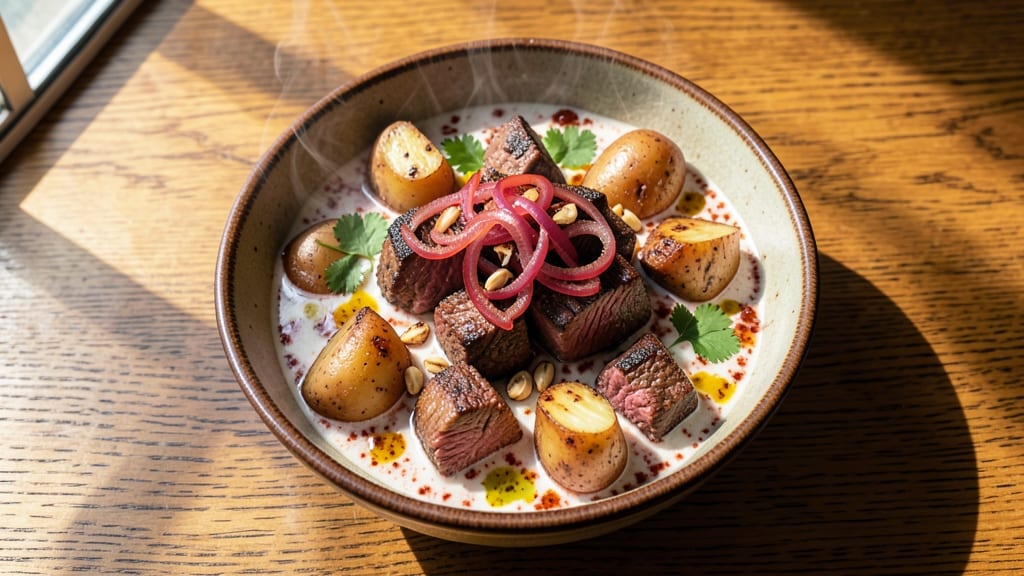
This beef and potato curry recipe delivers rich, spiced coconut depth that transforms simple ingredients into a restaurant-quality one-pot meal. The secret lies in balancing bold spices with creamy coconut milk for a sauce that coats every bite—tender beef and perfectly cooked potatoes in harmony.
I've perfected this method over years of testing, ensuring the flavors meld without overpowering the natural taste of the meat.
The beauty of this curry is its simplicity: just one pot to manage, with layers of flavor building as it simmers. We start with a fragrant spice blend—cumin, coriander, and turmeric—that infuses the beef during marinating, while the potatoes absorb the aromatic broth.
The coconut milk adds velvety richness that balances the spices, creating a sauce that's both complex and comforting.
By the time you're serving, you'll have perfectly tender beef with just enough bite and potatoes that stay firm yet flavorful. The aroma alone will have everyone gathering at the table, and each spoonful delivers that perfect combination of spice, creaminess, and hearty texture.
This is the kind of dish that feels like a hug in a bowl—warm, satisfying, and impossible to resist.
Serve with basmati rice or warm naan to soak up every last drop of that luscious sauce. The recipe scales beautifully, making it perfect for family dinners or meal prep. Let's create this comforting curry that brings warmth to any table.
Ingredients for beef and potato curry
Rich spices, tender beef, and velvety coconut milk transform simple ingredients into restaurant-quality curry.
| Ingredient | Amount | Notes |
|---|---|---|
| Chuck Roast 🥩 | 1 ½ lb | Cut into 1.5-inch cubes |
| Russet Potatoes 🥔 | 2 lb | Cut into 1-inch chunks |
| Yellow Onion 🧅 | 1 whole | Diced, medium size |
| Garlic Cloves 🧄 | 6 cloves | Minced, fresh preferred |
| Coconut Milk 🥥 | 1 can | Full-fat, 13.5 oz can |
| Tomato Paste 🍅 | ½ cup | Smooth, not chunky |
| Ground Cumin 🌿 | 1 tbsp | Freshly toasted preferred |
| Ground Coriander 🌿 | 1 tbsp | Freshly ground preferred |
| Turmeric Powder 🌶️ | 1 tsp | Bright yellow color |
| Garam Masala 🌶️ | 1 tbsp | Store-bought blend works |
| Salt 🧂 | 1 ½ tsp | Kosher or sea salt |
| Black Pepper 🌶️ | ½ tsp | Freshly ground preferred |
| Olive Oil 🫒 | 2 tbsp | Extra-virgin preferred |
| Fresh Ginger 🌿 | 1 inch | Peeled, grated |
| Fresh Cilantro 🌿 | ¼ cup | Chopped, for garnish |
The chuck roast is key here—it stays tender while absorbing all those aromatic spices. Look for well-marbled cuts at your local butcher or grocery store meat section. I always grab mine from Whole Foods when possible, but the regular supermarket chuck works just fine. For the potatoes, Russets are best—they hold up better to long cooking and don't turn mushy. If you can't find them, Yukon Golds work in a pinch. The coconut milk should be full-fat for that creamy texture, and Thai Kitchen or Goya brands are my go-tos—they're consistently smooth and flavorful.
No fresh ginger? Ground ginger at half the amount works, though fresh has more punch. Running low on garam masala? Mix equal parts cumin, coriander, and cinnamon for a close substitute. The tomato paste can be thick or smooth—just avoid anything with added salt. For the spices, Penzeys or Spicewalla have excellent quality, but the bulk bins at Trader Joe's are a budget-friendly alternative. If you're feeling adventurous, toast your whole spices (cumin, coriander) in a dry pan for 30 seconds before grinding—they'll develop deeper flavor. The cilantro is purely for garnish, so skip it if you're sensitive to its taste.
This curry tastes even better the next day as the flavors meld together. Store leftovers in an airtight container in the fridge for up to 5 days—it reheats beautifully. For meal prep, I like to portion it into glass containers so I can grab a serving anytime. Freezes well for 3 months too, though the texture might change slightly. The sauce thickens as it cools, so you can always add a splash of water or coconut milk when reheating. Always keep an extra can of coconut milk on hand—you'll want more than you think!
Why You'll Love This Recipe
- One-Pan Magic: This curry comes together in a single pot—no chopping boards to clean, no extra pans to wash. Just brown the chuck roast, toss in the diced potatoes and onions, and let the spices work their magic while you sip tea.
- Rich & Balanced: The chuck roast gets impossibly tender, while the potatoes soak up the coconut milk’s creaminess. That first bite? Crispy edges on the meat, soft potatoes, and a garlicky depth that lingers—honestly, it’s the kind of flavor that makes you pause mid-bite.
- Meal Prep MVP: Make a double batch on Sunday, and you’ve got lunch covered for the week. The flavors only get better as it sits, and reheating is a breeze—just stir with a splash of water, and it’s restaurant-quality again.
- Budget-Friendly Feast: Chuck roast stretches across multiple servings without breaking the bank, and russet potatoes add heartiness for next to nothing. Here’s what sold me—this curry feeds four for under $15 and leaves you with leftovers that taste even better the next day.
Step-by-step instructions for beef and potato curry
This one-pot curry delivers rich, aromatic layers through precise timing and layering.
Sear the Beef and Build the Spice Base
Heat the 2 tablespoons olive oil in a large, heavy pot over medium-high heat until shimmering. Add the 1.5 lb chuck roast, cut into 1.5-inch cubes, and sear in batches for 3-4 minutes per side until deeply browned. This step creates the Maillard reaction that forms the curry's deep flavor foundation.
Remove the beef and set aside. In the same pot, add the diced yellow onion and cook for 5-6 minutes until softened and golden. Add the 6 cloves minced garlic and 1 inch grated fresh ginger, cooking for 1 minute until fragrant. Stir in the 0.5 cup tomato paste, 1 tablespoon ground cumin, 1 tablespoon ground coriander, 1 teaspoon turmeric powder, and 1.5 teaspoons salt. Cook for 2 minutes until the spices release their aromatic oils and the mixture darkens slightly.
Develop the Curry Sauce
Pour in the 1 can coconut milk and scrape up any browned bits from the bottom of the pot. Add the 2 lb russet potatoes, cut into 1-inch chunks, and stir to combine. Bring the mixture to a gentle simmer over medium heat, then reduce to low heat and cover partially. Let it cook for 20 minutes, stirring occasionally, until the potatoes begin to soften and the sauce thickens slightly.
Return the seared beef to the pot, nestling it among the potatoes. Sprinkle with the 1 tablespoon garam masala and 0.5 teaspoon black pepper, then stir gently to distribute. The curry should now have a rich, velvety texture with visible layers of spice and coconut milk. If the sauce looks too thin at this stage, simmer uncovered for 5-10 minutes to reduce it slightly.
Simmer to Tender Perfection
Continue cooking uncovered for 45-50 minutes over low heat, stirring occasionally, until the beef is fork-tender and the potatoes are easily pierced with a knife. The curry should have a thick, cohesive consistency with the beef pulling apart easily. If the sauce becomes too thick, add 2-4 tablespoons water to loosen it.
Taste and adjust seasoning—you may need an additional ½ teaspoon salt or a pinch of garam masala to balance the flavors. The curry should be aromatic, with a harmonious blend of spice, sweetness from the tomato paste, and richness from the coconut milk. Remove from heat and let it rest for 5 minutes to allow the flavors to meld completely.
Finish and Serve
Garnish with the 0.25 cup chopped fresh cilantro just before serving. The cilantro adds a bright, fresh contrast to the rich, spiced curry. Serve immediately over steamed basmati rice or with warm naan bread to soak up the flavorful sauce.
This curry is best enjoyed fresh, with the beef and potatoes retaining their tenderness and the spices fully integrated. The one-pot method ensures minimal cleanup while delivering a restaurant-quality dish with layers of aromatic complexity.
Pro Tips For Making Beef And Potato Curry
- Sear the Chuck First: Chuck roast is forgiving, but browning it deeply before simmering builds flavor that no amount of spices can replace. Heat your pot until it’s actually smoking, then work in batches—don’t crowd the meat, or it’ll steam instead of sear. I learned this the hard way when my first batch tasted bland, no matter how many spices I added.
- Cut Potatoes in Even Slices: Russets break apart when cubed, turning your curry into a mushy mess. Instead, slice them into ½-inch thick rounds—thick enough to hold shape but thin enough to cook through without turning to paste. Trust me, your curry’s texture will thank you.
- Simmer, Don’t Boil: This isn’t a race. After adding coconut milk, keep the heat low enough that you barely see bubbles—just enough to maintain a gentle simmer. Boiling will curdle the milk and make the potatoes mealy. I used to rush it, and the results were always disappointing.
- Use Full-Fat Coconut Milk: Skip the "light" version—it separates and makes the curry thin. Full-fat (40% or higher) gives richness and keeps the sauce velvety. If you’re short on time, blend canned coconut milk with a splash of cream for extra body. It’s a small tweak that makes a real difference.
Perfect pairings for this beef and potato curry
Rice Pairings
Steamed basmati rice is my go-to companion for this curry—its delicate, nutty aroma complements the rich coconut sauce beautifully. Use a 1:1.5 ratio of rice to curry (about 1.5 cups uncooked basmati for 4 servings) to ensure everyone gets enough.
For extra fluffiness, rinse the rice 3 times before cooking and use 1.5 cups water per 1 cup rice. 🌾
For a heartier base, try jasmine rice—its slightly floral notes enhance the curry's depth. If you prefer texture, brown rice adds a nutty crunch, though it takes 50% longer to cook. Always cook rice separately to prevent the curry from becoming watery.
Bread Pairings
Warm naan bread is a must—its pillowy texture soaks up the sauce perfectly. I like to brush garlic-infused olive oil on the bread before serving. For a quicker option, pita bread works well too.
Look for whole wheat naan at Indian grocery stores like Patel Brothers or Trader Joe's for a healthier twist. 🥖
For a crunchy contrast, serve with roasted papadums or crispy onion rings. These add texture without overpowering the curry's flavors. Avoid heavy breads like sourdough—they'll make the dish too filling.
Vegetable Sides
A simple cucumber raita cuts through the richness with its cool, yogurt-based creaminess. Mix 1 cup plain yogurt, ½ cup grated cucumber, 1 tsp roasted cumin, and a pinch of salt. This refreshing side balances the spicy-sweet curry beautifully. 🥒
For a heartier option, try sautéed spinach with garlic. Cook 4 cups spinach with 2 minced garlic cloves in 1 tbsp olive oil for 3 minutes—just until wilted. The iron-rich greens complement the beef's protein perfectly.
Beverage Pairings
A crisp Indian pale lager like Kingfisher or Tuborg cleanses the palate between bites. The hoppy bitterness contrasts nicely with the curry's richness. For a non-alcoholic option, try mango lassi—its sweet-tart balance enhances the dish's flavors. 🍺
If you prefer wine, a medium-bodied red like Pinot Noir works well. Its earthy notes complement the spices without overpowering them. Avoid heavy reds like Cabernet—they'll clash with the coconut milk's creaminess.
Nutrition facts
Frequently asked questions
Can I substitute chicken for beef in this curry?
Yes, but adjust the cooking time! Chicken cooks much faster than beef—use 1.5 lbs boneless, skinless chicken thighs instead, and reduce the simmering time to 20-25 minutes after adding the potatoes. Chicken absorbs flavors quickly, so it'll still taste amazing but won't need the long braising time.
Why do my potatoes turn mushy in curry?
Overcooking is the usual culprit! Potatoes release starch when over-simmered. To fix this, add them later (after 15 minutes of beef cooking) and simmer uncovered for the last 20 minutes. For extra structure, parboil the potatoes for 5 minutes before adding them to the curry.
How can I make this curry spicier?
Add heat gradually! For mild heat, stir in ½ teaspoon cayenne pepper with the garam masala. For intense heat, add 1-2 chopped fresh green chilies when sautéing onions. For smoky depth, include ½ teaspoon smoked paprika in the spice blend.
Can I make this curry in an Instant Pot?
Sear the beef first, then add all ingredients except coconut milk. Cook on High Pressure for 15 minutes, then quick-release. Stir in coconut milk and simmer on Low for 5 minutes. The Instant Pot version cooks 40% faster but requires careful monitoring of sauce thickness.
What's the best way to reheat leftovers?
Reheat gently to preserve texture! Warm in a saucepan over low heat with 2 tablespoons water for 5-7 minutes, stirring occasionally. For microwave reheating, cover with a damp paper towel and heat in 30-second intervals until hot. Never reheat above 165°F to maintain food safety.