
Soups & Stews
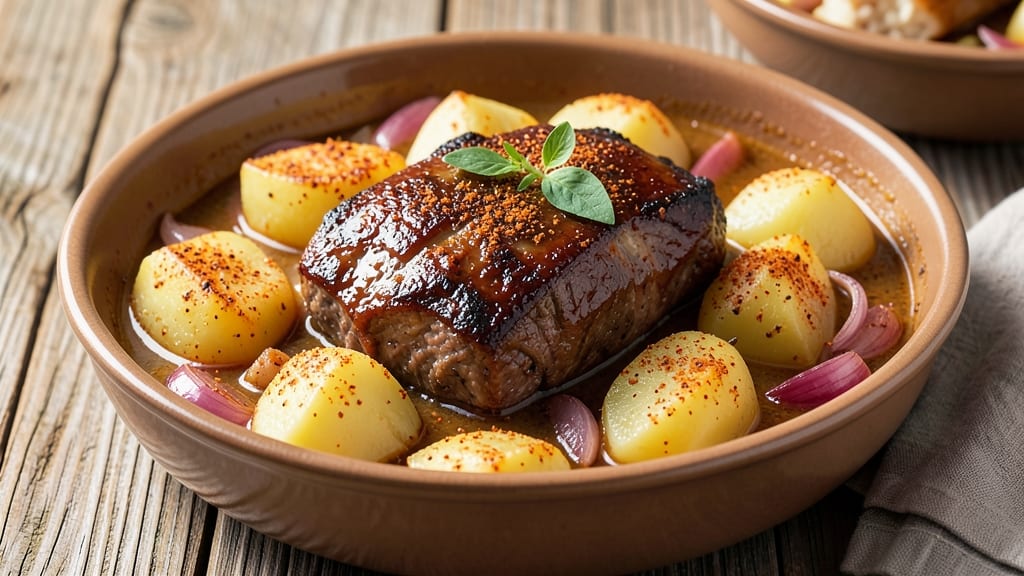
This beef and potato goulash recipe delivers the hearty, comforting flavors of a classic Hungarian stew with tender beef and perfectly cooked potatoes. The secret lies in slow simmering, which transforms tough beef into fork-tender chunks while developing a rich, paprika-infused sauce that coats every bite.
I’ve perfected this version to balance traditional techniques with modern convenience—whether you’re using a Dutch oven, slow cooker, or Instant Pot.
The foundation of great goulash is browning the beef before adding liquids—this step creates deep, caramelized flavors that form the base of the sauce. Sweet and hot paprika provide that signature warmth, while onions and garlic build aromatic depth.
Potatoes absorb the sauce beautifully, turning soft and creamy without falling apart. What you’ll end up with is a restaurant-quality stew that’s hearty enough for a family dinner but simple enough for a weeknight.
This recipe delivers tender beef that practically melts in your mouth, potatoes that soak up all the savory goodness, and a sauce thick enough to coat a spoon. The aroma alone will have everyone gathering around the table, and the flavors only deepen as it simmers.
Serve it with crusty bread to soak up every last drop or alongside a simple green salad for balance.
Whether you’re cooking for a crowd or meal prepping for the week, this goulash scales effortlessly while maintaining its rich, comforting character. The slow cooking process makes it even more flavorful over time, so leftovers taste just as good as the first serving.
Let’s get started on creating this classic dish that’s as satisfying as it is delicious.
Ingredients for beef and potato goulash
These hearty ingredients come together for a paprika-kissed stew that's restaurant-quality at home.
| Ingredient | Amount | Notes |
|---|---|---|
| Chuck Roast 🥩 | 2 ½ lb | Cut into 1.5-inch chunks |
| Yellow Onions 🧅 | 2 whole | Diced, medium size |
| Garlic Cloves 🧄 | 4 cloves | Minced, fresh preferred |
| Sweet Paprika 🌶️ | 2 tbsp | Hungarian preferred |
| Hot Paprika 🌶️ | 1 tbsp | For depth of flavor |
| Tomato Paste 🍅 | ½ cup | Squeeze tube or can |
| Beef Broth 💧 | 4 cups | Low-sodium preferred |
| Russet Potatoes 🥔 | 2 lb | Cut into 1-inch chunks |
| Carrots 🥕 | 3 whole | Peeled, sliced into rounds |
| Bay Leaves 🍃 | 2 whole | Fresh or dried |
| Allspice Berries 🌿 | ½ tsp | Crushed, optional but recommended |
| Black Peppercorns 🌶️ | 1 tsp | Freshly ground |
| Salt 🧂 | 1 ½ tsp | Kosher or sea salt |
| Extra-Virgin Olive Oil 🫒 | 2 tbsp | For browning beef |
The beef is everything here—chuck roast gives you that melt-in-your-mouth texture. Costco or Walmart usually have it pre-cut, but if you're buying a whole roast, look for good marbling. The potatoes? Russets hold up best to slow cooking, but Yukon Golds work too if you prefer creamier texture. For the paprika, Hungarian sweet and hot are non-negotiable—they've got that authentic smoky depth. I grab mine in bulk from Penzeys, but any well-stocked grocery store carries it. Pro tip: crush the allspice berries between your palms before adding—they release way more flavor that way.
No Hungarian paprika? Regular sweet paprika plus a pinch of cayenne gets you close. Running low on beef broth? Water plus 1 beef bouillon cube works in a pinch. The tomato paste can be the squeeze tube kind from Trader Joe's—no waste, and it keeps forever. Swapping potatoes? Sweet potatoes add natural sweetness, but they'll break down faster. For the carrots, baby carrots are fine, but regular carrots peeled and sliced into rounds soak up more sauce. The bay leaves? Tear one if you're feeling fancy—it releases more flavor, but whole leaves are fine too.
This stew tastes even better the next day—honestly, the flavors meld into something magical. Keeps 5-6 days in the fridge, freezes for 3 months. I always double the recipe because leftovers are perfect for lunches. For reheating, add a splash of water or broth if it's too thick. The potatoes will soak up any extra liquid, so don't stress about exact measurements when serving. Store in airtight containers with a lid—trust me, the smell alone will have you eating it straight from the pot.
Why You'll Love This Recipe
- One-Pot Magic: This recipe lives in a single pot—no chopping boards, no extra pans. Just dump the chuck roast, onions, and potatoes in, let the paprika work its smoky magic, and walk away. (Yes, even on a Tuesday night.)
- Deep, Smoky Hug: That combo of sweet and hot paprika? It’s like a warm blanket for your taste buds. The chuck roast gets tender enough to melt, while the garlic cloves caramelize into something dangerously addictive.
- Leftovers That Beg for More: Honestly, I make this on Sunday and eat it for lunch all week. The flavors only get richer as it sits, and reheating it? Just a splash of water, a few minutes on low—no dry, sad leftovers here.
- Budget Beef That Feeds: A chuck roast stretches for a crowd without breaking the bank. Between us, this is my go-to for game nights or when friends drop by unannounced. Everyone leaves happy, and my wallet stays intact.
Step-by-step instructions for beef and potato goulash
This method delivers melt-in-your-mouth beef and hearty potatoes with rich paprika flavor.
Brown the Chuck Roast for Deep Flavor
Heat the 2 tablespoons extra-virgin olive oil in a large Dutch oven over medium-high heat. Pat the 2.5 lb chuck roast dry with paper towels and cut into 1.5-inch chunks. Working in batches, add the beef to the pot and sear for 3-4 minutes per side until deep golden brown. This step develops the rich, meaty foundation.
Don't crowd the pan—browning requires space. Once all pieces are browned, transfer them to a plate and set aside. You'll know it's ready when the beef releases easily from the bottom of the pot. The browned bits (fond) will dissolve into the sauce later, adding incredible depth of flavor.
Sauté Onions and Garlic to Build Aromatics
In the same Dutch oven, add the 2 whole yellow onions (diced) and cook for 5-6 minutes until softened and light golden. Add the 4 cloves garlic (minced) and cook for 30 seconds until fragrant. You want the onions to caramelize slightly—they should be tender but still hold their shape.
Here's the thing—don't let the garlic burn. It's easy to do, but burned garlic makes the whole dish bitter. Keep the heat at medium and stir frequently. Once the garlic smells amazing (that's your cue), it's time to add the spices.
Toast the Paprika and Add Tomato Paste
Reduce heat to medium-low and stir in the 2 tablespoons sweet paprika and 1 tablespoon hot paprika. Toast for 30 seconds until fragrant—this step deepens the paprika flavor and removes any raw taste. Add the 0.5 cup tomato paste and stir for 1 minute to cook it through.
The paprika should smell rich and earthy. If it looks too thick, add 1 tablespoon beef broth to loosen it slightly. This creates the base for your sauce, so don't rush this step. The tomato paste will thicken the stew and add natural sweetness to balance the paprika's heat.
Simmer the Beef and Vegetables
Return the browned beef to the pot. Add the 4 cups beef broth, 2 lb russet potatoes (cut into 1-inch chunks), 3 whole carrots (peeled and sliced), 2 whole bay leaves, 0.5 teaspoon crushed allspice berries, 1 teaspoon black peppercorns, and 1.5 teaspoons salt. Stir well to combine.
Bring to a boil, then reduce heat to low and simmer uncovered for 1.5 hours. You want gentle bubbling—this ensures the beef becomes fork-tender without falling apart. Check occasionally and add ¼ cup water if the stew gets too thick. The potatoes should be soft when pierced with a fork.
Finish and Adjust Seasoning
Once the beef is fork-tender (about 1.5 hours), taste and adjust seasoning. The stew should be rich but not overly salty—add more salt if needed. Remove the bay leaves and discard. Let the goulash sit for 5 minutes to thicken slightly before serving.
This dish tastes even better the next day as flavors meld. Serve with crusty bread to soak up the delicious, paprika-kissed sauce. The beef should pull apart easily, and the potatoes should be creamy with just a hint of bite.
Pro Tips For Making Beef And Potato Goulash
- SEAR THE CHUCK ROAST: Don’t just toss that chuck roast into the pot raw—get it blistering brown first. Cut it into 1.5-inch chunks, pat them dry, and sear in batches over high heat with 1 tablespoon of oil until deep golden. I learned this the hard way: skipping the sear means a meal that tastes more like stew than goulash.
- CHAR THE ONIONS LOW: Onions are the flavor base, so don’t rush them. After searing the beef, add the onions and cook them on medium-low for 15 minutes, stirring occasionally, until they’re dark brown and almost jammy. I used to crank the heat and end up with burnt bits—this slow approach builds real depth.
- USE BOTH PAPRIKAS SEPARATELY: Sweet paprika adds color and mildness; hot paprika brings the heat. Toast the sweet paprika in the pot with the onions for 30 seconds until fragrant, then stir in the hot paprika at the end. My grandmother swore by this—it balances the flavors without overpowering the beef.
- POTATO SIZE MATTERS: Cut potatoes into 1-inch chunks, not smaller. They’ll hold their shape better and soak up the goulash flavors instead of turning mushy. If you’re short on time, parboil them for 3 minutes first, but drain well—no one wants a watery goulash.
Storing and reheating your beef and potato goulash
Refrigerator Storage
Let your goulash cool to room temperature (about 30-45 minutes) before transferring to airtight containers—I use glass Pyrex with tight-sealing lids. Store at 40°F or below for up to 5-6 days.
The flavors actually deepen overnight as the spices meld together beautifully. Honestly, the second day is often my favorite—it's like the stew knows it has more time to shine. 💫
Freezer Storage
For longer storage, freeze in quart-sized freezer bags (they stack efficiently) or glass containers with 1-inch headspace for expansion. Label with the date—this goulash stays delicious for up to 3 months.
When ready to eat, thaw overnight in the fridge, then reheat gently. I always double the recipe because leftovers make amazing lunches all week.
Stovetop Reheating
My preferred method is stovetop reheating—it preserves the best texture. Pour the goulash into a heavy-bottomed pot (I use my Lodge Dutch oven) and heat over medium-low heat for 10-15 minutes, stirring occasionally.
If it's too thick after reheating, add 2-3 tablespoons beef broth to loosen it up. The potatoes will soak up any extra liquid, so don't worry about exact measurements.
Microwave Reheating
For quick meals, use the microwave but do it right. Transfer to a microwave-safe bowl, cover with a damp paper towel, and heat on 50% power in 2-minute intervals, stirring between each.
This prevents uneven heating and keeps the potatoes from getting mushy. Add a splash of broth if needed—the sauce should coat the back of a spoon but still be spoonable.
Serving Leftovers
Goulash reheats beautifully and tastes even better the next day. I love serving it with crusty bread for soaking up the rich sauce or alongside a simple green salad to cut through the heartiness. For extra flavor, sprinkle with fresh parsley or a pinch of smoked paprika before serving.
The beef should pull apart easily, and the potatoes should be creamy with just a hint of bite—proof that slow cooking does its magic. ✨
Nutrition facts
Frequently asked questions
Can I use ground beef instead of chuck roast?
You can substitute 1 lb ground beef for the chuck roast, but the texture will be different. Ground beef cooks faster and won't develop the same melt-in-your-mouth tenderness. For best results, use 80/20 lean-to-fat ratio and brown it thoroughly before adding other ingredients. The dish will still be flavorful but more like a thick stew than a traditional goulash.
How do I make this goulash in a slow cooker?
Brown the beef and sauté the onions/garlic as directed, then transfer everything to a 6-quart slow cooker. Add all remaining ingredients and cook on low for 7-8 hours or high for 4-5 hours. The slow cooker's gentle heat will create tender beef and perfectly cooked potatoes without monitoring. Stir once halfway through if possible.
Why does my goulash taste bland? Bland goulash usually means insufficient browning or under-seasoning.
Can I add other vegetables to this recipe?
Try adding bell peppers (diced), zucchini (sliced), or green beans (trimmed) during the last 30 minutes of cooking. Avoid mushrooms—they absorb too much liquid. For heartier options, add 1 cup diced celery with the onions. Just remember: softer veggies (like carrots) hold up better than delicate ones.
Is this dish gluten-free?
The recipe as written is gluten-free, but check your beef broth and paprika labels for hidden gluten. Some broths contain wheat-based thickeners, and paprika blends may include additives. If needed, use a certified gluten-free beef broth and ensure your paprika is pure. The potatoes and other ingredients are naturally gluten-free.