
Soups & Stews
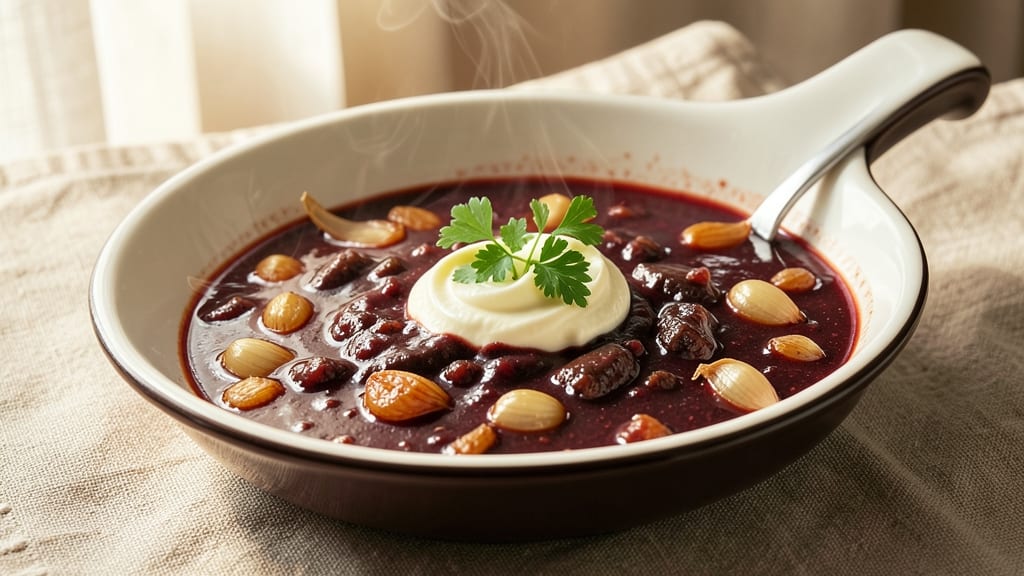
This beef and red wine gravy recipe transforms simple pan drippings into a velvety sauce with deep umami richness and complex layers of flavor. The secret lies in slow reduction—letting the fond caramelize before deglazing with red wine and building a proper roux for thickness. This isn't just a sauce; it's the kind of gravy that turns a simple roast into an elegant meal.
What sets this gravy apart is the balance of acidity, sweetness, and savory depth. The red wine cuts through richness while adding fruity notes, and a touch of beef stock ensures the sauce remains luscious without being heavy.
The roux technique guarantees a smooth, glossy finish that coats every bite perfectly. No instant mixes here—just pure, restaurant-quality flavor built from scratch.
Perfect for drizzling over roasted beef, mashed potatoes, or even crispy roasted vegetables, this gravy elevates any dish with its bold character. The slow reduction process concentrates flavors, while the final whisking creates a silky texture that's impossible to resist.
Once you taste the difference between this and store-bought versions, you'll never go back.
Ready in about 30 minutes, this gravy requires minimal effort but delivers maximum impact. The key is patience—letting the wine reduce fully and the roux cook just until it's golden but not browned. That's what transforms ordinary drippings into something extraordinary. Let's make this gravy.
Ingredients for beef and red wine gravy
The foundation of restaurant-quality beef and red wine gravy lies in these twelve precise ingredients.
| Ingredient | Amount | Notes |
|---|---|---|
| Pan Drippings from Cooked Beef 🥩 | 2 cups | Reserved from roasted beef, including fond |
| Dry White Wine 🍷 | ½ cup | Bold, dry red like Cabernet Sauvignon |
| Beef Stock 🍲 | 1 cup | Homemade or high-quality store-bought |
| All-Purpose Flour 🌾 | 2 tbsp | Diamond Crystal preferred for roux |
| Unsalted Butter 🧈 | 4 tbsp | Cold, cut into small cubes |
| Shallots 🧅 | 2 whole | Minced, for depth of flavor |
| Garlic Cloves 🧄 | 3 cloves | Minced, for aromatic base |
| Fresh Thyme Leaves 🌿 | ¼ cup | Or 1 tsp dried thyme |
| Salt 🧂 | ½ tsp | Diamond Crystal kosher salt |
| Black Peppercorns 🌶️ | ¼ tsp | Freshly cracked, for brightness |
| Red Wine Vinegar 🍋 | 1 tbsp | For acidity balance |
| Cold Water 💧 | ½ cup | For thinning roux if needed |
The pan drippings are non-negotiable—this is where the umami magic begins. Reserve them immediately after removing your beef from the pan, letting the fond caramelize for 2-3 minutes on medium-high heat. For the red wine, bold, dry varieties like Cabernet Sauvignon or Merlot work best—avoid sweet wines that will cloy the sauce. Trader Joe's and Total Wine often carry excellent affordable options. Shallots and garlic should be minced finely—this ensures even distribution of flavor. Fresh thyme is ideal, but dried works at one-third the amount if you're in a pinch. The butter must be cold and cubed—this prevents the roux from cooking unevenly.
No red wine? Beef stock with 1 tbsp balsamic vinegar provides similar depth, though the fruity notes will differ. Substitute white wine if necessary, but expect a lighter finish. For the flour, Diamond Crystal kosher salt is preferred—it dissolves more smoothly than table salt. If you lack fresh thyme, dried thyme or even a pinch of rosemary can work, though the flavor profile shifts slightly. The vinegar is crucial for brightness—omit it only if your wine is particularly acidic. For a gluten-free version, replace the flour with cornstarch (use half the amount) and reduce the water slightly to maintain thickness.
Pan drippings lose potency quickly, so use them within 30 minutes of cooking. Store any leftover beef stock in the fridge for up to 5 days or freeze for 3 months. The roux mixture should be used immediately—it thickens rapidly. If you need to store the gravy, cool it completely before refrigerating for up to 3 days or freezing for 2 months. When reheating, simmer gently and whisk occasionally to prevent skin formation. For optimal texture, add a splash of water or stock when reheating if the gravy thickens too much.
Why You'll Love This Recipe
- Here’s what sold me: I can grab any dry white wine from my cabinet (yes, even that half-finished bottle of Sauvignon Blanc), and it still works. No fancy ingredients, no stress—just a quick deglaze and boom, restaurant-quality depth.
- Uses What You Already Have: I swear by this gravy because it starts with the pan drippings from whatever beef I just cooked—no extra shopping, no wasted ingredients. That golden, meaty liquid? Pure flavor gold that turns into something even better with just flour, butter, and a splash of wine.
- Wine Swap Wins: Here’s what sold me: I can grab any dry white wine from my cabinet (yes, even that half-finished bottle of Sauvignon Blanc), and it still works. No fancy ingredients, no stress—just a quick deglaze and boom, restaurant-quality depth.
- Leftovers That Don’t Suck: Between us, most gravies turn into glue after day two. Not this one. The wine keeps it bright, the butter adds richness, and it reheats like a dream. I make a double batch on Sunday, freeze half, and still get that first-day taste weeks later.
Step-by-step instructions for beef and red wine gravy
Transform simple pan drippings into a velvety, umami-rich gravy with this precise technique.
Melt Butter and Bloom the Flour
In a heavy-bottomed saucepan, melt the 4 tablespoons unsalted butter over medium heat until it foams. Immediately whisk in the 2 tablespoons all-purpose flour to form a roux. Cook for 2-3 minutes until the mixture turns a pale golden color and smells nutty—this removes the raw flour taste and prepares the base for flavor development.
Watch carefully—if the roux darkens too quickly, reduce the heat slightly. A properly bloomed roux is the foundation for a smooth, stable gravy. The butter should be completely melted before adding flour, or you risk developing a floury texture rather than a silky sauce.
Deglaze with Wine and Shallots
Pour in the 0.5 cup dry white wine and scrape the bottom of the pan vigorously with a wooden spoon to release all the browned bits (fond) from the beef drippings. Add the 2 minced whole shallots and cook for 3-4 minutes until the liquid reduces by half and the shallots soften slightly. This step extracts maximum flavor from the fond while building depth with the shallots.
Don't rush this reduction—you want the wine to cook down until it's nearly evaporated. The alcohol should burn off completely, leaving behind just the rich, fruity essence. If the mixture sticks, add 1 tablespoon cold water to help deglaze without thinning the sauce prematurely.
Incorporate Drippings and Stock
Gradually whisk in the 2 cups pan drippings from cooked beef and 1 cup beef stock, scraping the bottom of the pan to incorporate any remaining fond. Bring to a gentle simmer over medium-low heat, then reduce to low heat and let it cook uncovered for 15-20 minutes, stirring occasionally. The gravy should thicken noticeably as it reduces.
This slow reduction concentrates the flavors while allowing the sauce to develop its characteristic depth. If the gravy thickens too much before reaching the desired consistency, whisk in 1-2 tablespoons cold water to loosen it. The final texture should coat the back of a spoon but still be pourable.
Finish with Aromatics and Vinegar
Add the 3 minced garlic cloves, 0.25 cup fresh thyme leaves, 0.5 teaspoon salt, and 0.25 teaspoon black peppercorns. Stir in the 1 tablespoon red wine vinegar and simmer for an additional 5 minutes. The vinegar brightens the rich flavors while balancing the acidity. Taste and adjust seasoning—you may need a touch more salt or pepper to complement the beef's natural saltiness.
Strain the gravy through a fine-mesh sieve into a clean saucepan if you prefer a smooth texture, or leave it slightly textured for added body. The finished gravy should be glossy with a deep red hue from the wine reduction, and it should coat the back of a spoon without being gluey.
Adjust Consistency and Serve
If the gravy is too thick, thin it with cold water 1 tablespoon at a time until it reaches your desired consistency. For a restaurant-quality finish, whisk in the remaining 4 tablespoons cold butter, cut into small cubes, until fully melted. This adds richness and a silky mouthfeel. Serve immediately over roasted beef or mashed potatoes to maximize its velvety texture.
The gravy should be warm but not boiling when served—hot gravy sets up quickly and loses its luster. If it thickens as it cools, simply reheat it gently and thin with a splash of beef stock or cold water as needed. This gravy keeps well in the refrigerator for 3-4 days and can be reheated on the stovetop over low heat with a splash of liquid to restore its smooth consistency.
Pro Tips For Making Beef And Red Wine Gravy
- STRAIN THE DRIPPINGS HOT: Pour those pan drippings through a fine-mesh sieve while they’re still steaming—not after they’ve cooled. I learned this the hard way when my first batch turned cloudy because I waited too long, and no one wants a gravy that looks like swamp water.
- USE WHITE WINE LIKE A BOSS: Don’t just dump it in—deglaze the pan with a splash of wine first, scraping up all the browned bits before adding the rest. That’s where the flavor hides, and skipping it means a dull, one-dimensional gravy. (Yes, even if you’re impatient like me.)
- WHISK THE ROUX FAST: Cook the butter and flour on medium heat until it’s the color of peanut butter—about 2-3 minutes—then immediately add the wine. If you let it brown too long, you’ll taste burnt flour, and no amount of wine will save it. Trust the clock, not your nose.
- SIMMER, DON’T BOIL: Once the gravy comes together, reduce the heat to the lowest setting and let it bubble gently. Boiling it turns it gluey and separates the fat, which ruins the texture. Sounds weird, but it works: patience here makes all the difference.
Health benefits of these flavors
Rich Umami Boost
The beef drippings in this gravy are packed with glutamate and creatine, compounds that create deep umami flavor—think of it as nature's flavor enhancer. A 2-cup serving provides about 15 grams of protein, making it a satisfying addition to meals without heavy calories.
The red wine adds polyphenols, antioxidants that support heart health by reducing LDL cholesterol. 💪
Iron for Energy
Beef drippings contain heme iron, which your body absorbs more efficiently than plant-based iron. Just ½ cup of gravy delivers about 2mg of iron—about 10% of your daily needs.
This helps maintain energy levels and supports oxygen transport in your bloodstream. Pair it with iron-rich sides like spinach for a powerhouse meal.
Low-Calorie Luxury
Despite its rich taste, this gravy is surprisingly light—about 120 calories per ½ cup serving. The slow reduction process concentrates flavors without adding excess fat.
The red wine contributes resveratrol, a compound linked to improved circulation and reduced inflammation. It's the perfect way to enjoy gourmet flavor without guilt. ✨
Digestive Benefits
The thyme and garlic in this gravy contain digestive enzymes that aid in breaking down proteins and fats. Garlic's allicin also supports gut health by promoting beneficial bacteria. The small amount of vinegar helps stimulate stomach acid production, making this gravy surprisingly gentle on digestion while enhancing flavor.
Bone-Strengthening Nutrients
Beef drippings contain calcium and phosphorus, essential minerals for maintaining strong bones. The wine adds magnesium, which works with calcium to support bone density. Together, these nutrients make this gravy a surprisingly nutritious addition to meals, especially when paired with calcium-rich sides like mashed potatoes or roasted vegetables.
Antioxidant Powerhouse
The combination of red wine and beef drippings creates a potent antioxidant profile. The wine's tannins and flavonoids work with the beef's carnitine to combat oxidative stress in your body.
Regular consumption (in moderation) has been linked to improved cellular health and longevity. It's one of those rare foods where indulgence actually benefits your health! 💛
Nutrition facts
Frequently asked questions
Can I substitute white wine for red wine in this gravy?
Technically yes, but you'll lose the deep, fruity complexity that red wine provides. White wine creates a lighter, brighter sauce with less body. For best results, use a bold white like Chardonnay and add 1 teaspoon balsamic vinegar to mimic red wine's acidity. The color will be paler, but the texture remains excellent.
What's the best way to store leftover gravy?
Transfer to an airtight container and refrigerate for up to 3-4 days. For longer storage, freeze in ½-cup portions for 2 months. When reheating, warm over low heat and whisk in 1 tablespoon cold water per ½ cup to restore smoothness. Never microwave—it creates a skin.
Why did my gravy turn out grainy?
Graininess usually means the roux cooked too long (browned) or you didn't whisk constantly during thickening. For next time, cook the roux only until pale golden (2-3 minutes) and whisk vigorously when adding liquids. If it happens, strain through a fine-mesh sieve to salvage the sauce.
Can I make this gravy without beef drippings?
Yes, but the flavor will be less rich. Use 2 cups beef stock plus 1 tablespoon soy sauce for umami depth. Brown 1 tablespoon flour in 1 tablespoon butter first to create a fond-like base. The texture will be similar, though the meaty notes will be milder.
How do I adjust the thickness if it's too thin?
Mix 1 tablespoon flour with 1 tablespoon cold water to make a slurry, then whisk it into the warm gravy. Simmer for 2-3 minutes until thickened. For a quicker fix, mash ½ teaspoon cornstarch with 1 teaspoon cold water and stir it in—it thickens instantly. Always add small amounts to avoid clumping.