
Soups & Stews
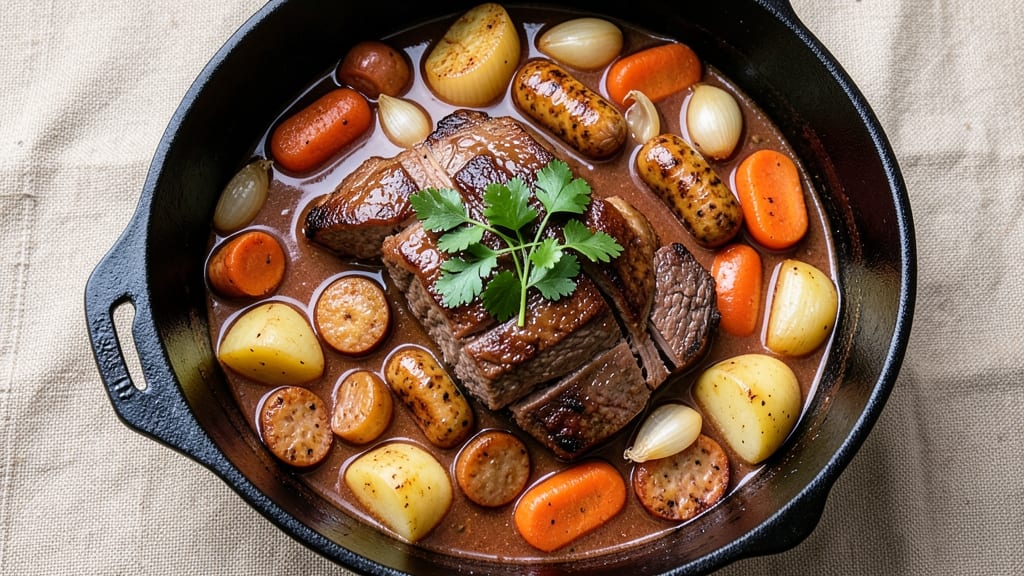
This beef and sausage stew recipe delivers the kind of deep, savory comfort that transforms a simple weeknight into a hearty celebration. The secret lies in slow-simmered roots and properly browned meat, creating layers of flavor that develop over hours—no shortcuts, just rich, satisfying results.
I’ve perfected this technique through years of testing, balancing smoky sausage with tender beef and aromatic vegetables for a stew that’s both restaurant-worthy and foolproof.
The foundation starts with a deep, flavorful base: caramelized onions, garlic, and herbs form the backbone, while beef chuck and Italian sausage add hearty protein. A splash of red wine and beef broth deepens the richness, while root vegetables like carrots and potatoes absorb the flavors beautifully.
The key? Patience—letting the stew simmer until the meat is fork-tender and the broth reduces to a velvety consistency. This isn’t just a stew; it’s a meal that feels like a hug in a bowl.
By the time you’re done, you’ll have a pot of stew with perfectly tender beef, crisp edges on the sausage, and a broth so flavorful it coats every spoonful.
The aroma alone will have everyone gathering around the table, and the texture—soft meat, tender vegetables, and just the right amount of sauce—makes it impossible to resist. Serve it with crusty bread to soak up every last drop, or pair it with roasted greens for a complete, satisfying dinner.
Whether you’re cooking for a crowd or meal prepping for the week, this stew scales effortlessly and tastes even better the next day. The slow-cooked method means less hands-on time and more time enjoying the results. Ready to master this hearty classic? Let’s get started.
Ingredients for beef and sausage stew
Six hearty ingredients create this restaurant-quality beef and sausage stew.
| Ingredient | Amount | Notes |
|---|---|---|
| Beef Chuck Roast 🥩 | 2 lb | Cut into 1.5-inch cubes |
| Italian Sausage 🌭 | 1 lb | Sweet or spicy, casings removed |
| Yellow Onions 🧅 | 2 whole | Thinly sliced for caramelizing |
| Garlic Cloves 🧄 | 6 cloves | Minced for aromatic base |
| Carrots 🥕 | 4 whole | Medium size, peeled and chopped |
| Russet Potatoes 🥔 | 2 lb | Cut into 2-inch chunks |
| Celery Stalks 🌿 | 3 whole | Diced for mirepoix |
| Dry Red Wine 🍷 | 1 cup | Bold variety like Cabernet |
| Beef Broth 💧 | 4 cups | Low-sodium preferred |
| Tomato Paste 🍅 | 2 tbsp | Smooth texture for depth |
| Fresh Thyme 🌿 | 2 tbsp | Leaves only, chopped |
| Fresh Rosemary 🌿 | 1 tbsp | Needles only, chopped |
| Bay Leaves 🌿 | 2 whole | Removed before serving |
| Olive Oil 🫒 | 3 tbsp | Extra-virgin for browning |
| Salt 🧂 | 1 ½ tsp | Kosher or sea salt |
| Black Pepper 🌶️ | 1 tsp | Freshly cracked |
The beef chuck is non-negotiable here—its fat marbling ensures tender, flavorful meat. Look for well-marbled cuts at Costco or your local butcher, and ask for it pre-cubed to save time. Italian sausage should be high-quality, with visible herbs and spices—Johnsonville or local deli brands are my go-tos. For the onions, yellow or red varieties work best—they caramelize beautifully. If using frozen carrots, thaw and pat dry to prevent a watery stew. The potatoes should be firm and starchy—Russets or Yukon Golds hold up best during long cooking.
No red wine? Substitute beef broth with 1 tbsp balsamic vinegar for depth. Fresh thyme and rosemary are ideal, but dried works at half the amount if needed. For a vegetarian twist, swap beef with mushrooms and extra lentils. The tomato paste can be replaced with 1 cup crushed tomatoes if preferred. If your celery is tough, blanch it first to soften. For a quicker version, use pre-chopped mirepoix mixes from Trader Joe's—just check for no added salt.
This stew tastes even better the next day—reheat gently on low heat to preserve texture. Store in the fridge for 4-5 days or freeze for 3 months. For meal prep, portion into containers with a layer of broth on top to prevent drying. The sausage and beef can be browned ahead and refrigerated for 2 days before adding to the stew. Always remove bay leaves before serving—they’re not meant to be eaten!
Why You'll Love This Recipe
- One-Pot Magic: I swear by this—just brown the meat, toss in the onions and garlic, then let it slow-cook. No extra pans, no stress, and honestly? That first sip of broth is all the reward I need.
- Deep Umami Bomb: The beef chuck roast gets so tender it falls apart, while the Italian sausage adds that smoky, herby punch. Between us, the caramelized onions take it over the top—sweet, jammy perfection in every bite.
- Leftovers That Beg: This stew only gets better the next day. I make a double batch on Sundays because reheating it? Absolute comfort. My kids fight over the last bowl, and I don’t even feel bad about it.
- Budget-Friendly Feast: A chuck roast and a couple sausages stretch across three meals—no takeout needed. Plus, carrots and onions are cheap staples. Here’s what sold me: I feed six people for under $20, and no one complains. (Yes, even on a Tuesday night.)
Step-by-step instructions for slow-simmered beef and sausage stew
This method builds rich, layered flavor through careful technique and patience.
Sear the Meat for Deep Flavor
Heat a large Dutch oven over medium-high heat until hot. Add 1 tablespoon of the olive oil and swirl to coat the bottom. Working in batches, add the 2 lb beef chuck roast cut into 1.5-inch cubes and sear for 3-4 minutes per side until deeply browned. This step creates the Maillard reaction that forms the stew's foundation.
Remove the beef and set aside. Add the 1 lb Italian sausage (casings removed) to the same pot and cook for 4-5 minutes, breaking it into chunks with a wooden spoon, until browned all over. Transfer the sausage to a plate with the beef. Don't wipe the pot clean—those browned bits are pure flavor.
Build the Aromatic Base
Return the pot to medium heat and add the remaining 2 tablespoons olive oil. Add the 2 whole yellow onions (thinly sliced) and cook for 8-10 minutes until softened and golden. Stir occasionally to prevent burning. This caramelization adds sweet depth to the stew.
Add the 3 whole celery stalks (diced) and 4 whole carrots (peeled and chopped) to the pot. Cook for 5 minutes until the vegetables begin to soften. Stir in the 6 cloves garlic cloves (minced) and cook for 30 seconds until fragrant. These vegetables form the mirepoix that supports the stew's structure.
Develop the Sauce Foundation
Push the vegetables to one side of the pot and add the 2 tablespoons tomato paste to the empty space. Stir for 1 minute until it darkens slightly. Pour in the 1 cup dry red wine and scrape up all the browned bits from the bottom with a wooden spoon. This deglazing step captures all the flavor you've built so far.
Let the wine simmer for 3-4 minutes until reduced by half. Add the 4 cups beef broth, 2 whole bay leaves, 2 tablespoons fresh thyme, and 1 tablespoon fresh rosemary. Bring to a gentle simmer and return the beef and sausage to the pot. Season with the 1.5 teaspoons salt and 1 teaspoon black pepper.
Simmer Until Tender
Cover the pot and reduce heat to low. Let the stew simmer gently for 1 hour, stirring occasionally. This initial simmer allows the meat to begin breaking down while the vegetables soften. The stew should bubble quietly—if it boils vigorously, reduce the heat further.
After 1 hour, add the 2 lb russet potatoes (cut into 2-inch chunks) to the pot. Return to a gentle simmer and cook uncovered for another 45-60 minutes until the beef is fork-tender and the potatoes are easily pierced with a knife. The stew should have thickened slightly and the flavors should be deeply integrated.
Adjust and Serve
Remove the 2 whole bay leaves before serving. Taste the stew and adjust seasoning if needed. If it's too thick, add ¼ cup water or broth. If it's too thin, simmer uncovered for another 5-10 minutes to reduce. The stew should coat the back of a spoon but still be spoonable.
Ladle the stew into bowls and serve immediately with crusty bread or over mashed potatoes. Each bite should deliver tender beef, flavorful sausage, and a rich sauce infused with all the aromatic vegetables. The potatoes should be creamy and the meat should pull apart easily at the fork.
Pro Tips For Making Beef And Sausage Stew
- BROWN THE MEAT FIRST: I learned this the hard way—skipping the sear means flavorless stew. Get that beef chuck and sausage screaming hot in a Dutch oven with 2 tablespoons of oil, then let it brown deeply on all sides. The crust locks in juices and builds depth that simmering alone can’t match.
- SLICE THE SAUSAGE LENGTHWISE: Cut those Italian sausages in half lengthwise before browning—yes, it looks messy, but it works. More surface area means faster cooking and better flavor integration into the stew. Plus, you avoid tough, undercooked centers that’ll ruin the texture.
- DON’T OVERCROWD THE POT: I used to toss everything in at once, and the stew would barely simmer. Start with the beef and sausage, remove them, then add onions and carrots to soften. Return the meat later—this keeps the liquid moving and prevents a sad, watery finish.
- USE COLD WATER FOR SIMMERING: Sounds weird, but it works: Add cold liquid (broth + water) to the pot instead of hot. The initial temperature drop prevents the meat from cooking too fast on the surface, ensuring even doneness. Your chuck roast will stay tender, not tough.
Serving suggestions for this beef and sausage stew
Crusty Bread Pairings
Nothing beats this stew with a warm, crusty baguette or sourdough loaf to soak up every last drop of that rich, savory broth. I love using French-style baguettes from Trader Joe’s or artisanal sourdough from local bakeries.
For extra flair, brush the bread with garlic butter or olive oil and sprinkle with flaky sea salt before serving. 🥖
Roasted Vegetable Sides
Bright, roasted vegetables cut through the heartiness of the stew beautifully. Try garlic-parmesan Brussels sprouts or honey-glazed carrots for a touch of sweetness. I often roast cauliflower and zucchini with lemon zest and fresh herbs—the acidity balances the stew’s depth.
For a one-pan wonder, roast everything at 400°F for 20-25 minutes until caramelized.
Creamy Potato Accompaniments
Mashed potatoes or creamy scalloped potatoes elevate this stew to next-level comfort. For mashed potatoes, use Yukon Golds with butter, cream, and roasted garlic—the smooth texture contrasts perfectly with the stew’s chunky ingredients.
For a fancier touch, try cheesy potato gratin with a crispy top. Both reheat beautifully alongside the stew.
Fresh Greens Finish
A simple arugula salad with lemon vinaigrette adds a peppery, fresh finish. Toss 4 cups arugula with 2 tbsp olive oil, 1 tbsp lemon juice, and a pinch of salt for a quick, vibrant side.
For a heartier option, try kale and apple salad with walnuts and goat cheese—the crunch and tang complement the stew’s richness.
Warm Cornbread or Biscuits
For a Southern-inspired twist, serve with jalapeño cornbread or buttermilk biscuits. I love using a boxed mix (like Jiffy) for convenience, but homemade cornbread with sharp cheddar and honey takes it to the next level.
Warm the cornbread in the oven for 5-10 minutes at 350°F to keep it soft and gooey.
Creamy Polenta or Risotto
For a more decadent pairing, try creamy polenta or mushroom risotto. Polenta cooks in 10 minutes with chicken broth and butter, while risotto takes 20-25 minutes with arborio rice, white wine, and parmesan.
Both soak up the stew’s sauce like a dream and add a luxurious texture contrast. 💛
Nutrition facts
Frequently asked questions
Can I use ground beef instead of beef chuck roast?
Ground beef works in a pinch, but it won't have the same rich, tender texture. The fat marbling in beef chuck breaks down during slow cooking, creating a deeper flavor and juicier meat. If you must substitute, use 80/20 ground chuck (not lean ground beef) and add 1 extra tablespoon of tomato paste for richness. The cooking time will be shorter (30-45 minutes total), but the texture will be more like a thick chili than a traditional stew.
How do I make this stew in a slow cooker?
For a slow cooker version, brown the beef and sausage in a skillet first, then transfer everything to the pot. Add all remaining ingredients except potatoes, and cook on low for 6-7 hours or high for 3-4 hours. Stir in potatoes during the last 1 hour of cooking. The slow cooker method is perfect for hands-off prep—just add ingredients in the morning and come home to a ready meal!
Why does my stew taste bland?
Bland stew usually means one of three things: under-seasoned meat, insufficient browning, or not enough time simmering. Double-check that you browned the meat deeply (it should be dark and crusty), and taste the broth before adding potatoes—season with more salt, pepper, or herbs if needed. For extra depth, add 1 teaspoon smoked paprika or ½ teaspoon cayenne at the end. Never rush the simmering—at least 2 hours is ideal for flavor development.
Can I make this stew ahead of time?
This stew tastes even better the next day! Let it cool completely, then refrigerate for up to 5 days or freeze for 3 months. Reheat gently on the stove over low heat (never microwave) to preserve texture. For meal prep, portion into containers with a layer of broth on top to prevent drying. The flavors meld beautifully overnight—perfect for busy weeknights!
What's the best way to reheat leftovers?
Reheat leftovers in a pot over medium-low heat, stirring occasionally, until warmed through (10-15 minutes). Avoid high heat to prevent the sauce from breaking. For extra richness, add 1-2 tablespoons of beef broth while reheating. If the stew seems too thick, thin with a splash of water or broth. Never reheat in the microwave—it creates a rubbery texture and uneven heating.