
Main Courses
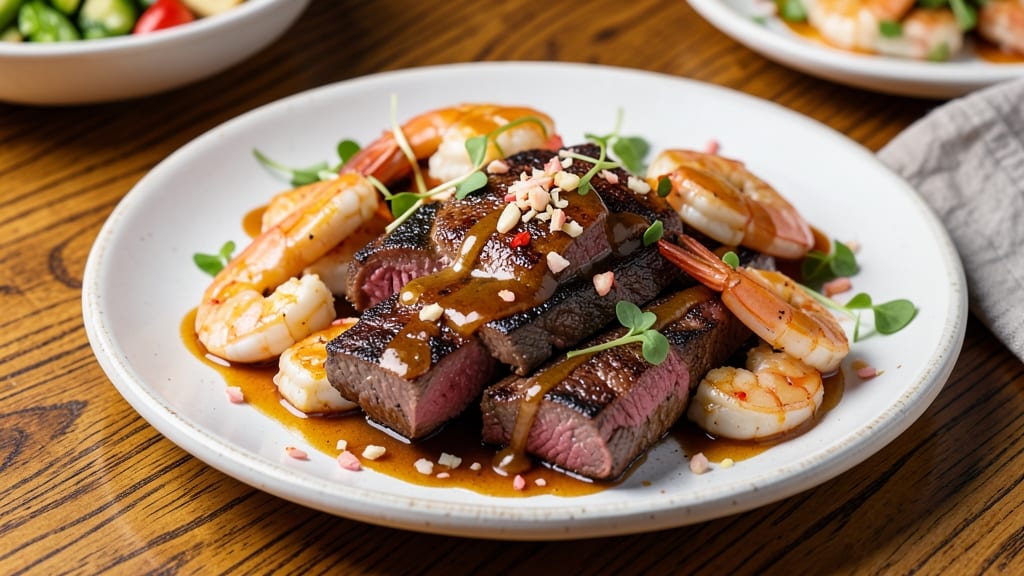
This beef and shrimp teriyaki recipe delivers restaurant-quality results with a perfect balance of sweet, savory, and umami flavors. The key lies in marinating both proteins separately—beef absorbs the teriyaki deeply while shrimp stays tender and plump.
What sets this dish apart is the caramelized glaze that forms on the edges, adding depth without overpowering the delicate seafood.
Preparation is straightforward: marinate the beef and shrimp for at least 30 minutes, then cook them separately to control doneness. The teriyaki sauce simmers until thick and glossy, ready to coat every bite.
Pan-searing or broiling ensures a perfect sear while keeping the shrimp juicy and the beef tender. Serve over steamed rice or with stir-fried vegetables for a complete meal.
The result is a dish where each component shines—the beef remains juicy with a caramelized crust, the shrimp stays tender yet flavorful, and the teriyaki glaze ties everything together. The sauce's sweetness balances the savory notes, creating a harmonious blend that’s both satisfying and elegant.
This recipe is designed for weeknight dinners or special occasions, offering professional-quality results with minimal effort.
Pair with a side of sesame seeds and sliced green onions for added texture and freshness. The dish holds well for leftovers, making it perfect for meal prep. Whether you're feeding a family or hosting guests, this teriyaki masterpiece will leave everyone asking for seconds.
Ingredients for beef and shrimp teriyaki
Sweet-savory teriyaki magic with just 15 ingredients—beef, shrimp, and a glaze that caramelizes perfectly.
| Ingredient | Amount | Notes |
|---|---|---|
| Ribeye Steak 🥩 | 1 ½ lb | Cut into 1-inch cubes |
| Large Shrimp 🦐 | 1 ½ lb | Peeled, deveined, tails on |
| Soy Sauce 🍶 | ½ cup | Low-sodium preferred |
| Honey 🍯 | ⅓ cup | Wildflower for depth |
| Garlic Cloves 🧄 | 6 cloves | Minced for sauce |
| Ginger Root 🌿 | 2 tbsp | Freshly grated |
| Sesame Oil 🫒 | 1 tbsp | Toasted for aroma |
| Brown Sugar 🍚 | ¼ cup | Packed for sweetness |
| Rice Vinegar 🍶 | ¼ cup | White vinegar substitute |
| Vegetable Oil 🫒 | 2 tbsp | High smoke point |
| Green Onions 🧅 | ¼ cup | Sliced for garnish |
| Toasted Sesame Seeds 🌾 | 1 tbsp | For crunchy finish |
| White Rice 🍚 | 2 cups | Uncooked, long-grain |
| Salt 🧂 | 1 tsp | Kosher or sea salt |
| Black Pepper 🌶️ | ½ tsp | Freshly cracked |
The shrimp and beef are stars here, but the ribeye is non-negotiable—look for well-marbled cuts at Whole Foods or your local butcher. Shrimp should be fresh or frozen (thaw overnight in the fridge), and tails-on for presentation. The honey is where the magic happens—wildflower has deeper flavor than clover, but any good honey works. For the sauce, low-sodium soy sauce balances sweetness better than regular. If you can't find it, just rinse regular soy sauce with water to reduce salt.
No honey? Maple syrup or agave works in a pinch, but honey’s floral notes are key. Running short on sesame oil? Toast the seeds first, then grind them into a paste with a pinch of salt for a quick substitute. The ginger and garlic can be pre-minced from the store (saves time), but fresh is always better. For the rice, jasmine or basmati adds aroma, but long-grain white is classic. And if you’re feeling fancy, swap brown rice for cauliflower rice—just cook it separately since it needs more liquid.
This dish reheats like a dream—2 minutes in the microwave with a splash of water keeps everything tender. Store leftovers in airtight containers for 3 days, or freeze for up to 3 months. The teriyaki sauce thickens as it cools, so stir in a splash of water if it’s too stiff when reheating. For extra crunch, toast the sesame seeds in a dry pan for 30 seconds before adding them—game-changer for texture.
Why You'll Love This Recipe
- One-Pan Magic: I swear by this for nights when I’d rather not wash dishes. The ribeye and shrimp cook right alongside the teriyaki glaze—no flipping pans, no fuss—just a single sheet that’s basically self-cleaning.
- Sweet-Savory Balance: That honey-soy glaze? It’s the kind of combo that makes you pause mid-bite. The garlic cloves caramelize into the sauce, giving it a depth that’s simple but ridiculously satisfying—like a hug for your taste buds.
- Weeknight to Dinner Party: Honestly, I make this for both. Toss it together for a Tuesday night with rice and steamed veggies, or double the batch for guests—it’s fancy enough to impress but still feels like home cooking.
- Budget-Friendly Luxury: Ribeye doesn’t have to break the bank here. The shrimp adds a premium touch without the premium price, and the teriyaki stretches to feed four (or two hungry people with leftovers). Leftovers? Even better—reheat and serve over noodles the next day.
Step-by-step instructions for beef and shrimp teriyaki
Here's how to create that perfect caramelized teriyaki glaze that clings beautifully to both beef and shrimp.
Prepare the Protein for Perfect Cooking
Cut the 1.5 lb ribeye steak into 1-inch cubes and season generously with 1 tsp salt and 0.5 tsp black pepper. I like to let it sit for 10 minutes at room temperature before cooking—this ensures even searing. Meanwhile, peel and devein the 1.5 lb large shrimp, leaving the tails intact for presentation.
Pat both the beef and shrimp completely dry with paper towels before cooking. Any moisture on the surface will prevent that perfect caramelized crust we're after. Keep them separate in bowls until ready to cook—this prevents the shrimp from getting waterlogged if the beef releases any juices.
Cook the Beef Until Deeply Browned
Heat 2 tbsp vegetable oil in a large skillet over medium-high heat until shimmering. Add the seasoned beef cubes in a single layer, being careful not to overcrowd the pan. Cook undisturbed for 3-4 minutes until a deep golden-brown crust forms on all sides.
This is where the magic happens—the beef needs that initial sear to lock in flavors and create texture. Once the first side is browned, stir gently and cook for another 2-3 minutes until the internal temperature reaches 145°F. Remove the beef and set aside, leaving the rendered beef fat in the pan—we'll use it for the shrimp.
Sear the Shrimp for Maximum Juiciness
Add the shrimp to the same skillet (no need to add more oil) and cook over medium heat for 1-2 minutes per side until they turn pink and opaque. The shrimp should curl slightly at the edges—this is your signal they're done. Remove them and set aside with the beef.
Here's the thing—don't overcook the shrimp. They'll continue cooking slightly when they hit the teriyaki sauce, and we want them tender with just a hint of pink in the center. If you see any shrimp that cook faster than others, remove them earlier and keep them warm in a separate bowl.
Create the Perfect Teriyaki Glaze
Reduce the heat to medium-low and add 6 cloves minced garlic and 2 tbsp freshly grated ginger root to the skillet. Sauté for 30 seconds until fragrant—this prevents the garlic from burning while building the sauce's aromatic base.
Pour in 0.5 cup soy sauce, 0.33 cup honey, 0.25 cup brown sugar, and 0.25 cup rice vinegar. Stir well to combine, then increase heat to medium-high and bring to a gentle boil. Let it simmer uncovered for 5-7 minutes, stirring occasionally, until the sauce thickens enough to coat the back of a spoon.
Combine Everything and Garnish
Return the beef and shrimp to the skillet with the sauce, tossing gently to coat everything evenly. Let it simmer for 1-2 minutes just to heat through and allow the flavors to meld. The sauce should cling beautifully to both proteins, creating that signature teriyaki look.
Transfer everything to a serving platter and garnish with 0.25 cup sliced green onions and 1 tbsp toasted sesame seeds. Serve immediately over 2 cups cooked white rice—the contrast of the warm, sticky teriyaki with the fluffy rice is what makes this dish truly special.
Pro Tips For Making Beef And Shrimp Teriyaki
- SEAR BEFORE SAUCE: Hit your ribeye with a screaming-hot pan first—no sauce yet—until it’s got deep brown crusts. I learned this the hard way: skipping the sear means flavorless beef that just soaks up teriyaki like a sponge. Shrimp can join later, but the steak needs that initial punch to stand up to the sweet-salty glaze.
- PEEL SHRIMP LAST: Leave the shells on shrimp until you’re ready to plate—yes, even if it looks weird. The shells release flavor into the sauce, and you only need to peel them right before serving. (Use a knife to loosen the meat first, then slide it out clean.) I skip this step sometimes, and the sauce always tastes flatter afterward.
- SIMMER NOT BOIL: Reduce the teriyaki sauce on medium-low, stirring often, until it thickens to coat the back of a spoon. If you crank the heat, you’ll end up with a sticky mess that clumps—especially with honey. My grandmother swore by this, and she was right: patience here makes all the difference.
- GARLIC TIMES TWO: Mince double the garlic called for and add half at the start of cooking, half at the end. The first batch caramelizes into the sauce, while the second infuses fresh aroma. (I was skeptical until I tried it—now I never go back.) Skip this, and your teriyaki tastes like it’s missing something.
Essential equipment for perfect results
Skillet Essentials
Your large stainless steel skillet (12-inch or larger) is non-negotiable for this recipe. I swear by All-Clad Stainless for its even heat distribution and durability, but Calphalon or Lodge cast iron work beautifully too.
The deep sides help prevent spills when tossing the proteins, and stainless won't warp like non-stick pans. Avoid cheap aluminum—it heats unevenly and can burn your sauce. 🔥
Sauce Thickening Tools
For that perfect glossy, clinging teriyaki glaze, you'll need a heat-resistant silicone spatula (like OXO Good Grips) to stir the sauce without scratching your pan. A small whisk (preferably stainless) keeps the sauce smooth while simmering.
Pro tip: Use a measuring spoon to check sauce consistency—it should coat the back of a spoon but still drizzle lightly. 💛
Temperature Control
An instant-read thermometer (I love ThermoWorks Thermapen) is your best friend for perfect doneness. The beef should hit 145°F internal temperature, while shrimp should reach 145°F at their thickest part.
A kitchen timer ensures you don't overcook either protein—set it for 1-2 minutes per side for shrimp and 3-4 minutes per side for beef. ⏰
Garnish & Finishing
Toast your sesame seeds in a dry pan for 30 seconds until golden—this adds incredible texture. A sharp chef's knife (like Wüsthof) makes quick work of slicing green onions, and a microplane gives you perfectly fine ginger zest.
For plating, a large serving spoon helps distribute the teriyaki evenly over rice. ✨
Optional Upgrades
Want restaurant-quality results? A blowtorch (like Dualit) adds dramatic caramelization to the teriyaki sauce right before serving. For extra flavor depth, a mortar and pestle lets you crush whole garlic cloves and ginger into a paste.
And if you're cooking for a crowd, a large serving platter (like Le Creuset) keeps everything warm and presentation-perfect. 💡
Nutrition facts
Frequently asked questions
Can I substitute chicken for the beef in this teriyaki?
Chicken thighs work beautifully—they stay juicy and absorb the teriyaki sauce well. Cut them into 1-inch cubes and marinate for 20-30 minutes before cooking. For extra flavor, add 1 tbsp honey to the marinade. Boneless, skinless breasts can also work, but they dry out faster—cook them for 2-3 minutes per side only.
How do I adjust the teriyaki sauce for a sweeter or less sweet taste?
For a sweeter glaze, increase the honey to 0.4 cup and reduce brown sugar to 0.125 cup. For less sweetness, swap half the honey for 0.165 cup rice vinegar or 0.125 cup mirin. Always taste as you simmer—adjust gradually to avoid overpowering the beef and shrimp flavors. A splash of sesame oil at the end adds depth without sweetness.
Can I make this dish ahead of time?
Yes! Cook the beef and shrimp separately, then refrigerate in airtight containers for up to 2 days. Store the teriyaki sauce separately—it thickens when chilled. Reheat everything together in a skillet over medium heat for 3-5 minutes, adding a splash of water if the sauce is too thick. For best texture, serve over freshly cooked rice.
What's the best way to prevent shrimp from turning rubbery?
Never overcook! Shrimp should cook for 1-2 minutes per side until just opaque. Pat them completely dry before cooking—moisture steams them instead of searing. Cook at medium heat, not high, to avoid burning the exterior while the inside stays tender. A quick test: The shrimp should curl slightly at the edges and reach 145°F internal temperature.
Can I use frozen shrimp in this recipe?
Frozen shrimp works perfectly if thawed properly. Place them in a sealed bag and submerge in cold water for 15-20 minutes until pliable. Pat completely dry before cooking—any ice crystals will prevent proper searing. For extra flavor, add 1 tsp soy sauce to the thawing water. Never microwave to thaw, as it starts cooking the shrimp.