
Soups & Stews
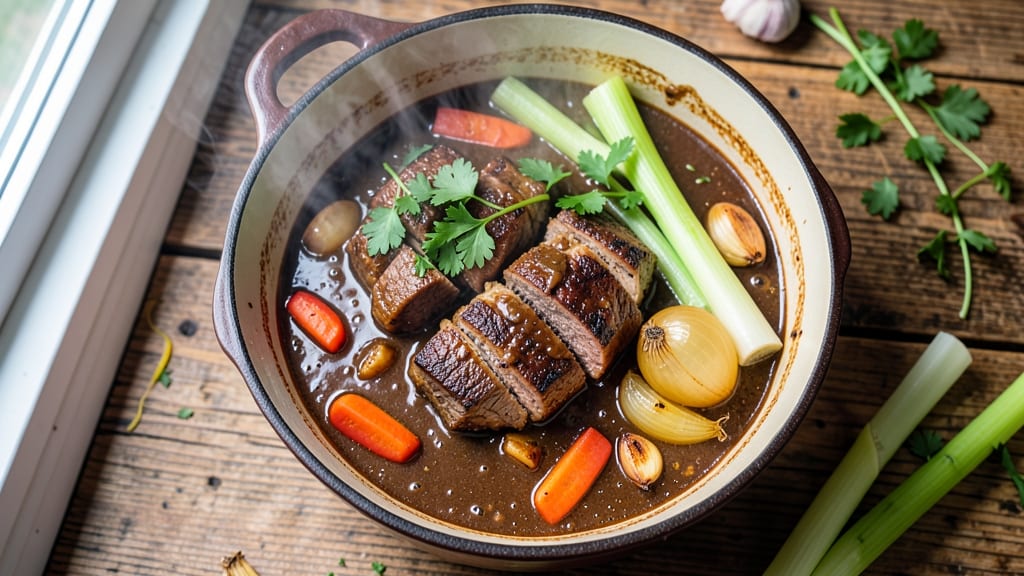
This beef and stout stew recipe transforms tough beef into melt-in-your-mouth tenderness with deep malty richness from dark beer and caramelized fond. The secret lies in slow braising—searing the beef creates a flavorful crust that dissolves into the stew, while stout beer adds a robust, slightly sweet depth that balances the hearty beef. This isn’t just comfort food; it’s a technique that builds layers of flavor over hours, resulting in a dish that tastes even better the next day.
The process begins with a high-heat sear to develop a deep, caramelized fond at the bottom of the pot, which forms the foundation of the stew’s complexity. Deglazing with stout beer captures those browned bits, infusing the liquid with umami and richness.
As the stew simmers, the beef becomes fork-tender while absorbing the malty, slightly bitter notes of the beer—creating a balance of flavors that’s both comforting and sophisticated. The result is a stew that’s hearty enough for a cold evening but refined enough for a dinner party.
What sets this recipe apart is the caramelized fond, a technique often overlooked but critical for depth. The slow simmer allows the flavors to meld, while the stout beer adds a subtle sweetness that rounds out the richness of the beef.
Serve it with crusty bread to soak up every last drop of that velvety, beer-infused sauce. This isn’t just a stew—it’s a restaurant-quality meal you can make at home with simple ingredients and patience.
Perfect for feeding a crowd or meal prepping, this stew scales beautifully and tastes even better reheated. The key is letting it work its magic over time—no rushing, just layers of flavor developing with each passing hour.
Once you try it, you’ll understand why this dish is a staple in kitchens around the world. Let’s get started on creating something truly memorable.
Ingredients for beef and stout stew
Sixteen ingredients for restaurant-quality beef stew with deep malty richness and caramelized depth.
| Ingredient | Amount | Notes |
|---|---|---|
| Beef Chuck Roast 🥩 | 3 lb | Cut into 1.5-inch cubes |
| Stout Beer 🍺 | 4 cups | Dark beer, like Guinness |
| Yellow Onion 🧅 | 1 whole | Chopped into 1/2-inch pieces |
| Carrots 🥕 | 4 whole | Cut into 1-inch chunks |
| Celery Stalks 🌿 | 4 whole | Cut into 1-inch pieces |
| Garlic Cloves 🧄 | 6 cloves | Minced |
| Tomato Paste 🍅 | ½ cup | High-quality, not watery |
| Beef Broth 💧 | 2 cups | Low-sodium preferred |
| Worcestershire Sauce 🥄 | 2 tbsp | Vegetarian version if needed |
| Thyme Leaves 🌿 | 1 tbsp | Fresh, or 1 tsp dried |
| Bay Leaves 🌿 | 2 whole | Remove before serving |
| Olive Oil 🫒 | 2 tbsp | Extra-virgin for searing |
| Salt 🧂 | 1 ½ tsp | Kosher or sea salt |
| Black Pepper 🌶️ | 1 tsp | Freshly ground |
| Flour 🌾 | 2 tbsp | All-purpose, for dredging |
The beef is non-negotiable—chuck roast with good marbling breaks down beautifully. Costco or local butchers often have the best quality, but any grocery store chuck works if it's fresh. Look for bright red meat with visible fat marbling; that's what makes it tender. The beer should be a dark stout—Guinness or similar—with at least 5% ABV. If you can't find stout, porter or even a robust dark ale will work, though the flavor won't be identical. For the aromatics, fresh thyme and bay leaves are essential—they add layers of earthy depth that dried spices can't match.
No stout beer? Substitute with equal parts beef broth and a splash of balsamic vinegar—it mimics the malty sweetness. Fresh thyme unavailable? Use 1/3 the amount of dried, but toast it first in a dry pan for 30 seconds to wake up the flavor. The tomato paste can be skipped if you're sensitive to acidity, but it adds a subtle sweetness that balances the beer's bitterness. For the Worcestershire, Lea & Perrins is the gold standard, but any good-quality brand works. The flour is just for dredging the beef before searing—don't skip this step, as it helps create that critical caramelized fond.
This stew tastes even better the next day, so double the batch if you're feeding a crowd. Store leftovers in an airtight container in the fridge for up to 5 days, or freeze for 3 months. The flavors continue to develop over time, so resist the urge to rush it. For serving, crusty bread is a must—it soaks up the rich, beer-infused sauce perfectly. If you're meal prepping, portion the stew into individual containers with a scoop of bread on the side for easy grab-and-go meals.
Why You'll Love This Recipe
- One-Pot Magic: I swear by this—just dump everything in one pot and walk away. The chuck roast softens while you sip that stout beer (yes, the same one in the stew), and the onions and carrots caramelize without a single extra pan to scrub.
- Rich Beer Love: That stout isn’t just an ingredient—it’s the soul. The dark malt and roasted notes cut through the beef’s richness, while the onions and celery add a sweet, earthy backbone. Honestly, I’ve tried other stews, but this one? It’s the only one I’ll fight someone over.
- Leftovers That Win: Make a double batch and thank me later. The flavors deepen overnight, and reheating it the next day feels like a cozy hug—especially with crusty bread. My roommates used to steal my portions before I could even finish mine.
- Budget Beef Boost: A chuck roast stretches for days, and stout beer is cheaper than fancy wine. You’re feeding a crowd for less than takeout, and the leftovers? Free meals for the week. Between us, this is how I survived grad school.
Step-by-step instructions for beef and stout stew
This method delivers deep, malty richness with a caramelized fond that clings to every bite.
Sear the Beef Chuck Roast for Maximum Flavor
Pat the 3 lb beef chuck roast dry with paper towels and cut it into 1.5-inch cubes. This size ensures even cooking and maximum surface area for browning. Heat 2 tablespoons olive oil in a large Dutch oven over medium-high heat until shimmering. Working in batches if needed, add the beef cubes and sear undisturbed for 2-3 minutes per side until deeply browned.
Don't crowd the pan—this is where the magic happens. The caramelized crust forms the foundation of your stew's depth. Once all pieces are browned, transfer them to a plate and set aside. You'll notice the pan has developed a rich, dark fond—this is pure flavor you don't want to miss.
Build the Aromatic Base with Vegetables and Tomato
In the same Dutch oven, add 1 whole yellow onion (chopped into ½-inch pieces), 4 whole carrots (cut into 1-inch chunks), and 4 whole celery stalks (cut into 1-inch pieces). Cook over medium heat for 5-6 minutes, stirring occasionally, until the vegetables begin to soften and the onion becomes translucent.
Add 6 cloves minced garlic and cook for 30 seconds until fragrant. Stir in ½ cup tomato paste and cook for another 2 minutes, stirring constantly. This step develops the stew's base flavor and removes any raw taste from the tomato paste. The paste will darken slightly—this is normal and indicates proper caramelization.
Deglaze and Combine Liquids for Richness
Pour in 4 cups stout beer and scrape up all the browned bits from the bottom of the pot with a wooden spoon. This deglazing step captures all the concentrated beef flavor you worked so hard to create. Let the mixture simmer for 3-4 minutes until the alcohol smell dissipates and the liquid reduces slightly.
Add 2 cups beef broth, 2 tablespoons Worcestershire sauce, 1 tablespoon thyme leaves, 2 whole bay leaves, 1½ teaspoons salt, and 1 teaspoon black pepper. Stir well to combine all ingredients. The stew should now have a rich, malty aroma with deep caramelized notes from the seared beef and tomato paste.
Simmer Until Tender with Perfect Texture
Return the seared beef cubes to the Dutch oven and bring the mixture to a gentle simmer. Cover and cook over low heat for 2-2½ hours, stirring occasionally, until the beef is fork-tender. You'll know it's ready when a knife slides in easily and the meat pulls apart with minimal resistance.
If the stew reduces too much before the beef is tender, add ½ cup hot water to maintain the proper consistency. The longer it simmers, the more the flavors meld together, creating that rich, comforting depth that defines a perfect beef and stout stew.
Finish with Flour for Thickened Perfection
Remove the 2 whole bay leaves from the stew. In a small bowl, mix 2 tablespoons flour with ¼ cup cold water to create a slurry. Slowly whisk the slurry into the stew, stirring constantly. Return to a simmer and cook for 3-5 minutes until the stew thickens to your desired consistency—it should coat the back of a spoon but still be spoonable.
Taste and adjust seasoning if needed. The stew should have a perfect balance of malty beer richness, caramelized fond, and tender beef. Serve immediately with crusty bread to soak up every last drop of that flavorful sauce.
Pro Tips For Making Beef And Stout Stew
- SEAR THE ROAST FIRST: Don’t just toss that chuck roast into the pot raw—hit it with a screaming-hot cast-iron or Dutch oven until it’s deep brown, even if it looks charred. I learned this the hard way: skipping the sear means a stew that tastes more like boiled beef than rich, caramelized comfort food. Let the meat rest 10 minutes after searing (yes, even if you’re impatient like me), or the juices will run out when you add the beer.
- USE COLD BEER: Pour that stout straight from the fridge into the pot—cold beer emulsifies better and won’t immediately turn your stew into a thin, watery mess. My grandmother swore by this, and she was right: the cold liquid helps break down the meat’s collagen without diluting the flavor like hot liquid would. Just let it warm up gradually with the rest of the ingredients.
- CHOP VEGETABLES UNIFORM: Carrots and celery should be cut into ½-inch chunks—no smaller, no larger. Onions? Quarter them and leave the skin on for the first hour of cooking (then peel them off). I used to hack veggies haphazardly, and some would turn to mush while others stayed stubbornly crunchy. Uniform size = even cooking, every time.
- DEGLAZE WITH BEER, NOT WATER: After searing the meat, don’t grab the water—use the stout you’re already using in the recipe. That browned crust on the bottom? It’s flavor gold. A splash of cold beer will lift it all up, giving your stew depth right from the start. I was skeptical until I tried it—now I never skip this step.
Pro cooking tips for great beef and stout stew
Sear Like a Pro
Your Dutch oven is your secret weapon here—cast iron retains heat perfectly for that critical caramelized fond. I use a Lodge 5.5-quart Dutch oven because it handles high heat without warping. Pat the beef completely dry with paper towels before searing; moisture prevents proper browning.
Work in single-layer batches—crowding steams the beef instead of searing. For extra depth, add 1 tablespoon butter to the hot oil before adding beef. 🔥
Beer Selection Matters
Not all stouts are created equal. For this recipe, I recommend Guinness Draught or Imperial Russian Stout—their roasted malt sweetness balances the beef's richness. Avoid light beers or lagers; they lack the malty depth needed.
If you can't find stout, porter or a dark ale works, but reduce the amount by ½ cup to compensate for lower alcohol content. Pro tip: Chill your beer first—it reduces foaming when added to the hot pot.
Vegetable Prep Shortcuts
Save time by using a mandoline slicer for onions and carrots—it gives uniform ½-inch pieces that cook evenly. For celery, cut the stalks lengthwise first, then slice into 1-inch pieces (this prevents stringiness). The sofrito trio (onion, carrot, celery) should cook until just tender—overcooking turns them mushy.
I add a pinch of salt to the vegetables while they cook to draw out moisture and enhance sweetness. 🥕
Deglazing Technique
The deglazing step is where 80% of your stew's flavor develops. After searing, let the fond cool for 30 seconds before adding beer—this prevents a violent reaction. Use a wooden spoon to scrape every last bit from the bottom (a metal spoon can scratch your Dutch oven).
For extra umami, add 1 teaspoon fish sauce or ½ teaspoon soy sauce during this step. Let the beer reduce until it smells alcohol-free (about 3-4 minutes).
Simmering Science
Low and slow is non-negotiable—225-250°F is ideal for tender beef. I use a meat thermometer to check doneness; beef should reach 203°F internal temperature. If your stew reduces too quickly, add ½ cup hot beef broth instead of cold water (prevents temperature shock).
The longer it simmers, the more the collagen breaks down, creating that luxurious, velvety texture. Never skip the 10-minute rest before serving—it lets juices redistribute. 💫
Thickening Tricks
For a silky finish, make your slurry with cold water—it thickens more evenly than hot. Whisk it into the stew gradually to avoid lumps. If your stew is too thick, add 1-2 tablespoons of reserved cooking liquid.
For extra richness, stir in 1 tablespoon of Dijon mustard with the slurry. Taste before serving—stout beer can be bitter, so adjust with lemon juice or a pinch of sugar if needed.
Nutrition facts
Frequently asked questions
Can I substitute another type of beer besides stout?
Yes, but the flavor will differ. For a similar malty depth, use porter or dark ale (reduce by ½ cup since they have less alcohol). Light beers like pilsners will make the stew taste flat. If avoiding alcohol, try non-alcoholic stout or beef broth + 1 tablespoon balsamic vinegar for sweetness.
Why does my stew turn out watery even after thickening?
This usually happens if you didn't sear the beef properly (no fond) or over-added liquid. Always deglaze with beer to capture fond, and use cold water for the slurry—it thickens better. If still too thin, simmer uncovered for 5-10 minutes to reduce naturally. For extra body, stir in 1 tablespoon cornstarch mixed with 1 tbsp water at the end.
How long can I store leftovers safely?
Store in an airtight container in the fridge for up to 5 days or freeze for 3 months. The flavors actually improve overnight! Reheat gently on low heat, adding 1-2 tbsp water if it thickens too much. Never reheat above 165°F to prevent drying.
Can I make this stew in a slow cooker?
Brown the beef first in a skillet, then transfer everything to the slow cooker. Use low heat for 6-8 hours or high for 3-4 hours. The slow cooker's gentle heat works perfectly for tenderizing the beef. Just skip the flour slurry—stir in 1 tbsp cornstarch mixed with water at the end if you want thickening.
What's the best way to reheat beef stew?
Reheat gently on the stove over low heat with the lid slightly ajar to prevent skin formation. For microwave reheating, cover with a damp paper towel and heat in 30-second intervals, stirring between each. The goal is to warm through without overcooking the beef. Add 1-2 tbsp broth or water if it becomes too thick.