
Soups & Stews
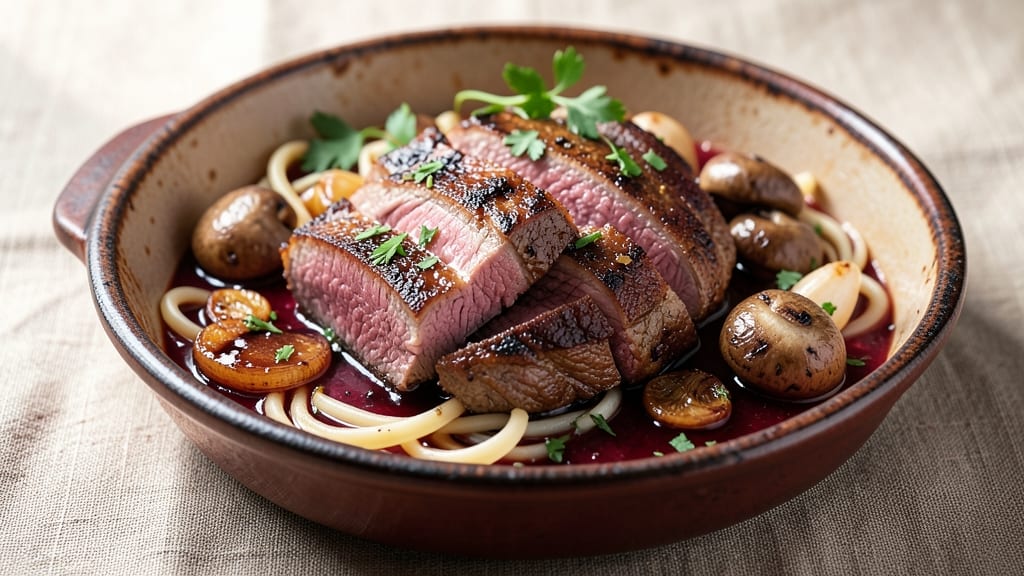
This beef au vin recipe transforms tough beef chuck into melt-in-your-mouth tenderness through slow braising with red wine and mushrooms. The magic happens when the wine reduces overnight, deepening into a rich, velvety sauce that coats every bite.
What starts as a simple sear and deglaze becomes a restaurant-worthy dish with minimal effort after the initial prep.
The key to perfect beef au vin lies in the technique: searing the beef creates a flavorful crust, while deglazing with wine captures those browned bits.
Adding mushrooms and aromatics like shallots and garlic builds layers of umami, and the long braising time tenderizes the meat while letting the sauce develop complexity. This isn't just a stew—it's a flavor journey that rewards patience.
By morning, your kitchen will smell like a Parisian bistro, and the sauce will have transformed from tart to rich and velvety. The beef will be fork-tender, the mushrooms perfectly softened, and the wine reduced to a glossy, aromatic glaze.
Serve with buttery mashed potatoes or crusty bread to soak up every last drop of that luxurious sauce.
This recipe delivers a dish that's impressive yet approachable, perfect for special occasions or cozy weeknight dinners. The overnight braising means you can prep ahead and enjoy the results without standing over the stove.
Let's create a classic that tastes like it took hours to make, even though the active time is short.
Ingredients for beef au vin
Pantry staples plus a few specialty touches make this bistro classic shine overnight.
| Ingredient | Amount | Notes |
|---|---|---|
| Beef Chuck Roast 🥩 | 2 ½ lb | Cut into 1.5-inch cubes |
| Dry Red Wine 🍷 | 2 cups | Bold like Cabernet or Merlot |
| Cremini Mushrooms 🍄 | 1 ½ lb | Sliced into 1/4-inch pieces |
| Shallots 🧅 | 2 whole | Minced, not chopped |
| Garlic Cloves 🧄 | 6 cloves | Smashed, not minced |
| All-Purpose Flour 🌾 | 2 tbsp | For dredging beef |
| Unsalted Butter 🧈 | 4 tbsp | Cold, not melted |
| Beef Stock 💧 | 2 cups | Low-sodium preferred |
| Tomato Paste 🍅 | 2 tbsp | Smooth, not chunky |
| Fresh Thyme 🌿 | 2 sprigs | Leaves only, stems removed |
| Fresh Parsley 🌿 | ¼ cup | Chopped, for garnish |
| Kosher Salt 🧂 | 1 ½ tsp | Diamond Crystal preferred |
| Freshly Ground Black Pepper 🌶️ | 1 tsp | Coarse grind preferred |
| Olive Oil 🫒 | 2 tbsp | For initial searing |
The beef is non-negotiable—beef chuck with good marbling gives you that melt-in-your-mouth texture. Most butchers will cube it for you, which saves time (and mess). If you're buying a whole roast, look for thick cuts with visible fat—that's where the flavor hides. For the wine, any bold, dry red works—Cabernet, Merlot, or even Pinot Noir. Avoid sweet wines like Zinfandel. Mushrooms? Cremini or baby bella—they hold up better than white button mushrooms during braising. Grab a pound or two at Trader Joe's or your local market, and slice them while they're fresh.
No red wine? Beef stock with a splash of balsamic vinegar gets you close, though the flavor will be subtly different. Fresh thyme is ideal, but dried works at one-third the amount if you're in a pinch. The tomato paste can be skipped entirely if you're sensitive to acidity, but it adds that classic umami depth. For the flour, King Arthur or Bob's Red Mill are my go-tos—they're fine and don't clump when dredging. If you're prepping ahead, slice the mushrooms and store them in a sealed container with a paper towel to absorb moisture. The beef can be cubed and refrigerated for up to 2 days before cooking, but fresher is always better.
This sauce gets better with time—trust the overnight braise. The wine reduces into a glossy, aromatic glaze that coats every bite. Store leftovers in an airtight container in the fridge for up to 5 days, or freeze for 3 months. I always make a double batch because it reheats beautifully for lunches. For serving, crusty bread or buttery mashed potatoes are non-negotiable—soak up every last drop of that sauce. The parsley garnish is optional, but it adds a fresh pop of color and brightness that cuts through the richness.
Why You'll Love This Recipe
- One-Pan Magic: Honestly, I swear by this—just sear the beef, toss in the shallots and mushrooms, deglaze with that red wine, and let it simmer. No chopping boards full of mess, no extra pots. The wine does half the work for you.
- Deep Umami Bomb: That beef chuck roast gets so tender it practically melts, while the mushrooms soak up all the wine’s richness. The garlic and shallots caramelize into something ridiculously flavorful—like a fancy bistro in your kitchen.
- Leftovers That Beg: Between us, this dish tastes even better the next day. Slice up the beef, reheat it in the same sauce, and suddenly you’ve got a weeknight dinner that feels like a celebration. (Yes, even on a Tuesday night.)
- Budget-Friendly Luxury: A chuck roast stretches further than you’d think, and a bottle of wine makes the whole thing feel special without breaking the bank. Plus, the mushrooms add that restaurant-worthy depth for pennies. My wallet and taste buds win.
Step-by-step instructions for beef au vin
Here's how to make this rich, wine-infused classic that gets even better overnight.
Sear the Beef Cubes for Maximum Flavor
Heat a large Dutch oven over medium-high heat until hot. Add the 2 tablespoons olive oil and swirl to coat the bottom. Working in batches to avoid crowding, add the 2.5 lb beef chuck roast cubes (cut into 1.5-inch cubes) and sear for 2-3 minutes per side until deeply browned.
This step is crucial—it develops the Maillard reaction that creates deep, caramelized flavors. Don't rush it; you want those cubes to turn a rich, golden brown. Once seared, transfer the beef to a plate and set aside. If needed, repeat with the remaining beef in batches, adding more oil if necessary.
Build the Sauce Base with Mushrooms and Aromatics
In the same Dutch oven, reduce heat to medium and add 2 tablespoons all-purpose flour. Stir constantly for 1 minute to cook off the raw flour taste. Slowly pour in the 2 cups dry red wine, scraping up any browned bits from the bottom with a wooden spoon.
Add the 1.5 lb sliced cremini mushrooms, 2 minced shallots, and 6 smashed garlic cloves. Stir and cook for 5-6 minutes until the mushrooms release their moisture and begin to soften. Here's where the magic happens—the wine will reduce and deepen in flavor, creating the foundation for your sauce.
Simmer the Beef in Wine and Stock
Return the seared beef to the Dutch oven along with any accumulated juices. Stir in the 2 cups beef stock, 2 tablespoons tomato paste, 2 sprigs fresh thyme leaves, 1.5 teaspoons kosher salt, and 1 teaspoon freshly ground black pepper. Bring to a simmer, then reduce heat to low and cover partially.
Simmer for 1.5 hours, stirring occasionally, until the beef is fork-tender. The sauce should thicken slightly as it reduces. If it gets too thick, add a splash of water or stock. The key here is patience—this slow cooking ensures the beef becomes melt-in-your-mouth tender while the flavors meld beautifully.
Finish with Butter and Herbs
Once the beef is tender, remove the thyme sprigs and increase heat to medium-high. Add the 4 tablespoons cold unsalted butter and stir until melted and incorporated into the sauce. This step adds richness and helps emulsify the sauce for a silky texture.
Finally, stir in the 0.25 cup chopped fresh parsley and taste for seasoning. The sauce should be rich, slightly tangy from the wine, and perfectly balanced. If you can, let the beef au vin sit overnight in the refrigerator—this allows the flavors to deepen and intensify, making the next day's meal even more delicious.
Pro Tips For Making Beef Au Vin
- Sear the Roast Hard: I learned this the hard way—skipping the deep sear means flavorless beef. Use a heavy pot or Dutch oven and let the chuck roast sit undisturbed for 3-4 minutes per side until it’s dark brown, almost black in spots. The wine won’t magically fix a pale sear.
- Slice Shallots Thinly: Thinly sliced shallots (almost translucent) cook faster and add texture without turning to mush. I used to chop them roughly, and they’d turn to paste—now I slice them paper-thin with a sharp knife, and they caramelize beautifully in the wine reduction.
- Deglaze Immediately: Don’t let those browned bits sit. As soon as you remove the roast, pour in the wine right away while the pan is still screaming hot. Scrape every last bit off the bottom with a wooden spoon—those bits pack more flavor than half the ingredients.
- Simmer Low and Slow: After the wine reduces, drop the heat to a gentle simmer. I used to rush it, and the mushrooms turned to sludge. Keep it at a low bubble (you should barely see movement) for at least 2 hours—this lets the beef tenderize and the sauce thicken properly.
Regional styles of these flavors
French Bistro Classic
This dish originated in Parisian bistros, where it became a staple of French comfort food. The original recipe from the 19th century used brown ale instead of red wine, but modern versions rely on bold Cabernet Sauvignon or Merlot for depth.
I first tasted it in a tiny bistro in Lyon—simple, rustic, and packed with flavor. The key is using beef chuck with good marbling for that signature tenderness. 🍷
American Home Cook Twist
American versions often swap French shallots for onions and use beef broth instead of stock for extra richness. I like adding carrots for sweetness and bay leaves for an herbal note.
The wine reduction time is shorter—just 1 hour—so it's perfect for weeknight dinners. A splash of balsamic vinegar at the end adds brightness that French versions often skip.
German Sauerbraten Influence
German immigrants brought their Sauerbraten tradition, which inspired beef au vin's marinating technique. While classic French versions skip marinating, German-style recipes call for soaking the beef overnight in vinegar and spices.
I've experimented with a 24-hour marinade in red wine vinegar before braising—it adds incredible depth to the final dish. The mushrooms become almost jammy when cooked this way. 🍲
Italian Braised Beef Adaptation
Southern Italian stracotto uses similar techniques but with tomato paste and oregano instead of thyme. I've made a hybrid version with San Marzano tomatoes blended into the sauce and rosemary instead of parsley.
The wine reduction stays the same, but the acidity from the tomatoes cuts through the richness beautifully. Serve with polenta instead of potatoes for an Italian touch.
Modern Shortcut Version
For busy cooks, I developed a 30-minute pressure cooker version that still delivers deep flavor. Sear the beef as usual, then add all ingredients to an Instant Pot and cook on high pressure for 45 minutes.
The wine reduces quickly, and the beef becomes tender without hours of simmering. Just add 1 cup of water instead of stock to prevent boiling over. 💡
Vegetarian Adaptation
Swap the beef for portobello mushrooms or hearts of palm for a meatless version. The mushrooms soak up the wine sauce beautifully, and the texture mimics beef when sliced thickly.
I add extra tomato paste and smoked paprika to compensate for the lack of meaty depth. Serve with crusty sourdough to soak up every drop of that rich sauce. 🌱
Nutrition facts
Frequently asked questions about beef au vin
Can I use any red wine for this recipe?
Stick to bold, dry red wines like Cabernet Sauvignon, Merlot, or Pinot Noir—they hold up best during reduction. Avoid sweet wines like Zinfandel or Port, as they'll make the sauce cloying. A 2-cup minimum is ideal, but you can use 1.5 cups if needed, just add 0.5 cup beef stock to compensate.
Why does the sauce taste bitter if I don't reduce it long enough?
The wine's tannins need time to mellow and integrate with other flavors. For best results, simmer uncovered for 20-30 minutes after the beef is tender to let the alcohol cook off and the sauce deepen. If you're short on time, add 1 teaspoon sugar to balance bitterness during the final 10 minutes of cooking.
How do I make this recipe ahead of time?
This dish actually improves overnight! After the initial 1.5-hour braise, transfer everything to a slow cooker on low for 6-8 hours or refrigerate covered for up to 2 days. Reheat gently on low heat with a splash of water or stock. For best texture, avoid reheating in the microwave—it makes the sauce watery.
What's the best way to reheat beef au vin?
Transfer the beef and sauce to a skillet over medium-low heat and warm through for 5-7 minutes, stirring occasionally. If the sauce thickens too much, add 1-2 tablespoons beef stock. Never reheat in the microwave—it breaks the sauce's silky texture. For leftovers, cover tightly and reheat on the stovetop only.
Can I substitute mushrooms in this recipe?
Try shiitake mushrooms for deeper umami or oyster mushrooms for a meatier texture. For a vegetarian version, use hearts of palm or portobello mushrooms—they absorb the sauce beautifully. If substituting, slice them 1/4-inch thick and add them in the final 15 minutes of cooking to prevent mushiness.