
Soups & Stews
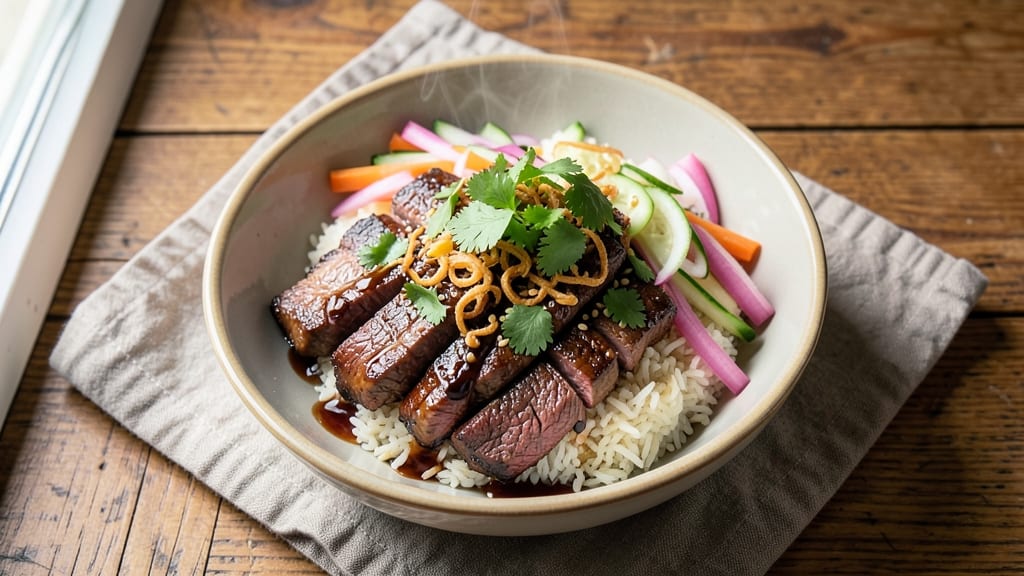
This beef banh mi bowl recipe transforms a Vietnamese street food classic into a satisfying, all-in-one meal that delivers tender beef, crisp pickled vegetables, and aromatic herbs in every bite.
The secret lies in marinating the beef overnight with fish sauce and sugar to create deep umami flavor, then searing it until perfectly caramelized.
While traditional banh mi uses a baguette, this bowl adaptation keeps all the essential elements—pickled daikon and carrots, fresh cilantro, jalapeños, and a tangy mayo-lime dressing—just without the bread.
The beauty of this recipe is its balance: the beef stays juicy and flavorful, the pickled vegetables add a bright crunch that cuts through the richness, and the rice bowl provides a sturdy base that holds everything together.
What makes it special is the layering—each component has its own texture and flavor profile, ensuring every spoonful is packed with complexity. The preparation might seem involved, but it breaks down into simple steps that even weeknight cooks can manage.
By the time you assemble your bowl, you'll have a dish that's vibrant, aromatic, and deeply satisfying—tender beef that falls apart slightly, crisp pickled vegetables that add a refreshing bite, and a dressing that ties everything together with its perfect balance of sweet, tangy, and spicy.
The presentation is just as important as the taste, so we'll focus on plating techniques that make your bowl look as good as it tastes.
This recipe works equally well as a lunch or dinner, and it's customizable enough to suit different dietary preferences. Whether you're making it for a weeknight dinner or a weekend gathering, the key is in the preparation—marinating the beef properly and pickling the vegetables ahead of time.
Let's get started on creating a bowl that captures the essence of banh mi in every bite.
Ingredients for beef banh mi bowl
Transform Vietnamese street flavors into a satisfying bowl with these carefully balanced ingredients.
| Ingredient | Amount | Notes |
|---|---|---|
| Flank Steak 🥩 | 1 ½ lb | Thinly sliced against grain |
| Fish Sauce 🍶 | ½ cup | Red Boat preferred for quality |
| Granulated Sugar 🍚 | ¼ cup | For marinade balance |
| Lime Juice 🍋 | ¼ cup | Freshly squeezed |
| Garlic Cloves 🧄 | 6 cloves | Minced for marinade |
| Fresh Ginger 🌿 | 2 tbsp | Grated, for marinade |
| Vegetable Oil 🫒 | 2 tbsp | High smoke point |
| Daikon Radish 🥕 | 1 whole | Julienned, for pickling |
| Carrot 🥕 | 2 whole | Julienned, for pickling |
| Rice Vinegar 🍶 | ½ cup | White vinegar substitute |
| Granulated Sugar 🍚 | ¼ cup | For pickling solution |
| Jalapeño 🌶️ | 1 whole | Sliced thin, seeded |
| Fresh Cilantro 🌿 | ½ cup | Chopped, stems removed |
| Mayonnaise 🥫 | ½ cup | Duck or avocado preferred |
| Lime Juice 🍋 | 2 tbsp | Freshly squeezed |
| Sriracha 🌶️ | 1 tbsp | Adjust for heat preference |
| Jasmine Rice 🍚 | 2 cups | Uncooked, long grain |
| Water 💧 | 3 cups | For rice cooking |
| Salt 🧂 | 1 ½ tsp | Diamond Crystal preferred |
The flank steak is non-negotiable for this recipe—its lean yet tender texture holds up perfectly to marinating and searing. Look for USDA Choice or higher at specialty butchers or Costco for the best marbling. Thinly slicing against the grain is critical; use a sharp knife or ask your butcher to do it. For the fish sauce, Red Boat is the gold standard, but Three Crabs works well too if you're on a budget. The daikon radish should be firm and white with no soft spots—Asian markets often carry the best selection. If you can't find fresh ginger, pasteurized ginger in tubes at Trader Joe's is a decent substitute, though fresh is always preferred.
No daikon? Extra jicama or regular carrot can stand in, though texture will differ slightly. For the pickling vinegar, rice vinegar is essential—substitute white vinegar at half the amount if needed, but flavor will be sharper. The jalapeños can be swapped for serrano peppers for more heat or banana peppers for milder flavor. If you're avoiding mayo, Greek yogurt thinned with lime juice creates a tangy alternative. The cilantro should be bright green with no wilting; if stems are tough, remove them completely. For the rice, jasmine or basmati work best, but long-grain white rice is fine in a pinch—just expect slightly less aroma.
Marinated beef keeps 3 days in the fridge, covered tightly. Pickled vegetables stay crisp for 5 days if submerged in their liquid. The dressing holds for 1 week in an airtight container. For meal prep, cook the rice fresh and store components separately—reheat beef gently and assemble bowls when ready to eat. Freeze cooked rice for 3 months in a sealed bag, but beef is best consumed within 2 days of cooking. Always let rice cool completely before refrigerating to prevent moisture buildup.
Why You'll Love This Recipe
- Fewer Ingredients, Bigger Impact: I swear by this—just five core ingredients transform simple flank steak into something ridiculously good. No fancy marinades or hidden pantry staples; the fish sauce, sugar, and lime juice do all the heavy lifting while you’re chopping carrots and cucumbers.
- Tangy-Sweet Magic: That quick marinade—garlic, fish sauce, sugar, lime—doesn’t just flavor the beef, it transforms it. The steak gets this perfect char on the outside while staying juicy inside, and the sauce? It’s the kind of balance that makes you pause mid-bite.
- Lunchbox to Dinner Party: Between us, this bowl is my go-to for everything. Pack it for work when you’re in a hurry, serve it at a potluck when you’re the guest who brings the flavor, or make a big batch for lazy Sundays. The same base works for all of it.
- Steak Leftovers? Not Here: Flank steak slices thinly and cooks fast, so you’re not stuck with a whole roast to figure out. What’s left? Toss it back into the fridge—it reheats like a dream for quick lunches, or even better, cold in wraps the next day. Zero waste, all win.
Step-by-step instructions for beef banh mi bowl
Master the balance of textures and flavors with this method—tender beef, vibrant pickles, and aromatic rice.
Marinate the Flank Steak for Maximum Tenderness
Thinly slice the 1.5 lb flank steak against the grain into ¼-inch thick strips. Place in a bowl and add the 0.5 cup fish sauce, 0.25 cup granulated sugar, 0.25 cup lime juice, 6 minced garlic cloves, and 2 tbsp grated fresh ginger. Use your hands to massage the marinade into the meat until fully coated.
Cover and refrigerate for at least 2 hours (overnight is ideal). The acidity in the lime juice and fish sauce will tenderize the beef while infusing it with complex flavors. The marinade should look glossy and cling to every strand of meat—this ensures maximum flavor penetration.
Cook the Jasmine Rice to Perfect Texture
Rinse the 2 cups jasmine rice under cold water until the water runs clear. This removes excess starch and prevents gummy rice. Combine the rice with 3 cups water and 1.5 tsp salt in a pot, bring to a boil, then reduce heat to low, cover, and simmer for 15 minutes.
Turn off the heat and let the rice steam undisturbed for another 10 minutes. The rice should be fluffy with individual grains that don't stick together. Fluff with a fork before serving—this aerates the rice and makes each bite distinct. Keep the rice warm while you prepare the remaining components.
Prepare the Crunchy Pickled Vegetables
Julienne the 1 whole daikon radish and 2 whole carrots into thin matchsticks. In a bowl, combine the vegetables with 0.5 cup rice vinegar, 0.25 cup granulated sugar, and sliced seeded jalapeño. Mix well and let sit for 30 minutes at room temperature. The vegetables should soften slightly while developing a bright, tangy flavor.
Real talk: this is where the crunch comes from. The vinegar and sugar create a perfect balance—sweet, acidic, and crisp. If you're short on time, you can refrigerate the pickled vegetables for 1 hour for even more flavor, but 30 minutes works in a pinch.
Cook the Marinated Beef to Juicy Perfection
Heat 2 tbsp vegetable oil in a large skillet over medium-high heat until shimmering. Add the marinated beef in a single layer and cook undisturbed for 2-3 minutes until the bottoms develop a deep golden crust. Flip and cook another 2-3 minutes until the beef reaches 145°F internally.
Remove the beef from the skillet and let it rest for 5 minutes before slicing against the grain into thin strips. The resting period ensures the beef stays juicy—don't skip this, or you'll end up with dry meat. The slices should be tender enough to cut with a fork but still hold their shape.
Assemble the Banh Mi Bowl with Flavor Layers
Divide the cooked jasmine rice among four bowls. Top each serving with the sliced beef, pickled vegetables, and chopped fresh cilantro. In a small bowl, whisk together the 0.5 cup mayonnaise, 2 tbsp lime juice, and 1 tbsp sriracha for the creamy dressing. Drizzle generously over each bowl.
Here's the thing—presentation matters. The contrast of textures is what makes this dish special: tender beef, crisp pickles, fluffy rice, and creamy sauce. Serve immediately while the beef is still warm and the pickles retain their crunch. Each bite should deliver a perfect harmony of flavors and textures.
Pro Tips For Making Beef Banh Mi Bowl
- SEAR THE STEAK HOT: Flank steak needs screaming heat to develop that smoky crust—don’t be shy with a cast-iron or heavy skillet. After the first sear, pull it off the heat and let it rest immediately (yes, even if it’s not perfectly done), or it’ll turn into shoe leather.
- GARLIC: MINCE IT FINE: I used to crush garlic cloves for the marinade, but mincing them into a paste makes a real difference. The texture blends smoother, and the flavor clings to the steak instead of sitting in clumps. (Pro tip: Pulse in a food processor for 2 seconds—don’t overdo it.)
- DON’T SKIP THE REST: After slicing the steak, tent it with foil and let it sit for 5–10 minutes. I learned this the hard way—skipping it means dry, tough slices. The residual heat keeps it juicy while you prep the rest of the bowl.
- UPGRADE THE MARINADE: Mix fish sauce, sugar, and lime juice first, then add garlic. The sugar dissolves better, and the acidity mellows out the garlic’s bite. (Bonus: Add a splash of water if the marinade gets too thick—it’ll cling better to the steak.)
Creative variations of this beef banh mi bowl
Spicy Sriracha Lime Twist
Swap the classic mayo-lime dressing for a spicy sriracha-lime aioli by mixing ½ cup mayonnaise with 2 tbsp lime juice, 1 tbsp sriracha, and 1 tsp honey.
This adds a fiery kick while keeping the creamy texture. For extra depth, stir in 1 tsp fish sauce—it enhances the umami without overpowering. 🌶️
Vietnamese-Inspired Slaw
Add a quick-pickled slaw by thinly slicing 2 cups cabbage and 1 cup shredded carrots, then tossing with ¼ cup rice vinegar, 1 tbsp sugar, and 1 tsp salt.
Let sit for 20 minutes before adding to your bowl. The cabbage’s crunch contrasts beautifully with the tender beef.
Protein Swaps
For a vegetarian option, replace the beef with marinated tofu or shitake mushrooms. Tofu works best when pressed, cubed, and marinated in the same fish sauce-lime mixture for 4+ hours.
Shitake mushrooms should be sliced and seared in a hot pan with 1 tbsp soy sauce and 1 tsp sugar until caramelized.
Herb-Infused Rice
Elevate your rice by cooking it with 1 tsp fish sauce and 1 tbsp chopped cilantro mixed into the water. After cooking, fluff with a fork and top with a sprinkle of toasted sesame seeds for a nutty crunch. This adds subtle layers of flavor without extra effort. ✨
Extra Crunch Toppings
Add texture with crushed peanuts or fried shallots for a Vietnamese-inspired crunch. Toast ¼ cup peanuts in a dry pan for 3-4 minutes until golden, or fry 2 shallots in oil until crispy. Sprinkle over bowls just before serving to keep them fresh.
Sweet Heat Variation
Balance the tangy pickles with a honey-chili drizzle by mixing 2 tbsp honey, 1 tbsp chili crisp, and 1 tsp lime juice. Drizzle lightly over the beef and pickles for a sweet-spicy contrast. This works especially well if you prefer less mayo in your bowl.
Nutrition facts
Frequently asked questions
Can I use a different cut of beef for this recipe?
Flank steak is ideal because it's lean yet tender when sliced thin against the grain. For alternatives, try sirloin or skirt steak—both work well with the same marinade. Avoid tougher cuts like chuck; they won't become tender enough in the short cooking time. If using pre-sliced beef, look for "thinly sliced for stir-fry" at Asian markets.
How do I make the pickled vegetables last longer?
The key is keeping them submerged in the pickling liquid. Store them in an airtight container with the liquid covering the vegetables completely. They'll stay crisp for up to 5 days in the fridge. For longer storage, transfer to a sealed jar and refrigerate—they'll keep for about 1 week while maintaining most of their crunch.
What if I don't have rice vinegar for the pickles?
Use white vinegar at half the quantity (about ¼ cup instead of ½ cup) for a sharper flavor. For a milder taste, apple cider vinegar works too. The sugar-to-vinegar ratio is what matters most—just reduce the vinegar amount by half to prevent over-acidification. The texture won't be identical, but it'll still add great crunch and tang.
Can I prep this recipe ahead of time?
Marinate the beef 1-2 days ahead and store it in the fridge. The pickled vegetables can be made 3 days in advance if kept submerged in their liquid. Cook the rice fresh or store it for 2 days in the fridge. Assemble bowls just before serving to keep the pickles crisp. The dressing stays fresh for 5 days in an airtight container.
Why is my beef tough after cooking?
This usually happens when beef isn't sliced against the grain or isn't rested properly. Always slice ¼-inch thick strips perpendicular to the muscle fibers. After cooking, let it rest for 5 minutes before slicing—this redistributes juices. If it's still tough, try marinating for 6-8 hours instead of just 2 hours for better tenderness.